Why e-commerce firms are rapidly shifting focus to mobile phones to lure customers
Roughly half the online transactions on some of India’s most exciting ecommerce startups are via mobile phones. That proportion can only increase.

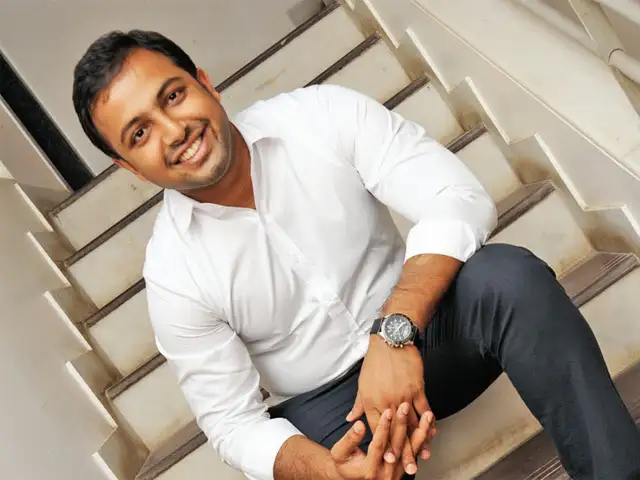
Unlike his fellow commuters, the 34-year-old isn’t glued to WhatsApp or talking to family; instead, he browses for furniture for his under-construction flat, checks out the latest deals on Flipkart and considers his lunch options either on Zomato, Foodpanda or the mobile-only startup TinyOwl.
His iPhone is the centre of his internet universe; he claims not to have been on an ecommerce website in at least six months and not ordered off a traditional website in a year.
Startups across India’s $15 billion ecommerce sector, in a desperate battle for customers, have decisively turned their attention to people such as Kumar who have ditched their laptops and desktops and use their smartphones to go deal-hunting.
As the number of broadband connections plateaued and mobile data connections grow almost 100% annually, consumers are voting with their feet. They are opting to download apps of their favourite ecommerce ventures and use these slickly designed products rather than browserbased variants.
 |
The companies, on their part, are following their customers’ lead. They are halting or slowing investments in traditional ecommerce and focussing their energies on upgrading their products in the mobile commerce, or mcommerce, sphere. “We are completely aligned with this mobile opportunity,” says Ashish Goel, co-founder of Urban Ladder, an online furniture and home furnishings venture.
“The mobile phone helps me fulfill the promise of brand Quikr much faster, since we have responses between both buyers and sellers and transactions in a few minutes.”
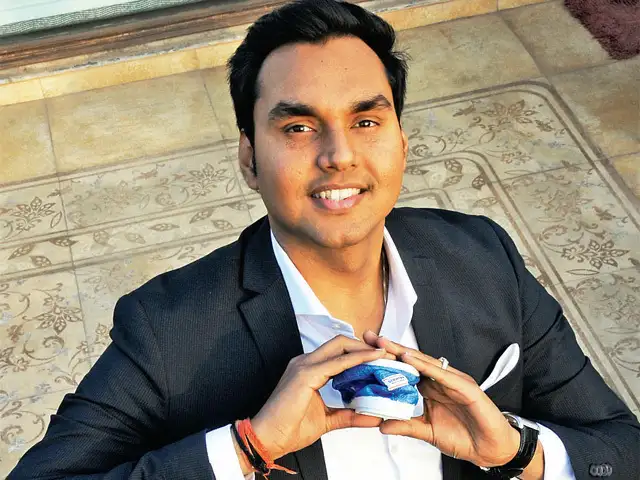
With over 30 million users a month and gross merchandise value (GMV) of over $5 billion cumulatively, Chulet has to be at the top of his game to keep both sides coming back for more. “The amount of time users spend on Quikr has increased six or seven fold after we launched a mobile app,” he adds.
| |
Chain Reaction
It isn’t only the smaller ventures that are seeing the virtue of going all-in with their mobile investments. Large ecommerce players such as Flipkart and Snapdeal, with years of investments in building a traditional web presence, are making firm bets on recasting themselves as mcommerce firms.For example Myntra, owned by Flipkart, announced in February that 90% of its traffic came from mobile devices. In six months to a year, its website may disappear altogether. “We get 70% of our business from mobile,” says Prasad Kompalli, head, ecommerce platform, Myntra. “This platform helps us deliver our value proposition to the customer better, with more personalised offerings.”
The firm’s co-founder and chief executive Sachin Bansal said that mobile would be a key focus area for the firm, which has landed nearly $2 billion in funding from some 50 assorted investors.
“In the last 12 months, the mobile business share has gone from single digit to over 50% of its orders and is expected to reach 65-70%,” according to Bansal.
As users gravitate towards the mobile, Flipkart executives are keen to sharpen its technology to allow consumers to place orders on patchy networks in the hinterland. “We want to build a strong presence in the mobile wallet space and our investment in ngpay [a mobile payment gateway company] is a strong step in this direction,” Bansal adds (see Mobile Wallets...).
“We get around 70% of our business from mobile. We want to deepen the culture of mobile-first and move quickly towards increasing our share from this platform.” To maximise its sales from mobile devices, Snapdeal has doubled its engineering headcount in this segment in the past year to 700.
With a mobile handset, for example, these ecommerce firms can offer more customised solutions, leverage other functionalities on the device (social media, camera, pinch to zoom features, address book) to build an app that looks palpably different from its seemingly distant browser-based cousin.
What’s more, targeting and communicating with customers is more focussed and direct. As these internet commerce companies launch mega sales to bring in customers, mobile is a key platform to keep them buying — companies get 50-70% of sales from them and say this could increase by 10-15% as mobile data coverage and speeds improve.
With a mobile device rapidly emerging as the default source of internet access across India — especially across its untapped hinterland — these startups may be only taking their first steps in this journey. Despite these attractions, most companies have had to work hard on their mobile device initiatives.
For starters, they need to reset their mindset, moving away from prioritising web-based metrics such as page views, to focussing on the speed and ease of transactions on the mobile. Then, there’s the headache of ensuring the app is installed and used repeatedly by consumers.
“As companies reach a GMV of $10 billion, having so much cash sloshing around the system will make them very inefficient,” says Vijay Shekhar Sharma, chief executive and founder of Paytm, a mobile wallet firm.
Despite these hurdles, startups are backing themselves to make the most of an explosively growing market. According to data from Telecom Regulatory Authority of India (TRAI), the number of active mobile connections was around 944 million in 2014 and is expected to cross 1 billion this year. In 2014 alone, some 70 million mobile data connections were added, with around 180 million of these subscribers cumulatively.
| |
According to some estimates, it costs just 1.3% of median income to pay for an entry-level data plan — the lowest among emerging economies. Coupled with crashing handset rates (a smartphone is now available for under Rs 5,000), mobile internet looks set to make a major impact. Some 80 million smartphones were shipped in 2014, as per multiple estimates.
Companies have quickly altered their strategy to tap this market. For example, Chulet of Quikr says its Quikr Nxt, a mobile messaging tool, has been a smash hit with customers who are chary of giving out their numbers and other personal details.“We get over 20 million responses every month,” he explains. “This method of communication gives more control to users and over 50% of communication has moved from phone and email to more targetted chats. The mobile has changed the game and transformed Quikr.”
His is not only the only venture to find fresh purpose with mobile devices. Over at Urban Ladder, these devices are helping co-founder Goel reimagine the future of his business. “We are helping customers imagine spaces and allowing them to virtually configure their own room before making a purchase,” he says. “We want to leverage the popularity of Pinterest and Instagram and features such as touch and pinch to zoom on devices to build the best tech team in the country.”
In the white-hot online food market, Foodpanda is hinging its entire strategy on the mobile. Managing director Rohit Chadda says the firm relaunched its app six months ago to incorporate some features on menu display, payments and repeat orders from specific joints. “We get a 20% higher basket size on the mobile compared to the web,” he says. “We already get half our business from the mobile and believe this will go to 70% quickly.”
Backed by $110 million from its investor Rocket Internet, Foodpanda is set to expand its payment options soon and is working on having a mobile wallet for customers. The roadblock to hiring the best talent and building the best team of mobile app developers may come in the form of Amazon, the proverbial 800-pound gorilla of this market.
“Shopping on the app offers additional benefits to the customer… they can shop on-the-go, get up to the minute order-tracking information and receive timely notifications for new launches and exclusives,” he adds.
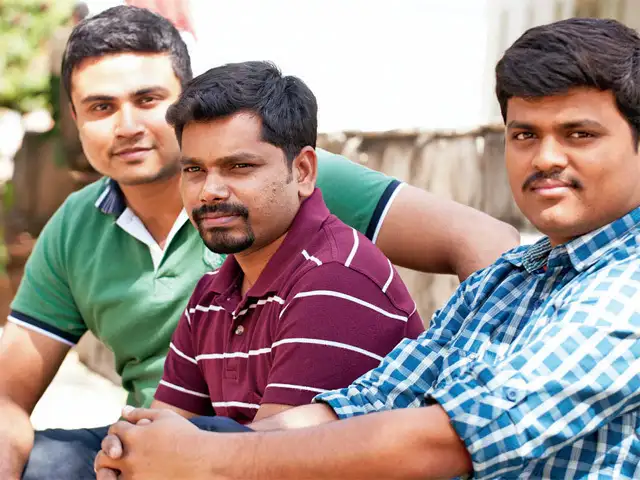
If the elephant is beginning to dance, the flyweights aren’t ducking for cover. New startups are standing up to be counted. For example, in Mumbai, TinyOwl, a food ordering startup, hasn’t even bothered with a web presence. Instead, the company proudly calls itself a mobile-only (as opposed to a mobile-first) venture. “Many people have used the internet for the first time on smartphones," says Harshvardhan Mandad, a cofounder of the startup. “The future is mobile and we want to build a company for it.”
When the firm was founded in 2013, it started small, focussing only on restaurants that deliver in Mumbai (it has since signed up with over 4,000), before casting its sights further. Now, TinyOwl is on a roll. The firm had quickly raised two rounds of venture capital financing from the likes of Sequoia Capital and Nexus Venture and in February it inked a deal for its third tranche of funding. Investors seem to like the company’s mobile-only model.
“We want to expand to four or five cities such as Delhi, Pune, Bengaluru and Hyderabad,” says Mandad. “When we went live in Mumbai, we estimated that we had around 60% of the restaurants with delivery services… we want to follow a similar model in these cities too.”
In January this year, Paytm’s Sharma, via flagship company One97 Communications, raised $635 million from Chinese internet giant Alibaba. The move was validation of a business that was built the other way around compared to the competition.
Paytm has become perhaps the most recognised prepaid mobile wallet in the business. Even as other companies consider their mobile wallet options, Paytm has forged full steam ahead. The number of wallets increased from over 13 million to over 26 million from September last year to now and is expected to race to 100 million by the end of 2015. “We have bet our business on mcommerce,” says Shekhar.
The bets seem to be paying off — the firm has racked up a billion dollars in GMV on its year-old mobile marketplace, with 18,000 merchants already signed up and live and another 20,000 in the queue. Shekhar is also building out his backbone — his mobile wallet — to allow peer-to-peer money transfers with zero fees and no intermediary such as a bank between his customers.
“Unlike traditional ecommerce players, 90% of our customers are on prepaid mobile wallets,” says Shekhar. “Our business is therefore more efficient because we don’t waste time and money chasing after cash on delivery payments.” Mobile devices, it appears, have become central to the strategy of India’s internet commerce startups. With 4G around the corner and mobile data subscriber numbers exploding, the opportunity to mine India’s massive market may be just beginning.
Mobile Wallets, anyone?
As India’s mcommerce market gets set for take-off, a prolonged process could deter users from ordering off their phones. The success of firms such as Paytm, with its mobile wallet (prepaid orders account for 90% of its business), may point to an easier path to success. Prepaid mobile wallet is a prepaid payment option for customers to pay for products and services online with a couple of taps on their device. No credit card details or PINs need to be entered, making it a faster payment method.
Already, global giants such as Google, Amazon and Facebook are investing heavily in mobile wallets, and more Indian firms could follow suit. “We will have around 100 million mobile wallets by the end of the year,” says Vijay Shekhar Sharma, founder of Paytm.
Other startups chasing the mcommerce market too say that a mobile wallet is a must. “We are considering several options to give our customers this option,” says Ankit Khanna of Snapdeal. Large rivals such as Flipkart and smaller specialist upstarts such as Urban Ladder and Quikr, as well as mobile-only ventures such as TinyOwl and Lybrate too say they are in various stages of piecing together a wallet to simplify payments.
The Economic Times Business News App for the Latest News in Business, Sensex, Stock Market Updates & More.
Related Articles
 In 1983, engineers squeezed a wireless conversation through a commercial cell network, and mobile phones started becoming real2026-06-16T12:27:59Z
- FIFA World Cup 2026: Best apps to watch matches live on your mobile phone free in India2026-06-13T08:29:50Z
- PLI 2.0 scheme for mobile phones may ring louder2026-05-29T01:55:30Z

These are just three of the 10 offbeat startups we’ve deep-dived into; just three of the 800-odd startups added every year; and just three of the over 3,000 startups that are trying to make it big in India.
The 10 that we’ve picked are novel, but being different or a first mover is no guarantee of being the best mover — or moving at all a few years later.