How to build a brand using social media
For a company, social media has proved to be a double edged sword. Use it strategically and it can be a great brand equity creator.
Updated:

By Saurabh Uboweja
A decade ago no one could have imagined the role of social media in our lives today. From being a platform to connect with friends, family and others that we know, social media has gone on to have an indelible impact on our lives, society and the very fabric of our existence. From its role in Arab Spring, to raising awareness about problems in our society, social media has emerged as a major source for developing public opinion.
For a company, social media has proved to be a double edged sword. Use it strategically and it can be a great brand equity creator. Be indifferent to it and social media has the potential to dilute a lot of the equity you may have created much before social media arrived. So how does an organization leverage social media to build its brand?
Notice the trends:
Social media has two elements to it. It is a lot easier to create new brands using social media as compared to the conventional way of spending money and building brands in people's minds.
The second is being able to use social media to measure your brand value at any point in time. I am not saying social media is the only media, which is relevant, but it has become one of the most important mediums. So, in terms of let us say if I were a large organization, based on social media metrics or based on an understanding of what kind of conversations people have about my brand, I can be sure that it is a good representation of what people are talking about in general about my brand. Brand value is a moving index. As an organization we are developing a tool that can depict the movement of brand value on a graph in real-time as conversations take place on social media. We believe that this index can be a good reference point for brands to reflect on their real brand equity.
The sway of social media is not limited to influencing brand triggers only. If you notice carefully traditional media is also getting strongly influenced by social media as most of the stories are actually germinating from ideas trending on social media itself. In fact, traditional and social media is increasingly interconnected now. You can see a TV channel with news, but there are tickers around Twitter and Facebook also running at the same time.
I think the challenge for brands is going to be how to utilize social media for their benefit. Measurement is fine and creating a new brand is also relatively easier. However, where you have already created a lot of equity using whatever means social or non-social, you need to have a strategy to actually secure and monetize that equity.
That, I think, is not currently evolved because a lot of what is happening in social media as a tool for branding is mainly restricted to increasing followers as a demonstration of influence or putting up posts, which are not really meaningful or not really integrated to the brand objectives. They are simply to keep people engaged without any plan in place.
Cannot be ad-hoc:
You can safely say that in India, including the MNCs, less than 5% of established companies are really able to use social media in building a brand and the rest are just participants. They are doing stuff, they are updating randomly, adding followers without any defined strategy to build a brand on social media. What is important to note is that many of these brands are scared about being suddenly bared to a barrage of opinion. Earlier in the case of conventional media, if you read a story and had something to say you would write a letter to the editor, which made the entire process complicated. Here the customer is much closer to the brand, therefore, many brands do not know how to develop, control or manage it well. Most have taken a little bit of a back seat and prefer to play the wait and watch game.
The problem for most companies is that they do not have a defined policy around social media. That its influence is increasing so fast and has permeated to influence even traditional mass media, I think companies should take social media seriously and develop a robust user engagement strategy that has defined objectives.
A decade ago no one could have imagined the role of social media in our lives today. From being a platform to connect with friends, family and others that we know, social media has gone on to have an indelible impact on our lives, society and the very fabric of our existence. From its role in Arab Spring, to raising awareness about problems in our society, social media has emerged as a major source for developing public opinion.
For a company, social media has proved to be a double edged sword. Use it strategically and it can be a great brand equity creator. Be indifferent to it and social media has the potential to dilute a lot of the equity you may have created much before social media arrived. So how does an organization leverage social media to build its brand?
Notice the trends:
Social media has two elements to it. It is a lot easier to create new brands using social media as compared to the conventional way of spending money and building brands in people's minds.
The second is being able to use social media to measure your brand value at any point in time. I am not saying social media is the only media, which is relevant, but it has become one of the most important mediums. So, in terms of let us say if I were a large organization, based on social media metrics or based on an understanding of what kind of conversations people have about my brand, I can be sure that it is a good representation of what people are talking about in general about my brand. Brand value is a moving index. As an organization we are developing a tool that can depict the movement of brand value on a graph in real-time as conversations take place on social media. We believe that this index can be a good reference point for brands to reflect on their real brand equity.
The sway of social media is not limited to influencing brand triggers only. If you notice carefully traditional media is also getting strongly influenced by social media as most of the stories are actually germinating from ideas trending on social media itself. In fact, traditional and social media is increasingly interconnected now. You can see a TV channel with news, but there are tickers around Twitter and Facebook also running at the same time.
ADVERTISEMENT
I think the challenge for brands is going to be how to utilize social media for their benefit. Measurement is fine and creating a new brand is also relatively easier. However, where you have already created a lot of equity using whatever means social or non-social, you need to have a strategy to actually secure and monetize that equity.
That, I think, is not currently evolved because a lot of what is happening in social media as a tool for branding is mainly restricted to increasing followers as a demonstration of influence or putting up posts, which are not really meaningful or not really integrated to the brand objectives. They are simply to keep people engaged without any plan in place.
Cannot be ad-hoc:
You can safely say that in India, including the MNCs, less than 5% of established companies are really able to use social media in building a brand and the rest are just participants. They are doing stuff, they are updating randomly, adding followers without any defined strategy to build a brand on social media. What is important to note is that many of these brands are scared about being suddenly bared to a barrage of opinion. Earlier in the case of conventional media, if you read a story and had something to say you would write a letter to the editor, which made the entire process complicated. Here the customer is much closer to the brand, therefore, many brands do not know how to develop, control or manage it well. Most have taken a little bit of a back seat and prefer to play the wait and watch game.
ADVERTISEMENT
The problem for most companies is that they do not have a defined policy around social media. That its influence is increasing so fast and has permeated to influence even traditional mass media, I think companies should take social media seriously and develop a robust user engagement strategy that has defined objectives.
Need for in-house strategist:
A brand that was created over the last 30 years can face stiff competition from a startup that entered the race about a year back, thanks to social media, which has tremendous influence on opinion building even though it is restricted to a group of say 500 -1000 people in a conversation at a point in time. However, one can never be sure what goes viral and if it does and has negative connotations to it, a brand can suffer dearly. The viral nature of social media can be a booster dose for some and bane for others; you have to manage it extremely well in order to really utilize it for your benefit.
If you ask me what is the current status of social media management my answer would be it is under developed. However, it is progressing in the right direction. What I can foresee is that starting with bigger organizations, the need for an in-house social media strategist will become wider. It is not something, which can be handled by a CMO or the corporate communication desk. How many companies would be thinking on these lines? Less than 1% and how many companies really have such a social media strategist in-house? Even lesser I would say. I do not think people still understand the potential and the risks associated with social media in building a brand.
Social media empowers anyone and everyone to voice their views and provides a platform for the world to see it. If a company uses it to its advantage, one can create a great brand with lesser costs involved. On the other hand, anything negative has the potential to snowball into a much deeper problem and cause irreparable damage.
(Saurabh Uboweja is CEO & Director, Brand Strategy at Brands of Desire and Member of the Executive Committee, World Communication Forum in Davos.)
Download
The Economic Times Business News App for the Latest News in Business, Sensex, Stock Market Updates & More.
The Economic Times Business News App for the Latest News in Business, Sensex, Stock Market Updates & More.
Related Articles
 Canada introduces legislation to ban social media for children under 16, regulate AI chatbots2026-06-11T02:50:30Z
- Nancy Guthrie Case Update: Savannah Guthrie shares emotional social media post for her missing mother as mystery around her disappearance continues2026-06-09T11:29:56Z
- Apple expands child safety tools as social media bans grow2026-06-09T09:43:12Z

Text: Rajiv Singh, ET Bureau
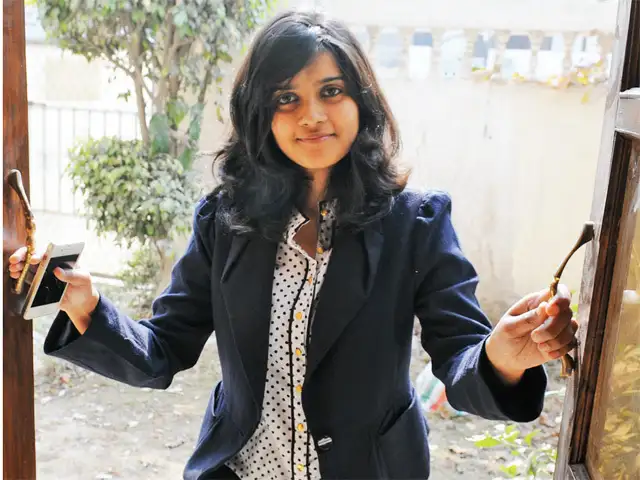
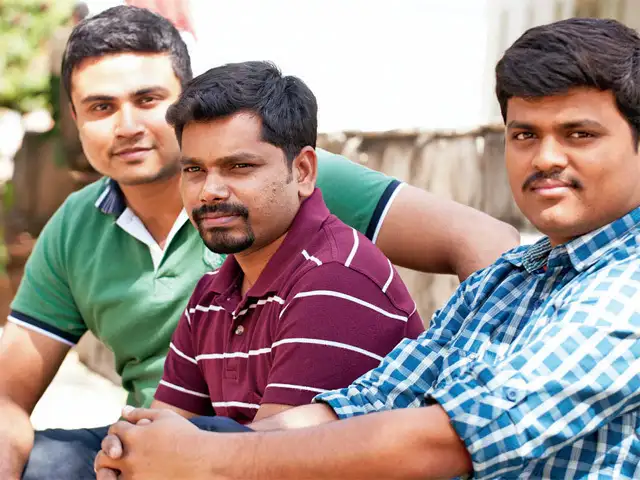
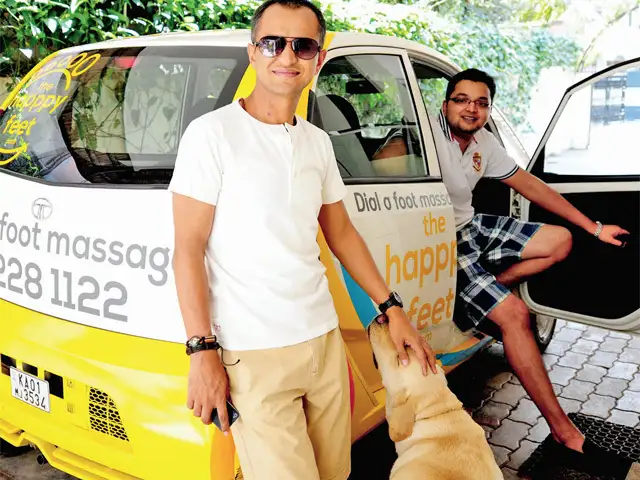
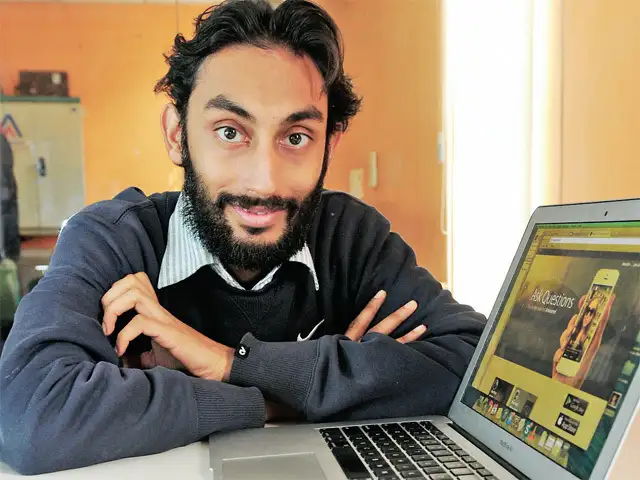
These are just three of the 10 offbeat startups we’ve deep-dived into; just three of the 800-odd startups added every year; and just three of the over 3,000 startups that are trying to make it big in India.
The 10 that we’ve picked are novel, but being different or a first mover is no guarantee of being the best mover — or moving at all a few years later.
These are just three of the 10 offbeat startups we’ve deep-dived into; just three of the 800-odd startups added every year; and just three of the over 3,000 startups that are trying to make it big in India.
The 10 that we’ve picked are novel, but being different or a first mover is no guarantee of being the best mover — or moving at all a few years later.


ADVERTISEMENT


