
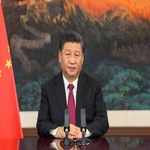
Xi Jinping
President, People's Republic of ChinaBirth DetailsJune 15, 1953 | Fuping County, China
NationalityChinese
LeaguePolitician
EducationChemical Engineering Graduate, Tsinghua University; PhD in Jurisprudence; Tsinghua University
Xi Jinping's Journey so far...
Before you go...
- Son of Xi Zhongxun -- one of the founding fathers of China’s Communist Party and a deputy prime minister -- Xi Jinping was born as a part of the elite society, but his life took a turn after his father was expelled from the party and imprisoned in 1962
- Jinping was 16 when he had to move to a poor countryside village for seven years where he worked as a labour
- Despite the hardships precipitated by the party, Jinping was always motivated to join it
- After being rejected several times because of his ancestry, he finally became a member of the Communist Party in 1974
- Starting off as a local party secretary in Hebei province in 1982, he worked hard and rose up the ranks to assume senior roles such as party chief of Shanghai in 2007. Later that year, he became a part of the party’s primary ruling body, the Politburo Standing Committee
- His rise to becoming the president of China was almost ascertained when in 2008 he was chosen as the vice-president of China
- In 2010, he assumed another important role as the vice-chairman of the Central Military Commission
- Then in 2012, he was chosen as the general secretary of the Communist Party
- Finally, on March 14, 2013, Jinping was named as the president of the People’s Republic of China
- As China’s top leader, he has been at the forefront of several economic reforms, including the restructuring of many state-owned industries, promoting global trade and increasing international investments. His ‘China Dream’ vision is a concept aimed at advancing the nation
- He has also taken steps to fight issues such as pollution and corruption within the country
- He became a ‘core leader’ of the Communist Party -- a position only few leaders have achieved -- in 2016
- Jinping’s philosophy “Xi Jinping Thought on Socialism with Chinese Characteristics for the New Era” was included in the party’s constitution in 2017 and in the country’s constitution the following year
- In March 2018, the National People’s Congress (NPC) amended the constitutional law that limited the country’s president to hold office for a maximum of two terms
- Simultaneously, Jinping was also re-elected for his second consecutive term as China’s president. The amendment cleared the path for him to be re-elected after 2023 as well
Before you go...
- He has been credited by name in the constitution of China for his ideas and contribution
- He’s often referred to as a ‘princeling’ because of his family background
- Reports suggest that he likes American movies with ‘Saving Private Ryan’ being one of his favourites
Last Updated: 12/02/2021
Xi Jinping News
- China's Xi vows unwavering support for North Korea's Kim in rare Pyongyang visitPresident Xi Jinping reaffirmed China's unwavering commitment to safeguarding common interests and supporting Kim Jong Un during a rare summit in Pyongyang. The leaders agreed to strengthen strategic ties, with Xi emphasizing opposition to hegemony and promoting regional stability. The visit highlights Beijing's view of Pyongyang as a strategic asset.

- US says BYD, Baidu and Alibaba and other tech giants are aiding China's militaryThe U.S. has updated its list of Chinese companies aiding Beijing's military, adding tech giants like Alibaba and Baidu, alongside chipmakers CXMT and YMTC. This move, superseding a 2025 list, could heighten U.S.-China tensions and impact firms through future contracting restrictions.
- India, China should stick to 'right strategic perception' of being cooperative partners, not rivals: BeijingChina urges India to view them as cooperative partners, not rivals, emphasizing mutual development and opportunities. Beijing supports dialogue between India and Pakistan to resolve differences. Meanwhile, Russia's President Putin highlighted his nation's strong, independent ties with both India and China, stressing that Moscow's relationships with each do not negatively impact the other.
- North Korea calls US push for its denuclearization 'anachronistic dreams'North Korea's Kim Yo Jong dismissed U.S. denuclearization calls as "anachronistic dreams," vowing to expand the nation's nuclear arsenal amid perceived threats. This statement precedes Chinese President Xi Jinping's visit, marking a significant diplomatic event. North Korea continues to prioritize bolstering its nuclear capabilities and missile production.
- Pete Hegseth’s silence on Taiwan is exactly what Xi Jinping wantsUS Defense Secretary Pete Hegseth adopted a quieter approach to Taiwan at a Singapore security forum. This shift in communication aims to project American strength without overt confrontation. While the long-term impact is uncertain, this move is seen as a win for China's President Xi Jinping. Taiwan and the US continue close exchanges, with Taiwan strengthening its self-defense capabilities.
- China is building launch pads near its nuclear missile silosChina is constructing a massive military complex in its desert regions. Satellite images reveal a sprawling network of launch pads and bunkers. This infrastructure is designed to safeguard China's nuclear missiles. The development signals a significant upgrade in Beijing's nuclear deterrent capabilities. It underscores intensifying nuclear competition with the United States.
- US journalist accused of secretly working with China-linked contacts, allegedly prepared political reports intended for Xi JinpingA US journalist, Thomas Pauken II, faces charges for allegedly acting as an unregistered agent for China. Federal authorities claim he prepared confidential political reports for Chinese intelligence, intended for President Xi Jinping. Pauken, who lived in China for over a decade, denies espionage, stating he only performed professional work without proper paperwork.
- China mine blast tests limits of Xi's energy pushA devastating mine blast in Shanxi, China, has claimed over 80 lives. This tragedy is now prompting a nationwide safety review. The incident highlights concerns about prioritizing production over safety in China's coal sector. Authorities are launching extensive inspections, signaling a potential impact on future coal output and energy security efforts.
- No talks currently planned between Trump and Taiwan's Lai, sources sayDonald Trump has repeatedly said he plans to speak with Lai Ching-te, but U.S. and Taiwanese officials have yet to make concrete arrangements for a call, according to sources familiar with the matter. A direct conversation between sitting U.S. and Taiwanese presidents would be unprecedented since Washington switched diplomatic recognition from Taipei to Beijing in 1979.
- How did Putin and Trump's visits to China compare?In a diplomatic dance, Russian President Vladimir Putin wrapped up his visit to Beijing right after US President Donald Trump's engagement with Chinese leadership. While both were greeted with pomp, Putin garnered a notably warmer reception, bolstered by a higher-ranking official's presence. China's leader underscored the steadfast bond between the nations, declaring their partnership as 'unyielding.
- Xi and Putin unite in criticism of US, but fail to clinch big gas dealChina and Russia united against US President Donald Trump's missile defense plans and nuclear policy. Leaders Xi Jinping and Vladimir Putin met in Beijing. They emphasized strong ties and a multipolar world order. However, a long-sought gas pipeline deal between the two nations remained elusive. Discussions on energy cooperation continue.
- Russia exploring joint projects with US and China as Putin meets Xi JinpingRussia is exploring joint projects with both the United States and China. Kirill Dmitriev, head of Russia's sovereign wealth fund, revealed these possibilities. President Vladimir Putin is set to meet Chinese President Xi Jinping soon. This comes after Xi Jinping's discussions with U.S. President Donald Trump. Dmitriev is a key figure in Russia-U.S. talks.
- Putin lands in China for trip that aims to show unshakeable ties after Trump pompRussian President Vladimir Putin arrived in Beijing late on Tuesday for talks with his Chinese counterpart and "long-time good friend" Xi Jinping, intending to show their ties are unshakeable days after a visit by Donald Trump. - 'Dear, old friends' - Xi welcomed Putin with open arms as an "old friend" when he last visited Beijing in September 2025 -- language the Chinese leader did not extend to Trump last week.
- Xi Jinping's 'Thucydides Trap' warning: Is China outsmarting the US without engaging in actual conflict?China employs a strategy of subduing rivals without fighting, a tactic evident in its diplomatic approach. This method has allowed China to achieve strategic growth intervals. The recent meeting between Xi Jinping and Donald Trump signals a new phase for China. India and other nations must prepare for China's evolving global role and the US's shifting strategic posture.
- White House fact sheet on Trump's China visit cites Iran agreement; omits TaiwanThe US and China have agreed to create new trade and investment boards and build a more stable economic relationship based on fairness and reciprocity, according to a White House fact sheet released after talks between US President Donald Trump and Chinese President Xi Jinping in Beijing.
- Trump and South Korea's Lee discuss outcome of US-China summitSouth Korean President Lee Jae Myung and U.S. President Donald Trump held a phone call. They discussed the recent U.S.-China summit. President Trump shared details of his meeting with Chinese President Xi Jinping. Both leaders focused on Korean Peninsula affairs and U.S.-China relations. They also touched upon Middle East stability and bilateral trade.
- Trump says Xi agrees Iran must open strait, but no sign China will weigh inPresident Donald Trump claims China's Xi Jinping agreed Iran must reopen the Strait of Hormuz. Iran effectively shut the vital waterway after U.S. and Israeli attacks. This has caused a major oil supply crisis and pushed up prices. Tehran insists it will not unblock the strait until the U.S. ends its blockade. Talks to end the conflict are stalled.
- POTUS: China is paying substantial tariffs, but we didn't discuss leviesWhile Trump maintained the leaders this week spoke about "almost everything you can discuss, except for a reduction of tariffs," he did allow that the two sides outlined efforts to reduce the flow of precursor chemicals used in the production of fentanyl. Trump has cited fentanyl flows in imposing some of the levies he placed on China.
- Trump leaves Beijing with few wins but warm words for XiWhile Trump searched for immediate business wins, such as a deal to sell Boeing jets that did not impress investors, Xi talked up a long-term reset and pact to maintain stable trade ties with Washington, underscoring their differing priorities. Xi pushed a new term by describing the relationship as “constructive strategic stability” – a sharp departure from the framing of “strategic competition” used by former U.S. President Joe Biden, which Beijing disliked.
- On a Beijing business trip: Trump-Xi meet signals managed rivalry, not reset in US-China tiesPresident Donald Trump's recent visit to China focused on managing competition between the two global powers. Leaders Xi Jinping and Trump engaged in discussions aimed at stability and mutual respect. While no major breakthroughs occurred, both nations agreed on incremental steps to stabilize engagement. This managed competition acknowledges the dangers of escalation.
- Is Donald Trump's China visit a victory for U.S or Iran gets upper hand on Strait of Hormuz?White House called the leaders' shared desire to reopen the Strait of Hormuz off Iran, through which a fifth of global oil and gas once flowed.
- Trump says he and China's Xi agree Iran cannot have nuclear weaponsTrump and Xi Jinping also discussed keeping the Strait of Hormuz open for global shipping. Tensions remain high as the conflict continues. Recent incidents involve a sunk cargo vessel and a ship boarded by unauthorised personnel. Diplomacy is currently stalled.
- Xi, Trump reach series of new common understandings: China's foreign ministryChinese President Xi Jinping and US counterpart Donald Trump held extensive discussions during Trump's three-day visit to Beijing, reaching new common understandings on bilateral and global issues. The leaders agreed on a vision for a constructive China-US relationship of strategic stability, aiming to guide relations for the next three years and beyond.
- Silver tumbles Rs 17,500, gold down Rs 3,100 as Iran war tensions stoke inflation worries. All eyes on Trump-Xi meetGold and silver prices opened sharply lower on MCX Friday, driven by rising energy prices fueling inflation concerns and expectations of prolonged high interest rates. Investors are closely watching U.S.-China trade talks, with gold and silver futures experiencing significant dips. Spot gold and silver also declined internationally, reflecting market pressure.
- Trump says he is losing patience with Iran after talks with China's XiIran war: The U.S. paused its attacks on Iran last month but began a blockade of the country's ports. Talks aimed at ending the conflict have stalled with Iran refusing to end its nuclear program or relinquish its stockpile of enriched uranium.
- Donald Trump says China wants to buy oil, soybeans from USPresident Trump announced China's intent to purchase US oil and soybeans following his meeting with Xi Jinping. Discussions also covered Visa's market access, trade deals, and regional security, including Iran and Taiwan. Trump described Xi as a direct and business-focused leader.
- Away from the complex agenda, here are five other highlights from day 1 of the Trump-Xi summitPosting on social media in mid-April, Trump predicted Xi would give him a “big, fat hug” upon his arrival in Beijing. Come Thursday morning, Trump was offered a firm handshake instead of the warm embrace he had hoped for. The handshake lasted more than 10 seconds, with the American leader patting Xi on his arm a couple of times.
- Beijing state banquet sets the table for Trump-Xi resetFor decades, China has used the powerful symbolism of food during landmark official events and when receiving distinguished foreign visitors. In China's modern history, famines and political turmoil that caused decades of widespread rationing turned food into a potent status symbol in Chinese culture.
- Xi's Thucydides Trap for the US to dodgeAt a high-profile summit in Beijing, Xi Jinping referenced the Thucydides Trap, framing it as a warning about potential conflict between a rising power and an established one. His remarks signaled China's emergence as a key player on the world stage.
- China's Xi lauds 'new positioning' in ties with USIn a significant pivot in international relations, Chinese President Xi Jinping and U.S. President Donald Trump have unveiled a fresh strategy for their nations' partnership that prioritises collaboration while recognising necessary competition. This initiative aims to steer their diplomacy over the coming three years, fostering stability by keeping differences within bounds.
- An ancient warning hangs over the Trump-Xi summit bonhomieChinese President Xi Jinping invoked the "Thucydides trap" at his summit with US President Donald Trump, highlighting the risk of war between a rising and established superpower. The meeting aimed to manage escalating tensions amid trade disputes, Taiwan's status, and technological rivalry, acknowledging that competition must be controlled to avoid conflict.
- US, China could 'clash' if Taiwan issue mishandled: Xi warns TrumpChinese President Xi Jinping has issued a stern warning to US President Donald Trump. He stated that the Taiwan issue is the most critical in China-US relations. Mishandling this matter could lead to a clash between the two powerful nations. President Xi emphasized this during President Trump's visit to Beijing. Both leaders are set for important discussions.
- A proper Trump-Xi summit would deal with nukesNuclear weapons may not dominate discussions between US President Donald Trump and Chinese President Xi Jinping this week, but analysts argue the issue is becoming increasingly urgent as China rapidly expands and modernises its atomic arsenal.
- US, China will have 'a fantastic future together', Trump tells Xi at Beijing meetingChinese President Xi Jinping and US President Donald Trump met in Beijing. The leaders engaged in high-level discussions. Topics included trade, Taiwan, and Iran. The meeting featured ceremonial pageantry. Both sides are expected to discuss economic cooperation and potential trade agreements. The visit aims to advance economic outcomes for the US.
- Trump arrives in Beijing for high-stakes Xi summit amid Iran, trade and Taiwan tensionsUS President Donald Trump has arrived in Beijing for crucial talks with Chinese President Xi Jinping. The leaders will focus on trade disputes, technology, Taiwan, and Iran. This high-stakes summit aims to manage differences and explore cooperation between the two global powers. Security is heightened across Beijing for the important discussions.
- Trump-Xi summit: What to expect as US-China ties, Trade, Taiwan and Iran on the agendaTrump-Xi summit: As Presidents Xi Jinping and Donald Trump are gearing up for an important summit, the current stable diplomatic landscape prospects looming challenges that can threaten this equilibrium. Key topics include the tricky realms of trade, technology, and Taiwan, US expectations of China, along with the shadow of the Iranian conflict
- Trump to raise Taiwan arms sales, jailed tycoon Jimmy Lai case with Xi in BeijingUS President Donald Trump will discuss arms sales to Taiwan and the case of jailed media tycoon Jimmy Lai with Chinese President Xi Jinping. Trump expressed confidence that tensions over Taiwan would not escalate during his presidency. China reiterated its consistent stance against US arms sales to Taiwan.
- Can China's Xi rescue Trump from a bruising West Asia war?Donald Trump seeks a significant win from his upcoming China trip to bolster his reputation and aid midterm election prospects. The meeting will address critical economic issues, including rare earths and tech goods, with both leaders needing to accommodate each other's political agendas for any meaningful agreement.
- Stung by Iran war, Trump heads to China in need of winsPresident Trump visits China with reduced trade goals. His earlier tariff strategy has not yielded expected results. The meetings will focus on limited trade agreements and managing future trade relations. China seeks assurances on Taiwan and trade policies. The outcome is expected to be a temporary truce favoring China.
- World’s most important bromance revived as Trump heads to ChinaDonald Trump's upcoming Beijing visit marks his return to a personal diplomacy with Xi Jinping, a relationship that has navigated trade wars and crises. Despite escalating tensions over Taiwan and technology, their rapport has endured, contrasting with Joe Biden's presidency. This enduring connection, characterized by lavish summits and strategic truces, continues to shape the complex US-China dynamic.
- Gen Z conspiracy: China thinks the West is pushing its youth to quitIn a cultural shift, many young Chinese individuals are opting for 'lying flat'—a lifestyle choice that rejects pressures of constant work and economic strain. What started as a minor trend has blossomed into a formidable expression of dissatisfaction rooted in job uncertainty and limited opportunities.
- China sentences two former defence ministers to death for corruptionFormer Chinese defense ministers Wei Fenghe and Li Shangfu received death sentences with a two-year reprieve for corruption. Both were convicted of accepting bribes, with Li also charged with offering bribes. They were expelled from the Communist Party and previously led the People's Liberation Army Rocket Force.
- What's at stake at the Trump-Xi summitPresident Donald Trump will meet President Xi Jinping in Beijing next week. The leaders aim to ease tensions over trade, Taiwan, and the Iran war. Discussions will cover trade deals, technology, and rare earths. The Iran conflict and Taiwan's status are also key agenda items. Minor trade agreements are anticipated.
- China lauds nations that denied overflight rights for Taiwan presidentChina praised Seychelles, Mauritius, and Madagascar for denying overflight permission to Taiwan President Lai Ching-te’s aircraft, saying it reflects the “one-China principle.” Taiwan, however, accused Beijing of pressuring the countries to block the flight ahead of Lai’s planned visit to Eswatini.
- Trump says US stopped ship delivering Chinese 'gift' to IranUS-Iran war news: United States forces have intercepted a vessel carrying a shipment from China to Iran. President Donald Trump stated the cargo was a "gift" intended for Iran. This comes as Iran seeks to replenish its military supplies during a ceasefire. Trump expressed surprise, noting a prior assurance from China's President Xi Jinping against such deliveries. The incident highlights ongoing geopolitical tensions.
- Xi calls China-Russia ties 'precious' in current international contextChinese President Xi Jinping met with Russian Foreign Minister Sergey Lavrov in Beijing. Xi highlighted the value of China-Russia ties amid global instability. He stressed the importance of strategic communication and diplomatic coordination between the two nations. The meeting occurred as uncertainty surrounds the duration of the war in Iran.
- US-Iran conflict: Chinese President Xi calls to respect sovereignty of all countries in West Asia, Gulf RegionPresident Xi Jinping of China has urged respect for the sovereignty and security of West Asian and Gulf nations. He called for a sustainable security framework and adherence to international law. This comes as the UAE Crown Prince visits China amid regional conflicts. China advocates for an end to hostilities and unimpeded passage through the Strait of Hormuz.
- 'World order is crumbling,' Xi says as Iran war strains global stabilityChinese President Xi Jinping told Spain’s Prime Minister Pedro Sánchez that the “world order is crumbling into disarray” amid the Iran war, urging closer ties and multilateral cooperation. The meeting focused on economic relations, global conflicts, and Spain’s push to act as a bridge between China and the European Union.
- Iran war diverts US military and attention from Asia ahead of Trump's summit with China's leaderFifteen years after a pivot to Asia was declared, the U.S. remains entangled in Middle East conflicts, diverting military assets and attention from China's growing influence. This distraction raises concerns about regional stability and the ability to counter Beijing's ambitions, particularly regarding Taiwan. The ongoing demands of Middle East engagements are impacting U.S.
- China's state media turns to social media, AI to tell its story - often mock USIn a five-minute AI-generated animation modelled after classic martial arts movies, China's state media frames an allegory for the war in Iran. A white eagle in regal attire representing the US unleashes an evil laugh before his army attacks a group of Persian cats draped in black cloaks standing in for Iranians, who vow to fight after losing their leader and close off a crucial trading route.
- Xi's $270 billion Middle East bet limits China support for IranChina's substantial investments across the Middle East, particularly in green tech and tourism, are now jeopardized by regional conflict. Despite facing risks to its capital and personnel, Beijing is navigating a delicate balance, aiming to de-escalate tensions while reassuring Gulf partners and continuing its economic expansion.
- Trump terms Iran deal a 'total and complete' victory; says China got Tehran to 'negotiate'US President Donald Trump confirmed Iran's uranium will be handled securely under a two-week ceasefire. He indicated this assurance was key to the agreement. Trump also suggested China played a role in bringing Iran to the negotiating table for a ceasefire with Israel and the United States. This development signals a potential shift in regional dynamics.
- Trump, tariffs and turmoil: How one factory in China learned to live with itAmerican tariffs aimed to disrupt Chinese manufacturing. However, companies like Agilian Technology found China's production capabilities hard to replace. While facing order freezes and client demands for offshore production, China's retaliatory measures and a subsequent tariff reduction allowed manufacturing to recover. This resilience may surprise U.S. President Trump as he seeks to reindustrialize America.
- Trump's trade war with China in focus ahead of May summitPresident Donald Trump will visit China in May for talks with President Xi Jinping. This meeting follows a year of trade disputes and tariffs between the two economic giants. Recent developments show ongoing negotiations and reciprocal actions. The visit is highly anticipated as both nations manage their complex trade relationship.
- Who is Ma Xingrui? Senior Chinese Politburo member under investigation for discipline violationsA top Communist Party official, Ma Xingrui, is under investigation for serious violations. He is the third Politburo member to face such scrutiny since 2022. Ma previously led Xinjiang and has been absent from key events. His investigation highlights ongoing anti-corruption efforts targeting high-ranking officials across various sectors.
- India, China ties on correct path of improvement: Chinese FM Wang YiChinese Foreign Minister Wang Yi stated that China-India relations are on a "correct path" of improvement, emphasizing that shared interests significantly outweigh differences. He expressed China's willingness to cooperate with India to implement leader consensus, viewing each other as partners and opportunities. This comes after efforts to stabilize ties following the 2020 military standoff.
- China is mapping the ocean floor as it prepares for submarine warfare with the U.S.China is undertaking a massive undersea mapping and monitoring mission across the Pacific, Indian, and Arctic oceans. This extensive operation is building detailed knowledge of marine conditions. Experts believe this information is vital for China's submarine warfare capabilities against the United States and its allies.
- 'It'll be wrapped up soon and we are going to have a much safer world,' says Trump on Iran-US warDonald Trump said the conflict involving Iran could end soon and would result in a safer world, adding that economic impacts like market fluctuations are a “small price to pay” for security.
- Chinese leaders project stability despite warOfficials under President Xi Jinping vowed to boost domestic consumption and invest in new technologies including artificial intelligence to drive growth, while making few changes to China's policy roadmap for the next five years.
- China to strengthen highways in border regions with India under 15th 5-year planOne project involves building a 394 km highway linking the northern and southern sides of the rugged Tianshan Mountains in Xinjiang, Uygur Autonomous Region, reported the Hong Kong-based South China Morning Post, quoting the draft report of the 15th Five-Year Plan.
- The new A(I)rsenal: US-Anthropic clash highlights need for sovereign AI in IndiaAs AI enters battlefields from Gaza to Iran, India must rethink defence strategy amid dependence on foreign tech, experts told ET.
- What China's latest economic plans say about its tech ambitions and rivalry with USChina's new economic blueprints focus on strengthening its home market and accelerating tech progress. This strategy aims to shift the nation from low-cost manufacturing to a tech-driven economy. The plans also address current economic slowdowns. These decisions will significantly impact global markets and jobs. China is investing heavily in key technologies like AI and semiconductors.
- Trump encourages Latin American leaders to use military action to help US fight cartelsPresident Donald Trump urged Latin American leaders to unite against violent cartels. He called for military action to defeat drug trafficking groups. The "Shield of the Americas" summit aimed to bolster regional security. Trump also discussed future plans for Cuba. This initiative highlights a renewed U.S. focus on its hemisphere.
- Enhance political loyalty, Xi Jinping tells Chinese military after purgesMeeting a largely condensed delegation of military officials of the People's Liberation Army (PLA) and the People's Armed Police Force at the National People's Congress (NPC), China's parliament, Xi stressed fully leveraging the unique strengths of enhancing political loyalty in the military, state-run Xinhua news agency reported.
- Top PLA general urges military loyalty to Xi JinpingPresident Xi Jinping met a reduced military delegation amidst a significant purge of top PLA officials. A top general urged defense personnel to show unwavering loyalty to Xi. This meeting follows the removal of senior military figures, impacting the Central Military Commission. China also increased its defense budget, aiming for rapid armed forces modernisation.
- China ramps up 'high stakes' tech race with US as economic imbalances deepenIn its 15th strategic plan since adopting Soviet-style quinquennial policy cycles in the 1950s, Beijing has outlined a bet that technology - not consumption - will drive its next phase of development despite growing structural pressures.
- China boosts military spending with eyes on US, TaiwanChina military spending: Beijing plans to spend 1.9096 trillion yuan ($276.8 billion) on defence, according to a report published at the opening of the annual "Two Sessions" parliamentary meeting.
- Iran attack could buoy Trump in talks with China's XiTrump is set to arrive in Beijing at the end of March following the U.S. capture of Venezuelan President Nicolas Maduro in a risky Caracas raid in January and the U.S.-Israeli air war that on Saturday killed Iran's Supreme Leader Ayatollah Ali Khamenei, the former leaders of two countries that have been major oil suppliers for China.
- Regimes come and go. China’s interests in Iran will endureIran war: For China, the US's interventions in Iran serve as an important strategic insight. Beijing plans to adapt to any shifts in Tehran’s political landscape while safeguarding the essential flow of oil and protecting its vital interests.
- China seen among losers as economists gauge hit from Mideast warEscalating Middle East conflict triggers market jitters, with investors flocking to safe havens like the dollar and gold, while stocks tumble. Oil prices surge, threatening major importers like China, Europe, and India. Smaller economies with limited foreign exchange reserves, such as Argentina and Turkey, face heightened risks of capital flight and currency depreciation.
- China removes five generals from national lawmaking bodyLi Qiaoming, who has been the commander of the PLA Ground Force, and Shen Jinlong, former PLA Navy commander, were dismissed as NPC deputies. Also removed were the current or former political commissars of the PLA Navy, Air Force and Information Support Force - Qing Shengxiang, Yu Zhongfu and Li Wei.
- US President Trump to travel to China from March 31 to April 2 amid trade tensionsPresident Donald Trump is set to visit China from March 31 to April 2 for crucial talks with President Xi Jinping. This meeting follows a Supreme Court decision impacting U.S. tariffs on Chinese goods. Discussions are expected to cover trade imbalances, fentanyl, and arms sales to Taiwan. The visit aims to manage relations between the world's two largest economies.
- Why fighting yesterday's battles against China's Belt & Road is pointless nowThe Belt and Road’s resurgence doesn’t demonstrate that China’s economic model is unstoppable. But it does show that Beijing isn’t retreating from global engagement. It is simply adapting.
- In Xi Jinping's purge of Chinese military, a search for absolute loyaltyChinese President Xi Jinping is consolidating power through purges reminiscent of Mao Zedong. Top military commanders are being removed, signaling a drive for absolute loyalty. This campaign aims to ensure ideological unity and control over the armed forces. The actions reflect a strategy to secure Xi's authority and prepare for future challenges.
- China lifts visa requirement for Canadians in major diplomatic thaw, signaling reset in Ottawa-Beijing relationsChina is easing travel restrictions for Canadians. Starting Tuesday, citizens can visit for up to 30 days without a visa. This policy marks a significant step in improving relations between Beijing and Ottawa. The move is expected to simplify travel for many Canadians. Both countries also agreed to jointly promote tourism.
- Xi Jinping says China's huge market key to boosting local demandChina should "coordinate efforts to boost consumption and expand investment, and fully leverage the advantages of China's super-large-scale market," Xi said in comments published by Qiushi, the Communist Party's flagship journal. He stressed improving livelihoods, stabilizing investment and supporting long-term growth.
- US expected to add Alibaba and others to list of firms allegedly aiding China's military: ReportThe Trump administration is set to add more Chinese companies, including Alibaba, to a list of firms accused of supporting China's military. This move could impact future contracts with US government agencies. The list already features major companies like Tencent and CATL.
- Japan seizes Chinese fishing vessel, arrests captainIn November, Prime Minister Sanae Takaichi enraged China by suggesting that Japan would intervene militarily if Beijing sought to take Taiwan by force.
- Trump pauses China tech bans ahead of Xi summitThe Trump administration has shelved a number of key tech security measures aimed at Beijing ahead of an April meeting between the two countries' presidents. The measures include a ban on China Telecom's US operations and restrictions on sales of Chinese equipment for US data centers, sources said.
- China's Xi makes rare public reference to recent military purgesChina's two highest-ranked generals have been ensnared in disciplinary probes, with He Weidong expelled in October last year and Zhang Youxia placed under investigation in January, marking one of the most high-profile purges of the Chinese military in decades.
- Trump says China's Xi Jinping to visit US 'toward the end of the year'Since returning to the White House a year ago, President Trump has introduced numerous tariffs. These levies have targeted specific industries, including steel and autos, and have also been used for broader policy goals. The administration has engaged in trade disputes with Beijing. However, a significant trade escalation with China last spring resulted in a broad truce.
- Why did China's Xi Jinping hold back-to-back calls with Russia's Vladimir Putin & US' Donald Trump?Chinese President Xi Jinping engaged in rare, back-to-back calls with Russia's Putin and US President Trump, signaling Beijing's global positioning. Discussions covered trade, Ukraine, and Iran, with China committing to increased US soybean purchases. Xi also cautioned the US on arms sales to Taiwan, while strengthening ties with Russia against the West.
- China's Xi presses Trump on Taiwan, says most important issue in China-U.S. relationsPresident Donald Trump and President Xi Jinping discussed Iran, Ukraine, and soybeans. Xi Jinping issued a strong warning to Trump regarding Taiwan. He stated Taiwan is the most crucial issue in China-U.S. relations. Xi asserted China will never permit Taiwan's separation. He urged caution on U.S. arms sales to Taiwan.
- US-Taiwan relations are 'rock solid,' president Ching-te says after Trump-Xi callTaiwan's President Lai Ching-te asserts that ties with the United States remain strong. He confirmed that cooperation programs will continue without alteration. This statement follows a call between Chinese President Xi Jinping and U.S. President Donald Trump concerning arms sales to Taiwan. Beijing views Taiwan as its territory. Lai emphasized that U.S. commitments to Taiwan are unchanged.
- Xi calls for 'mutual respect' in Trump call, issues Taiwan warningChinese leader Xi Jinping urged mutual respect and caution on Taiwan arms sales during a call with Donald Trump. Xi hopes for amicable resolutions to bilateral issues, including trade. Trump described the call as excellent and their relationship as extremely good. They discussed trade, Taiwan, Ukraine, and Iran. Xi stressed the importance of handling Taiwan arms sales carefully.
- Trump speaks to Xi hours after China–Russia call, says talks were ‘very positive'President Donald Trump held an "excellent" phone call with Chinese counterpart Xi Jinping, discussing trade, military matters, and Trump's upcoming April visit. The conversation followed Xi's call with Russian President Vladimir Putin. Trump expressed optimism about their relationship and potential positive outcomes for the next three years of his presidency.
- Xi, Putin hold video talks on Wednesday: China state mediaChinese President Xi Jinping and Russian leader Vladimir Putin held talks via video call. This meeting follows recent agreements by diplomats to boost economic cooperation. The strategic partnership between China and Russia has strengthened since Russia's invasion of Ukraine. The leaders have maintained regular contact, exchanging New Year greetings and discussing close exchanges.
- We can't ignore China, says UK's Kier Starmer after Trump criticises trade pushBritish Prime Minister Keir Starmer is engaging with China, a move U.S. President Donald Trump calls dangerous. Starmer believes it is foolish for Britain to ignore China, highlighting economic benefits from recent talks. China agreed to cut tariffs on UK whisky and relax visa rules. AstraZeneca committed to a significant investment in China. Starmer asserts the UK-U.S. relationship remains close.
- Donald Trump says 'very dangerous' for UK to deal with ChinaUS President Donald Trump has cautioned close ally Britain against engaging with China. Prime Minister Keir Starmer is currently in Beijing for talks with Chinese leader Xi Jinping. Trump also stated it is dangerous for Canada to do business with China. This comes as Western leaders seek to improve relations with Beijing.
- Keir Starmer calls for UK to have a deeper relationship with China during 'challenging times'British Prime Minister Keir Starmer is in Beijing to foster a stronger relationship with China. He met with Chinese leader Xi Jinping to discuss global stability and climate change. Starmer aims to boost opportunities for British businesses amid a slow domestic economy. This visit marks a significant step in improving UK-China ties after years of strain.
- Keir Starmer wants UK Plc to win over China’s Xi without annoying TrumpBritish Prime Minister Keir Starmer is in Beijing to boost trade with China. He aims to expand export business for British industries. Starmer is navigating a delicate balance between China and the United States. He is accompanied by business and cultural leaders. The UK is seeing a surge in Chinese electric vehicle imports.
- Dutch tech giant ASML posts profit gains, eyes bright AI futureDutch tech giant ASML, which sells cutting-edge machines to make semiconductor chips, reported a significant gain in annual net profit Wednesday and predicted a bright future driven by demand for artificial intelligence.
- Xi Jinping seeks 'total control' of military with purges, says US envoy David PerdueAmbassador David Perdue said the probe into Zhang Youxia, announced over the weekend, is a "major development," citing the family connections the vice chair of China's apex military commission has with Xi. Chinese authorities said Zhang is being investigated for suspected serious discipline and law violations, without providing further details.
- Who is Gen Zhang Youxia, the top Chinese military leader under investigation for leaking nuclear secrets to the USChina's most senior general, Zhang Youxia, faces serious allegations. Investigations are underway for corruption and leaking sensitive nuclear weapons data to the United States. These accusations emerged during a closed-door military briefing. The probe also examines his alleged abuse of authority and accepting bribes for promotions. Evidence surfaced from an inquiry into a former nuclear corporation executive.
- Xi says India, China are 'friends, partners' in Republic Day greetingChinese President Xi Jinping conveyed greetings to India's President Droupadi Murmu. He stated China and India are good neighbors, friends, and partners. Xi noted relations have improved and are significant for world peace. He expressed hope for expanded exchanges and cooperation. The two nations share a disputed border. Ties were strained after a 2020 clash.
- Trump welcomes TikTok deal, thanks Xi for approving itTikTok announced Thursday it has established a majority American-owned joint venture to operate its US business, allowing the company to avoid a ban over its Chinese ownership.
- Trump to visit China in April; Xi to travel US at year-end as Bessent forecasts 4 meetings in 2026President Donald Trump announced plans to visit China in April, with Chinese President Xi Jinping expected in the U.S. by late 2026. This follows Treasury Secretary Scott Bessent's suggestion of up to four meetings between the leaders this year, noting improved U.S.-China ties and increased soybean purchases.
- One day, two deals, same message: Old world order is dyingGlobal trade is changing. Canada and China have agreed to new terms, easing tariffs on farm products and allowing Chinese electric vehicles. The US and Taiwan have also signed a trade pact. This pact involves significant Taiwanese investment in US manufacturing. These deals show a world where strategic necessity and power play are guiding trade more than shared rules.
- Battle over Chinese-owned chipmaker Nexperia rages in Dutch courtA Dutch court is considering whether to investigate a Chinese-owned semiconductor firm amid tensions between the Netherlands and China over control, governance, and national security, with a ruling expected within weeks.
- Caught between superpowers, Canada seeks a new path in BeijingCanadian Prime Minister Mark Carney is visiting Beijing to mend ties with China, seeking new trade partners as the U.S. relationship falters. The visit aims to address retaliatory tariffs imposed after diplomatic ruptures in 2018, while navigating deep suspicions over Chinese interference in Canadian affairs.
Panache People 101

Trending In Profiles
Mukesh AmbaniRatan TataAnand MahindraSundar PichaiGautam AdaniElon MuskAnil AmbaniYogi AdityanathRakesh JhunjhunwalaRadhakishan DamaniNarendra ModiByju RaveendranNitin GadkariSmriti IraniKiran Mazumdar ShawJeff BezosNandan NilekaniJack DorseyWarren BuffettBill GatesLatest Panache News










DisclaimerThe content of this page has been aggregated from multiple websites. Some information can change over the passage of time.