


Suvendu Adhikari's assistant shot dead 2 days after BJP's mega Bengal victory
- Suvendu Adhikari's assistant shot dead 2 days after BJP's mega Bengal victory
 01:13
01:13 - TN: Vijay meets Governor; oath unlikely as TVK remains short of majority despite Congress support
 04:29
04:29 - 'Don't compare with TMC, BJP had to…': Suvendu Adhikari on row over post-poll violence in Bengal
 03:27
03:27 - 'TMC will be finished within 24 hours,' BJP's Suvendu Adhikari says after winning Bhabanipur seat
 04:07
04:07 - Mamata Banerjee lost to Suvendu Adhikari in Bhabanipur by 15,105 votes
 05:13
05:13 - Saffron Rises in Bengal: BJP's Dream Victory
 04:19
04:19 - ‘Kamaal Kar Diya, Kamal Khila Diya’: PM Modi hails BJP's strong show in Assam & Bengal elections
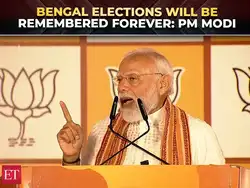 04:24
04:24 - 'The lotus now blooms from Gangotri to Gangasagar': PM Modi hails historic win in West Bengal
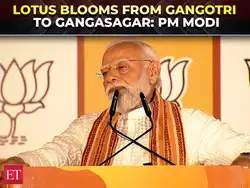 02:38
02:38 - PM Modi arrives at BJP headquarters wearing Bengali-style dhoti-kurta for his victory speech
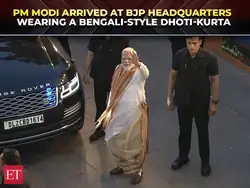 01:51
01:51 - Kerala Result: No Red State Left in India
 05:20
05:20 - Assam Trends: BJP set for historic solo majority; NDA sweeps, Gaurav Gogoi loses Jorhat
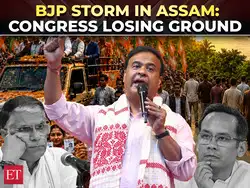 03:58
03:58 - Tamil Nadu poll result 2026: Vijay’s ‘Lights, Camera, Sarkar’ set to shine in Chennai, say trends
 02:01
02:01 - Mamata Banerjee accuses BJP of harassing workers; assures win, asks not to fear
 01:51
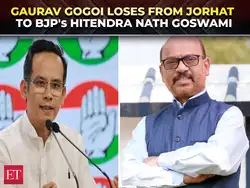
01:51 - Assam: Congress's Gaurav Gogoi loses big fight in Jorhat against BJP’s Hitendra Nath Goswami
 05:35
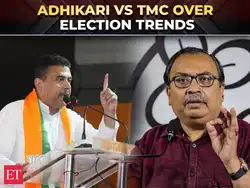
05:35 - ‘I’m leading in Bhabanipur’: Suvendu Adhikari sees victory; Kunal Ghosh says ‘it’s not final yet’
 04:26
04:26
Election Guide
Guide to check name in voter list online
West Bengal voter list 2026: Election Commission (EC) has officially released the fourth supplementary voter list for West Bengal following extensive SIR (Special Information Report) adjudications. The update follows the scrutiny of approximately 60 lakh names that were previously marked as "under adjudication" in the February 28 roll.
What if your name is missing in voters list?
Assembly Elections 2026 India: Ensuring voting eligibility is crucial for citizen engagement in governance. This guide simplifies the process, covering voter registration confirmation, enrollment steps, and utilizing technological aids like the 'Voter Helpline' app. Additionally, it outlines the procedure for updating address details on the voter ID card, emphasizing accuracy for seamless participation in the electoral process.
Those citizens who have been declared by the law that they are unstable to vote or barred due to corrupt practices or any illegal act relating to elections are not entitled to be a voter.
How can I register as a voter?
Log on to www.eci.nic.in or the website of Chief Electoral Officer (CEOs) of the state where you ordinarily resides. Click on tab 'Online Voter Registration'.
What if you lose your voter card?
If the applicant has lost the voter ID card, a copy of the FIR at the time it was lost has to be attached along with other documents.
The ECI while introducing NOTA indicated that although votes cast as NOTA are counted, they are invalid votes so they will not impact the result of the election process. Therefore, whether NOTA gets more or less votes, it is not taken into account for calculating the total valid votes.
How to cast your vote if you live in a different city
As the Assembly elections approach, citizens away from their voting constituency can still exercise their right to vote. Here's how: Check your registration status online or with your local Electoral Registration Officer. Apply for a voter ID transfer if you've moved cities. Submit necessary documents for verification, receive confirmation, then cast your vote at your new constituency's polling booth.
How to download digital voter ID card online?
A voter ID card is issued by the Election Commission, and is also known as Electoral Photo ID Card or EPIC.
Where can I get voting help online?
Answers to queries such as how to register, search name in voter's list, enroll as an NRI voter and FAQs are available on ECI website https://eci.gov.in/.
Voters across the states have designated time slots to exercise their voting rights, which differ according to their respective regions. For specific voting hours, individuals are encouraged to consult the Election Commission's official website. The Commission advises voters to find their polling stations using photo voter slips or online tools, aiming to facilitate a seamless voting experience. For further support, citizens can access information on the Commission's website or reach out to local electoral authorities.
Details on Bihar Election
Bihar Assembly Elections 2025In the end, it was not just a crushing verdict, it was a tsunami. On November 14, in a resounding mandate, the National Democratic Alliance (NDA) swept the Bihar Assembly elections 2025 with a spectacular performance, firmly re-establishing its dominance in the politically volatile state. The NDA won 202 out of 243 assembly seats, crossing the two-thirds majority mark and delivering a crushing blow to the Mahagathbandhan.
Polling in Bihar was conducted in two phases, on November 6 and November 11, with counting on November 14. Voter engagement was notably high, with both phases recording turnout in the high-60s. Women voters were particularly decisive, helping drive the NDA’s margin.
Following the elections, the new govt under Nitish Kumar was sworn in on November 20.
Final seats tally for the winners:
BJP: 89 seats
JD(U): 85 seats
LJP (Ram Vilas): 19 seats
Hindustani Awam Morcha (Secular): 5 seats
Rashtriya Lok Morcha: 4 seats
On the opposition side, the Mahagathbandhan secured only 34 seats:
RJD: 25
Congress: 6
CPI(ML)(Liberation): 2
CPI(M): 1
Key players and winners
Nitish Kumar once again emerged as the central figure in this election -- a win widely seen as a personal and political validation of his leadership. He was the biggest winner of Bihar 2025; despite nearly two decades in power, he warded off anti-incumbency and fatigue.
.
PM Narendra Modi also figured prominently in the narrative, with various reports highlighting how the NDA’s success leaned heavily on his popularity and outreach.
Another standout was Chirag Paswan, whose LJP (Ram Vilas) converted a modest vote base into 19 seats, giving him genuine bargaining power within the coalition.
On the opposition side, while most Mahagathbandhan allies underperformed, RJD chief Tejashwi Yadav won his traditional bastion of Raghopur with a margin north of 14,000 votes. Still, his broader campaign failed to translate into gains for his camp.
Subplots behind NDA wave
Several factors combined to deliver the NDA’s landslide.
Women-centric Welfare: A key plank of the NDA campaign was welfare for women. Millions of women received cash transfers of Rs 10,000. These targeted policies reportedly paid off, consolidating support in women-majority constituencies.
EBC Mobilisation: Extremely Backward Classes (EBCs) remain a core constituency in Bihar. Nitish Kumar’s JD(U) successfully retained its EBC base, while smaller NDA partners like LJP brought in the Dalit vote.
Voter Roll Revision (SIR): Another critical subplot was the Special Intensive Revision (SIR) of voter rolls prior to polls. Around 65 lakh names were removed in the draft voter list, and the final roll was 7.42 crore electors -- a move that triggered controversy, especially in Muslim-majority regions.
Critics argued that SIR disproportionately affected certain regions, but the NDA did not face any existential damage from this in the result.
Big blow to Mahagathbandhan
The Mahagathbandhan’s defeat was decisive. The outcome was described as a “crushing” blow to Tejashwi Yadav and Rahul Gandhi-backed efforts. While there were a few bright spots, like Raghopur, overall the alliance underperformed badly.
Prashant Kishor’s Jan Suraaj Party, much touted before the polls, failed to open its account. For Kishor, this was a major setback: his grassroots campaign, infrastructure pitch, and technocratic messaging did not translate into electoral wins.
Historical echoes
The scale of the NDA’s victory is comparable to its performance in 2010. This election mirrored the clean sweep the alliance recorded in 2010 when it won 206 seats. The 2025 mandate thus not only secures Nitish Kumar’s continuity but also marks one of the most dominant returns of NDA power in Bihar in recent memory.
What it means going forward
Stable government: With 202 seats, the NDA will have a comfortable majority in the 243-member Bihar Assembly. That gives Nitish Kumar room to govern without heavy dependence on smaller parties.
Modi momentum: The result strengthens Prime Minister Modi’s political position. The alliance’s performance underscores his continued electoral pull outside just national elections.
Opposition reset: For the Mahagathbandhan, this defeat demands introspection. The failure of Jan Suraaj to win any seat also raises questions about the effectiveness of technocratic campaigning in grassroots, caste-driven politics.
Policy focus: Given the emphasis on welfare and cash transfers in this election, the NDA may double down on social-sector spending. However, sustaining such benefits without compromising fiscal stability will be a challenge.
Women as kingmakers: The decisive role of women voters, as highlighted by multiple reports, signals a long-term shift in Bihar’s electoral dynamics. Parties will have to increasingly tailor their messaging and policymaking to female constituencies.
The final word
The 2025 Bihar Assembly elections were not merely a re-validation of the NDA’s rule; they were a dramatic reassertion of its governing philosophy -- continuity, welfare and broad-based outreach. Leveraging strong voter engagement, especially among women, effective voter-roll management, and a focused social strategy, the NDA under Nitish Kumar and Narendra Modi has secured a commanding mandate.
For the opposition, this election marks a moment of reckoning. The Mahagathbandhan’s shortcomings -- from seat conversion to campaign messaging -- will likely prompt a rethink. Meanwhile, the NDA’s double-century win sets a high bar for governance and raises expectations for delivery.
Bihar has spoken, and it has done so with a clear message: it wants stability, welfare and the continuation of what the NDA casts as "sushasan". Whether that promise is fulfilled will likely shape not just the next five years of Bihar politics, but also signal wider trends for Indian democracy going into upcoming state and national elections.