


Suvendu Adhikari's assistant shot dead 2 days after BJP's mega Bengal victory
- Suvendu Adhikari's assistant shot dead 2 days after BJP's mega Bengal victory
 01:13
01:13 - TN: Vijay meets Governor; oath unlikely as TVK remains short of majority despite Congress support
 04:29
04:29 - 'Don't compare with TMC, BJP had to…': Suvendu Adhikari on row over post-poll violence in Bengal
 03:27
03:27 - 'TMC will be finished within 24 hours,' BJP's Suvendu Adhikari says after winning Bhabanipur seat
 04:07
04:07 - Mamata Banerjee lost to Suvendu Adhikari in Bhabanipur by 15,105 votes
 05:13
05:13 - Saffron Rises in Bengal: BJP's Dream Victory
 04:19
04:19 - ‘Kamaal Kar Diya, Kamal Khila Diya’: PM Modi hails BJP's strong show in Assam & Bengal elections
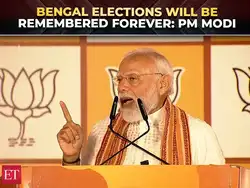 04:24
04:24 - 'The lotus now blooms from Gangotri to Gangasagar': PM Modi hails historic win in West Bengal
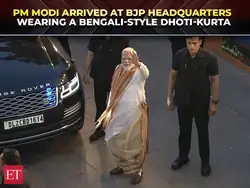
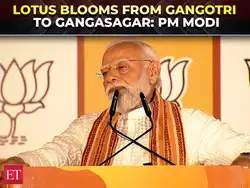 02:38
02:38 - PM Modi arrives at BJP headquarters wearing Bengali-style dhoti-kurta for his victory speech
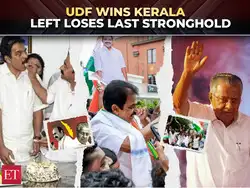
 01:51
01:51 - Kerala Result: No Red State Left in India
 05:20
05:20 - Assam Trends: BJP set for historic solo majority; NDA sweeps, Gaurav Gogoi loses Jorhat
 03:58
03:58 - Tamil Nadu poll result 2026: Vijay’s ‘Lights, Camera, Sarkar’ set to shine in Chennai, say trends
 02:01
02:01 - Mamata Banerjee accuses BJP of harassing workers; assures win, asks not to fear
 01:51
01:51 - Assam: Congress's Gaurav Gogoi loses big fight in Jorhat against BJP’s Hitendra Nath Goswami
 05:35
05:35 - ‘I’m leading in Bhabanipur’: Suvendu Adhikari sees victory; Kunal Ghosh says ‘it’s not final yet’
 04:26
04:26
Uttar Pradesh
- Govt should move beyond rhetoric, claims to improve education, healthcare: Mayawati
- Rajya Sabha polls have set tone for UP Assembly polls: UP CM Yogi Adityanath
- After 'sanyas' of his father-in-law, no more need to separate Akash Anand from BSP: Mayawati
- UP Elections: Samajwadi Party's focus is on 403 UP Assembly seats, says Akhilesh Yadav
Punjab
- Supreme Court bars coercive action by CBI against people linked to Punjab govt
- 'AAP plundering Punjab's resources to fund other elections': BJP slams Bhagwant Mann, Kejriwal
- AAP turned Punjab into 'Udta Punjab', BJP will make it 'Ubharda Punjab': Pushkar Singh Dhami
- 2027 Assembly battle: Drugs top Opposition poll issue in Punjab
Uttarakhand
Goa
- After AAP's jibe over defections, Congress' Khera calls Kejriwal-led party 'twice as shameless' as BJP
- AAP mocks Congress over defections, Opposition friction grows in Goa
- If serious Oppn parties come together, BJP will get just 5 seats in 2027 Goa polls: Chodankar
- Joint AAP-GFP hoardings fuel alliance buzz ahead of Arvind Kejriwal's Goa visit
Manipur
Election Guide
Guide to check name in voter list online
West Bengal voter list 2026: Election Commission (EC) has officially released the fourth supplementary voter list for West Bengal following extensive SIR (Special Information Report) adjudications. The update follows the scrutiny of approximately 60 lakh names that were previously marked as "under adjudication" in the February 28 roll.
What if your name is missing in voters list?
Assembly Elections 2026 India: Ensuring voting eligibility is crucial for citizen engagement in governance. This guide simplifies the process, covering voter registration confirmation, enrollment steps, and utilizing technological aids like the 'Voter Helpline' app. Additionally, it outlines the procedure for updating address details on the voter ID card, emphasizing accuracy for seamless participation in the electoral process.
Those citizens who have been declared by the law that they are unstable to vote or barred due to corrupt practices or any illegal act relating to elections are not entitled to be a voter.
How can I register as a voter?
Log on to www.eci.nic.in or the website of Chief Electoral Officer (CEOs) of the state where you ordinarily resides. Click on tab 'Online Voter Registration'.
What if you lose your voter card?
If the applicant has lost the voter ID card, a copy of the FIR at the time it was lost has to be attached along with other documents.
The ECI while introducing NOTA indicated that although votes cast as NOTA are counted, they are invalid votes so they will not impact the result of the election process. Therefore, whether NOTA gets more or less votes, it is not taken into account for calculating the total valid votes.
How to cast your vote if you live in a different city
As the Assembly elections approach, citizens away from their voting constituency can still exercise their right to vote. Here's how: Check your registration status online or with your local Electoral Registration Officer. Apply for a voter ID transfer if you've moved cities. Submit necessary documents for verification, receive confirmation, then cast your vote at your new constituency's polling booth.
How to download digital voter ID card online?
A voter ID card is issued by the Election Commission, and is also known as Electoral Photo ID Card or EPIC.
Where can I get voting help online?
Answers to queries such as how to register, search name in voter's list, enroll as an NRI voter and FAQs are available on ECI website https://eci.gov.in/.
Voters across the states have designated time slots to exercise their voting rights, which differ according to their respective regions. For specific voting hours, individuals are encouraged to consult the Election Commission's official website. The Commission advises voters to find their polling stations using photo voter slips or online tools, aiming to facilitate a seamless voting experience. For further support, citizens can access information on the Commission's website or reach out to local electoral authorities.
MORE ASSEMBLY STORIES
- Deputy ECs to visit 5 states as poll body steps up preparedness to hold high stakes elections

- Akhilesh Yadav says alliance victory matters more than seat-sharing
- UP elections: Akhilesh Yadav in talks with many BJP MLAs, working to accommodate them
- CM Adityanath says 'Ramdrohi' will create confusion over Sanatan glory, calls for unity
- SP's 27,000-per-seat push takes it to north's 'dalit capital' Agra
- Ayodhya to Mathura: BJP's new poll hub
- Even if we win all seats, we are against EVMs: Akhilesh Yadav
- Mayawati demands return to ballot papers, says EVMs undermine trust in elections
- Congress likely to contest over 150 seats in Uttar Pradesh, seat-sharing likely to be finalised by October
- Uproar over SIR unfortunate, says Yogi Aditynath; demands apology from Congress, allies
- AAP turned Punjab into 'Udta Punjab', BJP will make it 'Ubharda Punjab': Pushkar Singh Dhami
- BJP's UP poll blueprint: Fresh faces, joint decision-making and winnability
- 2027 Assembly battle: Drugs top Opposition poll issue in Punjab
- Voter list row: 3.27 crore new electors aged 18-28 added since June 2025; EC explains new declaration rule for Form 6
- AAP alleges Centre misusing agencies ahead of assembly polls amid ED searches in Punjab
- Akhilesh Yadav slams 'bulldozer action' in Ayodhya, promises compensation if Samajwadi Party returns to power
- UP Assembly polls: BSP Chief Mayawati to chair all-India meet on electoral roadmaps, candidate selection
- "Drug fight should begin from Mundra Port, not Punjab": says AAP National Convenor Arvind Kejriwal
- UP elections: AIMIM open to alliance with parties looking to prevent BJP, says Owaisi
- UP election: Why politicians, public and priests share a unique bond with faith
- Ishan Anand to get 'respectable role' in BSP, no change on Akash: Mayawati
- Assembly elections: As polls approach, UP turns into 'katha' pradesh
- AAP to launch door-to-door campaign in Punjab ahead of 2027 Assembly elections: Manish Sisodia
- UP Elections 2027: BJP to focus on government work over last decade, says Dinesh Pratap Singh
- Joint AAP-GFP hoardings fuel alliance buzz ahead of Arvind Kejriwal's Goa visit
- BJP announces 4 'Nasha Mukt Punjab Yatras'; Nitin Nabin to flag off first on September 18
- BJP eyes 18,900 UP booths that slipped away in 2024
- Channi, Randhawa lead Congress team, signal thaw
- Mayawati draws family line, 'frees' nephew Akash from BSP
- Mayawati 'frees' newphew Akash Anand from BSP after father-in-law quits politics
- BJP state in-charge Vinod Tawde goes into UP election mode; to tour 15 districts from Sept 16
- Yogi Adityanath announces payout hike for Anganwadi workers; monthly honorarium raised to Rs 12,000, Rs 5 lakh health cover & 3 sarees
- Bijli, Sadak, Pani: UP BJP bets on BSP; orders road repairs & development works
- BJP wins West Bengal's Falta assembly repoll by over 1 lakh votes
- Falta repoll results: BJP leading by over 14,000 votes after 5 rounds of counting
- ECI Falta Election Result 2026: BJP’s Debangshu Panda leading with massive margin amid strict security arrangements
- ‘They won’t get more than 5-7 thousand votes’: BJP’s Panda targets TMC in Falta
- Satheesan's Cabinet: Who are they, what's their net worth?
- Kerala: VD Satheesan takes over; free bus travel for women among major decisions announced
- Work in Kerala begins now: Rahul Gandhi after govt sworn in
Uttar Pradesh Assembly Election 2027
Attention is increasingly turning to the Uttar Pradesh Assembly polls, with the tenure of the present House due to end before the middle of next year.
Five state assemblies are scheduled to face elections in early 2027, with Uttarakhand, Goa, Punjab and Manipur being the other four states.
The Manipur Assembly is scheduled to complete its term on March 13. Since the Election Commission generally conducts elections in these states within a similar timeframe, the upcoming electoral process is expected to conclude before that date.
The possibility of this timeline has also coincided with the government moving ahead with the Census exercise in some of these states.
The term of the existing UP Assembly expires on May 22, 2027, allowing polling to take place nearly two months before the House completes its tenure. The Election Commission is permitted to conduct an Assembly election at any point during the six months preceding the end of the House's term.
Considering the state's vast geographical spread and large electorate, voting in UP is likely to be conducted across several phases. However, the number of rounds could be smaller, following the pattern adopted by the Election Commission in Bihar and West Bengal.
Should the EC settle on a two-phase exercise, similar to Bihar, voting in Uttar Pradesh could start in February or even in the early part of March. The election programme could be announced in January 2027.
The Special Intensive Revision (SIR) has been completed in three of the states heading for elections and remains in progress in the other two. Therefore, the EC is unlikely to conduct an annual summary revision in these states before it announces the Assembly poll schedule.
Once the SIR process was completed, Uttar Pradesh had 13.4 crore voters on its electoral roll, marking a 13.2% decline.
In the previous Assembly election, the BJP returned to power in the state with a decisive victory over its principal challenger, the Samajwadi Party. The BJP secured 255 of the 403 Assembly seats, making it the first party in more than three decades to win a second consecutive term in government in the state.
Punjab Assembly Election 2027
Punjab is preparing for another Assembly election, as the tenure of the existing House is due to end early next year.
Five states are scheduled to hold Assembly elections in early 2027, with Uttarakhand, Goa, Uttar Pradesh and Manipur being the other four.
The Manipur Assembly is due to finish its term on March 13. Given the Election Commission's tendency to hold elections in these states during broadly the same period, the next round of polling is expected to be completed before that date.
This projected election window may also have influenced the government's decision to bring forward the Census process in some of the states.
The present Punjab Assembly is scheduled to complete its term on March 16, 2027.
In Punjab, the final electoral rolls prepared after the SIR are expected to be published over the next couple of months.
The previous Assembly polls delivered a sweeping victory to the Aam Aadmi Party, which captured 92 of Punjab's 117 seats after defeating the Congress and the SAD-BSP alliance. The AAP won three-fourths of the seats, while the Congress secured 18, the Shiromani Akali Dal three, the BJP two and the BSP one.
The AAP secured more than 42 per cent of the vote, compared with 22.98 per cent for the Congress. The SAD received 18.38 per cent, the BJP recorded 6.60 per cent and the BSP polled 1.77 per cent. The NOTA vote share stood at 0.71 per cent.
Uttarakhand Assembly Election 2027
Uttarakhand is scheduled to vote early next year, as the tenure of its current Assembly is due to end on March 28, 2027.
Assembly elections are scheduled across five states during the same period, with Punjab, Goa, Uttar Pradesh and Manipur joining Uttarakhand in the electoral cycle.
The Manipur Assembly is set to reach the end of its term on March 13. In view of the Election Commission's established practice of organising elections in these states around the same time, the polls are expected to be completed before that deadline.
The likely election window could also be one reason behind the government's decision to advance the Census exercise in some of the states involved.
The final electoral rolls in Uttarakhand following the SIR are expected to be released shortly.
In the last Assembly election, the BJP won 47 seats in Uttarakhand, while the Congress took 19 and the BSP secured two. Independent candidates won two seats.
Although the BJP secured a second successive term with a strong performance, its seat count fell by around 10 compared with its earlier tally. The party had won 57 seats in the 2017 Uttarakhand Assembly election.
Goa Assembly Election 2027
Goa is also scheduled for an Assembly election early next year, with the tenure of the current House ending on March 14, 2027.
Five states are expected to head to the polls during this period, with Punjab, Uttarakhand, Uttar Pradesh and Manipur being the other four states.
The Manipur Assembly's present term is due to conclude on March 13. Since the Election Commission typically schedules elections in these states within a comparable timeframe, the Goa poll is expected to be completed before the Manipur Assembly's term expires.
The prospect of elections being held within this window may also have contributed to the government's move to advance the Census exercise in some of the states.
After the SIR exercise, Goa's electorate stood at 10.6 lakh, reflecting a 10.2% decline.
In the last Assembly election, the Bharatiya Janata Party (BJP) emerged as Goa's largest party by winning 20 of the 40 seats in the state Assembly, while the Congress was reduced to 11.
With the BJP falling one seat short of the majority threshold, it continued in office with support from the Maharashtrawadi Gomantak (MGP) and Independent candidates.
Manipur Assembly Election 2027
Manipur is now emerging as a key electoral focus, with the current Assembly due to finish its term early next year. Four other states -- Uttarakhand, Goa, Punjab and Uttar Pradesh -- are also scheduled to hold elections around the same period.
The Manipur Assembly is set to complete its tenure on March 13. As the Election Commission usually plans elections in these states within a broadly common timeframe, the available indications suggest that the electoral process will be completed before that date.
The government's decision to bring forward the Census exercise in some of these states may further point to the expected election schedule.
SIR has already concluded in three states that are headed for polls, while the exercise continues in the remaining two. In these circumstances, the Election Commission is not expected to undertake an annual summary revision in the states before issuing the Assembly election timetable.
The completion of SIR left Manipur with an electoral roll of 19.3 lakh voters, a decrease of 7.6%.
The upcoming Manipur election is especially sensitive because the state has witnessed a prolonged conflict between communities, with the confrontation continuing for years and little indication so far of a resolution.
West Bengal Assembly Elections 2026
West Bengal witnessed a veritable political earthquake on May 4, with the long-ruling Trinamool dethroned and the BJP storming to power.
The BJP's historic victory ended the Trinamool Congress’ 15-year rule and helped it capture power in a state that had long resisted the party’s expansion.
Riding on a sharp swing in voter support across urban centres, border districts and tribal belts, the BJP won 207 seats in the 294-member assembly, comfortably crossing the majority mark and registering its biggest-ever breakthrough in eastern India. The Trinamool Congress was reduced to 80 seats in one of its worst electoral performances since coming to power in 2011.
The verdict marked a dramatic reversal from the 2021 election, when Mamata Banerjee had led the TMC to a sweeping victory.
The BJP’s gains were driven by strong performances in south Bengal, north Bengal and the Kolkata metropolitan region, areas where the party had earlier struggled to establish a stable organisational base.
One of the biggest political upsets came in Bhabanipur, where senior BJP leader Suvendu Adhikari defeated Mamata Banerjee in a high-profile contest. Adhikari also retained Nandigram, strengthening his position as the frontrunner for the chief minister’s post. The defeat of Banerjee in her traditional bastion symbolised the scale of the anti-incumbency wave against the TMC government.
The BJP also swept several prestigious urban constituencies in Kolkata and adjoining districts. In many seats, victory margins crossed 50,000 votes, underlining the scale of the saffron party’s dominance. Election Commission data showed that of the 39 constituencies where winning margins exceeded 50,000 votes, the BJP secured 23 seats, while the TMC won 15.
Among the notable winners was veteran TMC leader Sobhandeb Chattopadhyay, who managed to retain his seat and entered the assembly for a record tenth term despite the party’s wider collapse. However, several senior TMC ministers lost their constituencies as the BJP made deep inroads into regions that had remained loyal to Banerjee for over a decade.
The election outcome marked one of the BJP’s most significant state-level victories after the 2024 Lok Sabha elections, giving the party control of another major state and substantially altering the political landscape of eastern India.
Assam Assembly Elections 2026
BJP's utter dominance in its "fortress in the Northeast" is now cast in stone. The BJP-led NDA swept back to power in Assam with a commanding mandate in the 2026 assembly elections, extending its dominance in the northeastern state and handing chief minister Himanta Biswa Sarma his second consecutive term and a third consecutive term for the alliance.
The Bharatiya Janata Party emerged as the principal force in the 126-member assembly, crossing the majority mark on its own for the first time in the state.
The alliance secured 102 seats in the 126-member Assembly, reaffirming its dominance in the state. The BJP alone won 82 seats -- the first time the party has crossed the majority mark on its own in Assam -- while allies Asom Gana Parishad (AGP) and Bodoland People’s Front (BPF) secured 10 seats each. The opposition was reduced to 24 seats, with the Congress winning 19 constituencies. Its ally Raijor Dal secured two seats, while the All India United Democratic Front (AIUDF) and the Trinamool Congress managed two and one seats respectively.
The outcome marked the BJP’s strongest performance in Assam since it first came to power in 2016. Political observers described the verdict as an endorsement of Sarma’s governance model centred on infrastructure, welfare expansion and a strong law-and-order narrative.
Among the most closely watched constituencies was Jalukbari, where Sarma retained his stronghold comfortably. Jorhat emerged as another headline contest after Congress leader Gaurav Gogoi suffered a high-profile defeat to BJP candidate Hitendra Nath Goswami by 23,182 votes. The result was viewed as a major political setback for the Congress leadership in the state.
In Dispur, one of Assam’s most prestigious urban seats, BJP’s Pradyut Bordoloi registered one of the biggest victories of the election, defeating Congress rival Mira Barthakur Goswami by a margin of 49,667 votes. Bordoloi’s switch from the Congress to the BJP before the polls became one of the defining political stories of the campaign.
The BJP also performed strongly across Guwahati’s newly delimited urban constituencies, underlining its growing hold over metropolitan and semi-urban voters. Constituencies such as Guwahati Central and New Guwahati witnessed decisive victories for NDA candidates.
The election results further consolidated the BJP’s position in the Northeast, with Assam continuing to serve as the party’s most important political base in the region.
Tamil Nadu Assembly Elections 2026
Tamil Nadu delivered one of the most dramatic verdicts in its recent political history as actor-turned-politician Vijay’s Tamilaga Vettri Kazhagam (TVK) emerged as a major force in the 2026 assembly elections, reshaping the state’s traditional DMK-AIADMK political landscape.
TVK, contesting its first state election under Vijay’s leadership, secured nearly 110 seats and emerged as the central player in government formation discussions. DMK and AIADMK registered largely disappointing performances, though they retained some of their pockets of influence.
One of the most closely watched contests was in Perambur, where Vijay registered a decisive victory, cementing his transition from cinema superstar to mass political leader. He also won from Trichy East, though he is expected to retain only one constituency as required under election rules.
His victories triggered celebrations across the state, particularly among younger voters and first-time supporters who rallied behind TVK’s anti-establishment campaign.
Several constituencies produced razor-thin contests. In Tirupattur, TVK candidate R Seenivasa Sethupathy defeated senior DMK leader K R Periyakaruppan by just one vote after a recount, ending the DMK’s two-decade dominance in the seat. The result became one of the biggest talking points of the election because of its extraordinarily small margin.
TVK also scored notable victories in southern districts. In Ottapidaram, R S Murugan defeated his DMK rival by 11,414 votes, adding to the party’s growing influence in the region.
The election also highlighted the persistence of regional strongholds. Many constituencies with the largest victory margins remained loyal to their traditional political camps, reflecting the enduring strength of local party networks despite the broader churn in state politics.
As per the final numbers, DMK ended with 59 seats, and AIADMK, 47.
For the DMK, the verdict represented a setback after five years in office, while for AIADMK, the results intensified questions over leadership and organisational revival. But the defining story of the election was undoubtedly Vijay’s rapid rise, with TVK transforming from a fan-driven movement into a formidable political force in its electoral debut.
Kerala Assembly Elections 2026
Kerala witnessed a decisive political shift in the 2026 assembly elections as the Congress-led United Democratic Front (UDF) stormed back to power after a decade, ending the CPI(M)-led Left Democratic Front’s uninterrupted rule in the state. The UDF secured 102 seats in the 140-member assembly, delivering one of the alliance’s biggest victories in recent decades and pushing the Left to one of its poorest performances in Kerala.
The verdict marked the end of chief minister Pinarayi Vijayan’s bid for a historic third straight term. According to reports, anti-incumbency, unemployment concerns and local dissatisfaction with the LDF government contributed to the sweeping reversal. The Congress emerged as the single largest party within the alliance, while the BJP-led NDA improved its footprint by winning three seats and finishing second in several constituencies.
Among the most closely watched battles was Dharmadam, where Vijayan trailed in early rounds before narrowly retaining the constituency. Senior Congress leader Ramesh Chennithala registered a comfortable win from Haripad, reaffirming his influence in central Kerala. Several ministers in the outgoing LDF government, including high-profile cabinet members, lost their seats as the UDF wave spread across the state.
One of the largest victory margins came from Irikkur, where Congress candidate Sajeev Joseph defeated Kerala Congress (M) rival Mathew Kunnappally by more than 42,000 votes, underlining the scale of the UDF’s dominance in northern Kerala.
In Kuttanad, Kerala Congress candidate Reji Cheriyan defeated NCP leader Thomas K Thomas by 20,600 votes in a major gain for the UDF alliance. Meanwhile, CPI leader Govindan Pallikappil managed to hold Kanhangad for the Left, defeating Kerala Congress candidate Shaiji Ottapalli by over 15,000 votes and emerging as one of the few prominent LDF winners in north Kerala.
The BJP also made gains in urban and semi-urban constituencies such as Nemom, Kazhakootam and parts of Thiruvananthapuram district, reflecting a gradual expansion of its support base in the state.
Political observers described the result as a return to Kerala’s traditional pattern of alternating governments, with voters decisively backing the opposition after two consecutive Left terms. The outcome also handed the Congress one of its most significant state-level victories ahead of the next Lok Sabha election cycle.
Puducherry Assembly Elections 2026
The National Democratic Alliance (NDA) retained power in Puducherry in the 2026 Assembly elections, with the All India N.R. Congress (AINRC) led by Chief Minister N. Rangasamy once again emerging as the dominant force in the Union Territory’s politics. The verdict extended Rangasamy’s political relevance and paved the way for his fifth term as chief minister.
The AINRC-led alliance crossed the majority mark comfortably in the 30-member Assembly, benefiting from strong support in urban as well as semi-rural constituencies. The BJP, contesting as part of the NDA, also improved its footprint, while the opposition INDIA bloc led by the Congress and DMK failed to convert campaign momentum into enough seats.
One of the biggest highlights of the election was Rangasamy retaining the Thattanchavady constituency, becoming among the earliest winners declared on counting day. His victory reinforced his standing as Puducherry’s most influential regional leader.
The election witnessed a record voter turnout of nearly 90%, the highest ever recorded in Puducherry, signalling intense voter participation and heightened political engagement across the Union Territory. Polling was held on April 9, while counting took place on May 4.
Among key constituencies, Muthialpet witnessed a closely fought battle, where AINRC candidate Vaiyapuri Manikandan defeated Congress nominee Eeram G. Rajendran by a margin of 952 votes, making it one of the tightest contests in the election.
The elections also threw up several politically significant victories tied to influential regional players. The contest drew attention due to the involvement of members of lottery businessman Santiago Martin’s family, who secured victories from different parties across southern states, underlining the complex political alignments in the region.
The NDA’s return to power in Puducherry stood out at a time when electoral contests across several states produced mixed outcomes for national and regional parties. Political observers said the alliance benefited from a combination of welfare measures, Rangasamy’s personal appeal and the absence of a cohesive opposition strategy.
Following the victory, Rangasamy was sworn in as chief minister for a record fifth time, with AINRC and BJP leaders joining the new council of ministers.
Attention is increasingly turning to the Uttar Pradesh Assembly polls, with the tenure of the present House due to end before the middle of next year.
Five state assemblies are scheduled to face elections in early 2027, with Uttarakhand, Goa, Punjab and Manipur being the other four states.
The Manipur Assembly is scheduled to complete its term on March 13. Since the Election Commission generally conducts elections in these states within a similar timeframe, the upcoming electoral process is expected to conclude before that date.
The possibility of this timeline has also coincided with the government moving ahead with the Census exercise in some of these states.
The term of the existing UP Assembly expires on May 22, 2027, allowing polling to take place nearly two months before the House completes its tenure. The Election Commission is permitted to conduct an Assembly election at any point during the six months preceding the end of the House's term.
Considering the state's vast geographical spread and large electorate, voting in UP is likely to be conducted across several phases. However, the number of rounds could be smaller, following the pattern adopted by the Election Commission in Bihar and West Bengal.
Should the EC settle on a two-phase exercise, similar to Bihar, voting in Uttar Pradesh could start in February or even in the early part of March. The election programme could be announced in January 2027.
The Special Intensive Revision (SIR) has been completed in three of the states heading for elections and remains in progress in the other two. Therefore, the EC is unlikely to conduct an annual summary revision in these states before it announces the Assembly poll schedule.
Once the SIR process was completed, Uttar Pradesh had 13.4 crore voters on its electoral roll, marking a 13.2% decline.
In the previous Assembly election, the BJP returned to power in the state with a decisive victory over its principal challenger, the Samajwadi Party. The BJP secured 255 of the 403 Assembly seats, making it the first party in more than three decades to win a second consecutive term in government in the state.
Punjab Assembly Election 2027
Punjab is preparing for another Assembly election, as the tenure of the existing House is due to end early next year.
Five states are scheduled to hold Assembly elections in early 2027, with Uttarakhand, Goa, Uttar Pradesh and Manipur being the other four.
The Manipur Assembly is due to finish its term on March 13. Given the Election Commission's tendency to hold elections in these states during broadly the same period, the next round of polling is expected to be completed before that date.
This projected election window may also have influenced the government's decision to bring forward the Census process in some of the states.
The present Punjab Assembly is scheduled to complete its term on March 16, 2027.
In Punjab, the final electoral rolls prepared after the SIR are expected to be published over the next couple of months.
The previous Assembly polls delivered a sweeping victory to the Aam Aadmi Party, which captured 92 of Punjab's 117 seats after defeating the Congress and the SAD-BSP alliance. The AAP won three-fourths of the seats, while the Congress secured 18, the Shiromani Akali Dal three, the BJP two and the BSP one.
The AAP secured more than 42 per cent of the vote, compared with 22.98 per cent for the Congress. The SAD received 18.38 per cent, the BJP recorded 6.60 per cent and the BSP polled 1.77 per cent. The NOTA vote share stood at 0.71 per cent.
Uttarakhand Assembly Election 2027
Uttarakhand is scheduled to vote early next year, as the tenure of its current Assembly is due to end on March 28, 2027.
Assembly elections are scheduled across five states during the same period, with Punjab, Goa, Uttar Pradesh and Manipur joining Uttarakhand in the electoral cycle.
The Manipur Assembly is set to reach the end of its term on March 13. In view of the Election Commission's established practice of organising elections in these states around the same time, the polls are expected to be completed before that deadline.
The likely election window could also be one reason behind the government's decision to advance the Census exercise in some of the states involved.
The final electoral rolls in Uttarakhand following the SIR are expected to be released shortly.
In the last Assembly election, the BJP won 47 seats in Uttarakhand, while the Congress took 19 and the BSP secured two. Independent candidates won two seats.
Although the BJP secured a second successive term with a strong performance, its seat count fell by around 10 compared with its earlier tally. The party had won 57 seats in the 2017 Uttarakhand Assembly election.
Goa Assembly Election 2027
Goa is also scheduled for an Assembly election early next year, with the tenure of the current House ending on March 14, 2027.
Five states are expected to head to the polls during this period, with Punjab, Uttarakhand, Uttar Pradesh and Manipur being the other four states.
The Manipur Assembly's present term is due to conclude on March 13. Since the Election Commission typically schedules elections in these states within a comparable timeframe, the Goa poll is expected to be completed before the Manipur Assembly's term expires.
The prospect of elections being held within this window may also have contributed to the government's move to advance the Census exercise in some of the states.
After the SIR exercise, Goa's electorate stood at 10.6 lakh, reflecting a 10.2% decline.
In the last Assembly election, the Bharatiya Janata Party (BJP) emerged as Goa's largest party by winning 20 of the 40 seats in the state Assembly, while the Congress was reduced to 11.
With the BJP falling one seat short of the majority threshold, it continued in office with support from the Maharashtrawadi Gomantak (MGP) and Independent candidates.
Manipur Assembly Election 2027
Manipur is now emerging as a key electoral focus, with the current Assembly due to finish its term early next year. Four other states -- Uttarakhand, Goa, Punjab and Uttar Pradesh -- are also scheduled to hold elections around the same period.
The Manipur Assembly is set to complete its tenure on March 13. As the Election Commission usually plans elections in these states within a broadly common timeframe, the available indications suggest that the electoral process will be completed before that date.
The government's decision to bring forward the Census exercise in some of these states may further point to the expected election schedule.
SIR has already concluded in three states that are headed for polls, while the exercise continues in the remaining two. In these circumstances, the Election Commission is not expected to undertake an annual summary revision in the states before issuing the Assembly election timetable.
The completion of SIR left Manipur with an electoral roll of 19.3 lakh voters, a decrease of 7.6%.
The upcoming Manipur election is especially sensitive because the state has witnessed a prolonged conflict between communities, with the confrontation continuing for years and little indication so far of a resolution.
West Bengal Assembly Elections 2026
West Bengal witnessed a veritable political earthquake on May 4, with the long-ruling Trinamool dethroned and the BJP storming to power.
The BJP's historic victory ended the Trinamool Congress’ 15-year rule and helped it capture power in a state that had long resisted the party’s expansion.
Riding on a sharp swing in voter support across urban centres, border districts and tribal belts, the BJP won 207 seats in the 294-member assembly, comfortably crossing the majority mark and registering its biggest-ever breakthrough in eastern India. The Trinamool Congress was reduced to 80 seats in one of its worst electoral performances since coming to power in 2011.
The verdict marked a dramatic reversal from the 2021 election, when Mamata Banerjee had led the TMC to a sweeping victory.
The BJP’s gains were driven by strong performances in south Bengal, north Bengal and the Kolkata metropolitan region, areas where the party had earlier struggled to establish a stable organisational base.
One of the biggest political upsets came in Bhabanipur, where senior BJP leader Suvendu Adhikari defeated Mamata Banerjee in a high-profile contest. Adhikari also retained Nandigram, strengthening his position as the frontrunner for the chief minister’s post. The defeat of Banerjee in her traditional bastion symbolised the scale of the anti-incumbency wave against the TMC government.
The BJP also swept several prestigious urban constituencies in Kolkata and adjoining districts. In many seats, victory margins crossed 50,000 votes, underlining the scale of the saffron party’s dominance. Election Commission data showed that of the 39 constituencies where winning margins exceeded 50,000 votes, the BJP secured 23 seats, while the TMC won 15.
Among the notable winners was veteran TMC leader Sobhandeb Chattopadhyay, who managed to retain his seat and entered the assembly for a record tenth term despite the party’s wider collapse. However, several senior TMC ministers lost their constituencies as the BJP made deep inroads into regions that had remained loyal to Banerjee for over a decade.
The election outcome marked one of the BJP’s most significant state-level victories after the 2024 Lok Sabha elections, giving the party control of another major state and substantially altering the political landscape of eastern India.
Assam Assembly Elections 2026
BJP's utter dominance in its "fortress in the Northeast" is now cast in stone. The BJP-led NDA swept back to power in Assam with a commanding mandate in the 2026 assembly elections, extending its dominance in the northeastern state and handing chief minister Himanta Biswa Sarma his second consecutive term and a third consecutive term for the alliance.
The Bharatiya Janata Party emerged as the principal force in the 126-member assembly, crossing the majority mark on its own for the first time in the state.
The alliance secured 102 seats in the 126-member Assembly, reaffirming its dominance in the state. The BJP alone won 82 seats -- the first time the party has crossed the majority mark on its own in Assam -- while allies Asom Gana Parishad (AGP) and Bodoland People’s Front (BPF) secured 10 seats each. The opposition was reduced to 24 seats, with the Congress winning 19 constituencies. Its ally Raijor Dal secured two seats, while the All India United Democratic Front (AIUDF) and the Trinamool Congress managed two and one seats respectively.
The outcome marked the BJP’s strongest performance in Assam since it first came to power in 2016. Political observers described the verdict as an endorsement of Sarma’s governance model centred on infrastructure, welfare expansion and a strong law-and-order narrative.
Among the most closely watched constituencies was Jalukbari, where Sarma retained his stronghold comfortably. Jorhat emerged as another headline contest after Congress leader Gaurav Gogoi suffered a high-profile defeat to BJP candidate Hitendra Nath Goswami by 23,182 votes. The result was viewed as a major political setback for the Congress leadership in the state.
In Dispur, one of Assam’s most prestigious urban seats, BJP’s Pradyut Bordoloi registered one of the biggest victories of the election, defeating Congress rival Mira Barthakur Goswami by a margin of 49,667 votes. Bordoloi’s switch from the Congress to the BJP before the polls became one of the defining political stories of the campaign.
The BJP also performed strongly across Guwahati’s newly delimited urban constituencies, underlining its growing hold over metropolitan and semi-urban voters. Constituencies such as Guwahati Central and New Guwahati witnessed decisive victories for NDA candidates.
The election results further consolidated the BJP’s position in the Northeast, with Assam continuing to serve as the party’s most important political base in the region.
Tamil Nadu Assembly Elections 2026
Tamil Nadu delivered one of the most dramatic verdicts in its recent political history as actor-turned-politician Vijay’s Tamilaga Vettri Kazhagam (TVK) emerged as a major force in the 2026 assembly elections, reshaping the state’s traditional DMK-AIADMK political landscape.
TVK, contesting its first state election under Vijay’s leadership, secured nearly 110 seats and emerged as the central player in government formation discussions. DMK and AIADMK registered largely disappointing performances, though they retained some of their pockets of influence.
One of the most closely watched contests was in Perambur, where Vijay registered a decisive victory, cementing his transition from cinema superstar to mass political leader. He also won from Trichy East, though he is expected to retain only one constituency as required under election rules.
His victories triggered celebrations across the state, particularly among younger voters and first-time supporters who rallied behind TVK’s anti-establishment campaign.
Several constituencies produced razor-thin contests. In Tirupattur, TVK candidate R Seenivasa Sethupathy defeated senior DMK leader K R Periyakaruppan by just one vote after a recount, ending the DMK’s two-decade dominance in the seat. The result became one of the biggest talking points of the election because of its extraordinarily small margin.
TVK also scored notable victories in southern districts. In Ottapidaram, R S Murugan defeated his DMK rival by 11,414 votes, adding to the party’s growing influence in the region.
The election also highlighted the persistence of regional strongholds. Many constituencies with the largest victory margins remained loyal to their traditional political camps, reflecting the enduring strength of local party networks despite the broader churn in state politics.
As per the final numbers, DMK ended with 59 seats, and AIADMK, 47.
For the DMK, the verdict represented a setback after five years in office, while for AIADMK, the results intensified questions over leadership and organisational revival. But the defining story of the election was undoubtedly Vijay’s rapid rise, with TVK transforming from a fan-driven movement into a formidable political force in its electoral debut.
Kerala Assembly Elections 2026
Kerala witnessed a decisive political shift in the 2026 assembly elections as the Congress-led United Democratic Front (UDF) stormed back to power after a decade, ending the CPI(M)-led Left Democratic Front’s uninterrupted rule in the state. The UDF secured 102 seats in the 140-member assembly, delivering one of the alliance’s biggest victories in recent decades and pushing the Left to one of its poorest performances in Kerala.
The verdict marked the end of chief minister Pinarayi Vijayan’s bid for a historic third straight term. According to reports, anti-incumbency, unemployment concerns and local dissatisfaction with the LDF government contributed to the sweeping reversal. The Congress emerged as the single largest party within the alliance, while the BJP-led NDA improved its footprint by winning three seats and finishing second in several constituencies.
Among the most closely watched battles was Dharmadam, where Vijayan trailed in early rounds before narrowly retaining the constituency. Senior Congress leader Ramesh Chennithala registered a comfortable win from Haripad, reaffirming his influence in central Kerala. Several ministers in the outgoing LDF government, including high-profile cabinet members, lost their seats as the UDF wave spread across the state.
One of the largest victory margins came from Irikkur, where Congress candidate Sajeev Joseph defeated Kerala Congress (M) rival Mathew Kunnappally by more than 42,000 votes, underlining the scale of the UDF’s dominance in northern Kerala.
In Kuttanad, Kerala Congress candidate Reji Cheriyan defeated NCP leader Thomas K Thomas by 20,600 votes in a major gain for the UDF alliance. Meanwhile, CPI leader Govindan Pallikappil managed to hold Kanhangad for the Left, defeating Kerala Congress candidate Shaiji Ottapalli by over 15,000 votes and emerging as one of the few prominent LDF winners in north Kerala.
The BJP also made gains in urban and semi-urban constituencies such as Nemom, Kazhakootam and parts of Thiruvananthapuram district, reflecting a gradual expansion of its support base in the state.
Political observers described the result as a return to Kerala’s traditional pattern of alternating governments, with voters decisively backing the opposition after two consecutive Left terms. The outcome also handed the Congress one of its most significant state-level victories ahead of the next Lok Sabha election cycle.
Puducherry Assembly Elections 2026
The National Democratic Alliance (NDA) retained power in Puducherry in the 2026 Assembly elections, with the All India N.R. Congress (AINRC) led by Chief Minister N. Rangasamy once again emerging as the dominant force in the Union Territory’s politics. The verdict extended Rangasamy’s political relevance and paved the way for his fifth term as chief minister.
The AINRC-led alliance crossed the majority mark comfortably in the 30-member Assembly, benefiting from strong support in urban as well as semi-rural constituencies. The BJP, contesting as part of the NDA, also improved its footprint, while the opposition INDIA bloc led by the Congress and DMK failed to convert campaign momentum into enough seats.
One of the biggest highlights of the election was Rangasamy retaining the Thattanchavady constituency, becoming among the earliest winners declared on counting day. His victory reinforced his standing as Puducherry’s most influential regional leader.
The election witnessed a record voter turnout of nearly 90%, the highest ever recorded in Puducherry, signalling intense voter participation and heightened political engagement across the Union Territory. Polling was held on April 9, while counting took place on May 4.
Among key constituencies, Muthialpet witnessed a closely fought battle, where AINRC candidate Vaiyapuri Manikandan defeated Congress nominee Eeram G. Rajendran by a margin of 952 votes, making it one of the tightest contests in the election.
The elections also threw up several politically significant victories tied to influential regional players. The contest drew attention due to the involvement of members of lottery businessman Santiago Martin’s family, who secured victories from different parties across southern states, underlining the complex political alignments in the region.
The NDA’s return to power in Puducherry stood out at a time when electoral contests across several states produced mixed outcomes for national and regional parties. Political observers said the alliance benefited from a combination of welfare measures, Rangasamy’s personal appeal and the absence of a cohesive opposition strategy.
Following the victory, Rangasamy was sworn in as chief minister for a record fifth time, with AINRC and BJP leaders joining the new council of ministers.