There is a misconception that only ruffians play rugby: Mahesh Mathai
The General Secretary of Rugby India says the non-touch version of the sport is how one gets introduced to it.
By Rohan Abraham, ET Bureau | Updated:

Getty Images
Indian parents, known to be notoriously protective, have long shielded their children from contact sports. With boxing, wrestling, and kabaddi belatedly coming into their own on the national scene, rugby still seems to be battling a war of perception, however unwarranted. “There is a misconception that only ruffians and rough-types play rugby. That is down to a lack of knowledge. There is non-contact rugby. Beginners start like that – with non-touch. That is how you do get introduced to the game,” said Mahesh Mathai, General Secretary, Rugby India.
Mathai reckons that the Indian women’s team’s first-ever victory in a 15-a-side match against Singapore last month is ample proof that the sport is safe, and moreover, something that Indians can be good at.
“There is a bit of apprehension obviously with parents and teachers. The majority of our programmes are non-contact. Now, in the digital age, after a week of playing non-touch rugby, the kids go online and watch videos of professional rugby matches and tell us that they are ready to make the step up – we want to do a scrum, we want to do a tackle. There’s a natural progression. Children are taught how to deal in such situation to minimize injuries,” said Nasser Hussain, General Manager, Rugby India.
The key to avoiding skirmishes lies in the way the rudiments of the game are imparted to young players, adds Mathai. The sport’s governing body in India is approaching a two-pronged approach to spreading the gospel of rugby. The direct approach involves going to schools and training students. However, this takes a toll on the manpower and finances of the board, forcing it to adopt a hierarchical approach to teach rugby to more children through certified trainers.
“We do ‘Train the Trainer’ programmes where we train them, we certify and assess coaches. After a point, they go and train the kids to play the game the right way. In non-contact rugby, lack-of-skill is fine. The minute you move to contact rugby, there is a lot of skill involved and unless you are not imparted the right training, it will be hard to adapt. We prefer the first approach where our coaches are going to schools and directly working with the kids,” Hussain said.
“The education element of the game will certainly improve if games are televised. If you watch a game, you pick up three out of the 10 rules. We’ve been playing kabaddi for years but not everyone in India would’ve known all the rules. By watching the league on television, people have sort of figured out the rules,” he added. Mathai estimates that India has the potential to become a top-rugby playing nation if it taps into the existing talent from other sports like kabaddi, wrestling, and volleyball.
“Kabaddi would certainly be a fantastic place to reach out to for talent. Look at the Maharashtra Police team, there has been a lot of talent transfer. A lot of them are from kabaddi and wrestling. Up north, in the Haryana belt, a lot of registered rugby players are wrestlers and boxers. All contact have a similar sort of skill set,” Mathai said.

Mathai reckons that the Indian women’s team’s first-ever victory in a 15-a-side match against Singapore last month is ample proof that the sport is safe, and moreover, something that Indians can be good at.
“There is a bit of apprehension obviously with parents and teachers. The majority of our programmes are non-contact. Now, in the digital age, after a week of playing non-touch rugby, the kids go online and watch videos of professional rugby matches and tell us that they are ready to make the step up – we want to do a scrum, we want to do a tackle. There’s a natural progression. Children are taught how to deal in such situation to minimize injuries,” said Nasser Hussain, General Manager, Rugby India.
The key to avoiding skirmishes lies in the way the rudiments of the game are imparted to young players, adds Mathai. The sport’s governing body in India is approaching a two-pronged approach to spreading the gospel of rugby. The direct approach involves going to schools and training students. However, this takes a toll on the manpower and finances of the board, forcing it to adopt a hierarchical approach to teach rugby to more children through certified trainers.
“We do ‘Train the Trainer’ programmes where we train them, we certify and assess coaches. After a point, they go and train the kids to play the game the right way. In non-contact rugby, lack-of-skill is fine. The minute you move to contact rugby, there is a lot of skill involved and unless you are not imparted the right training, it will be hard to adapt. We prefer the first approach where our coaches are going to schools and directly working with the kids,” Hussain said.
ADVERTISEMENT
The present organisational structure includes grassroots-level educators, who in turn are coached by two World Rugby-certified trainers. As many as ten educators have World Rugby certification. Rugby India also conducts certification programmes, providing a pathway for these trainers to move up the rungs and acquire training badges certified by the sport’s apex body. Moreover, Hussain believes the cold shoulder from broadcasters has done great disservice to rugby fans, and also youngsters looking to pick up the game.Rugby World Cup at the Bombay Gymkhana!!! https://t.co/BQ97VEgUV7
— Mahesh Mathai (@mathaiblue) 1533737724000“The education element of the game will certainly improve if games are televised. If you watch a game, you pick up three out of the 10 rules. We’ve been playing kabaddi for years but not everyone in India would’ve known all the rules. By watching the league on television, people have sort of figured out the rules,” he added. Mathai estimates that India has the potential to become a top-rugby playing nation if it taps into the existing talent from other sports like kabaddi, wrestling, and volleyball.
“Kabaddi would certainly be a fantastic place to reach out to for talent. Look at the Maharashtra Police team, there has been a lot of talent transfer. A lot of them are from kabaddi and wrestling. Up north, in the Haryana belt, a lot of registered rugby players are wrestlers and boxers. All contact have a similar sort of skill set,” Mathai said.
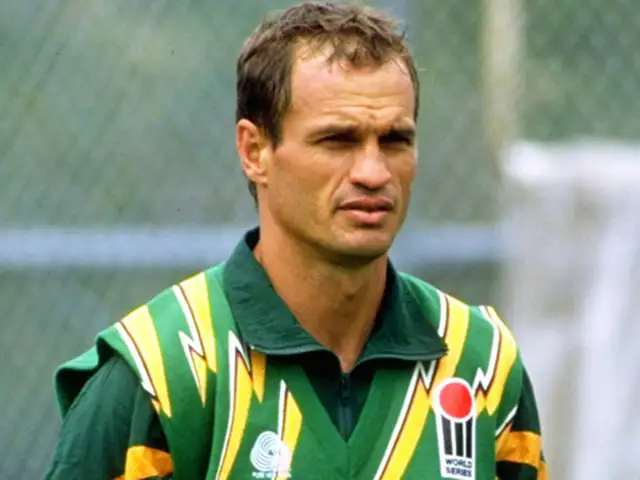
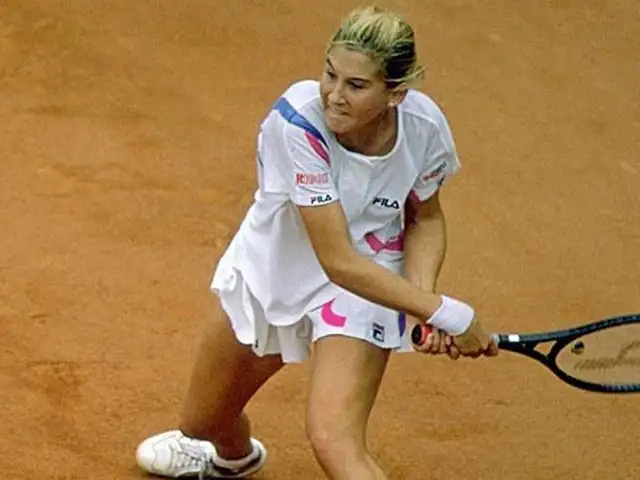
World No. 1 tennis player Naomi Osaka currently holds dual citizenship — of Japan and the US. But come October, she’ll have to relinquish one passport as Japanese law requires dual nationals to choose one before the age of 22. Here are others who chose to find a home away from home.
(In pic from left: Naomi Osaka, Diego Costa, Monica Seles)



ADVERTISEMENT
Download
The Economic Times Business News App for the Latest News in Business, Sensex, Stock Market Updates & More.
The Economic Times Business News App for the Latest News in Business, Sensex, Stock Market Updates & More.
ADVERTISEMENT


