To work around the blackout on cable television, Rugby India has been up-linking live streams from national events on platforms like Facebook.
It was a balmy Wednesday afternoon in Calcutta, and there was a nip in the air. The year was 1872. It was Christmas day. Commandeered by Prince Alfred, the Royal Navy’s marquee ship, the H.M.S. Galatea lay docked in the city’s port. A round of celebratory lunches, evening parties, and balls were held. Soldiers’ games were organised at a local maiden for the ship’s crew - a motley group of seafarers drawn from across the British Isles. Teak goalposts were erected, and an egg-shaped ball, launched into the fray. In the first rugby match to be played in the subcontinent, the Englishmen squared off against a combined team representing Scotland, Ireland and Wales. The result was not documented.
Unlike other colonial imports, rugby never took off in the subcontinent. However, the sport is belatedly coming into its own, more than a century since the first matches were played in the dust-bowls of Calcutta “We got a result we did not expect so soon. It is terrific for raising the profile of rugby in the country,” says Mahesh Mathai, General Secretary, Rugby India, on the Indian women’s team’s first-ever victory in a full test-match against Singapore last month. For the sport’s governing body, favourable results on the pitch are a reflection of policy initiatives to promote the game at the grassroots level, and also inspired hiring calls.
“There’s a lot happening in terms of grassroots development. In 2018, 1,75,000 kids were introduced to rugby which made us no.1 in Asia in terms of reach and participation,” said Nasser Hussain, General Manager, Rugby India. The ‘Get Into Rugby Programme,’ an initiative of World Rugby, has been a hit in schools, with many children at the under-10 level taking a shine to the egg-shaped ball. Rugby clinics are organised where children are taught the rudiments of the sport. “Non-contact rugby – also called touch rugby - is played in a more protected environment where children are encouraged to enjoy the sport, rather than worrying about the rules. They just have to go out there, handle the oval-shaped ball, and have fun,” he added.
While rugby was resigned to being a minor sport, played only in pockets of the country, its inclusion in the calendar of the School Games Federation of India (SGFI) has helped improve the profile and reach of the sport. While there has been a tangible improvement in the standard of play, the move has helped increase participation and engagement. “More than 90 per cent of all schools in the country are a part of the SGFI. More youngsters are now aware of the sport. In Mumbai, around 35-40 schools participate, accounting for 3,000 registered players. The enrolment is not male dominated. That’s something we are very happy about,” Hussain said. Rugby is belatedly coming into its own, more than a century since the first matches were played in the dustbowls of Calcutta. Less than a year ago, Rugby India, decided to try out a different approach to gain visibility in the country. “Any of these high-performance targets take years. We knew we had to manage a few podium finishes so that we are taken notice of by the government,” Mathai said. Budgetary allocation for bringing in better infrastructure and coaching teams for the national team was made for the next financial year. In the interim, Springbok legend, Naas Botha was touring India, and was impressed by what he saw. It was happenstance. The appointment proved fortuitous.
On March 31, former South Africa player and World Rugby hall-of-famer Naas Botha took over the reins as India’s head coach. He was tasked with overseeing the development of the men’s and women’s rugby teams. Botha’s first test was the Asia Rugby Championship in June. “The women’s team has come third in division one. The win by itself, is a testament to the change his team has brought about. It is our huge desire that Naas stays on for longer,” Mathai said. The men’s team has been around for longer, but Hussain insists that success should not be conflated with results. “It is too early to gauge whether putting the onus on performance over reach will bear fruit,” he said.
ADVERTISEMENT
Mathai reckons that one of the biggest disadvantages smaller sports are faced with in India is the monopolization of our collective conscious by more popular counterparts. The prescription he recommends is greater exposure to non-mainstream sports. “The ultimate visibility goal would be to get live television coverage, but that is difficult in this country for anything other than cricket. Kabaddi had visibility not just as kabaddi. It got visibility as a league, as the Pro Kabaddi League. At the back of our minds, we have the idea for a league that we want to do and that might help attract all the big broadcasters,” Mathai said.
To work around the blackout on cable television, Rugby India has been up-linking live streams from national events on platforms like Facebook. Matches from the Senior National tournament were beamed live on Rugby India’s Facebook page using a two-camera setup. “We are trying to improve our own production capabilities. There is an audience out there that is longing to watch the game and we want to provide an avenue for them to experience the sport live. We are getting a fair response digitally,” Hussain said. The matches have also created a buzz outside the country. The stream for the Junior Nationals, which was cross-posted by Asia Rugby on their Facebook page, generated record engagement levels.
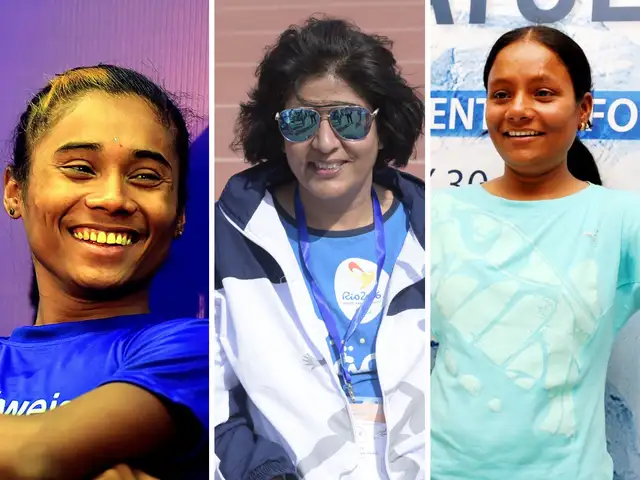
Hima, Deepa, Arunima: India's Golden Sports Girls Who've Made Us Proud
1/9
Women in India have taken giant strides, breaking barriers and setting new benchmarks over the past few decades. From business to politics and technology, they have successfully shattered all stereotypes, and glass ceilings.
The sporting arena, too, has seen champions emerging from various corners of India. From fighting gender discrimination to financial restraints, these women have overcome physical and mental obstacles to build not just a name, but a legacy for themselves.
This women's day, we tip our hats to these unstoppable ladies who have become inspiration and icons.
(In pic from left: Hima Das, Deepa Malik, Arunima Sinha)
Women in India have taken giant strides, breaking barriers and setting new benchmarks over the past few decades. From business to politics and technology, they have successfully shattered all stereot..
Read More
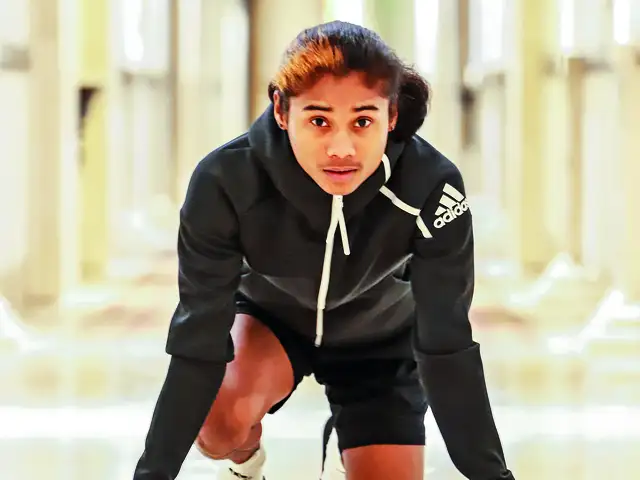
Sprinting from the rice fields of Assam to sports leagues like Asian Games, Hima Das has had a meteoric rise. The youngest of six siblings, she had wanted to pursue football at one point. However, thanks to one of her coaches, she was encouraged to join athletics.
The 19-year-old, who hails from a family of farmers, did not have access to a professional running track. Therefore, she practised on a muddy football field. Das, popularly known as 'Dhing Express', rose to fame after the 2018 Commonwealth Games in Australia where she put up a great show. Later, she bagged the gold medal in 400m relay event at Asian Games and brought home glory.
The small-town-girl proved that no barrier is strong enough to stop one if one's vision is clear.
Sprinting from the rice fields of Assam to sports leagues like Asian Games, Hima Das has had a meteoric rise. The youngest of six siblings, she had wanted to pursue football at one point. However, th..
Read More
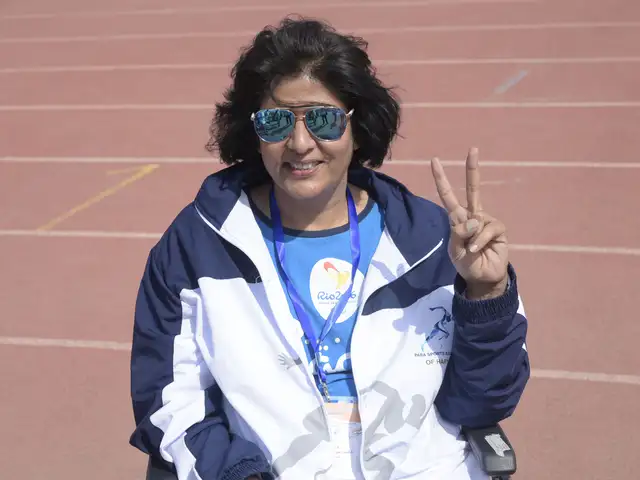
Raised and married in a family of Army officers, Deepa Malik was taught how to stay strong since childhood. The 48-year-old was diagnosed with a spinal tumour in 1999 and went through three surgeries after that. With 183 stitches in her shoulder blades for a period of 14 years, Malik was left paralysed from the waist down.
Paralysis, however, wasn't strong enough to stop her. She then decided to become a swimmer, athlete, biker and adventure junkie. In 2016, she was one of India's Paralympians at Rio Olympics in 2016.
Raised and married in a family of Army officers, Deepa Malik was taught how to stay strong since childhood. The 48-year-old was diagnosed with a spinal tumour in 1999 and went through three surgeries..
Read More
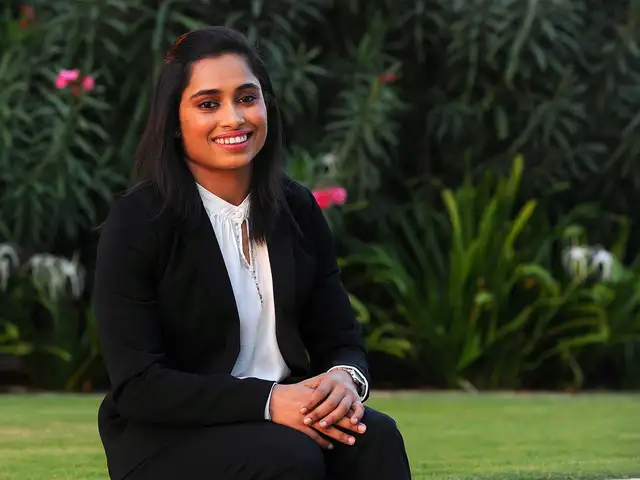
Not many in India were familiar with gymnastics until Dipa Karmakar put her best foot forward. Born with flat feet, she initially did not seem to have the physical signs of a good gymnast. But rigorous and regular training ensured that the 25-year-old was able to address it.
The girl, who rose to fame after qualifying for the Olympics, now has a tough routine. Eight hours of workout a day, a firm coach and determination to rise above all is how Karmakar became a leading gymnast of the this era.
Not many in India were familiar with gymnastics until Dipa Karmakar put her best foot forward. Born with flat feet, she initially did not seem to have the physical signs of a good gymnast. But rigoro..
Read More
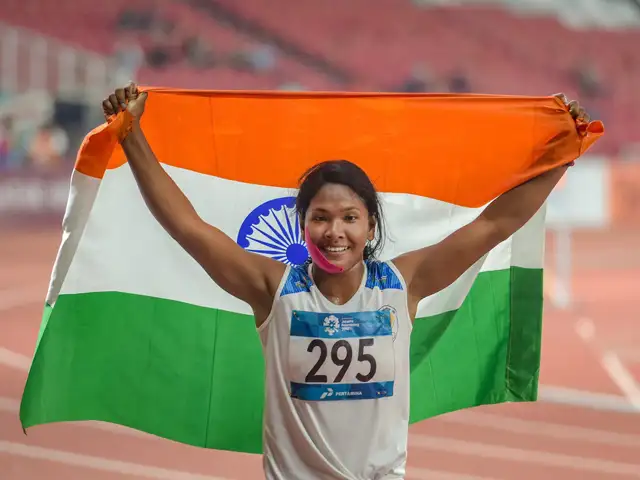
Lack of resources is one of the biggest reasons why some of the biggest talents remain unrecognised. However, some do not care for this restraint. Swapna Barman belonged to the latter group of people. Daughter of a van rickshaw puller, Barman was born with six toes in both feet.
Due to this, finding the perfect pair of shoes was a herculean task for her. The extra width caused pain when she wore shoes for too long. The 21-year-old heptathlete also suffered a serious gum infection the night before her final run at the 2018 Asian Games.
She put on a bandage of her face, pulled up her socks and put up a great show at the event. There's more, she even created history by becoming the first Indian woman to achieve the top podium finish in the event.
Lack of resources is one of the biggest reasons why some of the biggest talents remain unrecognised. However, some do not care for this restraint. Swapna Barman belonged to the latter group of people..
Read More
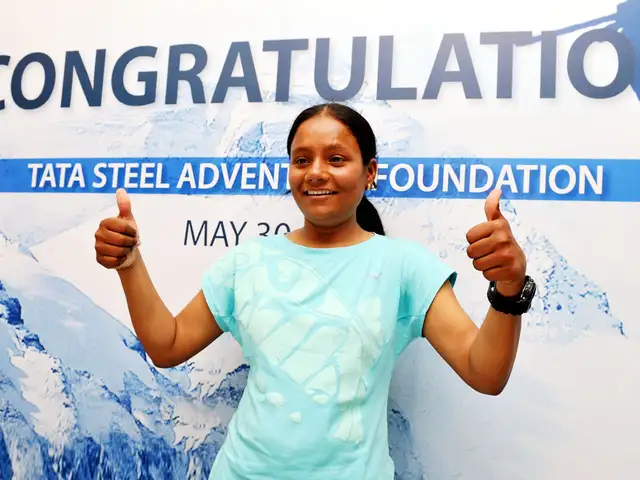
Fighting social and financial barriers is tough. For Arunima Sinha, who lost a limb in a train accident, it was even tougher. The Indian mountaineer, who went on to become the world's first woman amputee to climb the Mount Everest in 2013, was dealt a cruel blow. In 2011, when she refused to hand over her gold chain to thugs, the 30-year-old was thrown off a train and consequently lost her left leg. Facing discrimination due to the disability was not good enough to discourage her. Instead, it strengthened her vision of climbing the Mount Everest.
She firmly believes that it is through the biggest tragedies that the human spirit learns how to soar.
Fighting social and financial barriers is tough. For Arunima Sinha, who lost a limb in a train accident, it was even tougher. The Indian mountaineer, who went on to become the world's first woman amp..
Read More
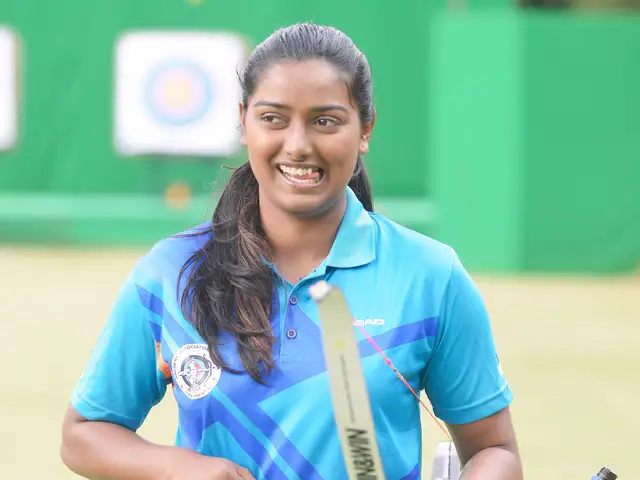
24-year-old Deepika Kumari had her own share of hardships trying to pursue a career in archery. The daughter of a rickshaw-puller and a nurse, Kumari does not believe in giving up and motivates others to do the same.
While her parents saw their daughter becoming a doctor someday, she had set her sights elsewhere. Starved of opportunity at first, she joined the Tata Archery Academy at the age of 11. After years of practice and determination, she rose to fame in 2009 when she became the second Indian archer to win the Cadet World Archery Championship title.
24-year-old Deepika Kumari had her own share of hardships trying to pursue a career in archery. The daughter of a rickshaw-puller and a nurse, Kumari does not believe in giving up and motivates other..
Read More
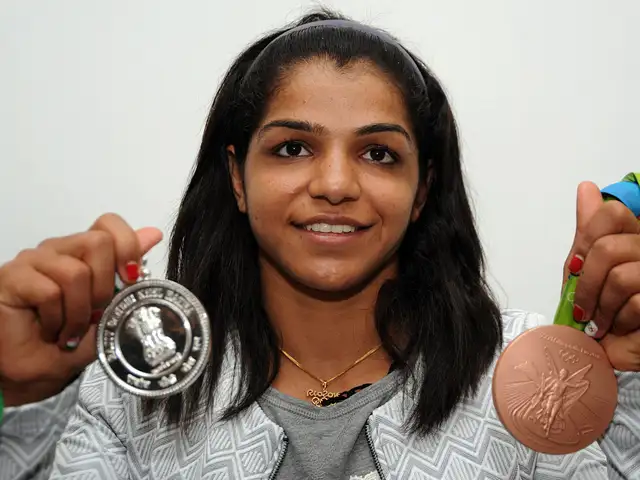
Haryana has given us the best of wrestling icons and Sakshi Malik is one of them. The 26-year-old, who grew up in Rohtak which has a skewed gender ratio, was not allowed to pursue wrestling at the beginning. However, Malik, determined to achieve her goal, stepped into an akhada and wrestled with the boys of her village.
Bagging India's first medal at the Rio Olympics 2016, Malik has since been bringing glory to the nation. She showed the world that women no longer stand behind men in the arena of wrestling.
Haryana has given us the best of wrestling icons and Sakshi Malik is one of them. The 26-year-old, who grew up in Rohtak which has a skewed gender ratio, was not allowed to pursue wrestling at the be..
Read More
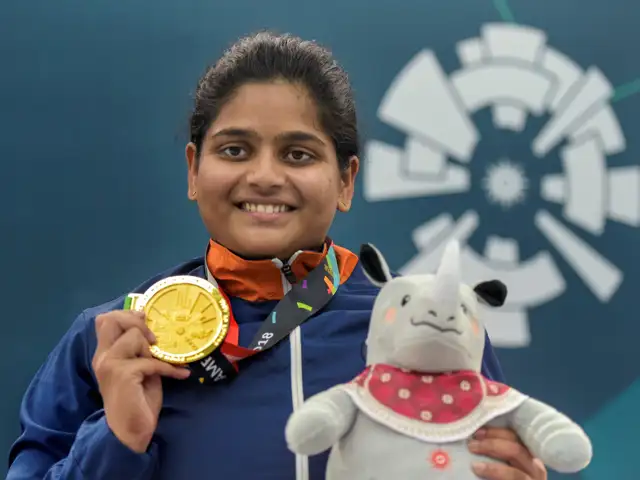
Winning has been her habit, even when she was injured. Shooter Rahi Sarnobat, born in Kolhapur, has been a part of the international scene since 2010. While everything seemed to be in her favour initially, an accident in 2013 became a serious hurdle on her way to success.
The 27-year-old tripped on an uneven road in Pune and landed on her right arm, injuring it severely. Consequently, she could not rotate her right arm properly. However, the pain just could not stop her from bringing home golds.
At the 2014 Commonwealth Games in Glasgow, Sarbobat bagged the gold medal. At the 2018 Asian Games, too, she created history by becoming the first Indian woman to win a gold in shooting.
Winning has been her habit, even when she was injured. Shooter Rahi Sarnobat, born in Kolhapur, has been a part of the international scene since 2010. While everything seemed to be in her favour init..