Mums-to-be, stay safe: Embryos could be vulnerable to coronavirus in second week of pregnancy
If the mother gets sick, it could affect the chances of a successful pregnancy.
By PTI | Updated:
iStock
COVID-19 could affect the ability of the embryo to properly implant into the womb or could have implications for future foetal health.
LONDON: Human embryos could be susceptible to COVID-19 as early as the second week of pregnancy, if the mother gets sick, potentially affecting the chances of a successful pregnancy, according to a study.
Scientists at the UK's University of Cambridge and California Institute of Technology in the US found that genes thought to play a role in how the SARS-CoV-2 virus infects our cells have been found to be active in embryos as early as during the second week of pregnancy.
While initially recognised as causing respiratory disease, the SARS-CoV-2 virus, which causes COVID-19 disease, also affects many other organs, they said.
Advanced age and obesity are risk factors for complications but questions concerning the potential effects on foetal health and successful pregnancy for those infected with SARS-CoV-2 remain largely unanswered, according to the researchers.
In the journal Open Biology, the researchers described how they used technology to culture human embryos through the stage they normally implant in the body of the mother to look at the activity - or 'expression' - of key genes in the embryo. On the surface of the SARS-CoV-2 virus are large 'spike' proteins. Spike proteins bind to ACE2, a protein receptor found on the surface of cells in our body, the researchers explained. Both the spike protein and ACE2 are then cleaved, allowing genetic material from the virus to enter the host cell.
The virus manipulates the host cell's machinery to allow the virus to replicate and spread, they said.
ADVERTISEMENT
The researchers found patterns of expression of the genes ACE2, which provide the genetic code for the SARS-CoV-2 receptor, and TMPRSS2, which provides the code for a molecule that cleaves both the viral spike protein and the ACE2 receptor, allowing infection to occur.
These genes were expressed during key stages of the embryo's development, and in parts of the embryo that go on to develop into tissues that interact with the maternal blood supply for nutrient exchange.
Questions concerning the potential effects on foetal health and successful pregnancy for those infected with SARS-CoV-2 remain largely unanswered Gene expression requires that the DNA code is first copied into an RNA message, which then directs the synthesis of the encoded protein.
ADVERTISEMENT
"Our work suggests that the human embryo could be susceptible to COVID-19 as early as the second week of pregnancy if the mother gets sick," said Professor Magdalena Zernicka-Goetz, who holds positions at both the University of Cambridge and Caltech.
"To know whether this really could happen, it now becomes very important to know whether the ACE2 and TMPRSS2 proteins are made and become correctly positioned at cell surfaces.
ADVERTISEMENT
If these next steps are also taking place, it is possible that the virus could be transmitted from the mother and infect the embryo's cells," Zernicka-Goetz said.
Professor David Glover, also from Cambridge and Caltech, noted that genes encoding proteins that make cells susceptible to infection by the novel coronavirus become expressed very early on in the embryo's development.
"This is an important stage when the embryo attaches to the mother's womb and undertakes a major remodelling of all of its tissues and for the first time starts to grow," Glover said.
He added that COVID-19 could affect the ability of the embryo to properly implant into the womb or could have implications for future foetal health.
The team said that further research is required using stem cell models and in non-human primates to better understand the risk.
However, they said their findings emphasise the importance for women planning for a family to try to reduce their risk of infection.
Coronavirus Can Get Children Worried: Here's How To Have The Talk
1/7
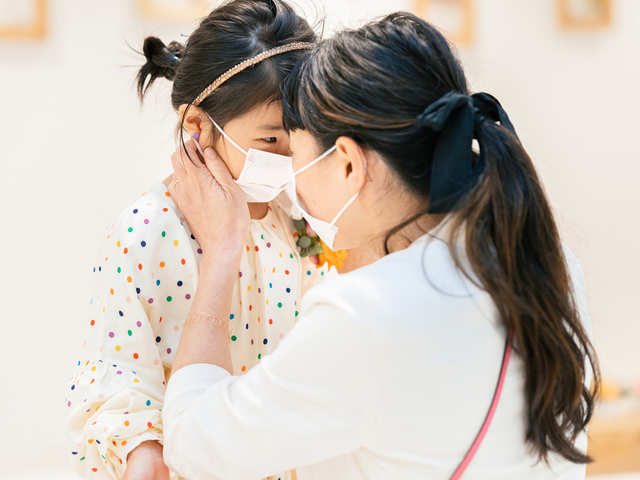
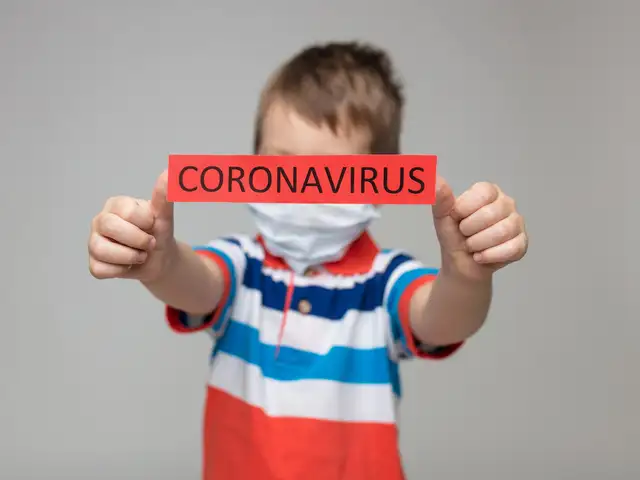
In the wake of coronavirus, several schools and colleges have been shut in many parts of the world to contain the spread of COVID-19. As public awareness and conversations around the novel virus increase, the situation can get the children anxious and worried for their family members and friends.
Parents, family members, teachers, healthcare professionals and trusted adults play a significant role in helping children make sense of what they hear in a way that is honest, accurate and minimise their fear or anxiety.
Dr Sreenath Manikanti, Senior Consultant Neonatologist & HOD Fortis La Femme Hospital, Richmond Road, Bangalore shares a few tips to help make the corona conversation easier around children.
In the wake of coronavirus, several schools and colleges have been shut in many parts of the world to contain the spread of COVID-19. As public awareness and conversations around the novel virus incr..
Read More
- Remember that children react to how and what things are said
- Children pick up cues from conversations you have with them and others
- Patiently listen to what they say, and allow them to ask questions
- Avoid using words that might blame others and lead to stigma
- Remember that the virus can make anyone sick. Avoid making assumptions about who might have COVID-19
- Pay attention to what children see, hear or read on television, radio or online
- Reduce the amount of screen time for children focused on COVID-19. Too much information on any one topic can lead to anxiety and worry
- Provide information to kids that is honest and accurate. Give information that is truthful and appropriate for the age and developmental level of the child
- Talk to children about how some stories on COVID-19 on the internet and social media may be based on rumours and inaccurate information
- Teach chilren everyday actions to reduce the spread of germs
- Stay calm and keep information simple
- Reassure children that health and school authorities are working very hard to keep everyone safe and healthy
- Teach dos and don'ts at home, schools and play areas
- Remember that children react to how and what things are said
- Children pick up cues from conversations you have with them and others
- Patiently listen to what they say, and allow them to ask qu..
Read More
- Stay 6 feet away from people who are coughing or sneezing or sick
- Cough or sneeze into a tissue or your elbow, and then throw the tissue into a closed bin
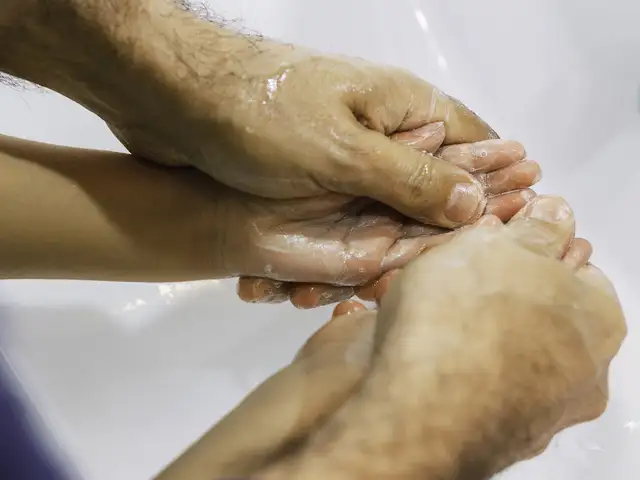
- Wash hands with soap and water for at least 20 seconds, especially after blowing nose, coughing or sneezing, after using restroom, and before eating or learning to prepare food
- If soap and water are not available, teach children to use hand sanitiser
- Stay 6 feet away from people who are coughing or sneezing or sick
- Cough or sneeze into a tissue or your elbow, and then throw the tissue into a closed bin
- Wash hands with soap and water for a..
Read More
- Avoid touching mouth, nose, eyes and face with unclean hands
- Avoid coughing or sneezing into hands
- Avoid crowded places
- Avoid touching surfaces in public places and play areas unnecessarily
- Avoid touching mouth, nose, eyes and face with unclean hands
- Avoid coughing or sneezing into hands
- Avoid crowded places
- Avoid touching surfaces in public places and play areas unnecessaril..
Read More
What is COVID-19?
- COVID-19 is the short name for 'coronavirus disease 2019'
- It is a new virus. Doctors are still learning more about it
- Recently, this virus has made a lot of people sick
- Doctors and scientists think that most people will be alright, especially kids, but some people might get very sick
- Doctors and experts are working hard to help people stay healthy
What is COVID-19?
- COVID-19 is the short name for 'coronavirus disease 2019'
- It is a new virus. Doctors are still learning more about it
- Recently, this virus has made a lot of people sick
- ..
Read More
- Practice healthy habits at home, school and play to help protect against the spread of COVID-19
- Cough or sneeze into a tissue or your elbow. If you sneeze or cough into a tissue, throw it in the dustbin right away
- Keep your hands out of your mouth, nose and eyes. This will help keep germs out of your body
- Wash your hands with soap and water for at least 20 seconds. If you don’t have soap and water, use hand sanitiser to clean the germs
- Keep things clean and hygienic
- If you have cough & fever, stay home. Just like you don’t want to get other people’s germs in your body, other people don’t want to get your germs either
- If you are old enough, you can help adults at home and school clean the things we touch the most like desks, doorknobs, light switches and remote controls
- Practice healthy habits at home, school and play to help protect against the spread of COVID-19
- Cough or sneeze into a tissue or your elbow. If you sneeze or cough into a tissue, throw it in the..
Read More
- COVID-19 can look different in different people. From what doctors have seen so far, most kids don’t seem to get very sick
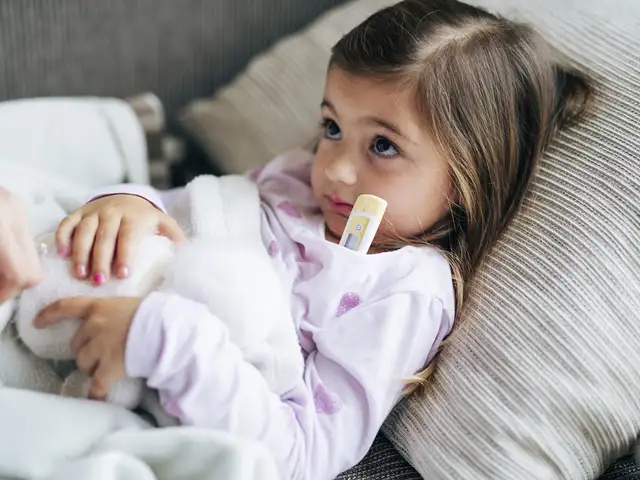
- Being sick with COVID-19 would be a little bit like having the flu. Children may get a fever, cough or have a hard time taking deep breaths
- Most people who have contracted COVID-19 don't get very sick. Only a small group of people who get it have had more serious problems
- If you suspect your child may have COVID-19, call Government of India helpline +91-11-23978046 or contact nearest healthcare facility to let them know before you bring your child in to see them
- COVID-19 can look different in different people. From what doctors have seen so far, most kids don’t seem to get very sick
- Being sick with COVID-19 would be a little bit like having the flu. Chi..