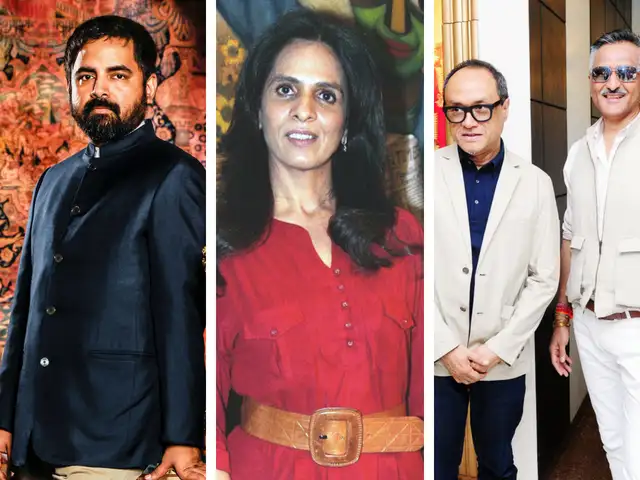
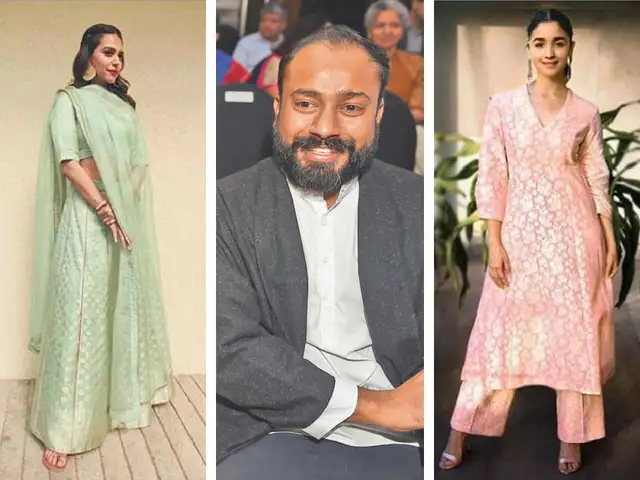
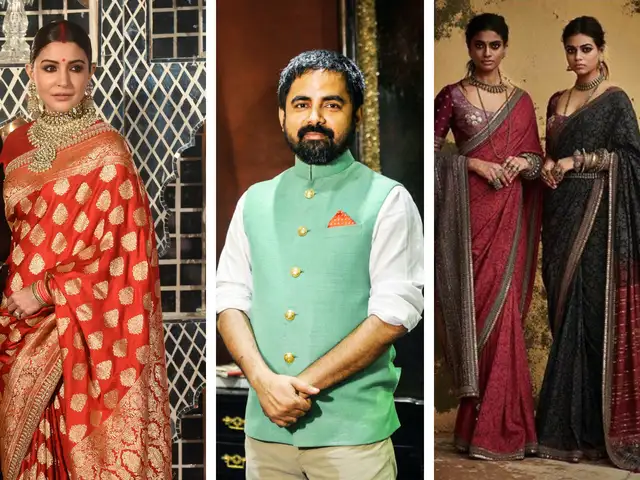
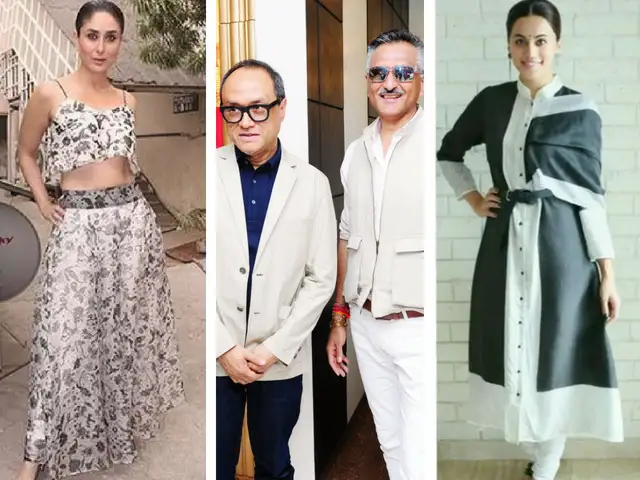
Sabyasachi Mukherjee with Kanishtha at his new store in Fort.
From sequinned saris for Deepika Padukone and Isha Ambani to the muted gold lehenga that Anushka Sharma chose for her grand reception, young Indian brides have always been wearing Sabyasachi. Such is the magic of the Indian couturier.
But the Kolkata-based couturier is now seeking out a new muse, hoping his distinctive Royal Bengal Tiger logo will carry him through in his new endeavour to become the ‘Cartier of India.’
In the rarefied world of high-end jewellery, lorded over by names with deep history, Sabyasachi will be an upstart. But that is exactly what he feels will work for him.
“It's about time that some interesting entrepreneurs came out this country. In many ways my business is following the model of Chanel where the other businesses will be built around the trophy (the clothing business)," he said before taking a trans-Atlantic flight.
Sabyasachi's NYC store. Suddenly, Sabyasachi, 45, is in the middle of several potential showstoppers. Just last month, in a major global coup, Swedish retailer H&M announced a tie-up with him for a travel line. Having worked with blue blood talent in the past — Versace, Giambattista Valli, Jimmy Choo, Stella McCartney, Balmain — for the first time ever, a collaboration with an Indian designer got stitched up for bright printed saris, kaftans, shirts and even accessories like caps, chains and earrings.
ADVERTISEMENT
“Sabyasachi is known for his dynamic use of indigenous crafts and textiles--a language so stunning, that it permanently altered the fashion and design landscape of the country," said H&M's concept designer at collaborations and special collections Ella Soccorsi.
A New York store — his first in the Big Apple — is also expected to open its doors by the second half of 2020.
Currently, the company has five stores in Mumbai, Delhi, Hyderabad and Kolkata and will evaluate other Indian cities to grow further. But to expand his jewellery vertical, which currently has one store in Mumbai, he plans to raise Rs 350-400 crore from an investor. "We are going to create an ecosystem in the next five years with an investor. We are looking to build a truly global luxury brand from India,” he said.
The idea is to create and institutionalise the business into a full-blown fashion house like the House of Anita Dongre, the biggest in the country, that has been backed by PE fund General Atlantic. "It will be a wholesome and Indian brand” focussing on fashion, home, accessories, jewellery and even beauty with a skincare and wellness.
ADVERTISEMENT
Each store yields an average revenue of Rs 40 crore and his FY18 top line of Rs 252 crore was less than half of Rs 680 crore that House of Anita Dongre clocked the same year, after growing into a pan-India network of 300 standalone exclusive stores in 76 cities and over 915 multi-brand large format outlets in 176 cities, employing 2,800. Each store yields an average revenue of Rs 40 crore and his FY18 top line of Rs 252 crore was less than half of Rs 680 crore that House of Anita Dongre clocked the same year. Sabyasachi still remains predominantly restricted to bridal wear and that too in the luxury segment whereas volume growth is in pret and investors prefer a full portfolio. Sabyasachi says, growth off late has been scorching in the jewellery segment -- 110% for two fiscal years 2017-18 and 2018-19 followed by accessories which has grown at 60% year-on-year for the same period.
ADVERTISEMENT
"A lot of things that I do don't make financial sense immediately, but they will have long term returns. I am creating a luxury brand. My sense of investment runs very deep and I do things with a 15-year-plan," he told ET.
However, it’s tough to check the veracity of his financials as the company remains a partnership firm.
"He’s one of the most successful designers in the country," said Mukesh Sawlani, managing director, House of Anita Dongre. “Indian arts and crafts are becoming centre-stage and fashion has a great future in India. Millennials are earning a lot more money now and there is a much bigger growth opportunity in the coming decade."
Investor dollars are chasing ethnic apparel sector but only if they have scale.
"This is still an unorganised business with minimal accounting compliances well," said Navroz Mahudawala, founder, Candle Partners, an advisory firm. “A majority of businesses still thrive on cash in northern India. Brands like Manyavar (owned by Ravi Modi) have been big disruptors and have done exceedingly well."
Sabyasachi still remains predominantly restricted to bridal wear and that too in the luxury segment whereas volume growth is in pret and investors prefer a full portfolio. It’s a tough segment overall--in the luxury, upper end, scale just does not exist, he said. Financial investors usually prefer to invest in scalable models and most business models in luxury that have got funded in India have not worked.
To be fair, Sabyasachi is no stranger to the world of high fashion. From local brands Bombay Dyeing and Lakme to the high streets of Milan, New York and London, he has been courted by Christian Louboutin and home furnishings brand Pottery Barn. Even Manhattan’s iconic luxury department store Bergdorf Goodman approached him for an exhibition of exclusive handcrafted pieces of fine and bohemian jewellery collections -- Chowringhee, Sudder and Bengal Royale.
"I feel happy that within two years into making jewellery, we could go to Bergdorf Goodman after 20 years of nurturing the brand," he said. His peers grudgingly admit that the “H&M association could be the game changer,” as it gives him unprecedented global exposure just as he embarks on expansion.
His opulent handlooms have long been making brides feel special on their big day. They might now get an opportunity to wear him and shine as well.
National Handloom Day: Sabyasachi, Anita Dongre And Others Who Made Us Rediscover Weaves
1/6
Handlooms, once thought to be the grandmother's attire, have now become the fashion industry's favourite. From rich Benarasi silks to khadis, every designer is turning to the country's craftsmen for their collections.
On National Handloom Day, here's a look at the designers who have made us fall in love with weaves.
Handlooms, once thought to be the grandmother's attire, have now become the fashion industry's favourite. From rich Benarasi silks to khadis, every designer is turning to the country's craftsmen for ..
Read More
Designer Sanjay Garg, who is celebrating the 10th anniversary of his brand Raw Mango this year, has been instrumental in the revival of a number of Indian textiles such as chanderi, brocade, mashru, chikankari. Talking about the growing love for handloom, Garg said in an interview to IANS, "I am glad to see more people being involved in preserving our heritage, however, I hope that this is not just a 'trend' or short-lived and instead creates a momentum that continues to support handloom."
In just a decade, Raw Mango has become the go-to brand for many Bollywood celebrities.
Designer Sanjay Garg, who is celebrating the 10th anniversary of his brand Raw Mango this year, has been instrumental in the revival of a number of Indian textiles such as chanderi, brocade, mashru, ..
Read More
Sabyasachi has long been a Bollywood favourite, and every bride's dream designer. The Kolkata-born design guru has always been a promoter of handicrafts. After designing actress Anushka Sharma's red Benarasi saree for her wedding reception, he said, "Bollywood can play a major role in spreading awareness about Indian textiles and handlooms. And I must say the occasion couldn’t be better. I know copies of this saree will flood the entire country in the next few months to come, which also means that a million weaver’s children will be back at school."
Right in pic: The designer's Kalamkari sarees in khadi from Andhra Pradesh are made over a time period of 31 days each. Women from the villages of Barasat create hand-made tassels to fringe the pallu.
Sabyasachi has long been a Bollywood favourite, and every bride's dream designer. The Kolkata-born design guru has always been a promoter of handicrafts. After designing actress Anushka Sharma's red ..
Read More
Designers Abraham and Thakore have been pioneering handlooms way before it became fashionable to be associated with them. For the designers, the handloom yarn runs strong. Not just the brand, but the two men behind it, too, started their personal careers working with weavers, long before A&T came into being. While Thakore's diploma project was about Ikat, David Abraham did his on Khadi.
And now, they couldn't be happier to be a part of the handloom resurrection.
Designers Abraham and Thakore have been pioneering handlooms way before it became fashionable to be associated with them. For the designers, the handloom yarn runs strong. Not just the brand, but the..
Read More
Starting out from her bedroom and balcony in suburban Khar with younger sibling Meena Sehra and just two sewing machines, Anita Dongre has come a long way in her 30 years in the fashion industry.
With a focus on community and sustainability, Dongre works with various NGOs like the SEWA Trade Facilitation Centre and collaborates with several artisans to revive age-old crafts.
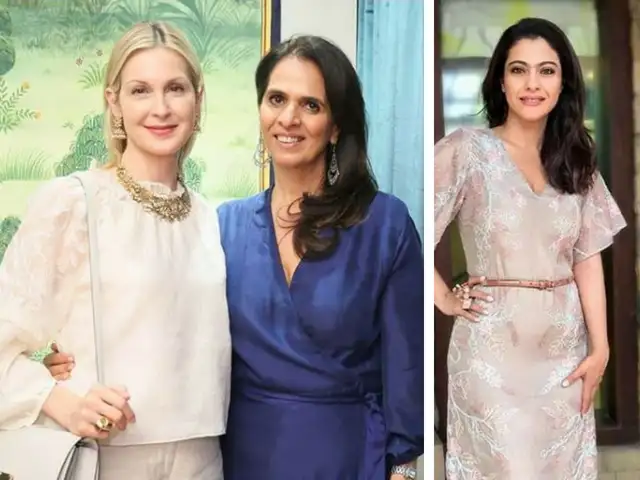
In Pic: Kajol (r) sporting a dress by Anita Dongre Grassroot, made and hand-embroidered by women artisans of the SEWA Trade Facilitation Centre in the remote village of Bakutra. Dongre with actress Kelly Rutherford, who is also sporting a design by Dongre.
Starting out from her bedroom and balcony in suburban Khar with younger sibling Meena Sehra and just two sewing machines, Anita Dongre has come a long way in her 30 years in the fashion industry.
Wi..
Read More
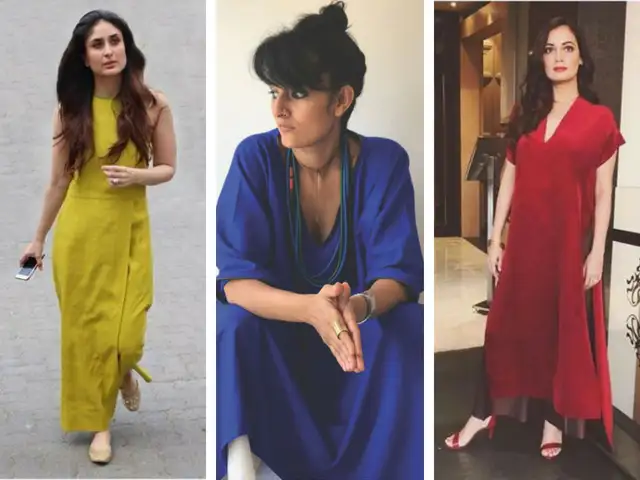
Payal Khandwala launched her eponymous label in 2012 , working with weavers to create clothes using silks, khadi, cottons and linens in a rich colour palette.
Talking about handloom making it big, she said in an interview to IANS, "I find lots of young designers are trying to integrate responsible fashion into their ideas. The government is supporting these clusters as part of the Make in India campaign and I see a serious effort to try and focus attention on the plight of our craftsmen and weavers."
Payal Khandwala launched her eponymous label in 2012 , working with weavers to create clothes using silks, khadi, cottons and linens in a rich colour palette.
Talking about handloom making it big, ..