According to food lore, biryani in Kolkata contains potatoes because of Wajid Ali Shah. His cooks should thank the AHSI. While potatoes were grown in Bengal in the 18th century, it was mainly for British consumption.
According to food lore, biryani in Kolkata contains potatoes because of Wajid Ali Shah, the nawab of Awadh. After the British deposed him in 1856 and he came to live in the city that was their centre of power in India, his cooks struggled to feed his huge retinue on curtailed funds, so took to adding potatoes to bulk out their biryani.
They had the Agri-Horticultural Society of India (AHSI) to thank for having potatoes in the first place. Potatoes were being grown in Bengal in the 18th century, but mainly for British consumption. As Rebecca Earle notes in Feeding the People, her study of the politics of potatoes, AHSI wanted Indians to grow them too, and for this purpose imported and distributed seed potatoes. It monitored “the tuber’s reception among India’s different religious communities, and was pleased when particular villages embraced the potato”.
The English East India Company supported a botanical garden as early as 1787, but its focus was on the British community. William Carey, a missionary and Sanskrit scholar at Serampore, was an enthusiastic gardener who wanted to extend the benefits of Western gardening knowledge and plants. He felt Indian agricultural skills were severely lacking, which led to frequent famines, and lobbied Company officials for support. They were receptive, possibly because they needed to counter the increasing criticism of their rule in India with evidence of beneficial projects.
The AHSI was launched in 1820 and, among the many events that Covid-19 has crowded out this year is a proper celebration of the bicentennial of an institution that has had a profound influence on the food habits of India. This is detailed in a document on the society’s website written by TK Bose, one of India’s leading horticulturists and an erstwhile AHSI secretary. Many of the society’s early reports are also available online and make for interesting reading on the introduction of new crops to India.
William Carey, a missionary and Sanskrit scholar at Serampore, wanted to extend the benefits of Western gardening knowledge and plants. He felt Indian agricultural skills were severely lacking, which led to frequent famines, and lobbied Company officials for support. AHSI was launched in 1820. Bose notes that the AHSI set up committees to focus on particular plants. Not all were edible — among the most important efforts of the society was the import of high-quality cotton and tobacco seeds from the US. This would prove critical decades later when the American Civil War stopped supply to British mills, enabling Indian cotton to break in. By then Bombay had an Agri-Horticultural Society of Western India to propagate these seeds. Bose writes that AHSI established branches across India, from Meerut to Madras, and even as far away as Colombo and Singapore. Many are still functioning at the heart of these cities, like Pune’s Empress Garden, or the Chennai society near the US consulate.
ADVERTISEMENT
Some idea of the support AHSI was able to command comes from a long report in the Bombay Times & Journal of Commerce (later the Times of India) in January 1839, just a few months after it first started. It contrasted how the Calcutta Presidency supported AHSI with a Rs 20,000 donation, plus Rs 4,500 for buildings and a further annual grant of Rs 10,000 while “the similar Society in this Presidency has derived from the Government Eleven Hundred and Fifty Rupees per annum with 100 Rupees per mensem for office expenses”. AHSI had top officials as patrons, like chief justices of the Supreme Court, and later the governor general himself. This tradition has continued till today, with leading industrialists taking up the role. LN Birla was a past president, and Sunil Kanoria is the current one.
Bose details many examples of food crops that AHSI imported from around the world. Some, like cotton, were already grown in India, but AHSI obtained commercially superior varieties, like the yellow Otaheite sugarcane from Mauritius.
Rebecca Earle says AHSI wanted Indians to grow them too. It imported and distributed seed potatoes, and monitored the tuber’s reception. Maize, apples, peaches and plums came from the US, wheat from Australia, litchis from China and a variety of vegetables, including cauliflower, cabbage and carrots, from the UK and South Africa (where ships to India stopped). AHSI sold seeds to farmers and encouraged them to grow better produce with a popular system of competitions where even the malis who did the hard work could win cash prizes.
It is a remarkable heritage, and yet it came with a certain constraint. AHSI continued to propagate a negative view of Indian agriculture, either for well-meaning reasons, like Carey’s desire to prevent famines, or from the more dubious aim of justifying Britain’s role in “improving” India. The counter to this, ironically, would come when the British government finally got directly involved in agriculture and set up the Imperial Agricultural Research Institute in Pusa in Bihar (later destroyed in an earthquake, and relocated to Delhi). This was meant to propagate Western crops and techniques as AHSI had done.
ADVERTISEMENT
However, a young British botanist named Albert Howard, recruited to work there, started thinking differently. He was a farmer’s son and did not come with a prejudiced view of Indian farmers. As he worked in the institute’s fields, he noticed that the plants in the plots of the peasants alongside often seemed healthier, even though they received none of the fertilisers, pesticides and other modern products that he used. These observations led him to develop the principles of organic farming which emphasise natural means of maintaining soil health.
AHSI imported food crops from around the world. Some, like cotton, were already grown in India, but AHSI obtained commercially superior varieties, like the yellow Otaheite sugarcane from Mauritius. Maize, apples, peaches and plums came from the US, wheat from Australia, litchis from China.
ADVERTISEMENT
Howard’s theories proved too radical for the British establishment, but luckily the maharaja of Indore stepped in to create an agricultural institute for him. An Agricultural Testament, the book he wrote in 1940 based on his Indian work, has become over the last 80 years a foundational text for a very different vision of agriculture from the kind initially promoted by AHSI.
This does not negate the importance of what AHSI did and continues to do through its encouragement of gardening and horticulture. Both approaches have their value, and together affirm the transformational power that plants can bring to the life of a nation.
Covid-19 might prevent a proper celebration of AHSI’s 200 years, but perhaps we could all cook a properly potato-laden Kolkata biryani in tribute to how it changed how we eat.
Rich Fruits: From $50K For 12 Mangoes To $4,395 For A Single Strawberry
1/6
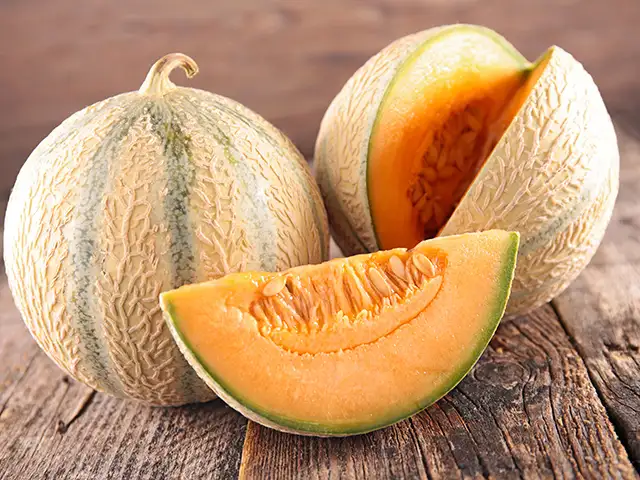
A pair of Yubari King Melons sold for $29,300 at an auction in Japan recently. Here’s a taste of some other expensive fruits.
A pair of Yubari King Melons sold for $29,300 at an auction in Japan recently. Here’s a taste of some other expensive fruits.
$6,000
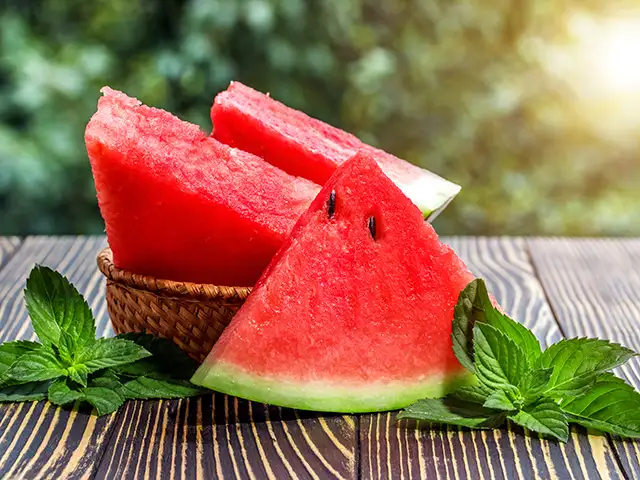
Densuke Watermelons sell at auctions in Japan for exorbitant prices, typically anywhere from $2000-5000, per melon. Those big prices are only paid for the first few lots of the annual crop yield. A 2014 crop, however, broke all records, selling for a cool $6,000 per fruit. The extremely rare fruit is sweeter than regular watermelons, a little rounder and are a shade of pink, instead of the usual red on the inside. They are also known for their black and shiny skin as well as for their crunchy texture.
$6,000
Densuke Watermelons sell at auctions in Japan for exorbitant prices, typically anywhere from $2000-5000, per melon. Those big prices are only paid for the first few lots of the annual crop yi..
Read More
$50,000
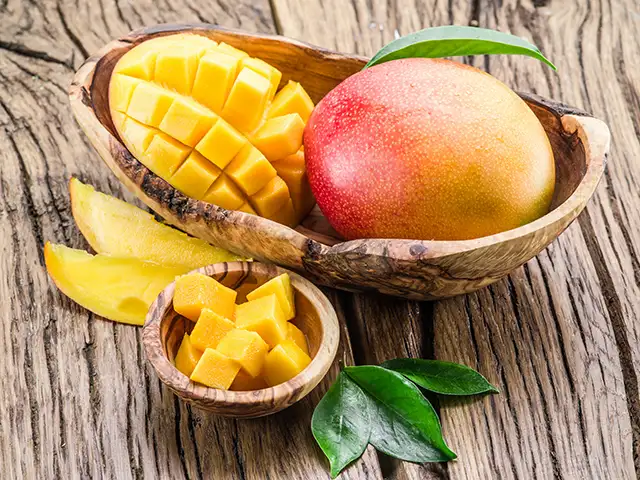
One might be forgiven for thinking that the world’s most expensive mango would come from India or some other tropical country. However, this record is held by Australia, where a tray of 12 mangoes were sold for a cool $50,000 in 2010. That made each mango worth about $4,000. The mangoes were purchased by Carlo Lorenti, owner of Clayfield Markets Fresh, one of Australia’s largest green grocery firms at an auction in Brisbane. Australia has been holding mango auctions since 1998 in celebration of the summer harvest season. Japan also attempts to claim they have the most valuable mangoes with a pair of mangoes called Ears of Sun sold for $2,000 each in April 2008.
$50,000
One might be forgiven for thinking that the world’s most expensive mango would come from India or some other tropical country. However, this record is held by Australia, where a tray of 12 m..
Read More
$4,395
There’s no Wimbledon without some traditional strawberries and cream. Taking the tryst of these berries and tennis forward, scientists in the UK engineered a giant breed of the fruit that can grow to the size of tennis balls. The new strawberry plant— Gigantella Maxim in Latin — produces strawberries that can fill the palm of a hand. At an auction in 2017, one of these giant strawberries was sold for $4,395. Obviously, some of these are shipped to Wimbledon for the elegant few who can afford to indulge in them.
$4,395
There’s no Wimbledon without some traditional strawberries and cream. Taking the tryst of these berries and tennis forward, scientists in the UK engineered a giant breed of the fruit that can..
Read More
$14,600
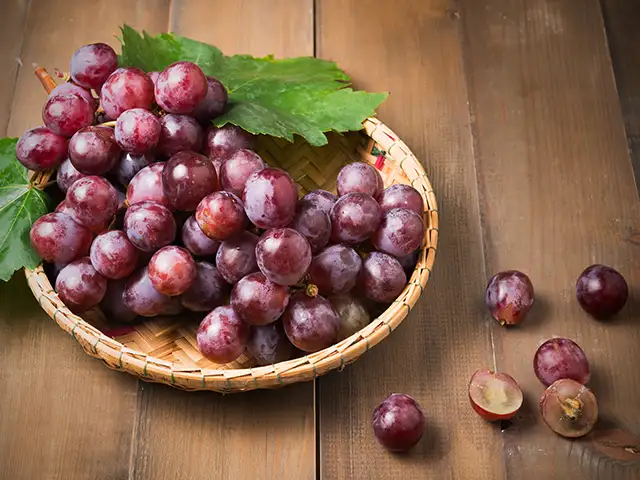
About the size of a ping pong ball, this variety of luscious red grapes grow in Japan. They were sold for $14,600 a bunch in 2016. With 30 grapes in the bunch, the cost of each fruit was approximately $480.
In 2008, the Ruby Roman grape debuted as a new variety of premium grapes in Japan and was so named via a public referendum. For a grape variety to be counted as a Ruby Roman, it must be over 20 gm and should have over 18 per cent of sugar.
$14,600
About the size of a ping pong ball, this variety of luscious red grapes grow in Japan. They were sold for $14,600 a bunch in 2016. With 30 grapes in the bunch, the cost of each fruit was app..
Read More
$13,000
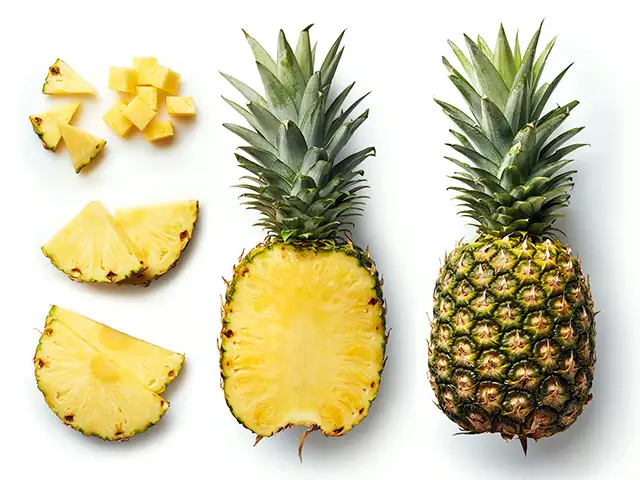
Rare, exotic and hard to grow, pineapples were a symbol of great status and wealth in Victorian times. This rings true even today, that is if your pineapples come from Cornwall. Cultivated at the Lost Gardens of Heligan, each of these carefully tended pineapples are worth a fortune. In 2012, each fruit was auctioned for $13,000. Traditional techniques are used to grow the fruit, complete with Victorian-style greenhouses and frequent changes of fresh horse manure. The resulting fruit is always “sweet, delicious and not stringy with an explosive flavour”, according to a Lost Garden spokesperson.
(All representative images)
$13,000
Rare, exotic and hard to grow, pineapples were a symbol of great status and wealth in Victorian times. This rings true even today, that is if your pineapples come from Cornwall. Cultivated a..