American slavery was mainly for cotton cultivation, but the British trade Colston engaged in was mostly for sugar.
After anti-racism protesters in Bristol dramatically pulled down the statue of Edward Colston, a local merchant and philanthropist, who became rich in the 17th century slave trade, there is now pressure to drop his name from other city institutions. So Colston Hall, Colston Tower and Colston schools might all change their names, but will they stop baking Colston buns?
These are large sweet buns divided into eight wedges to make it easier for a large family to share (one extra small bun is given to those taking them home, so they don¡¦t eat the big one). Colston left funds to have them distributed on specific occasions. They became a Bristol speciality ¡X and a reminder of how complex the interactions of food and slavery have been.
American slavery was mainly for cotton cultivation, but the British trade Colston engaged in was mostly for sugar production in the Caribbean. One reason the British became famous for cakes and puddings is the surge of cheap sugar that came from Caribbean plantations to the UK.
Colston buns are divided into eight wedges to make it easier for a large family to share. Sugar supplied quick energy to fuel workers in the Industrial Revolution, though its poor nutrition led to lasting health problems, and a reputation for bad teeth that dogs the British till today. Sugar also resulted in molasses that was exported to the US to be made into cheap rum. Sugar and rum were exchanged in Europe for cloth and other commodities that went to African rulers in exchange for slaves. Triangular trades like this were a feature of slave trading, increasing its influence across the world. Stopping the trade was always going to be a problem when so many people in so many places profited from it.
Protesters today rightly want Western countries to reckon with their legacy of slavery, but its links with food show how complex this can be. This was not just because slaves produced food, but because they had to be fed. The food they received was never good, but smarter slave-owners knew that better nourished slaves worked better, and different methods were tried to balance nutrition with the least possible cost.
Black-eyed peas, which originated in West Africa where most slaves came from, were taken with them as a pulse to grow in captivity.
ADVERTISEMENT
One obvious solution was to let slaves produce their own food, and they were often allowed space for vegetable gardens. Black-eyed peas, which originated in West Africa where most slaves came from, were taken with them as a pulse to grow in captivity. Breadfruit was another plant taken across the world as an easy way to provide starchy food.
But meat was a problem when slaves were not allowed to fish (because they might escape by boat) or hunt (because they might use the arms against their masters). Beef and pork were reserved for the masters, but slaves did receive the cheaper cuts and offal. Chicken would become the ideal solution, and poultry farming (and fried chicken) was popularised by the Black communities descended from slaves.
Before that, though, the abundant cod caught in cold northern seas and salted for preservation was a staple of slave food, adding another trading element to the business. After slavery ended, one reason Indian indentured labourers filled their roles was because it was felt that they didn¡¦t need meat in the same way, and could be supplied with protein from cheap yellow peas grown on Canadian prairies.
One often overlooked part of the slave trade is its impact in West Africa. In Lizzie Collingham¡¦s The Hungry Empire, she notes the devastating impact of the removal of so many able-bodied people from food production. Appallingly, the resulting food shortages actually helped Western slavers, as African ¡§owners would sell off any slaves they could not feed, and the desperate sold themselves into slavery to escape death by starvation¡¨.
ADVERTISEMENT
The abundant cod, caught in cold northern seas and salted for preservation, was a staple of slave food, adding another trading element to the business. Once in Western captivity, the slaves had to be fed, and more food was needed to stock the ships when they made the notorious ¡§Middle Passage¡¨ across the Atlantic. The solution came from their destination, with two New World crops, maize and cassava, proving so ideally suited to growing in Africa that they would become staples on the continent till today.
Maize produced two crops each year rather than the single crop local millets provided, and cassava (tapioca) was resistant to droughts and the local locust swarms, and the roots could be stored for a long time. The roots required a lot of washing and pounding to be made edible, but Collingham notes that a further twist to slavery provided the solution. The traders mostly wanted male slaves, so many female slaves were left with their African owners to mass produce the food that sustained both the trade and the region devastated by it.
ADVERTISEMENT
Both maize and cassava would later come to India, and this shows how efficiently the slave trade worked to disperse new food crops around the world. Collingham quotes from an account left by a French slave trader, Michel Jajolet de la Courbe, of a meal given to him in 1686 by a West African ruler¡¦s daughter who was a leading slave owner herself. The food included chillies and pineapples which were from the Americas, but now being grown in Africa, most probably brought by the same ships that came to take the slaves with them.
Stories like these show the complexity of the network spread by slavery, and the number and diversity of people it ensnared. But if dealing with its legacy is hard, at least the protesters are trying. This can be contrasted with the comparative silence over the equally tangled webs that caste has woven with food in India. For example, when undernourished children in schools in Madhya Pradesh are denied free eggs on the grounds that this is somehow impure, but no equivalent source of nutrition is provided, it shows a world of privilege linked to food and status that we need to question, just as much as protesters in the West are doing with the legacies of slavery.
Planning To Order In? Experts Decode How Safe Is Food Delivery In The Pandemic
1/4
With Covid precautions still in place, experts weigh in on whether it’s fine to get food delivered home.
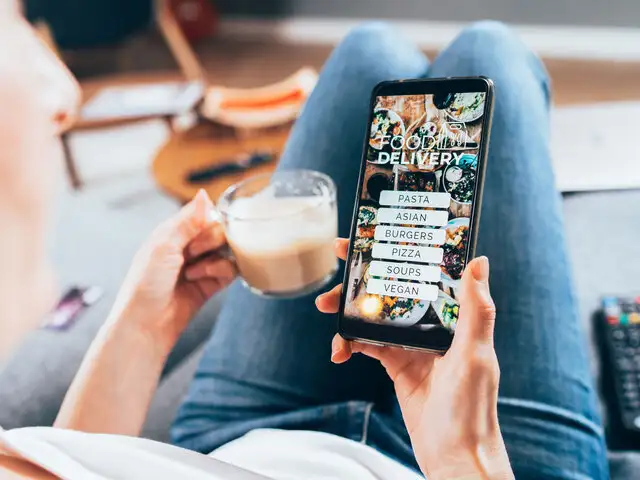
During the lockdown, meal times take on a whole new importance. The question of ‘What should we eat?’ is stuck on repeat. But what if you’re craving pizza, Chinese or Lebanese takeouts from your favourite restaurant? Is it safe to order?
With Covid precautions still in place, experts weigh in on whether it’s fine to get food delivered home.During the lockdown, meal times take on a whole new importance. The question of ‘What should we..
Read More
Whether or not we should be eating from outside and using food delivery apps is on everyone’s mind — especially those doing the cooking. The verdict: It’s a two-way street that you need to approach with some caution. “Safety precautions need to be followed by both parties. If the food handler is infected and handles anything without following precautions, then you are exposed to the risk of infection,” says Dr Deepak Parashar of health service provider Healthians.
Dr Atish Laddad, founder of the doctor tech platform Docterz, adds that contracting infections and viruses through the medium of food delivery, packaging or the food itself is marginally low. “The prime worry is diffusion of infection from person to person — in other words getting exposed to individuals who are symptomatic,” he says. However, he adds that this does not imply that you should not take any precautionary measures when ordering food from out.
Whether or not we should be eating from outside and using food delivery apps is on everyone’s mind — especially those doing the cooking. The verdict: It’s a two-way street that you need to approach w..
Read More
When it comes to what to order, Dr Avnish Seth, director, gastroenterology at the Fortis Memorial Research Institute in Gurugram, suggests ordering cooked food over salads and fresh juices. Also, reheat the food before consuming it. And for transactions, he recommends to keep exposure as low as possible.
“If you have to pay by cash and get change back, take the leftover money in a bag. If a credit/debit card has been used, wipe with alcohol and place in a zip lock bag,” he says.
When it comes to what to order, Dr Avnish Seth, director, gastroenterology at the Fortis Memorial Research Institute in Gurugram, suggests ordering cooked food over salads and fresh juices. Also, reh..
Read More
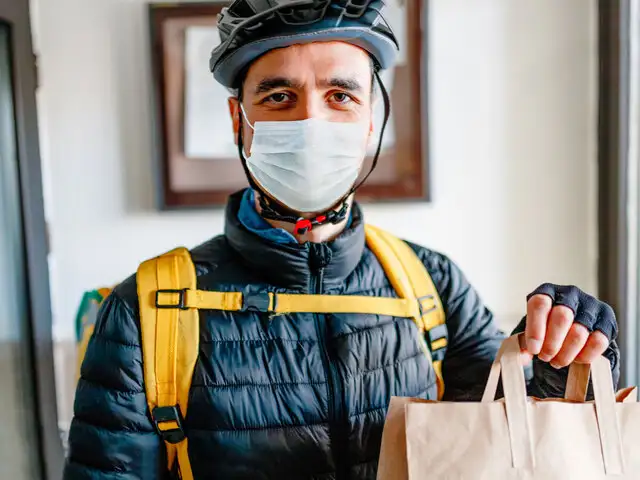
First, find out what measures the restaurant is taking in terms of hygiene and packaging. Also, now may not be the time to try out places you are unfamiliar with. Dr Pritam Moon, internal medicine consultant Wockhardt Hospital at Mira Road, Mumbai, adds, “The delivery person has to have taken enough precautions such as wearing gloves, sanitising his hands and covering his mouth as well.”
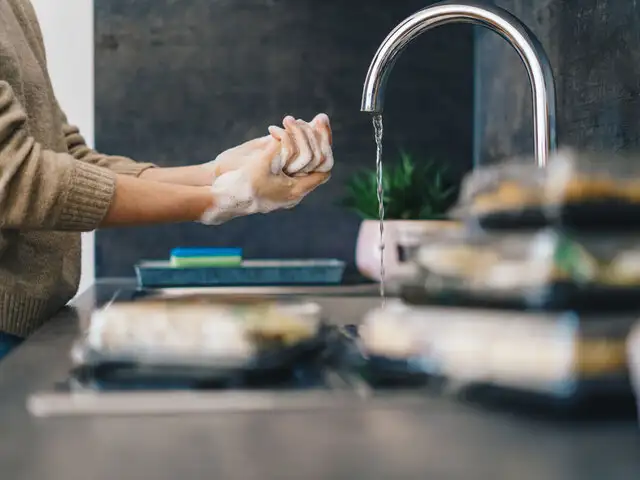
If you are ordering food, one of the main preventive measures you need to take is keeping a distance and limiting your contact with the delivery person. Dr Vikrant Shah, consulting physician, intensivist and infectious disease specialist at Zen Multispeciality Hospital in Mumbai, suggests, “Wear gloves before han-dling the package. Wipe the package before opening it. Sanitise or wash your hands after opening the package. And then, dispose of the package properly and wash your hands.”
First, find out what measures the restaurant is taking in terms of hygiene and packaging. Also, now may not be the time to try out places you are unfamiliar with. Dr Pritam Moon, internal medicine co..
Business News › Magazines › Panache › From Colston buns to abundant cod, deconstructing the complex relationship between slavery and the food we eatText Size:AAA