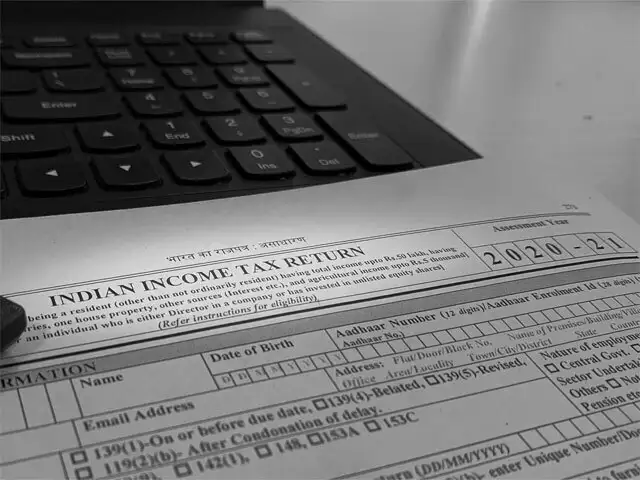
Do you need professional help in filing ITR? Here's how much it will cost you
Most taxpayers are not aware of the finer points of taxation. A professional can ensure you file an error-free return. Here are things to consider if you are planning on taking professional help to file your ITR and the likely costs of the same.
By ET Bureau | Updated:
Getty Images
Many incomes are tax free, but still need to be declared in the income tax return.
The deadline for income tax filing has been extended but taxpayers should not wait for the last few days to complete this critical task.
Here are a few things to keep in mind when you sit down to prepare your tax return.
30 Nov: Last date for filing tax return for financial year 2018-19 (Assessment year 2019-20)
31 Dec: Deadline for filing tax return for financial year 2019-20 (Assessment year 2020-21)
How much are you willing to spend? Filing income tax returns is not very complicated for most people. But taxpayers with complex finances and various sources of income need professional assistance.
Can be filed for free or at a nominal cost of Rs 100-200 if you have
Salary or pension
Interest
Rent from one house property
Total income less than Rs 50 lakh
Can be filed free if you are familiar with tax rules. Otherwise pay Rs 500-800 if you have
It is always a good idea to sort your ITR filing in advance. An individual can file his/her income tax return by registering on the incometaxindiaefiling.gov.in or via private e-filing websites.
ITR filing does seem like a daunting task but in reality, it is not very complicated for most people. However, taxpayers with complex finances and many income streams may feel the need for professional guidance. Most of them are not aware of the finer points of taxation. A professional can ensure you file an error-free return. Here are a few points that individuals miss when they file tax returns themselves.
It is always a good idea to sort your ITR filing in advance. An individual can file his/her income tax return by registering on the incometaxindiaefiling.gov.in or via private e-filing websites.ITR f..
Read More
Certain new tax deductions have been introduced in recent years. These include the Rs 50,000 deduction for interest to senior citizens under Sec 80TTB, the standard deduction of Rs 50,000 to salaried taxpayers and increase in the deduction limit for medical insurance premium under Sec 80D.
Certain new tax deductions have been introduced in recent years. These include the Rs 50,000 deduction for interest to senior citizens under Sec 80TTB, the standard deduction of Rs 50,000 to salaried..
Read More
From this year, your Form 26AS will also mention the high value investments and transactions carried out by you during the financial year. If you take help of a tax professional, he will ensure that the expenses and investments in the Form 26AS reconcile with the income declared in your tax return.
From this year, your Form 26AS will also mention the high value investments and transactions carried out by you during the financial year. If you take help of a tax professional, he will ensure that ..
Read More
Capital gain is the profit you make when you sell any investment including mutual funds (MFs). Long-term capitals gains (LTCG) and short-term capital gains (STCG) tax rules apply to mutual funds and differ between debt and equity MFs. Dividends on both equity and debt mutual funds are taxable in the hands of the investor. Mutual fund dividends are taxed as per the tax slab of the investor. The rules on these have changed often in the past so make sure you're in line with them
Capital gain is the profit you make when you sell any investment including mutual funds (MFs). Long-term capitals gains (LTCG) and short-term capital gains (STCG) tax rules apply to mutual funds and ..
Read More
Short-term or long-term capital losses made during the year can be adjusted against other gains. If you lost money in any investment last year, you can set off the loss against other taxable gains. Unadjusted losses can be carried forward to the next financial year.
Short-term or long-term capital losses made during the year can be adjusted against other gains. If you lost money in any investment last year, you can set off the loss against other taxable gains. U..
Read More
While computing LTCG, indexation benefit is provided as compensation against inflation. For example, if the LTCG is 10% p.a. and the inflation is 7% p.a., you need to pay tax only on 3% additional gains. Indexation benefit is not available for instruments that have interest components. Inflation can bring down your tax by adjusting the buying price of an asset to the inflation during the period of holding. The calculation is slightly complicated but a tax professional can help calculate the tax correctly.
While computing LTCG, indexation benefit is provided as compensation against inflation. For example, if the LTCG is 10% p.a. and the inflation is 7% p.a., you need to pay tax only on 3% additional ga..
Read More
Many incomes (such as PPF interest, dividends up to Rs 10 lakh and long-term capital gains of up to Rs 1 lakh from stocks and equity funds) are tax free, but still need to be declared in the tax return. Not mentioning this income may not invite a notice, but could prove tricky when the investments mature in future.
Many incomes (such as PPF interest, dividends up to Rs 10 lakh and long-term capital gains of up to Rs 1 lakh from stocks and equity funds) are tax free, but still need to be declared in the tax retu..
Read More
If a dependant suffers from any of the diseases specified under Section 80DDB, a taxpayer can claim a deduction. Dependants can include spouse, children, parents and siblings. If the taxpayer himself is disabled, he can claim deduction under Section 80U.
If a dependant suffers from any of the diseases specified under Section 80DDB, a taxpayer can claim a deduction. Dependants can include spouse, children, parents and siblings. If the taxpayer himself..
Do you really need professional assistance? Most taxpayers are not aware of the finer points of taxation. A professional can ensure you file an error-free return. Here are a few points that individuals miss when they file tax returns themselves.
ADVERTISEMENT
New tax deductions
Certain new tax deductions have been introduced in recent years. These include the Rs 50,000 deduction for interest to senior citizens under Sec 80TTB, the standard deduction of Rs 50,000 to salaried taxpayers and increase in the deduction limit for medical insurance premium under Sec 80D.
Revised Form 26AS
From this year, your Form 26AS will also mention the high value investments and transactions carried out by you during the financial year. If you take help of a tax professional, he will ensure that the expenses and investments in the Form 26AS reconcile with the income declared in your tax return.
ADVERTISEMENT
Capital gains and dividends
Tax rules have also changed and long-term capital gains beyond Rs 1 lakh from stocks and equity funds are now taxable. Dividends beyond Rs 10 lakh are also taxable. A tax professional will ensure that the tax on capital gains is not missed when you file your return.
Adjustment of capital losses
Short-term or long-term capital losses made during the year can be adjusted against other gains. If you lost money in any investment last year, you can set off the loss against other taxable gains. Unadjusted losses can be carried forward to the next financial year.
Correct indexation values
Inflation can bring down your tax by adjusting the buying price of an asset to the inflation during the period of holding. The calculation is slightly complicated but a tax professional can help calculate the tax correctly.
Tax free incomes
Many incomes (such as PPF interest, dividends up to Rs 10 lakh and long-term capital gains of up to Rs 1 lakh from stocks and equity funds) are tax free, but still need to be declared in the tax return. Not mentioning this income may not invite a notice, but could prove tricky when the investments mature in future.
Illness and disability
If a dependant suffers from any of the diseases specified under Section 80DDB, a taxpayer can claim a deduction. Dependants can include spouse, children, parents and siblings. If the taxpayer himself is disabled, he can claim deduction under Section 80U.