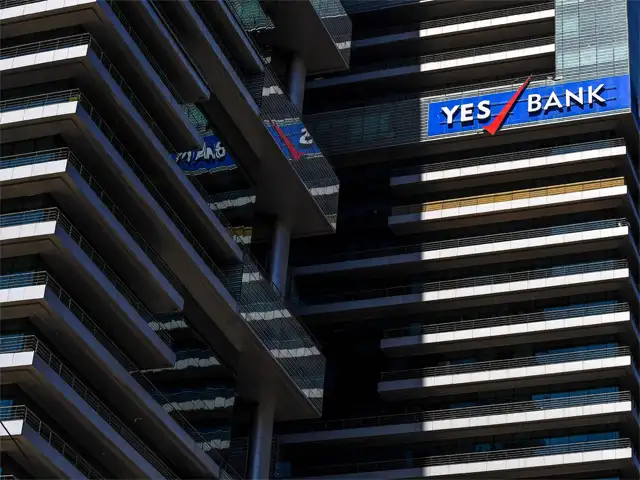
BENGALURU: Ahead of the March 31 tax deadline, lakhs of LIC customers might see disruption as the Life Insurance Corporation of India’s nodal bank for NACH debit and cheque clearance is Yes Bank.
LIC sees anywhere between 25-30% of its yearly business in the month of March; which is most crucial for the public-sector giant given the tax implication. At fiscal close last year, LIC had cornered Rs 1.42 lakh crore in first year premium (66% of marketshare), by selling 2.1 crore new policies as of March 2019.
LIC’s digital collection now forms 60% of total payments. This includes payments via UPI-BHIM, LIC customer portal, PayTM, Authorised agents, designated banks and collection agencies like CSC, AP online etc.
On Tuesday, LIC sent text messages to customers saying “NACH premium debit for your policy XX will be delayed as NACH nodal bank - Yes Bank is on moratorium. Kindly bear with us.”
Customers are now making alternate arrangements. “EMI for my premium goes from Indian Bank. Now I’ll have to write out a cheque,” said customer N Sasi from Bengaluru.
LIC insurance agent N Rajadurai said, “We have not been given any instructions from our development officers, which is disappointing. But I have been making the rounds visiting customers and collecting cheques in person.”
Investing in perpetual bonds? Be ready for these risks
1/8
DHLF, PMC, Yes bank, new names of stressed financial institutions have been coming up and the situations seems to be have become more alarming. Among the many hit by the recent Yes bank crisis, features a section of retail investors who had invested in perpetual bonds issued by Yes Bank and are now facing the possibility of a complete wipe-out of their investments.
While the government has assured depositors that they will not be penalised, select Yes Bank perpetual bondholders would not receive their money back, according to the RBI’s draft restructuring proposal for Yes Bank. The final plan is still awaited but if there is a write-off, investors in debt schemes of mutual funds, which bought these bonds, will also face losses due to fall in NAVs of their units.
DHLF, PMC, Yes bank, new names of stressed financial institutions have been coming up and the situations seems to be have become more alarming. Among the many hit by the recent Yes bank crisis, fea..
Read More
Additional Tier 1 (AT1) bonds are issued to raise Additional Tier 1 capital, as per the Basel III norms, they ensure that a financial insitution's capital requirements are met. Perpetual bonds are seen as riskier quasi-debt instruments which do not have fixed maturity. Issuers pay coupons on these forever. The price of a such a bond is the coupon amount divided by a constant discount rate. Since they have no maturity date, investors can get their investment back only by selling them in the secondary debt market unless the issuer calls the bonds back, i.e. redeems them. When the issuer sinks, like Yes Bank did, it is unlikely to redeem the bonds on its own and for investors, finding buyers becomes near impossible.
Last year, there was a huge inflow of perpetual bonds into the market by banks, NBFCs. With liquidity being an issue and the NBFC crisis spooking investors, entities were forced to announce higher coupon rates. Consequently, the yield being offered was much higher than fixed deposit rates which lured some retail investors who were unaware of the risks. To make sure you don't fall prey to such an occurrence in the future, know about these risks associated with perpetual bonds.
Additional Tier 1 (AT1) bonds are issued to raise Additional Tier 1 capital, as per the Basel III norms, they ensure that a financial insitution's capital requirements are met. Perpetual bonds are se..
Read More
Though the bonds are issued by large corporates, investors should understand the implications of the company going into liquidation, in which event, perpetual bonds are subordinate to senior bonds, say financial experts and to claim final receipt, their status is just above that of preference shares. This means that perpetual bond investors will be paid after all other claimants like depositors, other bond holders, etc are paid. Preference and equity shareholders will be the ones to be paid after that.
Though the bonds are issued by large corporates, investors should understand the implications of the company going into liquidation, in which event, perpetual bonds are subordinate to senior bonds, s..
Read More
Perpetual bonds are unlike regular bonds where interest has to be paid regardless of whether the issuer is running a profit or loss. If there are no free reserves to dip into, no interest payment will be made in case of loss in a year by the issuer, according to experts. Free reserves are created out of profits from previous years.
Perpetual bonds are unlike regular bonds where interest has to be paid regardless of whether the issuer is running a profit or loss. If there are no free reserves to dip into, no interest payment wil..
Read More
Another restrictive feature is tier 1 perpetual bonds are non cumulative. What this means is that interest that does not get paid in a year due to the company incurring loss, does not build up. Therefore, bond holders are not eligible to get the same in later years even if the company makes a profit.
Another restrictive feature is tier 1 perpetual bonds are non cumulative. What this means is that interest that does not get paid in a year due to the company incurring loss, does not build up. There..
Read More
Further, perpetual bonds normally come with a call option— the issuers have the right to call (redeem) these bonds early. This means these institutions will call (redeem) them back if interest rates fall from current levels but will not if interest rates rise. In other words, these bonds are perpetual only for the investor and not for the issuer. Yield calculation is also different. Experts say that due to the call option, investors should calculate yield to call (YTC) instead of yield to maturity (YTM).
Further, perpetual bonds normally come with a call option— the issuers have the right to call (redeem) these bonds early. This means these institutions will call (redeem) them back if interest rates ..
Read More
Unlike for other bonds that have a maturity date when the issuer returns the principal, for perpetual bonds, liquidity is critical because selling in the secondary market is the only option available. However, liquidity is low and the bid-ask spread is high.
Unlike for other bonds that have a maturity date when the issuer returns the principal, for perpetual bonds, liquidity is critical because selling in the secondary market is the only option available..
Read More
In addition to the above-mentioned broader risks, investors should note that there are company-specific risks too. They should first look at their own risk appetite, then consider only perpetual bonds issued by financially very sound and healthy institutions, after evaluating the risks associated with these bonds. Doing a detailed cash flow analysis is recommended. Also note that the yield available from high quality corporates is normally much lower compared to that from risky ones. For example, in October last year, the YTC of HDFC Bank perpetual bonds was only 8.27% whereas the YTC from Yes Bank was 18%.
In addition to the above-mentioned broader risks, investors should note that there are company-specific risks too. They should first look at their own risk appetite, then consider only perpetual bond..









 Bolivia's Paz declares state of emergency over blockade crisis2026-06-20T06:08:42Z



