Why rebalancing of investment portfolio is need of the hour; how to do it
One of the severe side-effects of this wild ride has been that asset allocations are widely out of whack. However, success at investing is full of things that are difficult to do, in the sense that they are psychologically counterintuitive.
By Dhirendra Kumar, ET CONTRIBUTORS | Updated:

Getty Images
The 18 months since the covid virus has afflicted the world has not been a great time for maintaining the asset allocation of your investments. Starting in February 2021, first came a great big crash when it looked like the sky was falling. A lot of people sold and rushed out of equities. After that, it’s been a rollercoaster of different sectors and sizes of companies, with investors frantically hunting for clues to locate some kind of a map of the near future vis-a-vis the near and far-term impact of the virus. Even in the phases when stock prices are rising, investors have been shaky in their beliefs and have made more of their decisions based on short-term guesswork and fear.
One of the severe side-effects of this wild ride has been that asset allocations are widely out of whack. There are investors who have rushed out of equity and then rushed back in a great hurry. Moreover, since the middle of last year, mid-and small-cap stocks have done well, always a sure sign of a raging bull run. Nothing wrong with that, that’s what smaller-company stocks do and that’s their utility to the investor. However, it does lead to a lot of equity portfolios becoming too heavily tilted towards such stocks, thereby increasing the volatility and the risk down the road.
At times like this, thinking back sanely to your asset allocation and trying to restore it by rebalancing seems like a foolish thing to do. That’s because asset rebalancing always (by definition) involves selling assets that have done better and leaning towards assets that have done worse, or at least less well. It goes against the instincts of investors and in fact, that’s exactly why it frequently gets ignored till it’s too late.
For a moment, let’s recap the basic concepts here and what the logic is, in simplified terms. One: Basically, there are two major types of financial investments, equity and fixed income (deposits, bonds etc.). Two: Equity has higher potential gains and more risk, while fixed income has lower but less volatile gains. Depending on your preference, you should invest in equity and fixed income in a certain ratio. This ratio is called asset allocation. Three: Over time, equity and fixed income gain at different rates, thus changing the asset allocation away from what you want. Shifting money between the two to restore that allocation is called asset rebalancing. The same principle can also apply to different sub-types within assets. For example, within stocks, to small- vs mid- vs large-caps or even sectors.

Here’s why it works, and why investors are so resistant to the idea. When ‘A’ is growing faster than ‘B’ you would periodically sell some ‘A’ investments and invest the money in ‘B’ so that the balance would be restored. When ‘A’ starts lagging, you periodically sell some of your ‘B’ and move it into ‘A’. This beautifully implements the basic idea of booking profits and investing in the beaten-down asset. Inevitably, things revert to a mean, and that means that when one starts lagging, you have taken out some of your profits into the other. Substitute any asset class or subclass for A and B—the principle is the same. It’s obvious why this is a hard thing to do. Asset rebalancing always, without fail, involves quitting the very type of investment that is doing well.
However, success at investing is full of things that are difficult to do, in the sense that they are psychologically counterintuitive. Most investors learn the lesson after a couple of bad experiences. The lucky ones manage to do so without too high a cost.
(The writer is CEO, Value Research)
Also Read: Time to rebalance your portfolio now
One of the severe side-effects of this wild ride has been that asset allocations are widely out of whack. There are investors who have rushed out of equity and then rushed back in a great hurry. Moreover, since the middle of last year, mid-and small-cap stocks have done well, always a sure sign of a raging bull run. Nothing wrong with that, that’s what smaller-company stocks do and that’s their utility to the investor. However, it does lead to a lot of equity portfolios becoming too heavily tilted towards such stocks, thereby increasing the volatility and the risk down the road.
At times like this, thinking back sanely to your asset allocation and trying to restore it by rebalancing seems like a foolish thing to do. That’s because asset rebalancing always (by definition) involves selling assets that have done better and leaning towards assets that have done worse, or at least less well. It goes against the instincts of investors and in fact, that’s exactly why it frequently gets ignored till it’s too late.
For a moment, let’s recap the basic concepts here and what the logic is, in simplified terms. One: Basically, there are two major types of financial investments, equity and fixed income (deposits, bonds etc.). Two: Equity has higher potential gains and more risk, while fixed income has lower but less volatile gains. Depending on your preference, you should invest in equity and fixed income in a certain ratio. This ratio is called asset allocation. Three: Over time, equity and fixed income gain at different rates, thus changing the asset allocation away from what you want. Shifting money between the two to restore that allocation is called asset rebalancing. The same principle can also apply to different sub-types within assets. For example, within stocks, to small- vs mid- vs large-caps or even sectors.
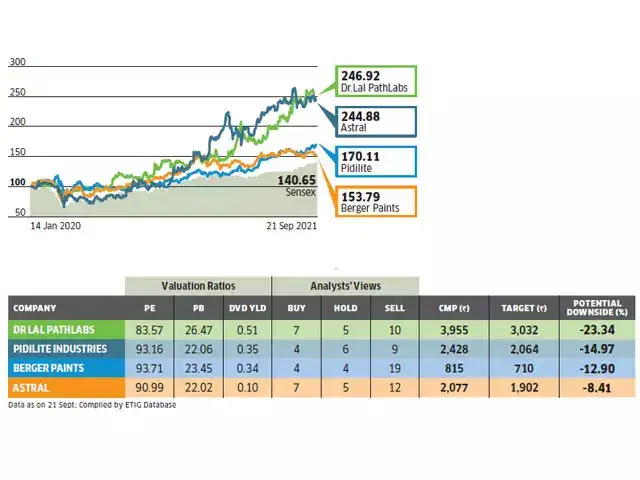
Thanks to a liquidity-laden stock market, Sensex attained a new high by touching the 60k mark. It is safe to say that the key reason for this has been an easy monetary policy held by central banks worldwide in the continued common battled against covid-19 and the pandemic-induced economic weakness. As on Sep 21, 2021, Sensex closed at 59,000, 41% higher than its pre-covid peak of 41,953 on Jan 14, 2020.





Here’s why it works, and why investors are so resistant to the idea. When ‘A’ is growing faster than ‘B’ you would periodically sell some ‘A’ investments and invest the money in ‘B’ so that the balance would be restored. When ‘A’ starts lagging, you periodically sell some of your ‘B’ and move it into ‘A’. This beautifully implements the basic idea of booking profits and investing in the beaten-down asset. Inevitably, things revert to a mean, and that means that when one starts lagging, you have taken out some of your profits into the other. Substitute any asset class or subclass for A and B—the principle is the same. It’s obvious why this is a hard thing to do. Asset rebalancing always, without fail, involves quitting the very type of investment that is doing well.
However, success at investing is full of things that are difficult to do, in the sense that they are psychologically counterintuitive. Most investors learn the lesson after a couple of bad experiences. The lucky ones manage to do so without too high a cost.
(The writer is CEO, Value Research)
Also Read: Time to rebalance your portfolio now
(Disclaimer: The opinions expressed in this column are that of the writer. The facts and opinions expressed here do not reflect the views of www.economictimes.com.)
Download
The Economic Times Business News App for the Latest News in Business, Sensex, Stock Market Updates & More.
The Economic Times Business News App for the Latest News in Business, Sensex, Stock Market Updates & More.
Download
The Economic Times News App for Quarterly Results, Latest News in ITR, Business, Share Market, Live Sensex News & More.
The Economic Times News App for Quarterly Results, Latest News in ITR, Business, Share Market, Live Sensex News & More.
Related Articles
 Three big market crashes in 25 years: 7 investment portfolios show why diversification is the best defence against market volatility2026-03-16T01:00:00Z
- How AI protects your investment portfolio during volatility2026-03-10T00:30:00Z
- Which equity fund categories do you need in your investment portfolio?2026-01-19T01:00:00Z
ADVERTISEMENT




