How to financially prepare for a home loan interest rate hike in the future
Though home loans are currently available at low-interest rates, it is equally important that you are financially prepared for future interest rate hikes. Any increase in the home loan rates will increase the EMI (or loan tenure) and could mess up...
The chances of further rate reduction are very low. However, home borrowers should not ignore the chance of rates going up from current levels. Since the rate transmission is smooth now, any rate increase by RBI will immediately reflect in their home loan rate. Any increase in the home loan rates will increase the EMI (or loan tenure) and could mess up your financial planning.
For instance, the EMI for a 20-year home loan of Rs 1 crore will be Rs 75,739 @6.7%. The same will go upto Rs 81,787 @7.7% and jump to Rs 88,052 @8.7%. The best thing to do in situations like this is to go for fixed-rate loans. However, the options are very limited and only a few options offer fixed rates that too for a limited period. More importantly, these partially fixed-rate home loans also charge higher interest rates.
Partially fixed loans will cost you more
Consider the additional costs before going for partial fixed loans. While these rate increases are not in your hand, you can be prepared for that by assuming a higher rate of interest. “Instead of the very low rates now, assume a reasonable home loan rate of around 8.5% and invest the remaining EMI somewhere else systematically,” says Aparna Ramachandra, Founder & Director, Rectifycredit.com. For instance, the EMI for a 20-year home loan of Rs 1 crore is Rs 86,782 @8.5% and will be Rs 75,739 @6.7%. You should invest the difference of Rs 11,043 in a short-term debt fund every month. This corpus will act as a backup if the rates go up. You will be in a better position even if the rate doesn’t go up because this money will be getting into savings instead of spending.
Taking a home loan? Make sure your financial plan isn't hit, ask yourself these 5 questions
1/6
You, like many others, too may be tempted to bag those decade-low interest rates on home loans and make the most of slashed real estate prices before things starting recovering and going back to normal. As much as these external factors seem appealing, the decision of taking on added debt to buy a house also depends on certain factors about you and your finances.
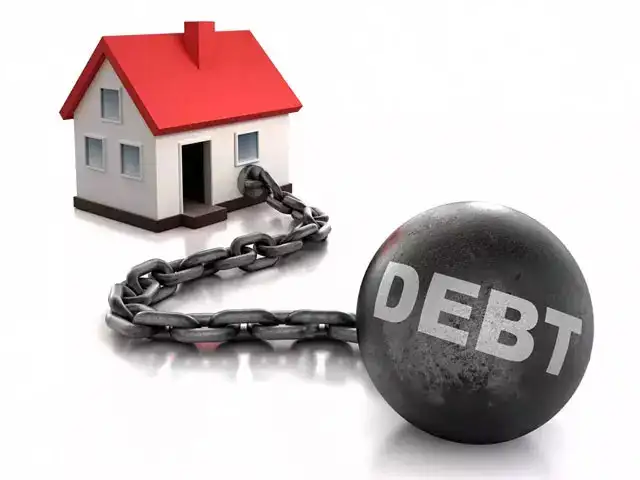
For many, buying a house means stretching finances to even an uncomfortable limit and stretching yourself too thin in the process. Before you apply for a hefty home loan, make sure you are standing on firm ground as far as your personal finances and goals are concerned. Ask yourself these five questions about your emergency fund, down payments, EMIs and status of other financial goals, to ensure that your home loan doesn’t end up as a noose around your neck.
You, like many others, too may be tempted to bag those decade-low interest rates on home loans and make the most of slashed real estate prices before things starting recovering and going back to norm..
Read More
Before you even get into crunching the numbers, you need to ensure your foundations are in good shape. The emergency corpus should be big enough to cover all your expenses for the next 12 months. This should also factor in the new EMI commitments on the home loan. This is to provide immediate financial cushion in case of loss of income owing to job loss, accident or prolonged illness. Having this buffer when paying off a big home loan has proven indispensable in the last 18 months.
Before you even get into crunching the numbers, you need to ensure your foundations are in good shape. The emergency corpus should be big enough to cover all your expenses for the next 12 months. Thi..
Read More
Banks ask borrowers to cough up 20% of the property value upfront before agreeing to sanction a loan for the remaining amount. However, you can put in a higher amount if you wish. For a property with a price tag of Rs 90 lakh, the maximum sanctioned loan will be Rs 72 lakh, which means you pay Rs 18 lakh as down payment. Additionally, you also need to pay a few lakhs towards stamp duty and GST—the latter only if going for under-construction property. Together, this outlay is a handsome sum for majority. Even so, financial advisers typically suggest going for the maximum down payment possible.
Smaller loan component not only invites lower interest rates and brings down the EMI burden, it also reduces total interest outgo and allows for faster repayment, insists Joshi. Yet, borrowers shouldn't empty entire accumulated savings into the down payment. When considering how much savings you have available for down payment, don’t forget your retirement and other critical life goals. Don’t pull out money set aside for these goals. Also factor in spends on any renovations or furnishings for your new home. Then, after providing for the cushion of emergency corpus, what is left can be ploughed into the down payment. Besides, a large down payment will become a restraint on your liquidity.
Banks ask borrowers to cough up 20% of the property value upfront before agreeing to sanction a loan for the remaining amount. However, you can put in a higher amount if you wish. For a property with..
Read More
Budgeting for EMIs is another tricky aspect. Typically, a bank assumes that about 50% of your monthly disposable income is available for repayment. No bank will provide a loan beyond this threshold. This includes your ongoing EMI commitments, if any. “Some banks have become aggressive and are willing to go beyond 40% EMI if the borrower meets certain criteria,” points out Rohit Shah, CEO, Getting You Rich. But the lender’s internal EMI cap may not be realistic for everyone. For instance, if you earn Rs 1 lakh every month and incur expenses of Rs 60,000, then a Rs 40,000 EMI is simply unaffordable. You would be living hand-to-mouth in such a scenario. If you are buying an under-construction property, you will likely be paying rent along with your EMI. Make sure you can afford this even if the bank is willing to give you a large loan. Stretching your budget is fine up to a point—as your income will increase but EMIs won’t. But don’t go overboard.
Budgeting for EMIs is another tricky aspect. Typically, a bank assumes that about 50% of your monthly disposable income is available for repayment. No bank will provide a loan beyond this threshold. ..
Read More
Some borrowers are simply sold on the tax benefits a home loan allows under Income Tax rules. These deductions, which effectively bring down the cost of the loan over its lifetime, often entice borrowers into hefty EMI commitments. But don't forget that these benefits accrue only up to a certain threshold. An individual is allowed deductions up to Rs 2 lakh a year towards housing loan interest payments. If paying off a 20 year home loan of Rs 75 lakh at 7% interest, the interest outgo will run much beyond Rs 2 lakh for several years. Even if opting for a joint home loan with spouse where husband and wife both can claim deduction of Rs 2 lakh each a year, the deductions fall well short of the actual interest outgo for initial few years. So do not extend the home loan EMI for tax benefits alone.
Some borrowers are simply sold on the tax benefits a home loan allows under Income Tax rules. These deductions, which effectively bring down the cost of the loan over its lifetime, often entice borro..
Read More
For many, there is no escaping that taking on home loan EMIs will temporarily put other financial goals on the backburner. You may go several years without saving for own retirement or children’s higher studies but if you cannot make provisions for contributions towards other critical life goals, try and prioritise among these goals. Go after them selectively, such as non-negotiable targets like higher education. Alternately, you may scale down contributions for the time being. In a few years, as your income grows to allow some breathing space, start contributing towards other goals in earnest.
For many, there is no escaping that taking on home loan EMIs will temporarily put other financial goals on the backburner. You may go several years without saving for own retirement or children’s hig..








 Stable home loan interest rate to sustain housing demand: Industry bodies CREDAI, NAREDCO2026-06-05T11:07:21Z



