
 Daily Top 5 Daily Top 5 |
Shiprocket’s stellar D-Street debut; KKR buys BookMyShow stake
Want this newsletter delivered to your inbox?
I agree to receive newsletters and marketing communications via e-mail

Thank you for subscribing to Daily Top 5
We'll soon meet in your inbox.
Shiprocket shares zoomed in a bumper public market debut on Wednesday. This and more in today’s ETtech Top 5.
Also in the letter:
■ IT firms turn to debt
■ Deeptech VCs await RDIF funds
■ Meta goes to trial against US states
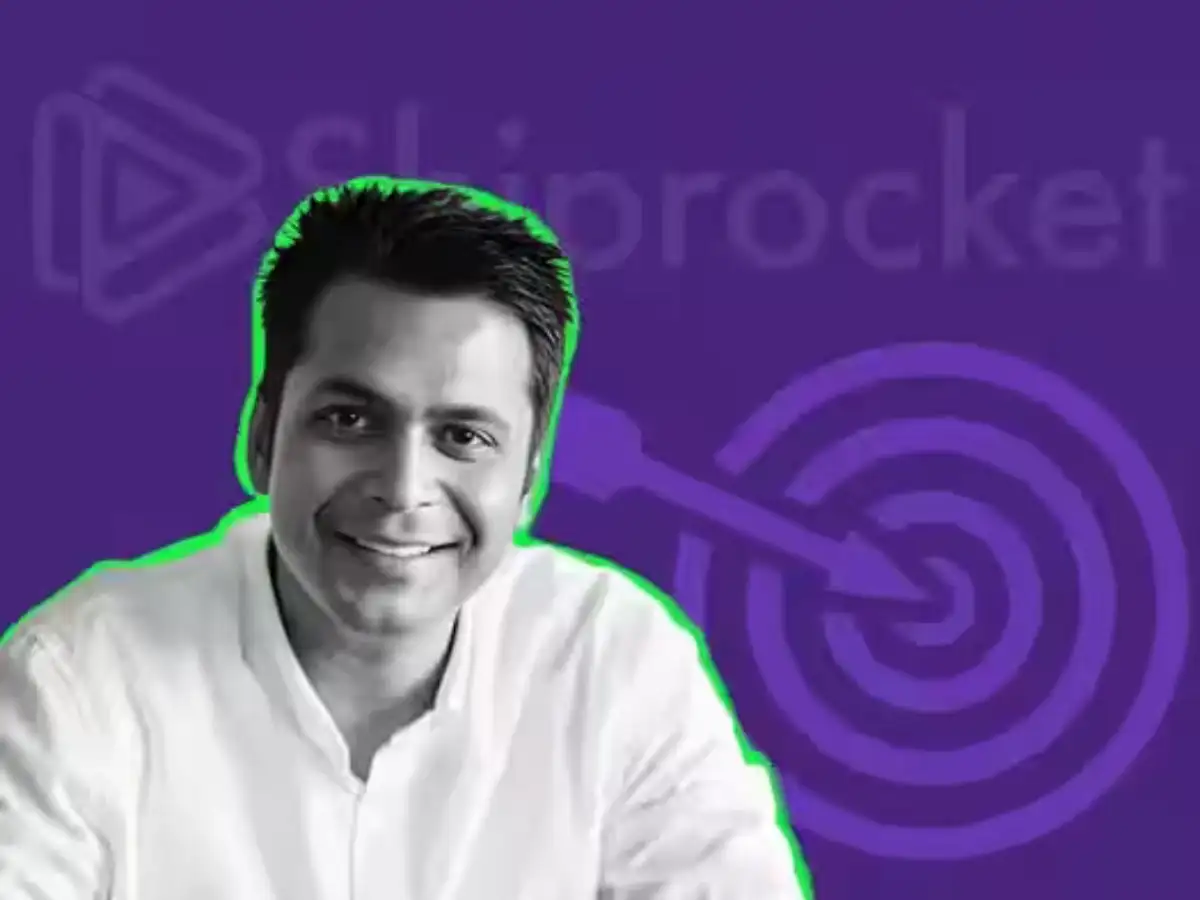 Shiprocket CEO Saahil Goel
Ecommerce logistics services firm Shiprocket made a strong Dalal Street debut on Wednesday, with its shares listing at a 35% premium over the IPO price.
Number-wise:
Issue details: The Rs 1,617.48 crore IPO, which was open for subscription from August 12-14, received an overwhelming response from investors. The issue was subscribed 99.38 times, reflecting strong demand across investor categories.
Shiprocket had fixed the IPO price band at Rs 92–97 per share.
Tell me more: The bumper listing was broadly in line with grey market expectations. Ahead of the debut, the company’s unlisted shares were trading at a grey market premium (GMP) of 33-36% over the IPO price.
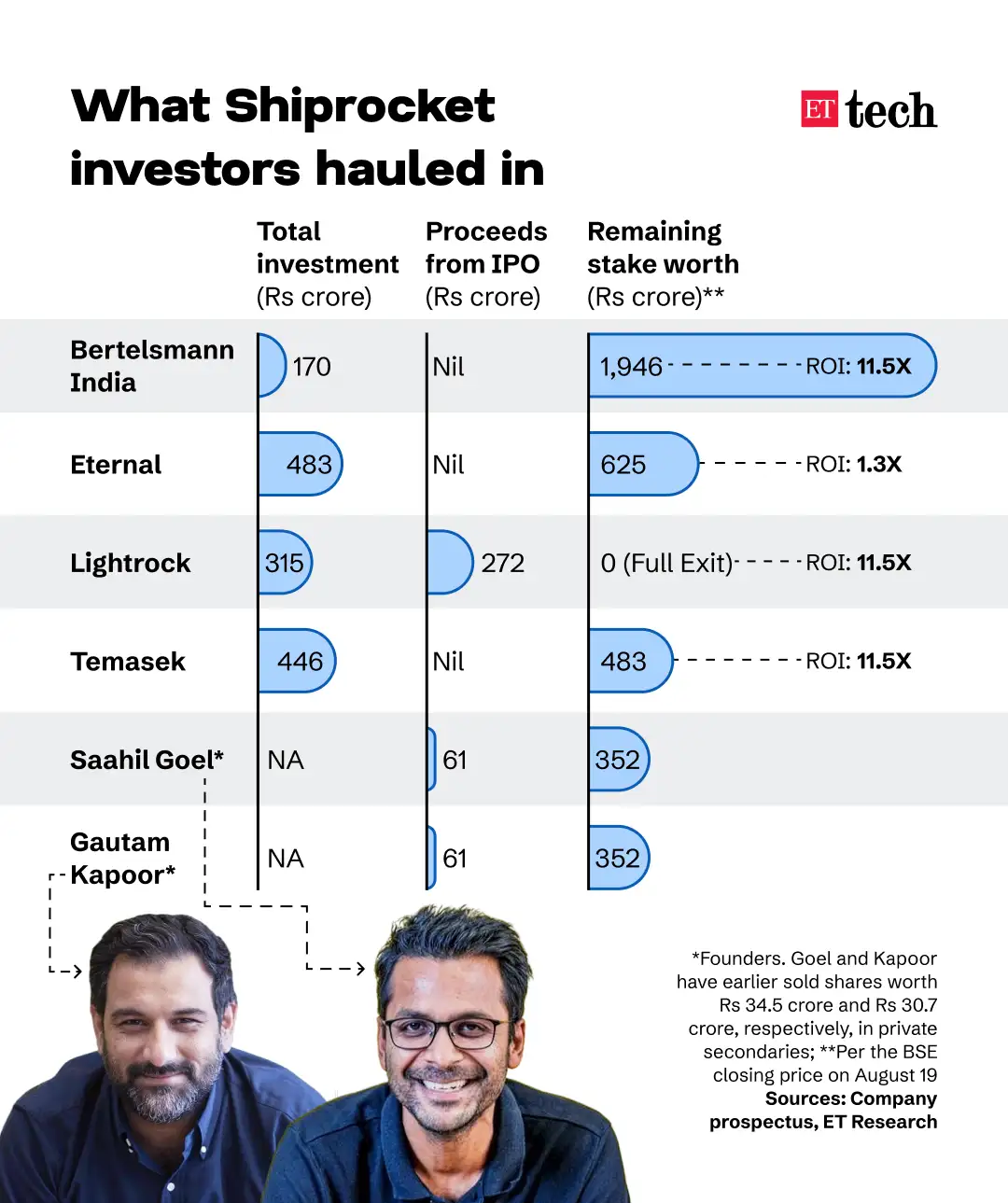
Investor gains: The strong debut led to significant gains for some of the company’s earliest backers.
 BookMyShow CEO Ashish Hemrajani
KKR, a global investment firm, said on Wednesday that it will acquire a minority stake in entertainment and ticketing platform BookMyShow (BMS).
Deal details:
Tell me more: Network 18, part of the Reliance group, is the largest shareholder of BMS with a 39% stake. Other investors include Accel, Elevation Capital, Stripes Group, and TPG Growth.
The investment will support the platform’s next phase of growth, including expansion of its live entertainment business, KKR said.
Financials: BMS has been scaling its live entertainment business.
Also Read: Offline shopping to be District’s second-largest business in three years: CEO Rahul Ganjoo

Indian IT services companies are taking on debt to fund acquisitions and share buybacks, as AI disruption and slower growth push them to boost revenues and manage investor expectations.
What’s the news: For over a year, firms like Cognizant, Persistent Systems, and Coforge have used credit to finance buybacks and asset purchases without dipping into cash reserves.
IT majors have been averse to borrowing in the past decade given their healthy cash flows.
Why now: Experts see this as a strategic shift in the capital structure: using the balance sheet to preserve operational liquidity for M&A and restructuring, while still returning cash to shareholders.
Quote, unquote: Phil Fersht, founder and CEO of research firm HFS Group, said, “If management believes its stock is materially undervalued, borrowing some money to accelerate repurchases can be financially rational, provided leverage remains conservative and free-cash-flow remains strong.”

The disbursement of the Research, Development and Innovation Fund (RDIF) to venture capital firms has been delayed, slowing fundraising for several deeptech funds amid controversy over beneficiary selection, sources told us.
What happened: ET reported in June that 20 Indian investors, including Ideaspring Capital, Speciale Invest, Chiratae Ventures, Sixth Sense Ventures, and Blume Ventures, were asked to present to a selection committee in June, but fund disbursal is yet to begin.
“It has been three months, and nothing has moved and there is no clarity on when the funding is expected,” one deeptech investor told us on condition of anonymity.
Why this matters: At least two investors told ET that the RDIF was expected to be a significant share of their funding. The delay in disbursal also impacts the startups the VC firms had planned to invest in.
Also Read: Sidbi tweaks startup fund rules, nudges VCs to draw capital faster
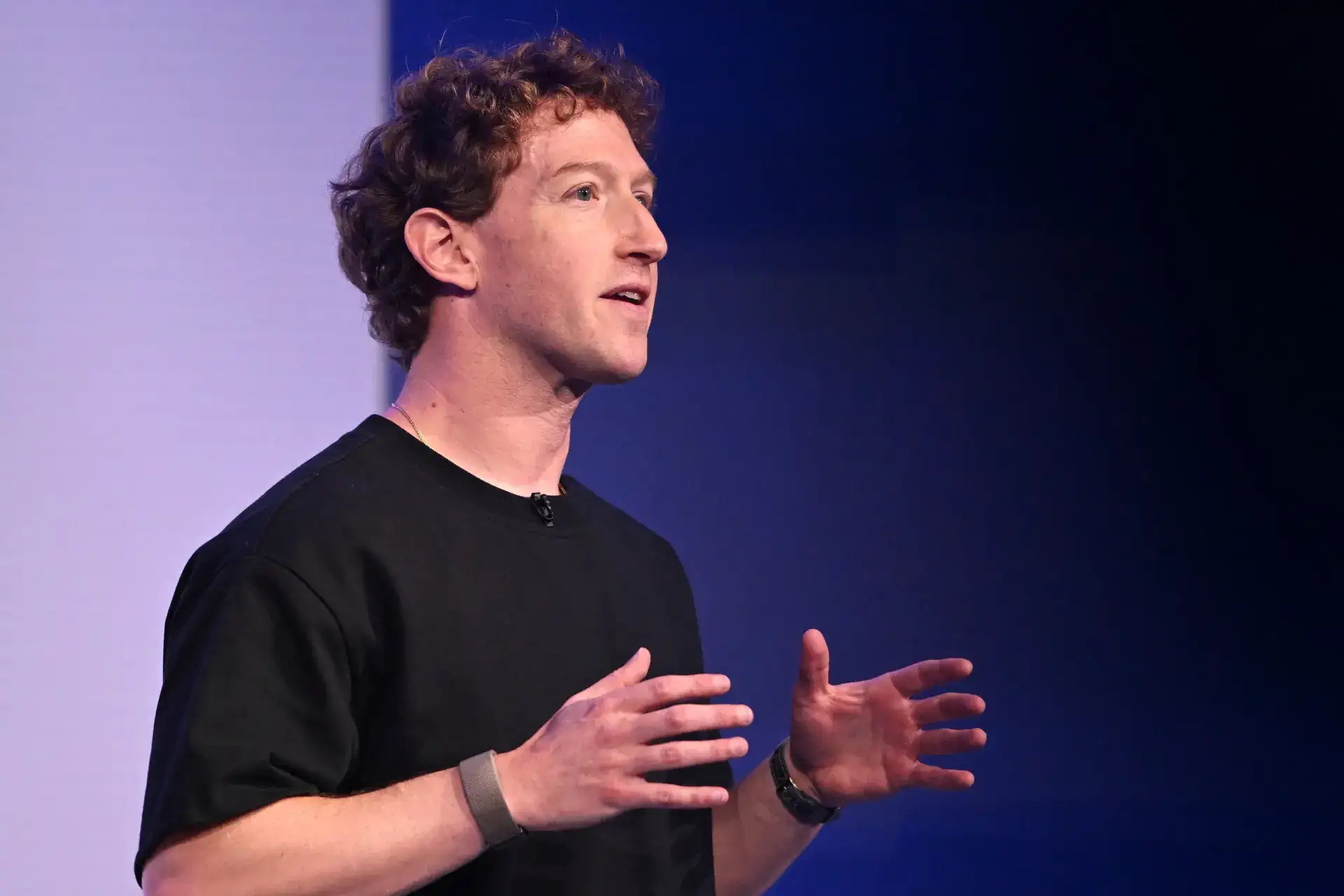 Meta CEO Mark Zuckerberg
Facebook and Instagram parent Meta rejected accusations that it intentionally sought to addict children to its platforms for profit, in a trial that could reshape some of the most popular apps on the planet.
Case details: A bipartisan group of 29 US states is suing Meta, potentially seeking tens or hundreds of billions of dollars in penalties, and changes to how the company does business.
Against Meta: Megan O'Neill, a deputy attorney general for California, told the eight-person jury that Meta's business model was to "hook the users, hold them for as long as they can, harvest their data, and then hide the truth from the public."
For Meta: Meta's lawyer Paul Schmidt acknowledged there was "no dispute" that some people face struggles from using social media. But he said this did not lead to addiction, and that research showed no clear link between social media use by adolescents and a lack of well-being.
Also Read: In Meta's trial, families of social media victims see pivotal moment for online safety
Also in the letter:
■ IT firms turn to debt
■ Deeptech VCs await RDIF funds
■ Meta goes to trial against US states
Shiprocket shares list at 35% premium over IPO price
Ecommerce logistics services firm Shiprocket made a strong Dalal Street debut on Wednesday, with its shares listing at a 35% premium over the IPO price.
Number-wise:
- The stock opened at Rs 129.5 and Rs 131 on the BSE and NSE, respectively, compared to its issue price of Rs 97.
- It touched a high of Rs 155.4, before settling at Rs 143.5 at close of day. This is nearly 48% more than the issue price.
Issue details: The Rs 1,617.48 crore IPO, which was open for subscription from August 12-14, received an overwhelming response from investors. The issue was subscribed 99.38 times, reflecting strong demand across investor categories.
Shiprocket had fixed the IPO price band at Rs 92–97 per share.
Tell me more: The bumper listing was broadly in line with grey market expectations. Ahead of the debut, the company’s unlisted shares were trading at a grey market premium (GMP) of 33-36% over the IPO price.
Investor gains: The strong debut led to significant gains for some of the company’s earliest backers.
- Bertelsmann, Shiprocket’s largest shareholder, saw its Rs 170 crore investment in the company climb to Rs 1,946 crore as of Wednesday's closing price.
- Temasek invested Rs 446 crore in the company; its stake is now worth Rs 483 crore.
KKR to invest about Rs 400 crore in Reliance-backed BookMyShow at Rs 6,000 crore valuation
KKR, a global investment firm, said on Wednesday that it will acquire a minority stake in entertainment and ticketing platform BookMyShow (BMS).
Deal details:
- Sources said KKR is investing Rs 380-400 crore as primary capital.
- The deal values BookMyShow (BMS) at about $620 million, or Rs 6,000 crore.
Tell me more: Network 18, part of the Reliance group, is the largest shareholder of BMS with a 39% stake. Other investors include Accel, Elevation Capital, Stripes Group, and TPG Growth.
The investment will support the platform’s next phase of growth, including expansion of its live entertainment business, KKR said.
Financials: BMS has been scaling its live entertainment business.
- Revenue from live events jumped to Rs 756 crore in FY25 from Rs 455 crore a year earlier.
- Online ticketing revenue increased to Rs 828 crore from Rs 741 crore.
- Bigtree’s net profit in FY25 rose to Rs 192 crore from Rs 109 crore, with total income increasing to Rs 1,869 crore from Rs 1,430 a year ago.
Also Read: Offline shopping to be District’s second-largest business in three years: CEO Rahul Ganjoo
Cash-rich IT firms turn to debt for acquisitions, buybacks
Indian IT services companies are taking on debt to fund acquisitions and share buybacks, as AI disruption and slower growth push them to boost revenues and manage investor expectations.
What’s the news: For over a year, firms like Cognizant, Persistent Systems, and Coforge have used credit to finance buybacks and asset purchases without dipping into cash reserves.
IT majors have been averse to borrowing in the past decade given their healthy cash flows.
Why now: Experts see this as a strategic shift in the capital structure: using the balance sheet to preserve operational liquidity for M&A and restructuring, while still returning cash to shareholders.
Quote, unquote: Phil Fersht, founder and CEO of research firm HFS Group, said, “If management believes its stock is materially undervalued, borrowing some money to accelerate repurchases can be financially rational, provided leverage remains conservative and free-cash-flow remains strong.”
Investors in limbo as government’s deeptech fund disbursal stretches on
The disbursement of the Research, Development and Innovation Fund (RDIF) to venture capital firms has been delayed, slowing fundraising for several deeptech funds amid controversy over beneficiary selection, sources told us.
What happened: ET reported in June that 20 Indian investors, including Ideaspring Capital, Speciale Invest, Chiratae Ventures, Sixth Sense Ventures, and Blume Ventures, were asked to present to a selection committee in June, but fund disbursal is yet to begin.
“It has been three months, and nothing has moved and there is no clarity on when the funding is expected,” one deeptech investor told us on condition of anonymity.
Why this matters: At least two investors told ET that the RDIF was expected to be a significant share of their funding. The delay in disbursal also impacts the startups the VC firms had planned to invest in.
Also Read: Sidbi tweaks startup fund rules, nudges VCs to draw capital faster
Meta rejects claims it sought to hook children to Facebook, Instagram as landmark trial begins
Facebook and Instagram parent Meta rejected accusations that it intentionally sought to addict children to its platforms for profit, in a trial that could reshape some of the most popular apps on the planet.
Case details: A bipartisan group of 29 US states is suing Meta, potentially seeking tens or hundreds of billions of dollars in penalties, and changes to how the company does business.
Against Meta: Megan O'Neill, a deputy attorney general for California, told the eight-person jury that Meta's business model was to "hook the users, hold them for as long as they can, harvest their data, and then hide the truth from the public."
For Meta: Meta's lawyer Paul Schmidt acknowledged there was "no dispute" that some people face struggles from using social media. But he said this did not lead to addiction, and that research showed no clear link between social media use by adolescents and a lack of well-being.
Also Read: In Meta's trial, families of social media victims see pivotal moment for online safety
Want this newsletter delivered to your inbox?
I agree to receive newsletters and marketing communications via e-mail