
 Daily Top 5 Daily Top 5 |
Delhivery gets ecommerce bump; Amazon shakes up qcomm
Want this newsletter delivered to your inbox?
I agree to receive newsletters and marketing communications via e-mail

Thank you for subscribing to Daily Top 5
We'll soon meet in your inbox.
Delhivery CEO Sahil Barua said ecommerce deliveries are leading the company’s growth. This and more in today’s ETtech Top 5.
Also in the letter:
■ India’s Eastward AI tilt
■ PayU India’s profitable FY26
■ FIFA fuels midnight munchies
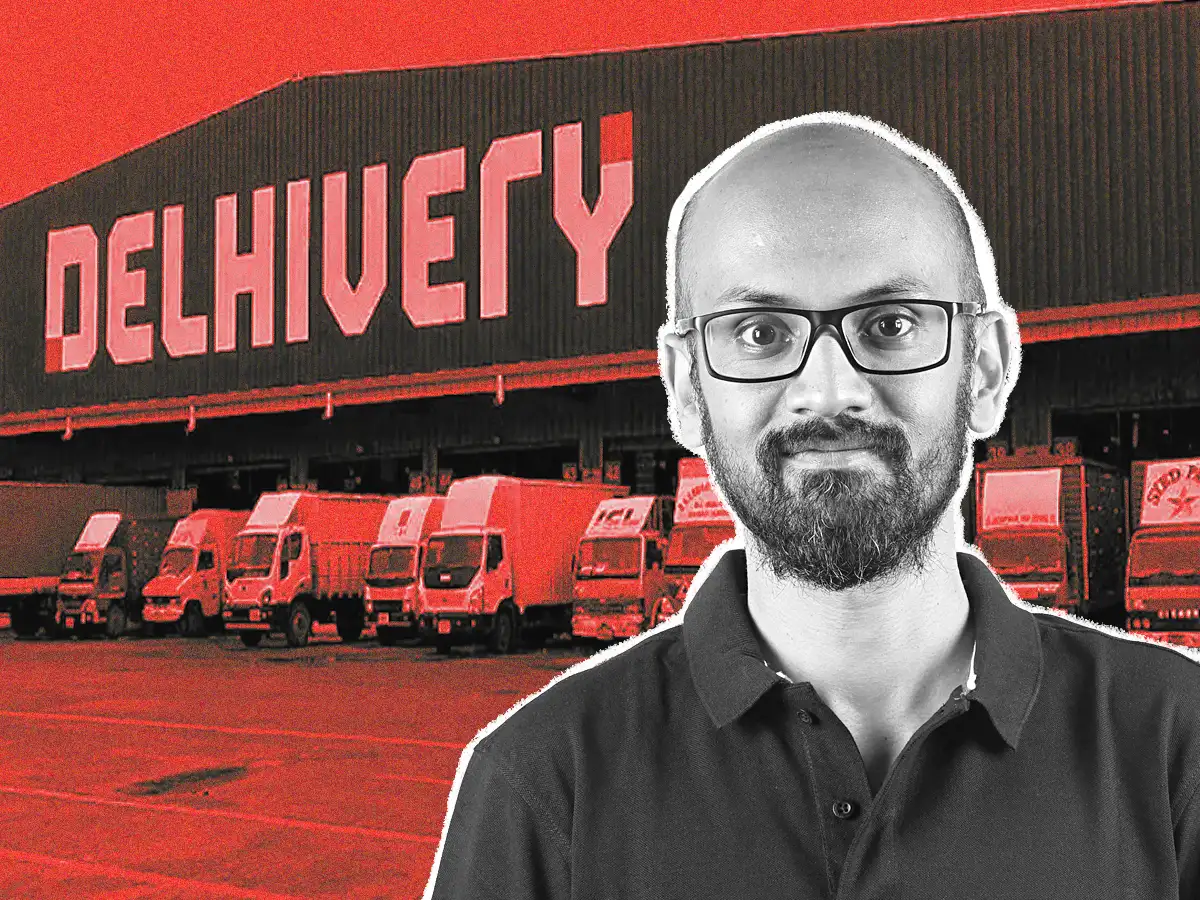
Delhivery’s performance has picked up as ecommerce deliveries surge across price points, founder and CEO Sahil Barua told us in an exclusive interview. He credited the gains to broader market growth and consolidation in the logistics sector.
What’s the trend: Mid- and premium-tier online shopping is growing, not just low-ticket orders. Category-focused marketplaces and D2C brands, especially in fashion, are also sending more shipments, Barua said.
“Earlier, many SMEs relied on local couriers and unorganised logistics providers. Now, with Delhivery Direct, we can see that business has been growing at over 50% annually for the past two years,” he said.
Driving the pace: Ecommerce firms are increasingly outsourcing logistics instead of running fleets in-house, giving Delhivery an additional lift. Barua expects the shift to accelerate as fuel and labour costs rise.
“Those are two of the three biggest cost heads in logistics. As costs rise, more efficient operators will have a greater advantage over less efficient ones,” he said.
Also Read: We don't intend to get into last-mile quick commerce delivery: Delhivery CEO Sahil Barua
On consolidation: Barua expects the logistics sector to consolidate further, arguing that the market can sustain only a handful of large players. “The problem is that there simply isn't enough incremental volume left to capture because the rest of us have already established strong positions. At the same time, costs are rising (fuel and labour).”
Background: In May, Delhivery reported a 30% year-on-year jump in revenue to Rs 2,850 crore for Q4, up from Rs 2,192 crore a year earlier. Barua said this is the first time the company has had a strong fourth quarter, with the third quarter traditionally the industry's best.

India’s quick commerce leaders Blinkit and Swiggy are staring at a new threat as Amazon and Flipkart crank up their 10-minute delivery push.
Driving the news:
Expert take: “Based on store expansion and aggressive discounts offered, we believe Amazon will take away some market share from the incumbents,” said Rashi Talwar Bhatia, chief investment officer at Ashmore Investment Management India.
Price wars 2.0: ET reported that Amazon and Flipkart have reignited discounting in quick commerce to win customers. Blinkit and Instamart, however, are largely steering clear of heavy price cuts as they chase profitability.
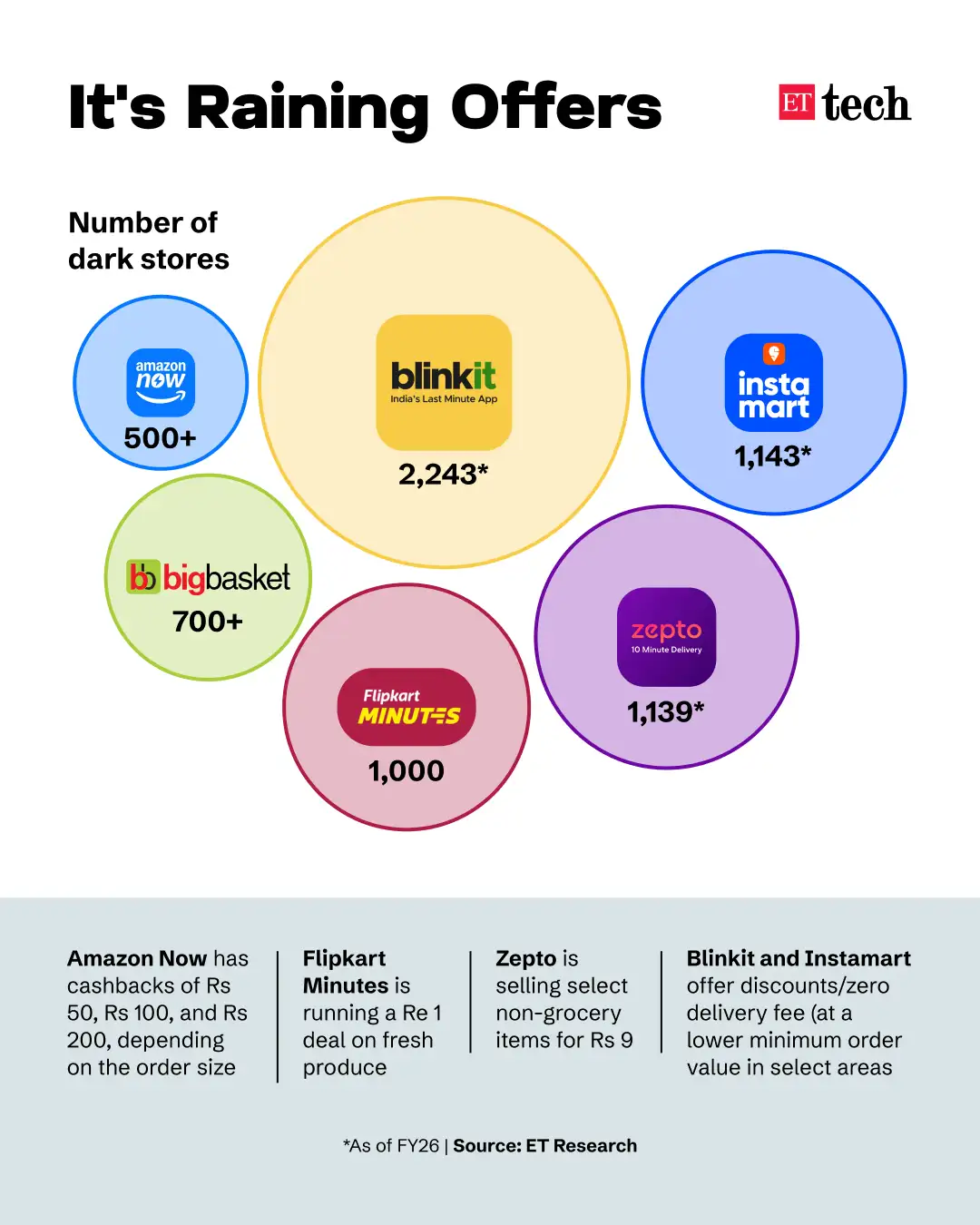
After scaling back discounts and adding new fees last year to shore up margins, the space is once again seeing cashbacks, freebies and promotional offers as the battle heats up.

As access to top US frontier AI models tightens, Indian companies are increasingly looking east – towards cheaper Asian models that promise comparable results.
A clear shift: Chinese open-source models, already popular among startups for their lower costs, are now attracting interest from large enterprises seeking to de-risk high-budget AI projects.
Expert take: “On capability, Chinese open-weight models are becoming extremely impressive,” said Nikhil Narendran, partner at law firm Trilegal and a tech policy thought leader. “They are far cheaper, can often be downloaded and self-hosted, and the gap with frontier systems is narrowing fast.”

Trust factor: Whether companies ultimately trust Chinese models remains an open question. Experts warn that without sovereign models, India risks merely “switching landlords”, moving dependence from US systems to Chinese ones.
Also Read: Chinese AI models up to 50 times cheaper as enterprises reassess OpenAI, Anthropic costs: JPMorgan

PayU India, the fintech arm of Dutch technology investor Prosus, has reported its first full year of operating profit in FY26.
Financials:
Where the growth is: PayU’s payments segment, its largest business, grew 10% to $577 million, contributing 74% of total revenue. Prosus said higher-margin value-added services and software-as-a-service (SaaS) products made up 33% of payments revenue.
Credit turns the corner: PayU India’s credit business also swung to profit in FY6.
Prosus said the credit business shifted to a partnership-led, digital-only model, helping cut the net loss rate from 4% to 5% a year earlier.

Late-night food delivery in India is surging, powered by the ongoing FIFA World Cup and shifting eating habits among younger consumers.
What’s happening?
Quote, unquote: “Sleep timings of India’s young consumers have changed to 2 am or even 3 am,” McDonald’s India (North and East) chairman Sanjeev Agrawal said. “We’re observing that the standard 9 pm dinner time has changed; this is driving significant change in order timings, and orders have now gone up further incrementally because of FIFA (World Cup).”
Also in the letter:
■ India’s Eastward AI tilt
■ PayU India’s profitable FY26
■ FIFA fuels midnight munchies
Delhivery founder Sahil Barua says rise in ecommerce deliveries driving company’s improved performance
Delhivery’s performance has picked up as ecommerce deliveries surge across price points, founder and CEO Sahil Barua told us in an exclusive interview. He credited the gains to broader market growth and consolidation in the logistics sector.
What’s the trend: Mid- and premium-tier online shopping is growing, not just low-ticket orders. Category-focused marketplaces and D2C brands, especially in fashion, are also sending more shipments, Barua said.
“Earlier, many SMEs relied on local couriers and unorganised logistics providers. Now, with Delhivery Direct, we can see that business has been growing at over 50% annually for the past two years,” he said.
Driving the pace: Ecommerce firms are increasingly outsourcing logistics instead of running fleets in-house, giving Delhivery an additional lift. Barua expects the shift to accelerate as fuel and labour costs rise.
“Those are two of the three biggest cost heads in logistics. As costs rise, more efficient operators will have a greater advantage over less efficient ones,” he said.
Also Read: We don't intend to get into last-mile quick commerce delivery: Delhivery CEO Sahil Barua
On consolidation: Barua expects the logistics sector to consolidate further, arguing that the market can sustain only a handful of large players. “The problem is that there simply isn't enough incremental volume left to capture because the rest of us have already established strong positions. At the same time, costs are rising (fuel and labour).”
Background: In May, Delhivery reported a 30% year-on-year jump in revenue to Rs 2,850 crore for Q4, up from Rs 2,192 crore a year earlier. Barua said this is the first time the company has had a strong fourth quarter, with the third quarter traditionally the industry's best.
Amazon’s rapid delivery push triggers $15 billion rout for Eternal, Swiggy
India’s quick commerce leaders Blinkit and Swiggy are staring at a new threat as Amazon and Flipkart crank up their 10-minute delivery push.
Driving the news:
- Blinkit parent Eternal's stock has dropped 28% from its October record high.
- Swiggy has fallen about 47% from its September peak.
- Together, the two have shed more than $15 billion (Rs 1.4 lakh crore) in market value as investors brace for sharper competition.
Expert take: “Based on store expansion and aggressive discounts offered, we believe Amazon will take away some market share from the incumbents,” said Rashi Talwar Bhatia, chief investment officer at Ashmore Investment Management India.
Price wars 2.0: ET reported that Amazon and Flipkart have reignited discounting in quick commerce to win customers. Blinkit and Instamart, however, are largely steering clear of heavy price cuts as they chase profitability.
After scaling back discounts and adding new fees last year to shore up margins, the space is once again seeing cashbacks, freebies and promotional offers as the battle heats up.
Alternatives to OpenAI, Anthropic: With US prime AI off the table, India opts for fine China
As access to top US frontier AI models tightens, Indian companies are increasingly looking east – towards cheaper Asian models that promise comparable results.
A clear shift: Chinese open-source models, already popular among startups for their lower costs, are now attracting interest from large enterprises seeking to de-risk high-budget AI projects.
- Last week, China’s Ziphu AI launched the GLM-5.2 model, which sits quite close to Anthropic’s Opus 4.8 on performance benchmarks.
- Another Chinese firm, 360 Security Technology, unveiled two AI security tools that gained traction.
- Japan’s Sakana AI launched Fugu, a multi-agent orchestrator designed to behave like a single model.
Expert take: “On capability, Chinese open-weight models are becoming extremely impressive,” said Nikhil Narendran, partner at law firm Trilegal and a tech policy thought leader. “They are far cheaper, can often be downloaded and self-hosted, and the gap with frontier systems is narrowing fast.”
Trust factor: Whether companies ultimately trust Chinese models remains an open question. Experts warn that without sovereign models, India risks merely “switching landlords”, moving dependence from US systems to Chinese ones.
Also Read: Chinese AI models up to 50 times cheaper as enterprises reassess OpenAI, Anthropic costs: JPMorgan
PayU India posts 11% revenue growth in FY26 at $781 million
PayU India, the fintech arm of Dutch technology investor Prosus, has reported its first full year of operating profit in FY26.
Financials:
- Revenue rose 13% to $781 million for the year ended March 31.
- Adjusted Ebitda came in at $18 million in FY26, compared with a loss of $25 million in FY25.
- PayU India processed $90 billion in total payment value during the year, with transactions up 49%.
Where the growth is: PayU’s payments segment, its largest business, grew 10% to $577 million, contributing 74% of total revenue. Prosus said higher-margin value-added services and software-as-a-service (SaaS) products made up 33% of payments revenue.
Credit turns the corner: PayU India’s credit business also swung to profit in FY6.
- Credit revenue rose 19% to $204 million.
- Adjusted Ebitda stood at $6 million, versus a loss of $28 million in FY25.
Prosus said the credit business shifted to a partnership-led, digital-only model, helping cut the net loss rate from 4% to 5% a year earlier.
Late-night food delivery booms as FIFA World Cup fuels demand
Late-night food delivery in India is surging, powered by the ongoing FIFA World Cup and shifting eating habits among younger consumers.
What’s happening?
- Food delivery apps, quick commerce firms and quick-service restaurant chains have seen a 12-15% rise in late-night and early-morning orders over the past two weeks.
- Even before the tournament, late-night orders had grown 10-12% over the past year, about double the pace a year earlier.
- Around 20% of McDonald’s outlets in Delhi-NCR, Lucknow and Jaipur now stay open until 3 am, with some serving until 6 am.
- Highway stores remain open round the clock.
Quote, unquote: “Sleep timings of India’s young consumers have changed to 2 am or even 3 am,” McDonald’s India (North and East) chairman Sanjeev Agrawal said. “We’re observing that the standard 9 pm dinner time has changed; this is driving significant change in order timings, and orders have now gone up further incrementally because of FIFA (World Cup).”
Want this newsletter delivered to your inbox?
I agree to receive newsletters and marketing communications via e-mail