
 Morning Dispatch Morning Dispatch |
WhatsApp usernames’ India hiccup; Zepto’s unusual legal structure
Want this newsletter delivered to your inbox?
I agree to receive newsletters and marketing communications via e-mail

Thank you for subscribing to Morning Dispatch
We'll soon meet in your inbox.
WhatsApp’s big bet on usernames has hit a regulatory speed bump in India. This and more in today’s ETtech Morning Dispatch.
Also in the letter:
■ E2W sales rise in June
■ ETtech Done Deals
■ Byju’s inventory issue
The Centre has served Meta a notice directing it to halt the rollout of WhatsApp’s new username feature and to submit a detailed explanation within three days.
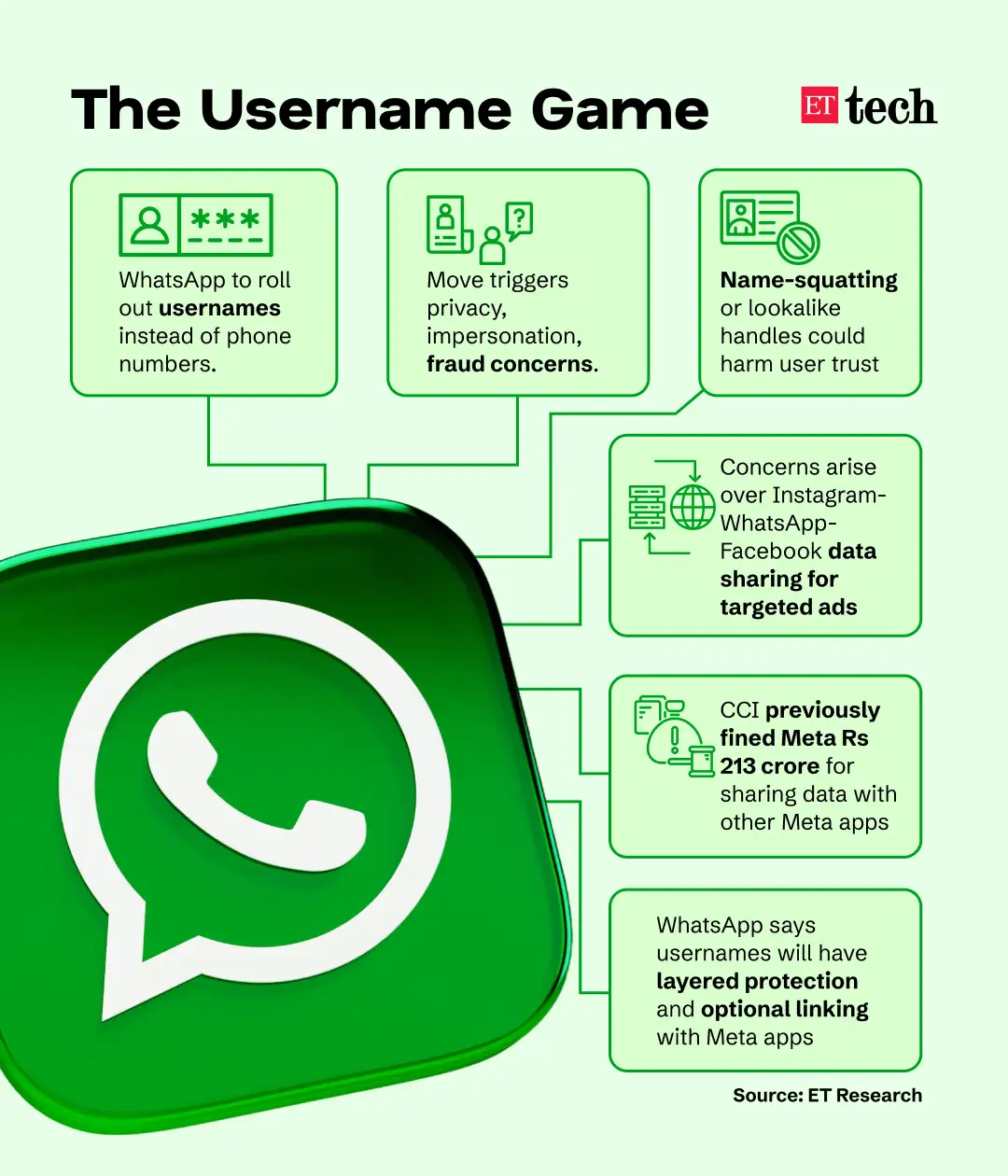
What’s the concern: Experts and observers say usernames could fuel impersonation and identity fraud. The Centre is now weighing legal options to restrict the feature.
Officials have also flagged questions about data sharing, deeper integration across Meta platforms, and whether usernames could expose more user information across its apps.
Also Read | Handle with care! Perks and perils of new WhatsApp shift
WhatsApp’s stance: Meta says usernames won’t change how Accounts Center works, and linking WhatsApp to Facebook or Instagram will remain optional.
A company spokesperson said the feature is not live yet and will roll out gradually. WhatsApp is reserving high‑profile usernames for verified owners and building in guardrails: users will need the exact handle to message people, new contacts will be capped, repeated username-guessing will be blocked, and additional abuse-detection systems will run in the background.
Key things to know:
Quick commerce player Zepto's unconventional legal structure is emerging as a regulatory overhang as it readies for an IPO, according to industry executives, analysts and institutional investors.
Tell me more: Unlike Blinkit's inventory-led model or Swiggy-owned Instamart's marketplace structure, Zepto blends wholesale operations with a marketplace. It recognises gross revenue from product sales, alongside commissions, logistics, advertising, and other fees.
What does the law say? Under India's foreign direct investment (FDI) rules, companies with majority foreign ownership – such as Zepto and Swiggy – can only run ecommerce platforms under the marketplace model and cannot own inventory.
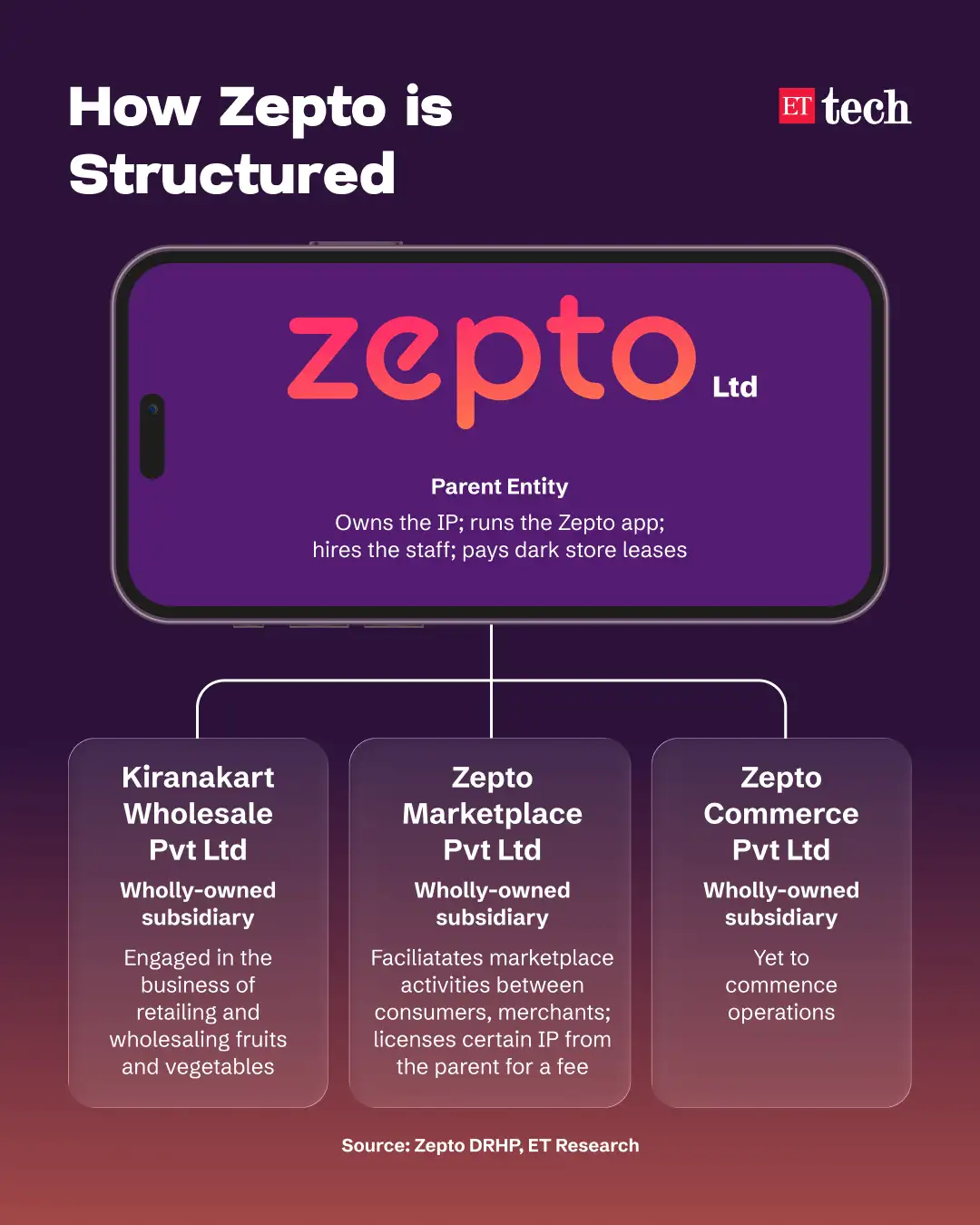
Zepto's group entities: The IPO-bound firm owns three entities -- Zepto Limited, Kiranakart Wholesale Pvt. Ltd and Zepto Marketplace Pvt. Ltd.
Bank of America said Zepto’s financials are harder to compare with peers because, unlike Swiggy’s commission-based marketplace model, the company reports revenue more like an inventory-led business.
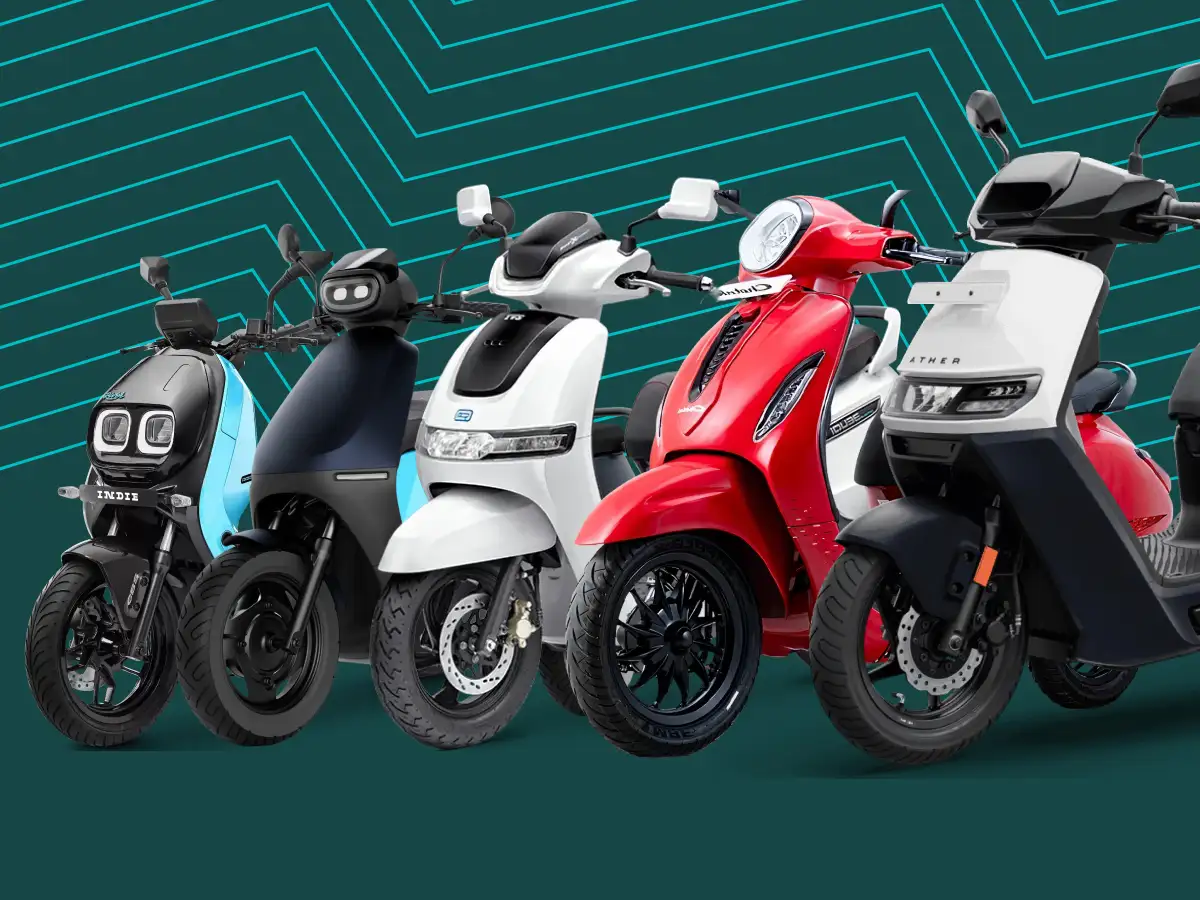
Electric two-wheeler sales rose 19% month-on-month in June to 1.81 lakh units, up from 1.51 lakh in May, signalling a steady recovery in demand after the April slowdown. Year-on-year (YoY), sales surged 75.3% from 1.06 lakh units in June last year.
Leaders hold ground: TVS Motor Company topped June registrations with 47,006 units, followed by Bajaj Auto at 43,234. Ather Energy sold 31,188, Hero MotoCorp 21,812, and Ola Electric 16,144.
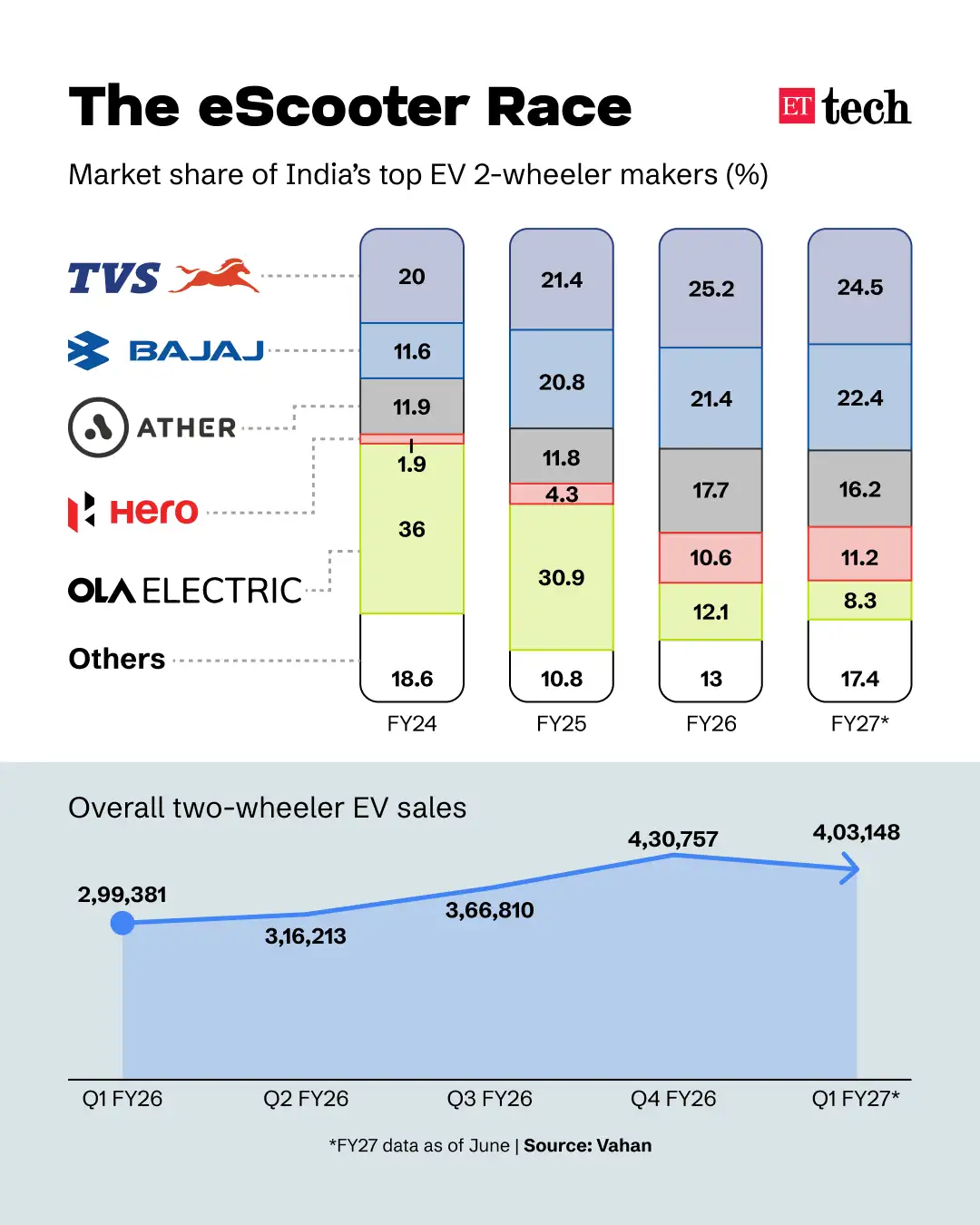
Quarterly momentum: Q1 FY27 E2W sales climbed 34.5% YoY to 4.03 lakh units, up from nearly 3 lakh a year earlier. Industry executives said the recently cleared Delhi EV policy – with its incentives, phased electrification mandates, and push on charging infrastructure – could add fresh tailwinds to adoption.
Under the policy, electric two-wheeler buyers will receive a purchase incentive spread over three years, with benefits tapering over time. In the first year, buyers will be eligible for an incentive of Rs 10,000 per kWh, capped at Rs 30,000 per vehicle.
 (L-R) Yash Jain, Aakash Goyal, Darshit Vora and Arpit Agarwal, Sparrow Capital
Sparrow Capital closes third fund: Seed-stage venture capital firm Sparrow Capital has closed its third fund at Rs 475 crore, as it looks to write larger cheques and lead more early-stage rounds, at a time when seed funding sizes in India are increasing even as fewer startups are getting funded.
Age Care Labs raises funds: At-home elder care startup Age Care Labs has raised Rs 85 crore ($9 million) from Zerodha-backed Rainmatter, Pegasus Finvest, the Shrem Group, and some family offices.
Byju’s hardware inventory gathers dust: Around two lakh tablets and thousands of laptops, headphones, routers, keyboards, printers, and webcams belonging to Byju’s remain stuck in a warehouse on Bengaluru’s outskirts, underscoring the slow progress in the insolvency process of Think & Learn, the parent of the troubled edtech firm.
■ Anthropic added a new security measure to get back into the Trump administration’s good graces (Wired)
■ China’s EV makers are taking over the European factories Ford and Nissan can’t fill (Rest of World)
■ Weak hands and blurry vision: Are you getting a 'phone body'? (BBC)
Also in the letter:
■ E2W sales rise in June
■ ETtech Done Deals
■ Byju’s inventory issue
Centre asks Meta to pause WhatsApp username rollout; seeks reply in three days
The Centre has served Meta a notice directing it to halt the rollout of WhatsApp’s new username feature and to submit a detailed explanation within three days.
What’s the concern: Experts and observers say usernames could fuel impersonation and identity fraud. The Centre is now weighing legal options to restrict the feature.
Officials have also flagged questions about data sharing, deeper integration across Meta platforms, and whether usernames could expose more user information across its apps.
Also Read | Handle with care! Perks and perils of new WhatsApp shift
WhatsApp’s stance: Meta says usernames won’t change how Accounts Center works, and linking WhatsApp to Facebook or Instagram will remain optional.
A company spokesperson said the feature is not live yet and will roll out gradually. WhatsApp is reserving high‑profile usernames for verified owners and building in guardrails: users will need the exact handle to message people, new contacts will be capped, repeated username-guessing will be blocked, and additional abuse-detection systems will run in the background.
Key things to know:
- If a business already has your phone number, it can continue to reach you on WhatsApp using that number.
- Switching to a username can make you harder to find, especially if the handle is not intuitive. Recruiters, prospective clients, marketing leads, or even new college and workplace contacts struggle to start a conversation if they don’t know your exact ID.
- WhatsApp’s voice and video calls on WhatsApp are account-based, not SIM-based, so those services will continue unchanged.
Zepto’s ops structure sparks regulatory fear ahead of IPO
Quick commerce player Zepto's unconventional legal structure is emerging as a regulatory overhang as it readies for an IPO, according to industry executives, analysts and institutional investors.
Tell me more: Unlike Blinkit's inventory-led model or Swiggy-owned Instamart's marketplace structure, Zepto blends wholesale operations with a marketplace. It recognises gross revenue from product sales, alongside commissions, logistics, advertising, and other fees.
What does the law say? Under India's foreign direct investment (FDI) rules, companies with majority foreign ownership – such as Zepto and Swiggy – can only run ecommerce platforms under the marketplace model and cannot own inventory.
Zepto's group entities: The IPO-bound firm owns three entities -- Zepto Limited, Kiranakart Wholesale Pvt. Ltd and Zepto Marketplace Pvt. Ltd.
Bank of America said Zepto’s financials are harder to compare with peers because, unlike Swiggy’s commission-based marketplace model, the company reports revenue more like an inventory-led business.
E2W sales climb 19% in June to 1.81 lakh units
Electric two-wheeler sales rose 19% month-on-month in June to 1.81 lakh units, up from 1.51 lakh in May, signalling a steady recovery in demand after the April slowdown. Year-on-year (YoY), sales surged 75.3% from 1.06 lakh units in June last year.
Leaders hold ground: TVS Motor Company topped June registrations with 47,006 units, followed by Bajaj Auto at 43,234. Ather Energy sold 31,188, Hero MotoCorp 21,812, and Ola Electric 16,144.
Quarterly momentum: Q1 FY27 E2W sales climbed 34.5% YoY to 4.03 lakh units, up from nearly 3 lakh a year earlier. Industry executives said the recently cleared Delhi EV policy – with its incentives, phased electrification mandates, and push on charging infrastructure – could add fresh tailwinds to adoption.
Under the policy, electric two-wheeler buyers will receive a purchase incentive spread over three years, with benefits tapering over time. In the first year, buyers will be eligible for an incentive of Rs 10,000 per kWh, capped at Rs 30,000 per vehicle.
Other Top Stories By Our Reporters
Sparrow Capital closes third fund: Seed-stage venture capital firm Sparrow Capital has closed its third fund at Rs 475 crore, as it looks to write larger cheques and lead more early-stage rounds, at a time when seed funding sizes in India are increasing even as fewer startups are getting funded.
Age Care Labs raises funds: At-home elder care startup Age Care Labs has raised Rs 85 crore ($9 million) from Zerodha-backed Rainmatter, Pegasus Finvest, the Shrem Group, and some family offices.
Byju’s hardware inventory gathers dust: Around two lakh tablets and thousands of laptops, headphones, routers, keyboards, printers, and webcams belonging to Byju’s remain stuck in a warehouse on Bengaluru’s outskirts, underscoring the slow progress in the insolvency process of Think & Learn, the parent of the troubled edtech firm.
Global Picks We Are Reading
■ Anthropic added a new security measure to get back into the Trump administration’s good graces (Wired)
■ China’s EV makers are taking over the European factories Ford and Nissan can’t fill (Rest of World)
■ Weak hands and blurry vision: Are you getting a 'phone body'? (BBC)
Want this newsletter delivered to your inbox?
I agree to receive newsletters and marketing communications via e-mail