
 Morning Dispatch Morning Dispatch |
VC fundraising hits wall; WhatsApp’s new privacy headache
Want this newsletter delivered to your inbox?
I agree to receive newsletters and marketing communications via e-mail

Thank you for subscribing to Morning Dispatch
We'll soon meet in your inbox.
Indian VC firms are facing their hardest fundraising year in a decade as LPs tighten filters and demand cash returns. This and more in today's Morning Dispatch.
Also in the letter:
■ Inside Oyo’s FY26 profit
■ New AI skills in demand
■ Agnikul’s new launch

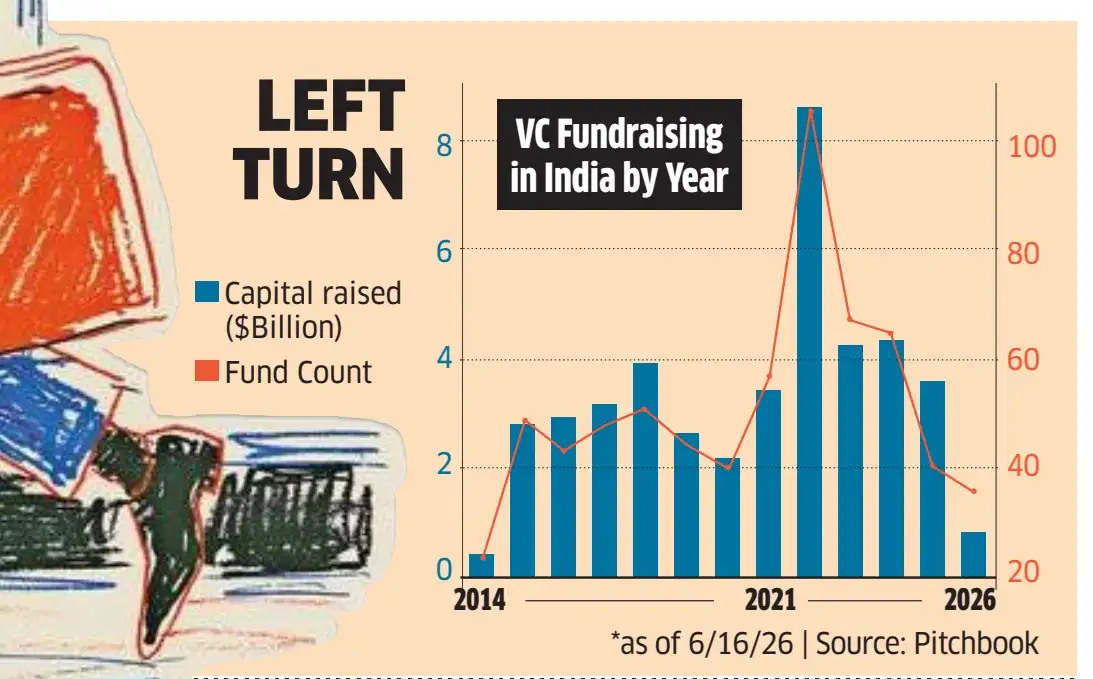
Indian venture capital firms are staring at their toughest fundraising year in more than a decade. PitchBook data reviewed by ET shows they’ve raised just $820 million across 32 funds as of mid-June.
That’s a sharp drop from $3.58 billion in 2025 and a far cry from the 2022 peak of $8.59 billion, when easy liquidity fuelled ever-larger funds. The second half could look better – Mettle Capital, Ambition Capital, Lightspeed, and Z47 are all on the road – but LPs are now pressing much harder on the question that matters: cash back.
Smaller funds, harder filters:
Global capital rethinks India:

WhatsApp's move to let users connect via usernames instead of phone numbers – hailed by some as a privacy upgrade – is already drawing criticism on privacy grounds.
What’s happening: Users worry the change could fuel imper impersonation and tighten integration with parent Meta's broader advertising stack across Facebook and Instagram. WhatsApp told us those fears were overblown.
The feature, set to roll out later this year, will let people find and message each other using usernames without sharing their phone numbers.
Also Read | WhatsApp opens username reservations: All you need to know
What’s the issue: Experts say usernames do reduce exposure of personal phone numbers and lower risks such as SIM swapping and contact scraping.
But they also warn that the shift raises fresh questions on data sharing, platform integration and identity fraud. Scammers could use lookalike usernames to impersonate brands, banks, government agencies, or celebrities, they said.
WhatsApp’s take: "When the feature launches later this year, usernames will not change anything about how accounts centre works," a Meta spokesperson said, adding that linking WhatsApp with Facebook or Instagram through Accounts Centre would remain entirely optional.
Background: The rollout will be among the first major decisions at WhatsApp under its new CEO Kunal Shah, whom Meta brought on earlier this month.
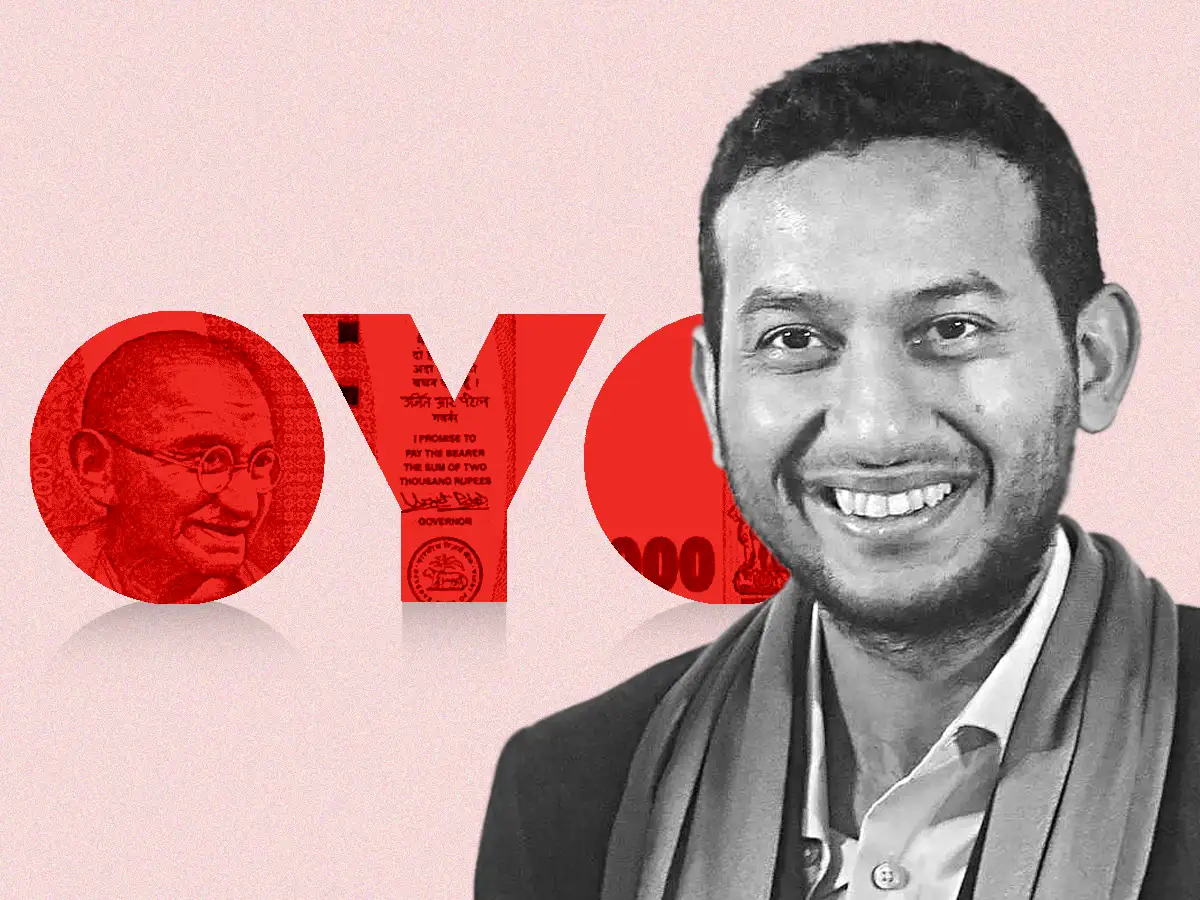 Ritesh Agarwal, CEO, OYO Rooms
Hospitality chain Oyo’s parent, Prism, has reported a profit of Rs 748 crore for the nine months ended Dec 31, 2025, according to the updated draft red herring prospectus-I (UDRHP-I) filed with Sebi for a Rs 6,650 crore initial public offering (IPO).
Driving the profit: The figure is sharply higher than the Rs 245 crore reported in FY25 and the Rs 230 crore reported in FY24. This big swing, from a Rs 1,287 crore loss in FY23, stems largely from a deferred-tax credit rather than a sudden surge in underlying earnings.
Also Read | Oyo parent files updated DRHP for Rs 6,650 crore IPO: Key things to know
Jargon buster: A deferred-tax credit is an accounting entry that reflects the expected use of accumulated losses or other tax assets to offset future taxable income. It boosts reported profit on paper but does not generate cash during the period.
By the numbers: For the nine months ended December 31, 2025, Prism recorded a deferred tax credit of Rs 559 crore. Its profit before tax for the same period stood at Rs 245 crore.
Issue details:

A year ago, prompt engineering sat at the top of India’s AI job market. That moment has passed. Recruiters told us companies are already looking beyond it.
Now hiring: Dedicated prompt-engineering roles have plateaued as companies seek engineers who can design, build, and orchestrate agentic or autonomous AI systems.
Data from Quess Corp-IT staffing shows 49% of active AI hiring demand is now concentrated in professionals with three to five years of experience – a signal that employers want engineers who can immediately build and deploy AI systems in production.
Where’s the demand: The shift is now visible across hiring mandates. Enterprises now want engineers who can ship production-grade AI systems, not just interact with large language models.
Expert take: “Hiring requirements asking for AI agents, agentic AI, autonomous workflows and AI orchestration have grown by almost 180% to 220% over the last 12 months,” said Neeti Sharma, chief executive of staffing firm TeamLease Digital. “While these roles still account for about 5% to 8% of overall hiring volumes, they are among the fastest-growing categories.”
Also Read: AI startups fuel talent war as hiring surges across India
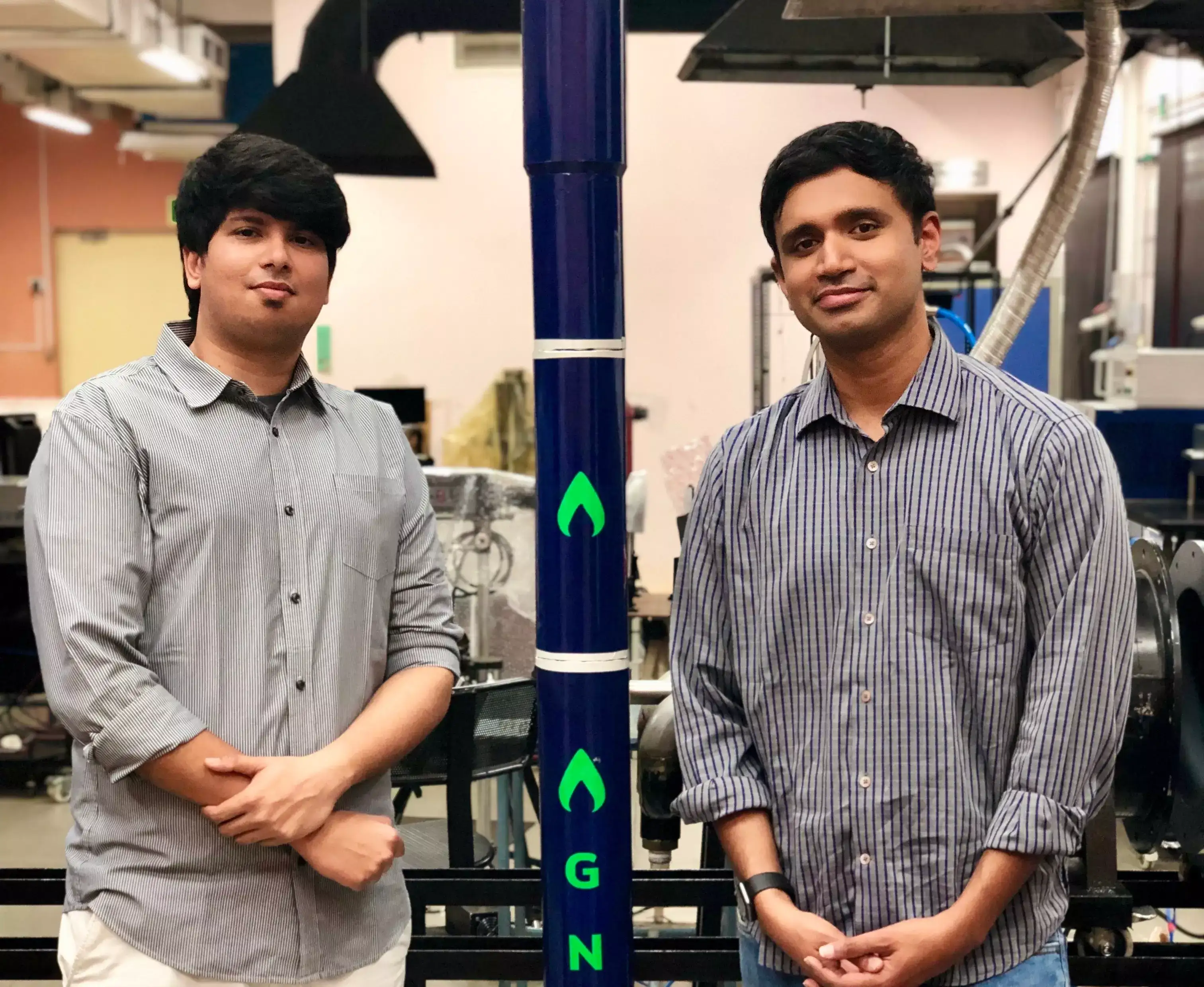 From left: Agnikul Cosmos founders Moin SPM and Srinath Ravichandran
Agnikul’s new launch: Indian launch vehicle startup Agnikul Cosmos and Finland-based ICEYE are jointly building a sovereign Synthetic Aperture Radar (SAR) Earth observation capability from India, combining indigenous launch infrastructure with advanced radar imaging technology, the chief executive of the local company told ET.
Fibe files for IPO: Digital lending startup Fibe has filed its draft papers with market regulator Sebi seeking to raise Rs 750 crore in fresh capital. The company is also selling around 40 million shares through an offer-for-sale component of the IPO.
Firstsource CFO violates insider trading code: Mid-tier BPM firm Firstsource Solutions has disclosed an inadvertent violation of its insider trading code by its chief financial officer, Dinesh Jain, who traded in the company's shares during the trading window closure period and also executed contra trades, according to a stock exchange filing on Monday.
■ Is AI an exoskeleton for the mind? (FT)
■ America’s immigrant tech workers are paying an uncertainty tax (Rest of World)
■ The abundant but expensive energy source that's under your feet (BBC)
Also in the letter:
■ Inside Oyo’s FY26 profit
■ New AI skills in demand
■ Agnikul’s new launch
Capital Call: Indian VCs face toughest fundraising market in a decade
Indian venture capital firms are staring at their toughest fundraising year in more than a decade. PitchBook data reviewed by ET shows they’ve raised just $820 million across 32 funds as of mid-June.
That’s a sharp drop from $3.58 billion in 2025 and a far cry from the 2022 peak of $8.59 billion, when easy liquidity fuelled ever-larger funds. The second half could look better – Mettle Capital, Ambition Capital, Lightspeed, and Z47 are all on the road – but LPs are now pressing much harder on the question that matters: cash back.
Smaller funds, harder filters:
- LPs are prioritising DPI (actual cash returned) over paper markups in private portfolios.
- First-time managers and spinouts from large platforms are finding the bar meaningfully higher.
- Several funds are pitching smaller, more focused vehicles as LPs question whether India can productively absorb very large pools at venture-style return expectations.
Global capital rethinks India:
- Gulf sovereign and institutional investors, once active in India-focused funds, have slowed commitments amid geopolitical uncertainty.
- Global LP attention has swung toward AI infrastructure and large US tech bets.
- India’s AI and deeptech opportunity set is still early, pushing VCs toward more disciplined, slower deployment.
Worries over gaming of WhatsApp usernames
WhatsApp's move to let users connect via usernames instead of phone numbers – hailed by some as a privacy upgrade – is already drawing criticism on privacy grounds.
What’s happening: Users worry the change could fuel imper impersonation and tighten integration with parent Meta's broader advertising stack across Facebook and Instagram. WhatsApp told us those fears were overblown.
The feature, set to roll out later this year, will let people find and message each other using usernames without sharing their phone numbers.
Also Read | WhatsApp opens username reservations: All you need to know
What’s the issue: Experts say usernames do reduce exposure of personal phone numbers and lower risks such as SIM swapping and contact scraping.
But they also warn that the shift raises fresh questions on data sharing, platform integration and identity fraud. Scammers could use lookalike usernames to impersonate brands, banks, government agencies, or celebrities, they said.
WhatsApp’s take: "When the feature launches later this year, usernames will not change anything about how accounts centre works," a Meta spokesperson said, adding that linking WhatsApp with Facebook or Instagram through Accounts Centre would remain entirely optional.
Background: The rollout will be among the first major decisions at WhatsApp under its new CEO Kunal Shah, whom Meta brought on earlier this month.
Oyo IPO: How real is Oyo parent Prism’s Rs 748 crore net profit
Hospitality chain Oyo’s parent, Prism, has reported a profit of Rs 748 crore for the nine months ended Dec 31, 2025, according to the updated draft red herring prospectus-I (UDRHP-I) filed with Sebi for a Rs 6,650 crore initial public offering (IPO).
Driving the profit: The figure is sharply higher than the Rs 245 crore reported in FY25 and the Rs 230 crore reported in FY24. This big swing, from a Rs 1,287 crore loss in FY23, stems largely from a deferred-tax credit rather than a sudden surge in underlying earnings.
Also Read | Oyo parent files updated DRHP for Rs 6,650 crore IPO: Key things to know
Jargon buster: A deferred-tax credit is an accounting entry that reflects the expected use of accumulated losses or other tax assets to offset future taxable income. It boosts reported profit on paper but does not generate cash during the period.
By the numbers: For the nine months ended December 31, 2025, Prism recorded a deferred tax credit of Rs 559 crore. Its profit before tax for the same period stood at Rs 245 crore.
Issue details:
- The entire offer is a fresh issue of shares, so all proceeds will go to the company.
- Prism plans to use Rs 4,987 crore from the IPO proceeds to repay or prepay borrowings.
- The IPO, which is Oyo's third attempt at going public, is a key part of its $830-million term loan agreement. As per the loan conditions, Oyo is required to use any cash proceeds from a fundraise, including an IPO, towards repayment of the debt.
Orchestration layer is new battleground for Indian AI talent
A year ago, prompt engineering sat at the top of India’s AI job market. That moment has passed. Recruiters told us companies are already looking beyond it.
Now hiring: Dedicated prompt-engineering roles have plateaued as companies seek engineers who can design, build, and orchestrate agentic or autonomous AI systems.
Data from Quess Corp-IT staffing shows 49% of active AI hiring demand is now concentrated in professionals with three to five years of experience – a signal that employers want engineers who can immediately build and deploy AI systems in production.
Where’s the demand: The shift is now visible across hiring mandates. Enterprises now want engineers who can ship production-grade AI systems, not just interact with large language models.
Expert take: “Hiring requirements asking for AI agents, agentic AI, autonomous workflows and AI orchestration have grown by almost 180% to 220% over the last 12 months,” said Neeti Sharma, chief executive of staffing firm TeamLease Digital. “While these roles still account for about 5% to 8% of overall hiring volumes, they are among the fastest-growing categories.”
Also Read: AI startups fuel talent war as hiring surges across India
Other Top Stories By Our Reporters
Agnikul’s new launch: Indian launch vehicle startup Agnikul Cosmos and Finland-based ICEYE are jointly building a sovereign Synthetic Aperture Radar (SAR) Earth observation capability from India, combining indigenous launch infrastructure with advanced radar imaging technology, the chief executive of the local company told ET.
Fibe files for IPO: Digital lending startup Fibe has filed its draft papers with market regulator Sebi seeking to raise Rs 750 crore in fresh capital. The company is also selling around 40 million shares through an offer-for-sale component of the IPO.
Firstsource CFO violates insider trading code: Mid-tier BPM firm Firstsource Solutions has disclosed an inadvertent violation of its insider trading code by its chief financial officer, Dinesh Jain, who traded in the company's shares during the trading window closure period and also executed contra trades, according to a stock exchange filing on Monday.
Global Picks We Are Reading
■ Is AI an exoskeleton for the mind? (FT)
■ America’s immigrant tech workers are paying an uncertainty tax (Rest of World)
■ The abundant but expensive energy source that's under your feet (BBC)
Want this newsletter delivered to your inbox?
I agree to receive newsletters and marketing communications via e-mail