
 Morning Dispatch Morning Dispatch |
TCS CEO on Q1 performance; B Capital on India’s IPO market
Want this newsletter delivered to your inbox?
I agree to receive newsletters and marketing communications via e-mail

Thank you for subscribing to Morning Dispatch
We'll soon meet in your inbox.
Happy Monday! TCS top deck told us that the company sees a better Q2 on stressed sectors’ turnaround. This and more in today’s ETtech Morning Dispatch.
Also in the letter:
■ Explained: Ecomm under lens
■ Private late-stage cheques go big
■ Polymatech explores IPO
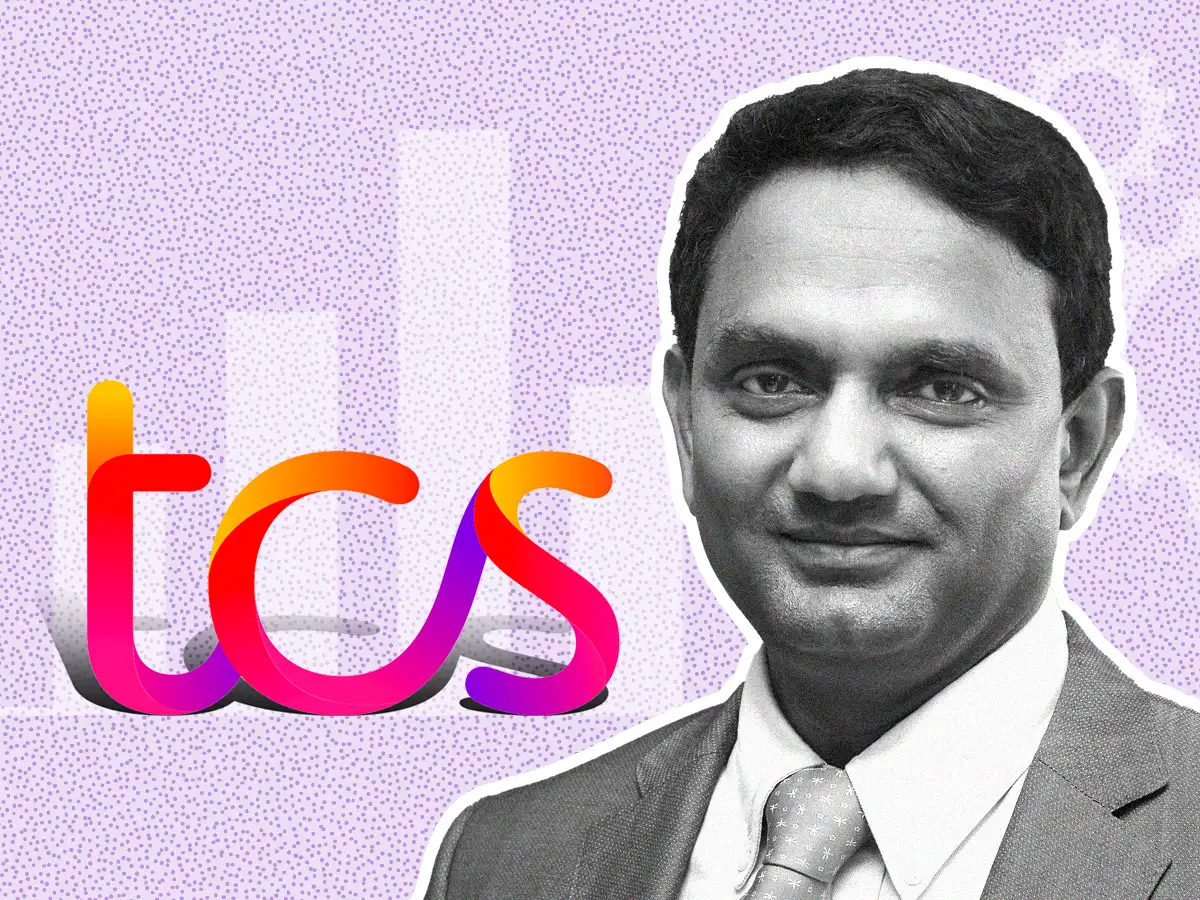
India’s largest software services firm, Tata Consultancy Services (TCS), is betting on a stronger second quarter as pressure eases on stressed sectors and its AI deal pipeline expands, CEO K Krithivasan and COO Aarthi Subramanian told us in a chat.
Background: On Thursday, the company reported flat sequential growth and a 13.9% year-on-year rise in increase in rupee terms.
On Q1: “The macroeconomic conditions that we spoke about around March last year have continued. In fact, the West Asia crisis, which we had hoped would ease, is still ongoing,” Krithivasan said, adding that some industries continue to remain under pressure.
Subramanian stated the company expects sectors such as manufacturing and life sciences to turn positive in the coming quarters.
On AI deals: Subramanian clarified that TCS uses a narrow, specific definition of AI revenue. “The $2.6 billion AI revenue refers specifically to pure-play AI transformation projects. It's a new area. Enterprises completed numerous pilots in 2024 and 2025. Last year, we saw meaningful scaling of projects, and that has continued,” she said.
On headcount: “It is about the right talent pool. We constantly evaluate where we need to hire people with the capabilities our customers require. At the same time, we calibrate hiring based on the demand we see,” the CEO said.

IPO pricing for venture-backed companies in India has largely stabilised as markwets deepen and domestic mutual funds add a layer of support, B Capital’s Howard Morgan and Karan Mohla told us in an interaction.
IPO-ready: "A few years ago, it was very hard to do an IPO in India, and the pricing wasn't very stable. Now, the market has gotten deeper, so there is decent pricing," cofounder and general partner Morgan told us.
Tell me more: Mohla, a general partner at the VC firm, said the number of tech and VC-backed companies going public is rising each year, making domestic investors more comfortable valuing them beyond traditional profitability and cash flow metrics.
"As FIIs come back, and we do expect them to come back in the second half of this year and going forward, you'll probably see a little bit more loosening on how some of these IPOs are priced," Mohla said.
About the fund: B Capital recently closed Ascent Fund III at about $500 million, nearly doubling its previous fund. In an exclusive chat in March this year, Morgan and Mohla had detailed the surge of capital flowing into AI startups.

Quick commerce is back in the spotlight – and this time, regulators and industry bodies are questioning the business models behind it.
What are the concerns?

India’s late-stage funding is getting bigger, but more concentrated. In the first half of 2026, fewer deals closed, but the average cheque size more than doubled to about $86 million.
Number-wise:
Polymatech’s listing push: Oragadam-based Polymatech Electronics, which designs and packages opto-semiconductors, is exploring a public listing in both India and the US. The move is part of its plan to raise capital for the next phase of expansion in semiconductor and consumer electronics, managing director and chief executive Eswara Nandam told ET.
VCs double down on India’s AI upstarts: Funding in Indian AI startups crossed the $1-billion mark in the first six months of 2026, as venture capital investors double down on artificial intelligence amid a shift towards frontier, cutting-edge technology.
■ Microsoft reports a massive 25% jump in emissions (Wired)
■ Why the chips are down despite the AI boom (FT)
■ Older adults know AI is slop. They just like it (Rest of World)
Also in the letter:
■ Explained: Ecomm under lens
■ Private late-stage cheques go big
■ Polymatech explores IPO
TCS sees better Q2 show on stressed sectors’ turnaround
India’s largest software services firm, Tata Consultancy Services (TCS), is betting on a stronger second quarter as pressure eases on stressed sectors and its AI deal pipeline expands, CEO K Krithivasan and COO Aarthi Subramanian told us in a chat.
Background: On Thursday, the company reported flat sequential growth and a 13.9% year-on-year rise in increase in rupee terms.
On Q1: “The macroeconomic conditions that we spoke about around March last year have continued. In fact, the West Asia crisis, which we had hoped would ease, is still ongoing,” Krithivasan said, adding that some industries continue to remain under pressure.
Subramanian stated the company expects sectors such as manufacturing and life sciences to turn positive in the coming quarters.
On AI deals: Subramanian clarified that TCS uses a narrow, specific definition of AI revenue. “The $2.6 billion AI revenue refers specifically to pure-play AI transformation projects. It's a new area. Enterprises completed numerous pilots in 2024 and 2025. Last year, we saw meaningful scaling of projects, and that has continued,” she said.
On headcount: “It is about the right talent pool. We constantly evaluate where we need to hire people with the capabilities our customers require. At the same time, we calibrate hiring based on the demand we see,” the CEO said.
VC-backed IPO pricing stabilising in India, likely to ease further: B Capital
IPO pricing for venture-backed companies in India has largely stabilised as markwets deepen and domestic mutual funds add a layer of support, B Capital’s Howard Morgan and Karan Mohla told us in an interaction.
IPO-ready: "A few years ago, it was very hard to do an IPO in India, and the pricing wasn't very stable. Now, the market has gotten deeper, so there is decent pricing," cofounder and general partner Morgan told us.
Tell me more: Mohla, a general partner at the VC firm, said the number of tech and VC-backed companies going public is rising each year, making domestic investors more comfortable valuing them beyond traditional profitability and cash flow metrics.
"As FIIs come back, and we do expect them to come back in the second half of this year and going forward, you'll probably see a little bit more loosening on how some of these IPOs are priced," Mohla said.
About the fund: B Capital recently closed Ascent Fund III at about $500 million, nearly doubling its previous fund. In an exclusive chat in March this year, Morgan and Mohla had detailed the surge of capital flowing into AI startups.
ETtech Explainer: Why online commerce business models are under scrutiny
Quick commerce is back in the spotlight – and this time, regulators and industry bodies are questioning the business models behind it.
What are the concerns?
- The All India Consumer Products Distributors Federation has urged the government to examine whether Amazon and Flipkart’s expansion into quick commerce complies with FDI rules for ecommerce.
- Zepto’s unconventional corporate structure has also triggered regulatory questions among investors.
- Under India’s FDI regime, foreign-owned ecommerce companies can run marketplaces, but cannot operate as inventory-owning retailers.
- Platforms cannot own stock, influence prices or favour specific sellers.
- Dark store networks used in quick commerce raise questions about who really owns inventory, who sets prices, and how logistics dovetail with marketplace rules.
- Regulators and industry bodies have previously flagged ecommerce over preferential treatment of select sellers, exclusive partnerships, and deep discounting.
- Food delivery and private-label bets – such as Zomato and Swiggy’s cloud kitchens and in-house brands – have also drawn criticism.
- As platforms chase higher-margin categories, competition and tighter control over supply chains, the tension between growth, competition and compliance is resurfacing
Private late-stage cheques go big at $86 million average this year
India’s late-stage funding is getting bigger, but more concentrated. In the first half of 2026, fewer deals closed, but the average cheque size more than doubled to about $86 million.
Number-wise:
- Total late-stage funding increased to $3.8 billion across 44 rounds in January-June.
- That’s up from $3 billion across 78 rounds in the second half of 2025, and $3.5 billion across 94 rounds in the first half of 2025, according to Tracxn.
- The average cheque size jumped from about $37 million in the first half of 2025 and $38 million in the second half, to roughly $86 million in H1 2026.
- Capital is clustering around AI infrastructure, data centres, clean energy, lending platforms and a handful of scaled consumer platforms.
- Large deals involved companies such as Cred, Nxtra, Neysa, GreenCell Mobility and KreditBee.
- Pure consumer internet deals were limited, and many of them included secondary share sales.
Other Top Stories By Our Reporters
Polymatech’s listing push: Oragadam-based Polymatech Electronics, which designs and packages opto-semiconductors, is exploring a public listing in both India and the US. The move is part of its plan to raise capital for the next phase of expansion in semiconductor and consumer electronics, managing director and chief executive Eswara Nandam told ET.
VCs double down on India’s AI upstarts: Funding in Indian AI startups crossed the $1-billion mark in the first six months of 2026, as venture capital investors double down on artificial intelligence amid a shift towards frontier, cutting-edge technology.
Global Picks We Are Reading
■ Microsoft reports a massive 25% jump in emissions (Wired)
■ Why the chips are down despite the AI boom (FT)
■ Older adults know AI is slop. They just like it (Rest of World)
Want this newsletter delivered to your inbox?
I agree to receive newsletters and marketing communications via e-mail