
 Morning Dispatch Morning Dispatch |
Sugar’s valuation slump; Slice takes a hit
Want this newsletter delivered to your inbox?
I agree to receive newsletters and marketing communications via e-mail

Thank you for subscribing to Morning Dispatch
We'll soon meet in your inbox.
Happy Friday! A91 Partners is backing Sugar Cosmetics in a round that will see the beauty brand’s valuation fall sharply. This and more in today’s ETtech Morning Dispatch.
Also in the letter:
■ SiMa AI CEO on India’s chip bet
■ NHRC Probes CSAM Ads
■ Instagram CSAM ads under fire
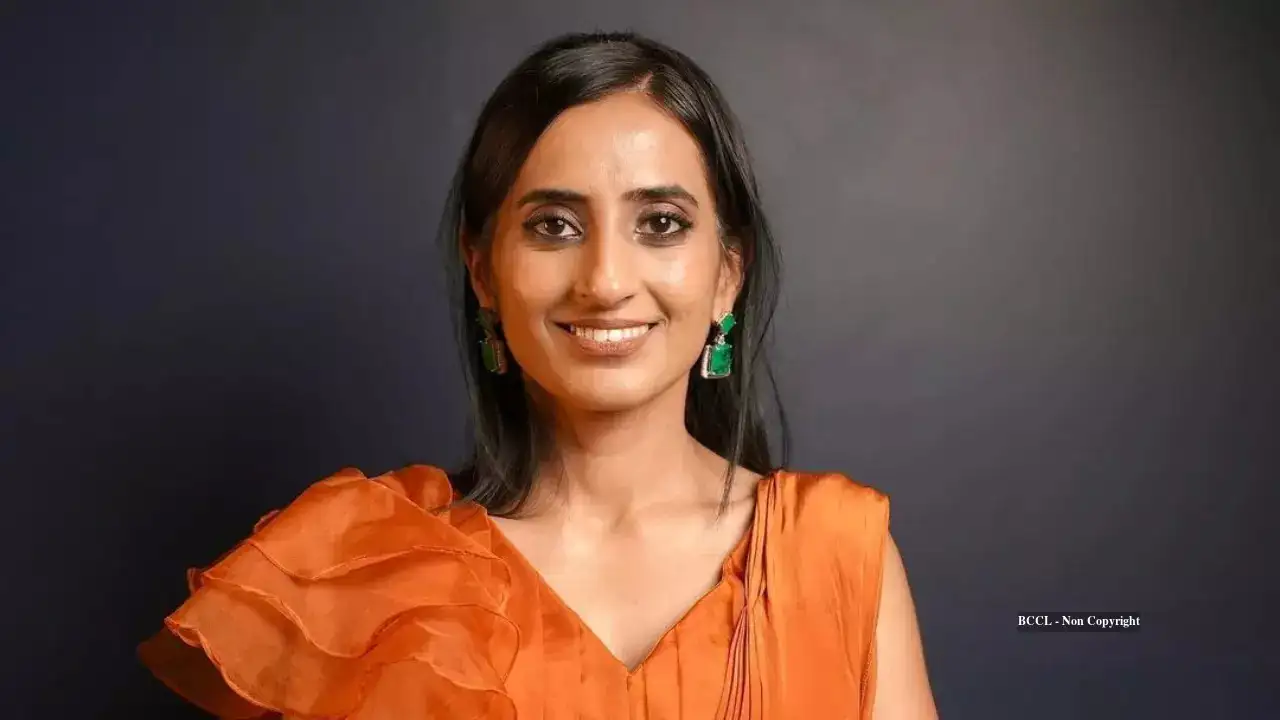 Vineeta Singh, cofounder and CEO, SUGAR Cosmetics
Mumbai-based beauty brand Sugar Cosmetics is raising Rs 140-150 crore from existing investor A91 Partners at a valuation of Rs 500-600 crore, people familiar with the matter said.
Driving the news:
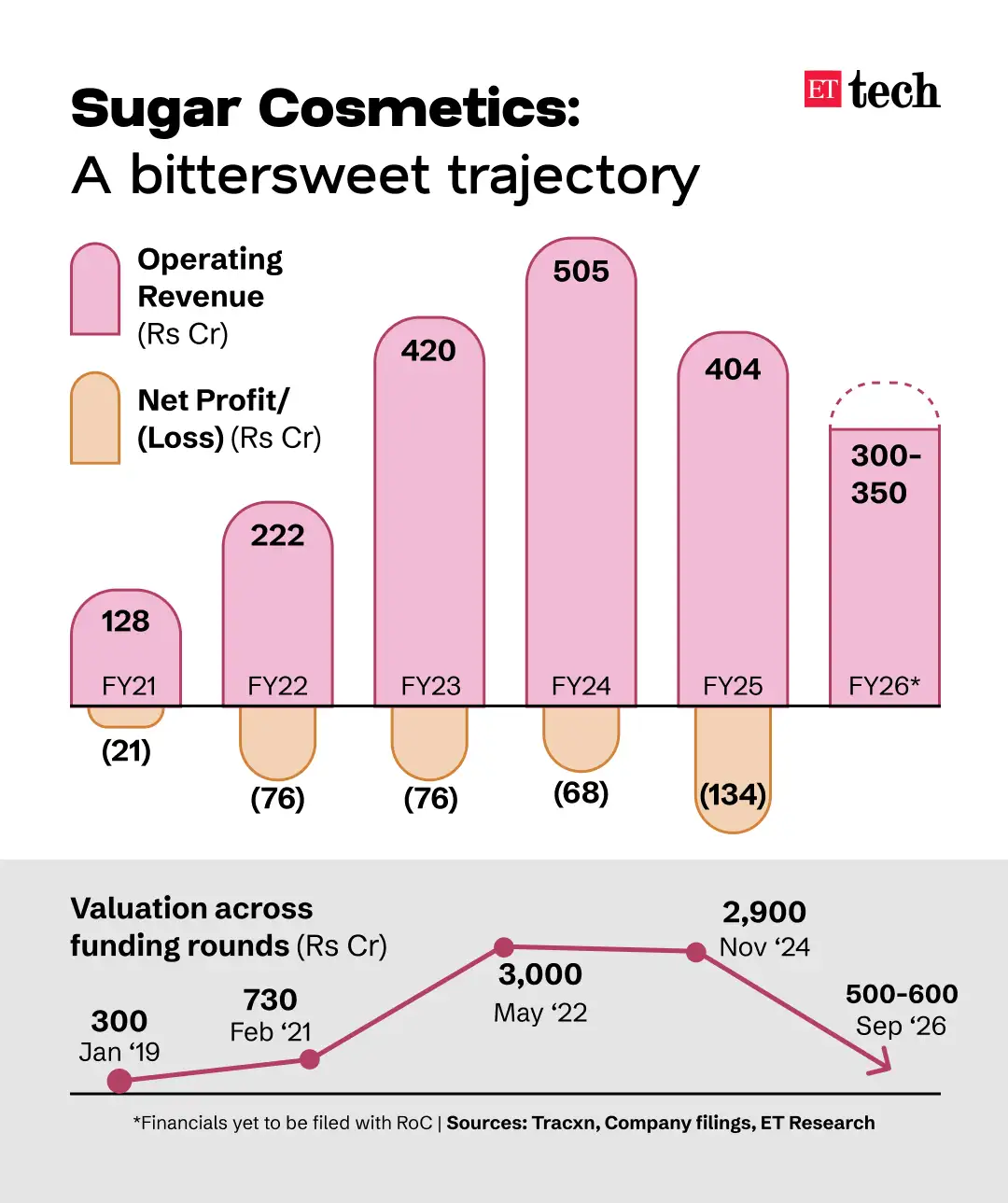 More on the round: A91 Partners, which owns around 20% of Sugar Cosmetics, according to Tracxn, is expected to significantly raise its stake through the transaction.
The funds will be used to build “incremental working capital capacity for growth, particularly to support the momentum in our skincare brand Quench”, the company said.
 Rajan Bajaj, CEO, Slice
Slice Small Finance Bank has raised about $100 million at a valuation of $450-470 million, its first institutional funding as a bank and a steep reset from the $1.3 billion it commanded before its merger with North East Small Finance Bank.
The deal:
 Why it matters:
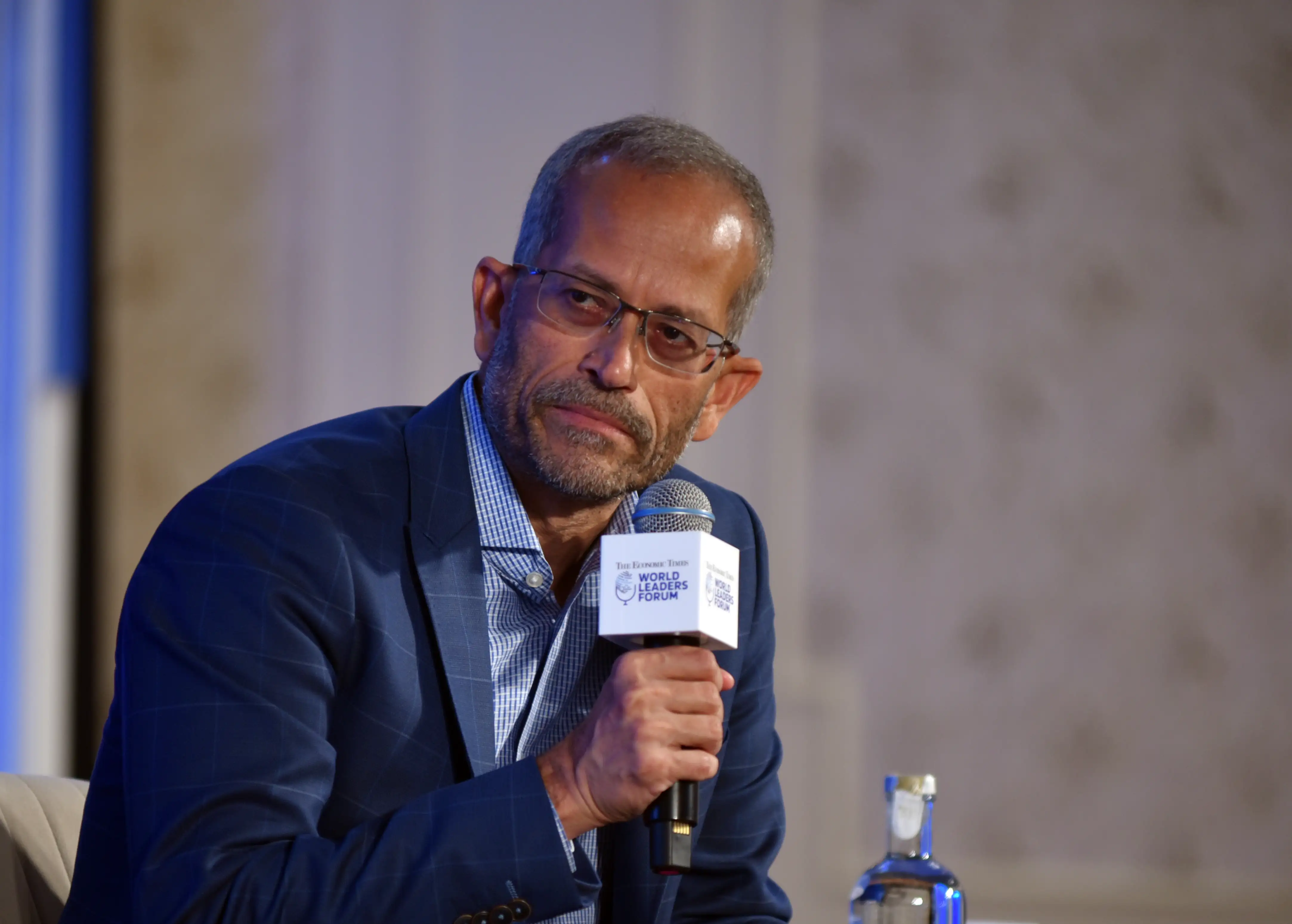 India’s semiconductor industry could take decades to develop, said Krishna Rangasayee, founder and CEO of California-based edge inference chip startup SIMa AI.
India and semiconductors: “I have no doubt that India's sovereign need to build semiconductors domestically is going to become a reality. It's a matter of time… but I think it's going to take a little longer than people are expecting and building for,” Rangasayee said at The ET World Leaders Forum in New Delhi.
Also Read: VCs becoming marginal in AI cycle, enterprises should invest in the sector: Peak XV’s Shailendra Singh
On challenges: Rangasayee said building at scale needs more than fabs here.
“If you look at countries that have successfully done it — Taiwan is an example, or the US — it takes 40 years. Unfortunately, it's going to take 40 years here too. It's not just about manufacturing, it's about the ecosystem, the customer base. The supply chain, cost structure, efficiency, and scaling something of that complexity globally takes a long time. India has no doubt got everything going for it,” he added.
He also flagged the challenge of funding deeptech firms with high upfront costs and long gestation periods.
“Deeptech isn't pay-as-you-go… you pay a lot upfront and wait patiently for a very long time. I don't think that comfort with investing in deeptech is consistently there in the venture community yet,” he said.
Also Read: India faces capital, talent gap in foundational AI race: Menlo Ventures’ Deedy Das
 Mark Zuckerberg, CEO, Meta
NHRC seeks reports on Instagram CSAM ads: The National Human Rights Commission (NHRC) on Wednesday sought specific, point-wise action-taken reports from the ministries of electronics and IT (MeitY), information and broadcasting (MIB) and the Delhi Police over allegations that paid advertisements on Instagram promoted or facilitated access to child sexual abuse material (CSAM) in India.
IBM signals five-year timeline for sub-1nm chips: IBM’s 0.7 nanometre chip technology is still at the research-demonstration stage and could take years to become commercially manufacturable, but the breakthrough marks a shift in how future processors will be designed, Rahul Rao, distinguished engineer at IBM India Systems Development Lab, told ET.
Global Picks We Are Reading
■ This is Flock’s AI search tool for cops (Wired)
■ Taiwan’s six-year hunt for China’s undercover chip labs (Rest of world)
■ Abliteration.ai is making a business out of removing AI guardrails (TechCrunch)
Also in the letter:
■ SiMa AI CEO on India’s chip bet
■ NHRC Probes CSAM Ads
■ Instagram CSAM ads under fire
Behind Sugar Cosmetics’ down round: Valuation set to fall 80% to Rs 500-600 crore
Mumbai-based beauty brand Sugar Cosmetics is raising Rs 140-150 crore from existing investor A91 Partners at a valuation of Rs 500-600 crore, people familiar with the matter said.
Driving the news:
- The deal marks a drop of more than 80% from Sugar’s peak valuation of around Rs 3,000 crore, when it raised capital four years ago.
- The fundraise comes as the direct-to-consumer (D2C) brand faces rising losses, falling revenue and tougher competition.
- Sugar is estimated to have posted Rs 300-350 crore in revenue in FY26, down from Rs 404 crore in FY25 and Rs 505 crore in FY24, one person said.
- The company also has financial obligations, including working capital debt, the person added.
The funds will be used to build “incremental working capital capacity for growth, particularly to support the momentum in our skincare brand Quench”, the company said.
Slice closes $100 million round as valuation more than halves to $470 million
Slice Small Finance Bank has raised about $100 million at a valuation of $450-470 million, its first institutional funding as a bank and a steep reset from the $1.3 billion it commanded before its merger with North East Small Finance Bank.
The deal:
- Moore Strategic Ventures, Peak XV-backed Neo Group, and Japan's Kado Global invested, alongside Dhan parent Raise Financial Services and backer Blume Ventures.
- Slice called for an extraordinary general meeting on September 4 to seek shareholder approval for the issuance of Rs 403.47 crore worth of compulsorily convertible debentures and Rs 81.49 crore worth of partly-paid equity shares, covering only a portion of the latest fundraise. ET first reported the fundraising talks in April.
- An early Slice investor said the bank was valued at 4.5 times book, against HDFC Bank's 1.8 times, JPMorgan's 2.7 times, and Nubank's 5.2 times.
- Slice made a profit of Rs 48.4 crore in FY26, reversing a Rs 216.7 crore loss in the year prior; it clocked a profit of Rs 50.9 crore in the June quarter.
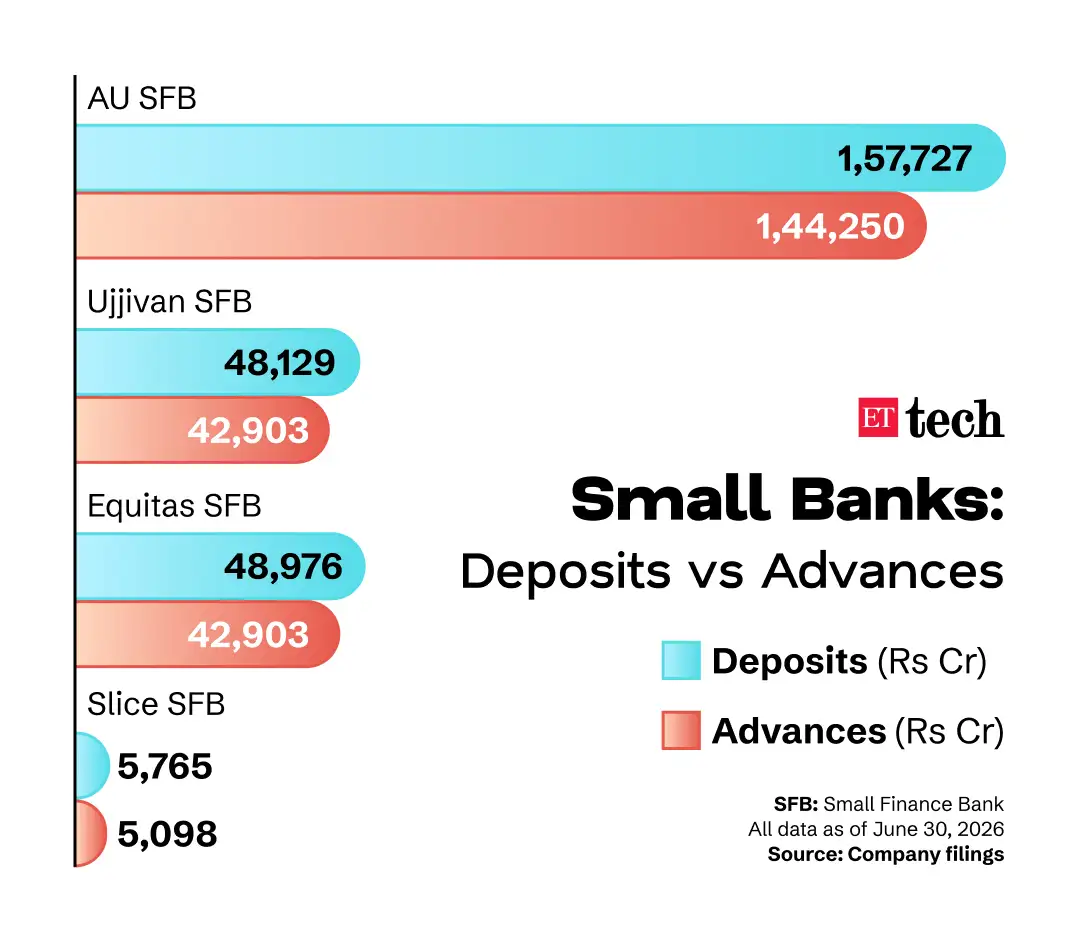
- Its loan book has reached Rs 5,098 crore, but still far below AU's Rs 1.44 lakh crore, Equitas' Rs 47,641 crore, and Ujjivan's Rs 42,903 crore.
- Slice serves 6.7 million customers, has issued about half a million credit cards, and pays the 5.25% repo-linked savings rate daily.
ETtech interview: India’s semiconductor ambitions could take decades to mature: SiMa AI CEO
India and semiconductors: “I have no doubt that India's sovereign need to build semiconductors domestically is going to become a reality. It's a matter of time… but I think it's going to take a little longer than people are expecting and building for,” Rangasayee said at The ET World Leaders Forum in New Delhi.
Also Read: VCs becoming marginal in AI cycle, enterprises should invest in the sector: Peak XV’s Shailendra Singh
On challenges: Rangasayee said building at scale needs more than fabs here.
“If you look at countries that have successfully done it — Taiwan is an example, or the US — it takes 40 years. Unfortunately, it's going to take 40 years here too. It's not just about manufacturing, it's about the ecosystem, the customer base. The supply chain, cost structure, efficiency, and scaling something of that complexity globally takes a long time. India has no doubt got everything going for it,” he added.
He also flagged the challenge of funding deeptech firms with high upfront costs and long gestation periods.
“Deeptech isn't pay-as-you-go… you pay a lot upfront and wait patiently for a very long time. I don't think that comfort with investing in deeptech is consistently there in the venture community yet,” he said.
Also Read: India faces capital, talent gap in foundational AI race: Menlo Ventures’ Deedy Das
Other Top Stories By Our Reporters
NHRC seeks reports on Instagram CSAM ads: The National Human Rights Commission (NHRC) on Wednesday sought specific, point-wise action-taken reports from the ministries of electronics and IT (MeitY), information and broadcasting (MIB) and the Delhi Police over allegations that paid advertisements on Instagram promoted or facilitated access to child sexual abuse material (CSAM) in India.
IBM signals five-year timeline for sub-1nm chips: IBM’s 0.7 nanometre chip technology is still at the research-demonstration stage and could take years to become commercially manufacturable, but the breakthrough marks a shift in how future processors will be designed, Rahul Rao, distinguished engineer at IBM India Systems Development Lab, told ET.
Global Picks We Are Reading
■ This is Flock’s AI search tool for cops (Wired)
■ Taiwan’s six-year hunt for China’s undercover chip labs (Rest of world)
■ Abliteration.ai is making a business out of removing AI guardrails (TechCrunch)
Want this newsletter delivered to your inbox?
I agree to receive newsletters and marketing communications via e-mail