
 Morning Dispatch Morning Dispatch |
Festive carts to get heavier; Pixxel’s $100 million fresh fuel
Want this newsletter delivered to your inbox?
I agree to receive newsletters and marketing communications via e-mail

Thank you for subscribing to Morning Dispatch
We'll soon meet in your inbox.
Happy Monday! Online festive shopping is set to hit a new high this year. This and more in today’s ETtech Morning Dispatch.
Also in the letter:
■ B2B firms under debt strain
■ Rentomojo’s ‘hard-to-copy’ moat
■ Ola Electric greenlights fundraise
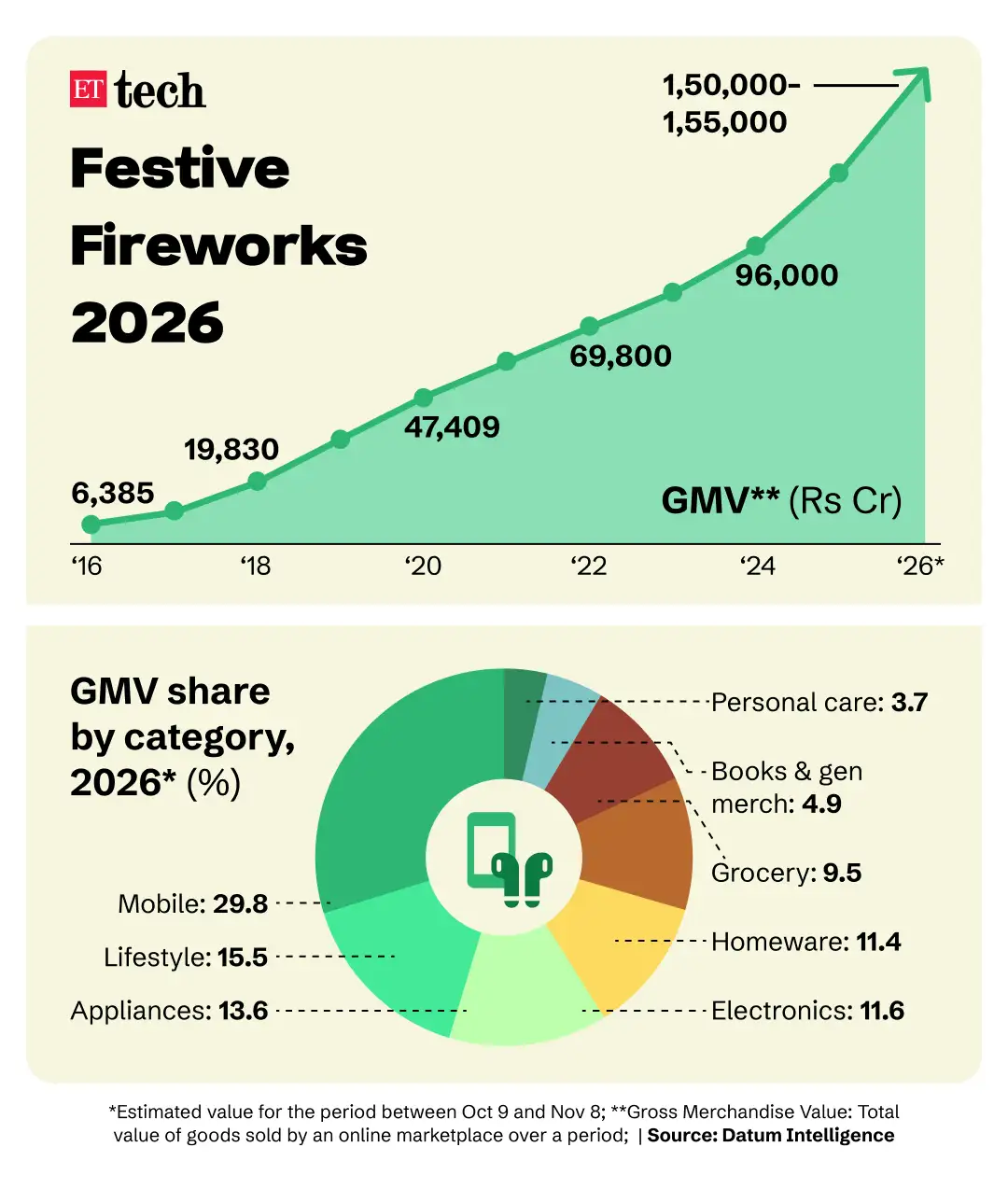
 Ecommerce marketplaces and online retailers are expected to sell a record Rs 1.50-1.55 lakh crore worth of goods during this year’s festive season sale events, up 25-29% from around Rs 1.20 lakh crore in 2025, according to data from market research firm Datum Intelligence.
Categories in focus: Mobile phones are expected to account for the largest share of online festive GMV in 2026 at 29.8%, followed by lifestyle at 15.5% and appliances at 13.6%.
 Speed in trend:
 Also Read: Quick commerce gains GMV, user share as ecommerce majors lose ground
For context: The projection of robust growth in gross merchandise value (GMV), which excludes discounts and returns from total sales at online marketplaces, comes as brands are grappling with increasing raw material and packaging costs amid geopolitical uncertainties.
Early trends: Industry executives told ET that early festive occasions indicate stronger shopping activities this year. Independence Day sales volume this year grew 25% for both online and offline retailers, ET reported on August 17.
Also Read: Quick commerce braces for Rakshabandhan rush as capacity strains emerge
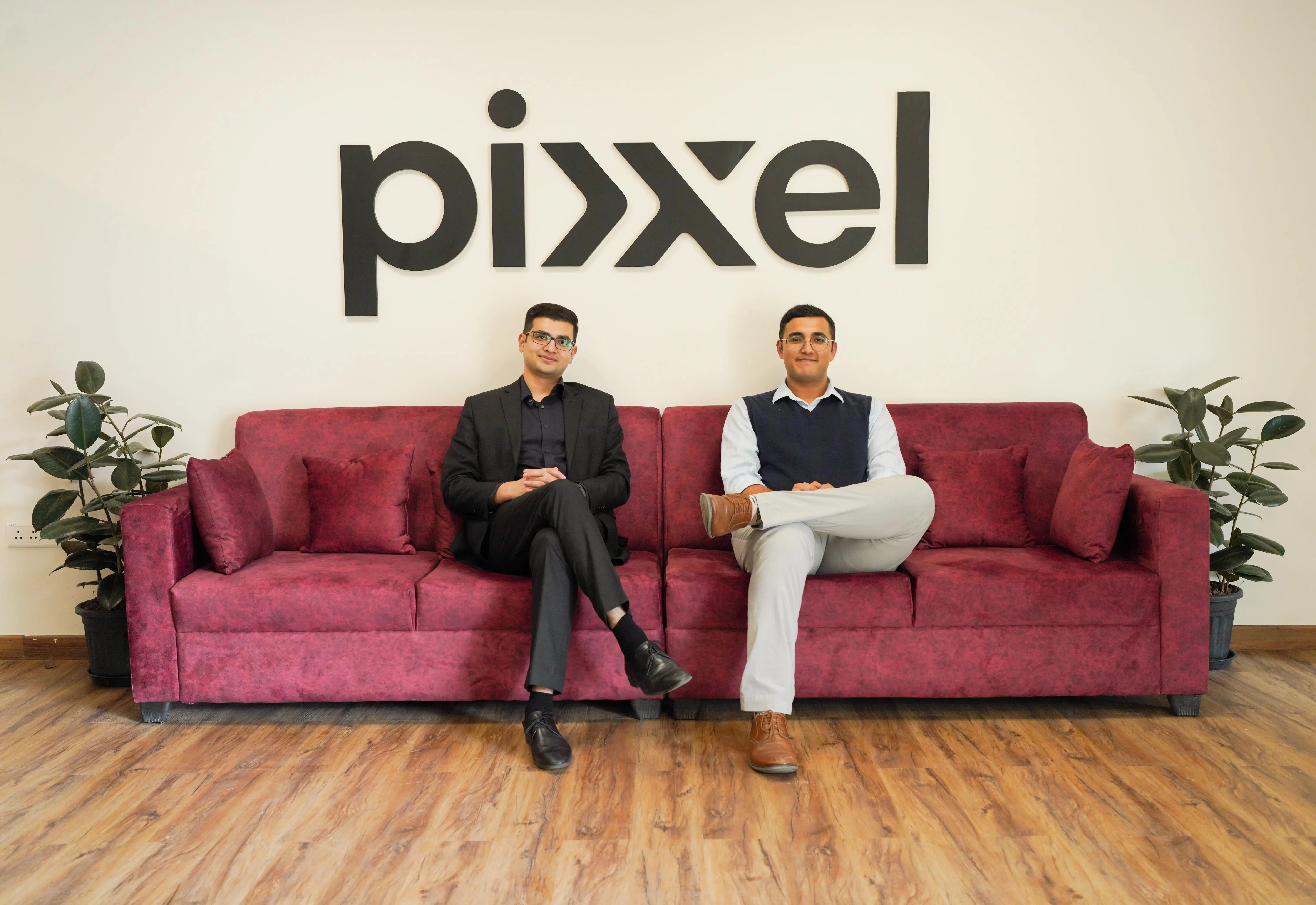 L-R: Awais Ahmed and Kshitij Khandelwal, cofounders, Pixxel
Pixxel has secured $100 million (around Rs 945 crore), led by Temasek and UK-based space investor Seraphim.
More on the round:
.jpg "Spacetech Investments (1)") Yes, and? Pixxel is considering raising venture debt as it expands its satellite-making capacity and constellation operations, Ahmed said. Reaching the $1 billion valuation mark could require another equity round, he said. Ahmed, however, did not reveal Pixxel’s current valuation.
Yes, and? Pixxel is considering raising venture debt as it expands its satellite-making capacity and constellation operations, Ahmed said. Reaching the $1 billion valuation mark could require another equity round, he said. Ahmed, however, did not reveal Pixxel’s current valuation.
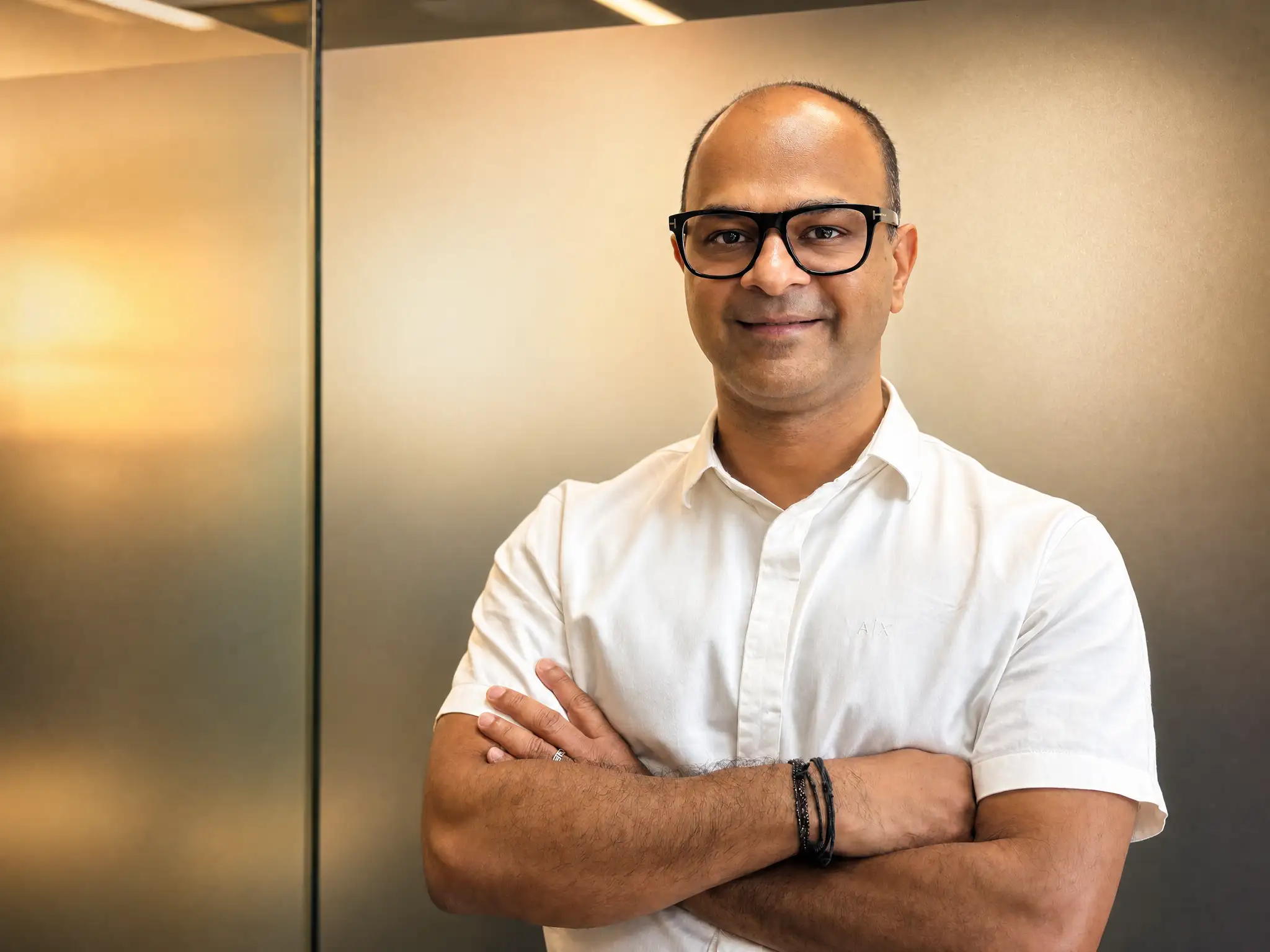 Ravi Ramachandran, founder and CEO, Nua
Nua, a women’s wellness and hygiene brand, has raised $50 million from Peak XV Partners and Filter Capital, with existing backers Mirabilis Investment Trust and US-based Footpath Ventures also investing.
Around $14 million of the round was primary capital, while the rest was a secondary sale that gave Kae Capital, Lightbox VC and some angel investors a partial exit, founder and CEO Ravi Ramachandran told us.
 India’s venture capital-backed business-to-business companies are managing growth-era debt as repayments compete with investment. Zetwerk is directing most of its IPO fresh issue towards debt repayment, Infra.Market has refinanced debt, and Udaan’s Singapore parent has restructured creditor claims after a default.
The numbers:
 Geetansh Bamania, founder, Rentomojo
Rentomojo pins growth on 'hard-to-copy' supply chain moat: As Rentomojo prepares to tap the public markets, founder Geetansh Bamania says the company's moat lies in a business modelthat combines multiple operationally intensive segments of the company into a single platform.
Ola Electric approves Rs 1,500 crore fundraise; COO quits: Electric two-wheeler maker Ola Electric has approved a plan to raise up to Rs 1,500 crore by issuing shares and other securities, the company said in an exchange filing on Saturday.
TCS’ HyperVault to build 1 GW AI data centre campus: TCS subsidiary HyperVault has announced it will build a 1 GW AI data centre campus in Hyderabad, at an investment of Rs 70,000 crore, marking one of India’s largest planned investments in AI infrastructure.
■ Why China Is the Bogeyman Data Center Enthusiasts Just Can't Quit (Wired)
■ Chinese businesses are giving away AI tokens with coffee, credit cards, and dumplings (Rest of World)
■ Data from drones in Ukraine is fueling a new Wild West marketplace (MIT Technology Review)
Also in the letter:
■ B2B firms under debt strain
■ Rentomojo’s ‘hard-to-copy’ moat
■ Ola Electric greenlights fundraise
Ecommerce festive sales set to rise almost 30%, quick commerce to gain share: Analysts
Categories in focus: Mobile phones are expected to account for the largest share of online festive GMV in 2026 at 29.8%, followed by lifestyle at 15.5% and appliances at 13.6%.
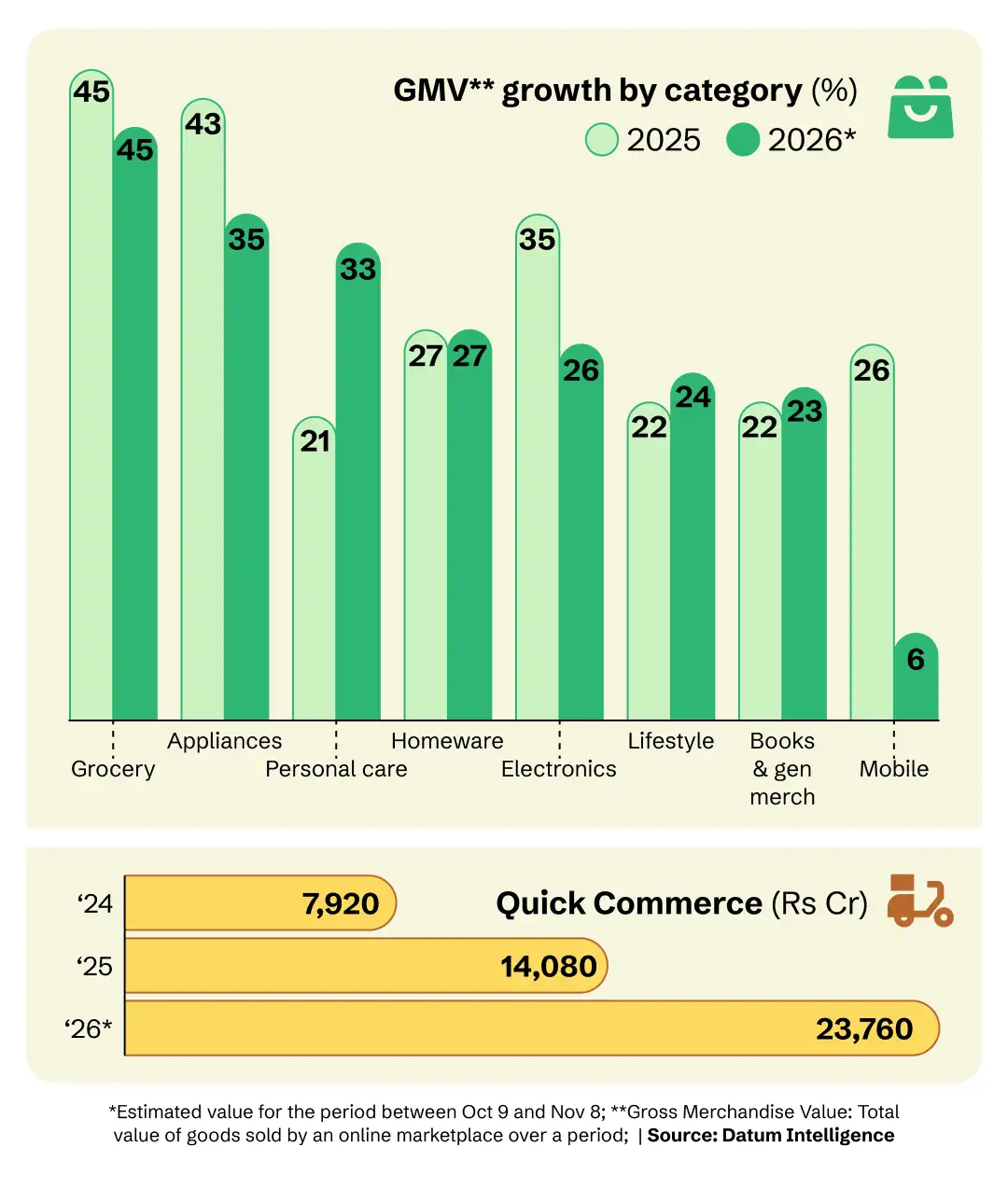
- Quick commerce is expected to account for 16%, or Rs 24,000 crore, of festive spending this year, as consumers seek instant delivery.
- Brands are introducing festive-specific stock-keeping units (SKUs) for different occasions and regions.
- Quick commerce platforms are likely to hire 35-40% more temporary workers this festive season compared with last year.
For context: The projection of robust growth in gross merchandise value (GMV), which excludes discounts and returns from total sales at online marketplaces, comes as brands are grappling with increasing raw material and packaging costs amid geopolitical uncertainties.
Early trends: Industry executives told ET that early festive occasions indicate stronger shopping activities this year. Independence Day sales volume this year grew 25% for both online and offline retailers, ET reported on August 17.
Also Read: Quick commerce braces for Rakshabandhan rush as capacity strains emerge
Satellite imaging startup Pixxel bags $100 million from Temasek, others
Pixxel has secured $100 million (around Rs 945 crore), led by Temasek and UK-based space investor Seraphim.
More on the round:
- 360 One Asset, IMM Investment, Radical Ventures and GrowX Ventures joined the round.
- The seven-year-old startup could now be worth $400-450 million (Rs 3,780-4,250 crore), according to people familiar with the deal.
- Founder and chief executive Awais Ahmed said the investment was through fresh shares, with the entire proceeds going to Pixxel.
- The company has not revealed the deal terms.
Women’s wellness brand Nua closes $50 million round led by Peak XV, Filter Capital
Nua, a women’s wellness and hygiene brand, has raised $50 million from Peak XV Partners and Filter Capital, with existing backers Mirabilis Investment Trust and US-based Footpath Ventures also investing.
Around $14 million of the round was primary capital, while the rest was a secondary sale that gave Kae Capital, Lightbox VC and some angel investors a partial exit, founder and CEO Ravi Ramachandran told us.
VC-backed B2B firms feel the weight of growth-era debt
The numbers:
- Zetwerk will use Rs 1,800 crore, 69% of its Rs 2,600-crore fresh issue, to repay certain borrowings; fund-based borrowings were Rs 2,992 crore at May-end.
- Infra.Market repaid Rs 1,649 crore in FY25 against cash accruals of Rs 669 crore, meeting the shortfall through fresh borrowing and refinancing.
- Udaan’s Singapore parent defaulted on $170 million of bonds and later restructured $178 million of claims, alongside $45 million of fresh BlackRock credit.
- These companies borrow for needs spanning order financing, working capital, factories and acquisitions.
- Debt is cheaper than equity and avoids dilution, but fixed repayments can outpace collections.
- When cash remains tied up in receivables or assets, refinancing diverts capital from expansion and heightens dependence on lenders or fresh equity.
Other Top Stories By Our Reporters
Rentomojo pins growth on 'hard-to-copy' supply chain moat: As Rentomojo prepares to tap the public markets, founder Geetansh Bamania says the company's moat lies in a business modelthat combines multiple operationally intensive segments of the company into a single platform.
Ola Electric approves Rs 1,500 crore fundraise; COO quits: Electric two-wheeler maker Ola Electric has approved a plan to raise up to Rs 1,500 crore by issuing shares and other securities, the company said in an exchange filing on Saturday.
TCS’ HyperVault to build 1 GW AI data centre campus: TCS subsidiary HyperVault has announced it will build a 1 GW AI data centre campus in Hyderabad, at an investment of Rs 70,000 crore, marking one of India’s largest planned investments in AI infrastructure.
Global Picks We Are Reading
■ Why China Is the Bogeyman Data Center Enthusiasts Just Can't Quit (Wired)
■ Chinese businesses are giving away AI tokens with coffee, credit cards, and dumplings (Rest of World)
■ Data from drones in Ukraine is fueling a new Wild West marketplace (MIT Technology Review)
Want this newsletter delivered to your inbox?
I agree to receive newsletters and marketing communications via e-mail