
 Morning Dispatch Morning Dispatch |
Big Tech execs on AI; UN on AI inclusion and regulations
Want this newsletter delivered to your inbox?
I agree to receive newsletters and marketing communications via e-mail

Thank you for subscribing to Morning Dispatch
We'll soon meet in your inbox.
Happy Thursday! Big Tech leaders such as Microsoft’s Brad Smith and Meta’s Alexandr Wang, spoke to ET about AI, digital sovereignty and jobs. This and more in today’s ETtech Morning Dispatch.
Also in the letter:
■ Google CEO on India’s AI trajectory
■ Pronto’s rapid rise
■ Future wars to go digital
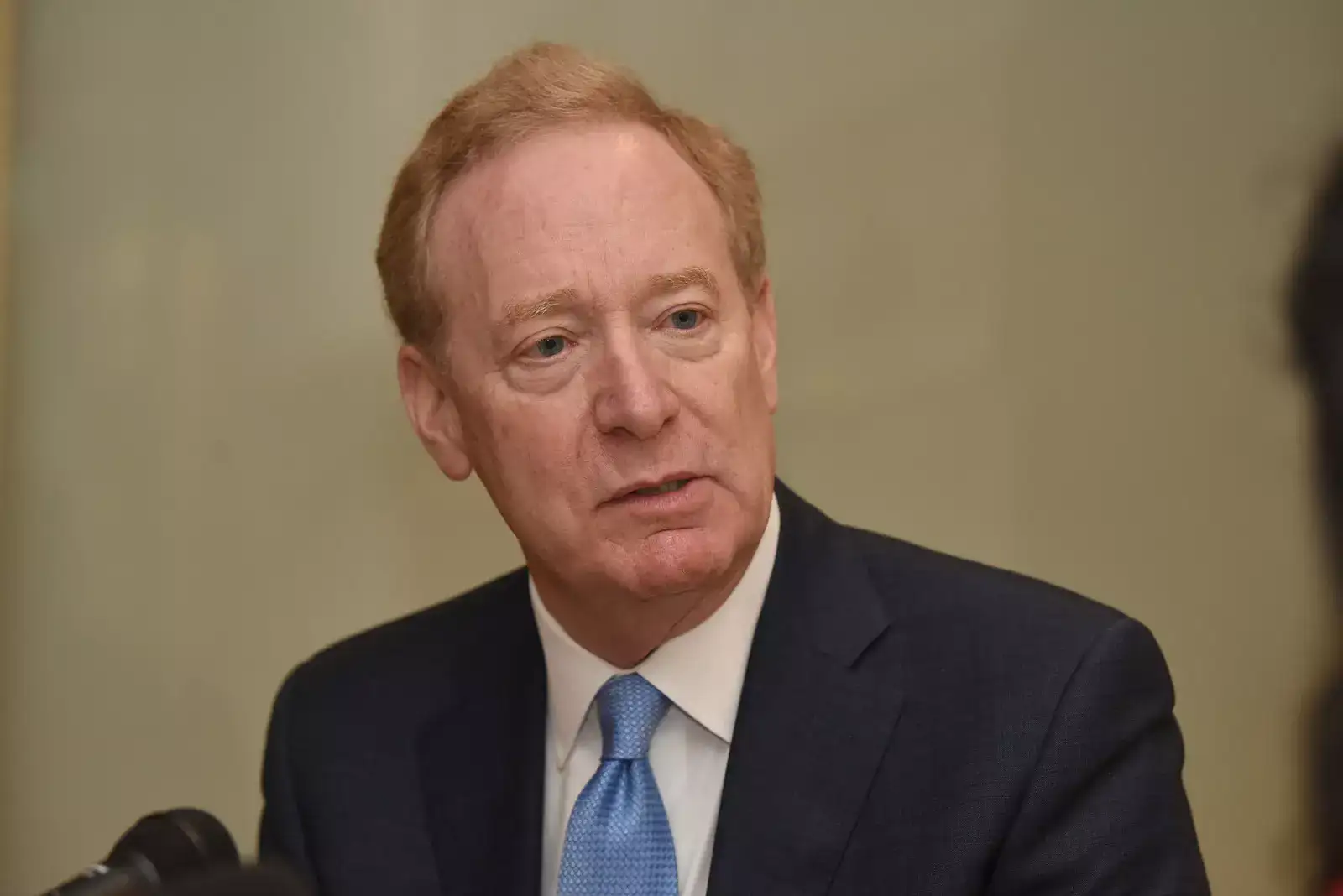
Calling India a “land of digital opportunity”, Brad Smith, vice-chair and president of Microsoft, told ET’s Surabhi Agarwal that the company is playing a major role in supporting the country’s $200 billion AI infrastructure drive.
He added that AI gives countries in the Global South a chance to “catch up” in technology adoption.
On India: We are very optimistic about the future here (in India). That's why, in December, Satya Nadella announced our $17 billion-plus investment. Everyone who looks at India sees that it is a land of digital opportunity. At the same time, we always need to keep in mind that money will continue to flow as usage grows.
Digital sovereignty framework: Focus on three things. One, keep your market open because you need the investment. Number two, protect privacy by having an international agreement in place that regulates when governments in one country may seek data in another for, say, law-enforcement purposes. Three, ensure continuity of services in exchange for keeping the market open, and guarantee that the supply will always be available.
Also Read: AI could either narrow or dangerously widen the economic divide: Microsoft's Brad Smith
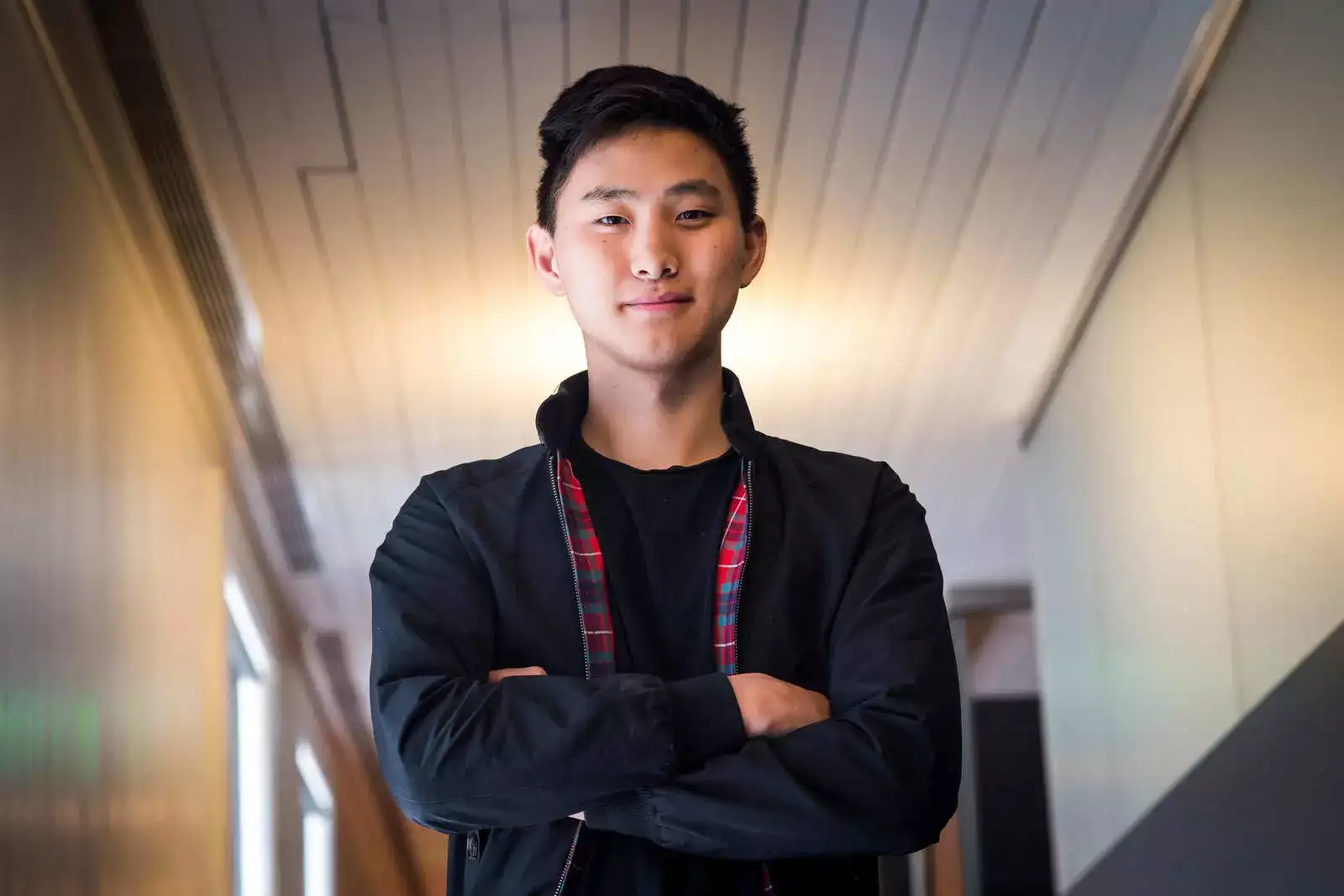
Alexandr Wang, Meta’s chief AI officer and head of Superintelligence Labs, spoke to us about the company’s plans to implement artificial intelligence (AI) across its applications, in line with Mark Zuckerberg’s vision of “personal superintelligence.”
Edited excerpts:
On agentic commerce: It's definitely true that the future of agents that we believe in are agents that you would trust enough to ultimately make purchases on your behalf and ultimately coordinate very complex logistics on your behalf. In that sense, we really do believe in the world of agentic commerce, where agents are doing more and more commerce.
On AI job disruption: One of the things that we see, even on our platforms consistently, is when we empower more small businesses, more creators with AI tools and AI products and AI platforms, the opportunity vastly outstrips any of the disruption. I think the version of the world that we believe in is, for sure… AI coding tools and much of the progress in AI in knowledge work are very real. But if anything, we think that will be utilised more as a tool for small businesses, entrepreneurs and new businesses to start.
Also Read: Meta flags ‘operational challenges’ in India’s 3-hour takedown rule, backs consultative AI regulations
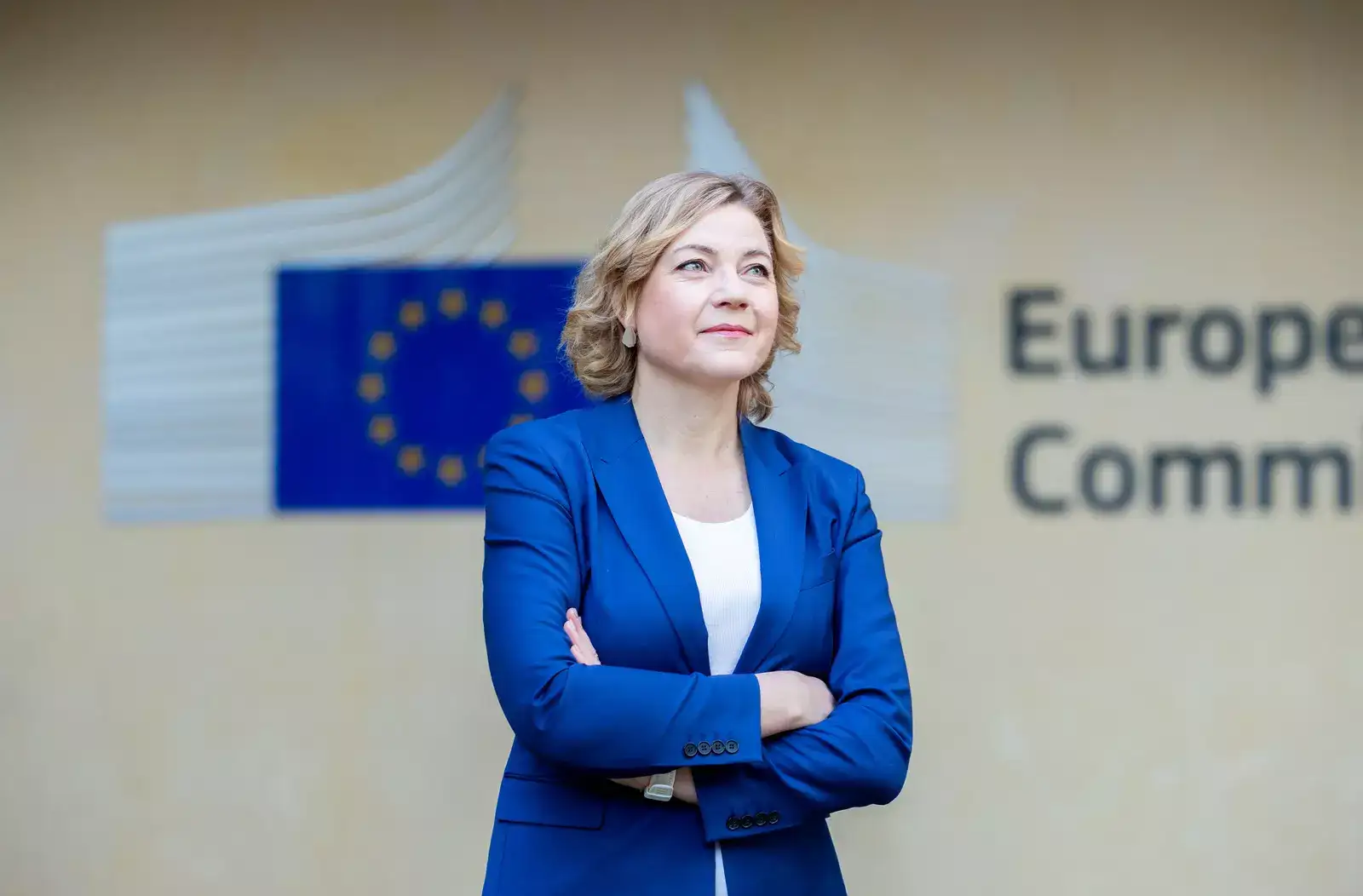 Henna Virkkunen, executive VP, European Commission
In an interview with ET’s Pranav Mukul at the India AI Impact Summit, Henna Virkkunen (executive vice-president of the European Commission for tech sovereignty, security and democracy) said AI governance must move beyond safety debates to prioritise access, interoperability and real-world impact, especially for emerging economies.
On tech regulation: Many countries have been cautious, concerned that excessive regulation could slow innovation. In the European Union, however, we’ve taken a risk-based approach to ensure citizens can trust the technology. I see common ground with India here, as India has strongly emphasised a human-centric approach to AI.
Rules are necessary, but they must support innovation rather than stifle new ideas.
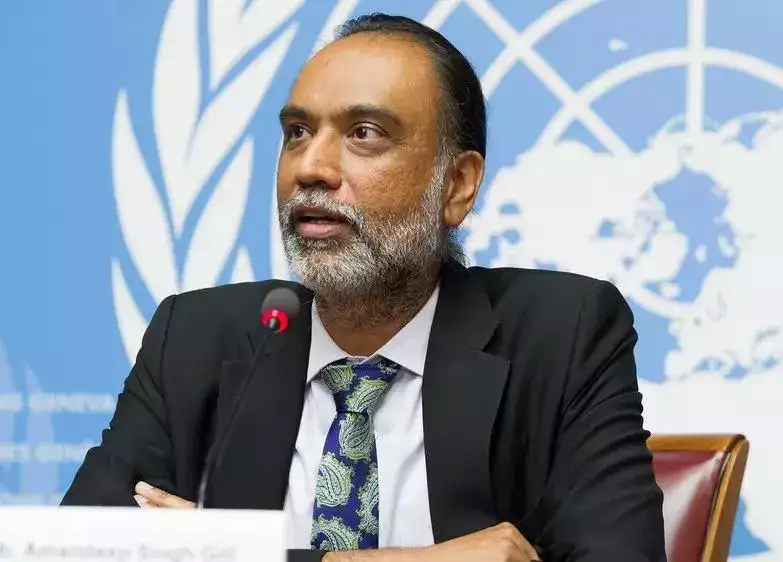
Developing countries should see AI as a major opportunity, but must ensure it does not widen global inequality, said Amandeep Singh Gill, the United Nations (UN) under-secretary-general and special envoy for digital and emerging technologies.
On AI: Gill said AI should not be viewed in isolation, but as part of a wider digital shift that includes ecommerce, digital government services, and digital public infrastructure (DPI).
For India, he recommended a balanced approach—spreading AI adoption across agriculture, healthcare, and education, while also investing in research into foundational and domain-specific models. He stressed the need for skilled talent, strong local-language datasets, computing infrastructure and open, shareable models.

Blanket bans on children using social media may not work everywhere, as their impact depends on a country’s development level and socio-economic conditions, UNICEF’s global innovation director Thomas Davin told us.
Davin’s opinion: In many developing countries, including India, school-age children need access to AI and online services to support their educational and economic security.
Referring to India’s talks on age-based restrictions, Davin said he was unsure if such unilateral steps would be effective. “It is my understanding that in India, there are quite a few children who are working after school, or are out of school and trying to find skills,” he said, adding that even in Australia’s case, Unicef hopes the law is backed by proactive training.
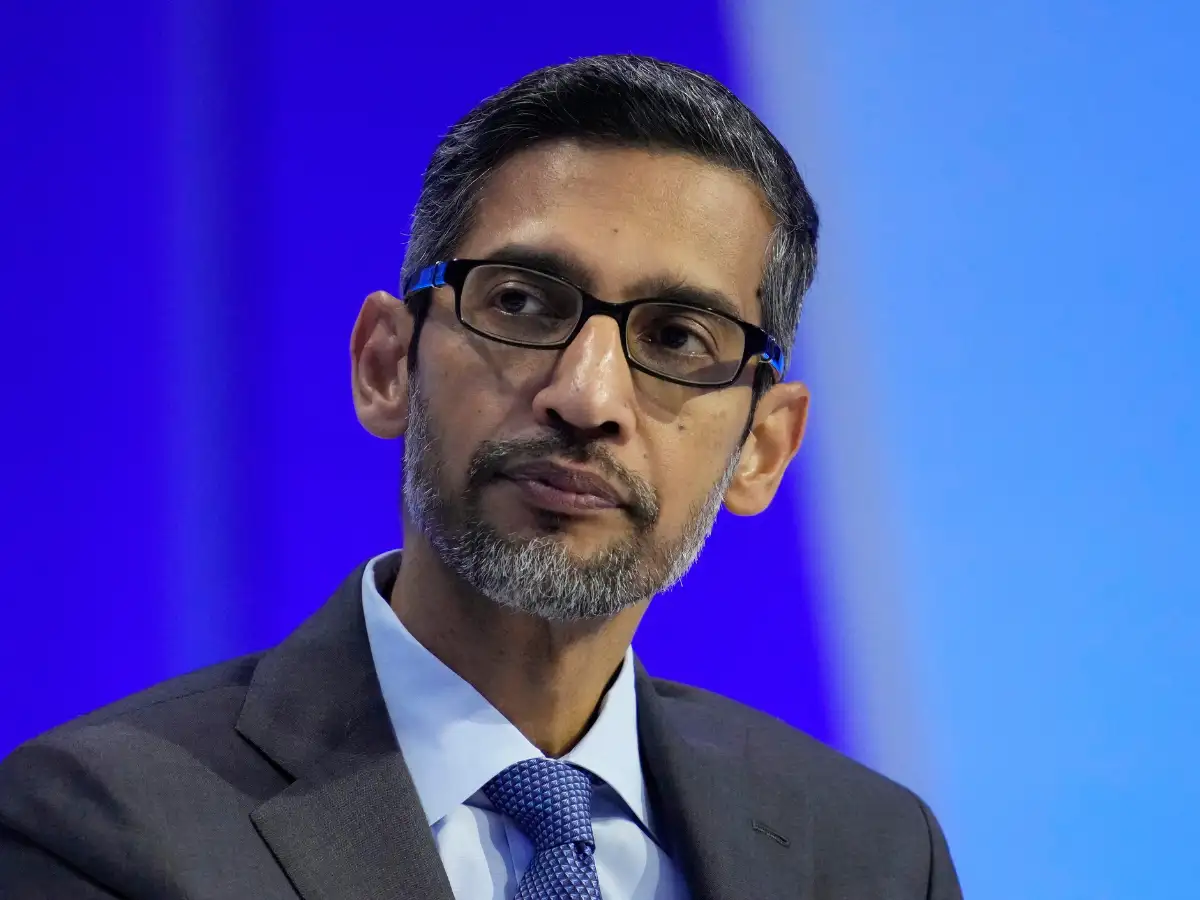
Google chief executive Sundar Pichai began his India visit with a meeting with Prime Minister Narendra Modi in New Delhi, where the two discussed the company’s work with Indian professionals and students.
Pichai later attended the India AI Impact Summit, joining global policymakers and technology leaders. “Nice to be back,” he wrote on X.
Before arriving, Pichai spoke to ET virtually about Alphabet's rising AI investments, the company’s plans for Gemini, and more.
Excerpts from the interview:
Alphabet at the AI Summit: Pichai said AI is advancing rapidly, and the Delhi summit represents an important moment for global collaboration, especially given India's dynamic growth and vast AI potential. “The fact that it's happening in India makes it even more meaningful. The scale of the AI opportunity [in India] is immense.”
On competition with ChatGPT: “Most of the foundational breakthroughs in AI were developed at Google and Alphabet. In consumer tech, it's common for products to appear suddenly from the outside. But because we had invested deeply, we had the capacity to respond,” Pichai added.
Read the full Q&A here.
Also Read: Google announces $30 million science fund; new subsea connectivity initiative
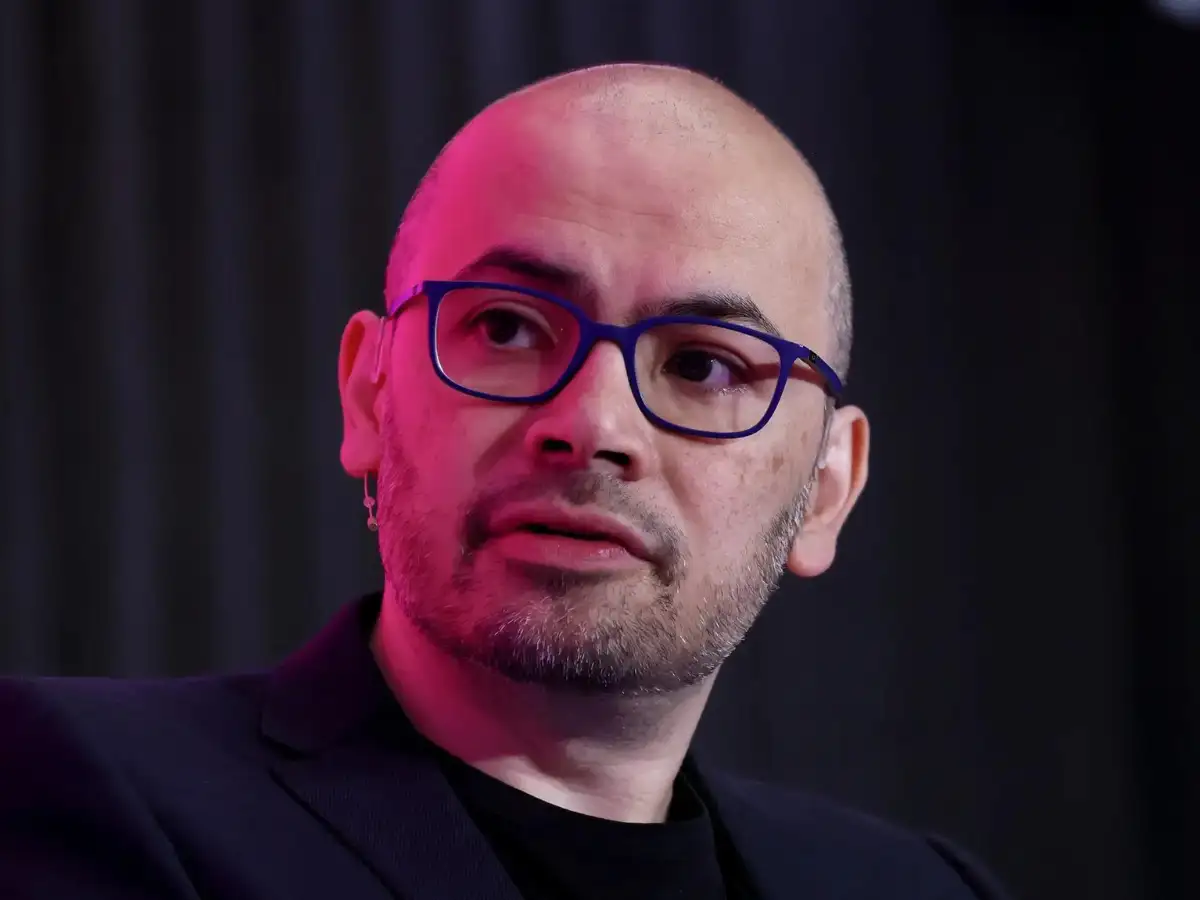
Google DeepMind chief executive Demis Hassabis warned that increasingly powerful AI systems have serious biosecurity and cybersecurity risks, even as he expressed confidence in the technology’s long-term benefits.
He added that AI could reach artificial general intelligence within five to eight years.
Cautious optimism: “My message about AI is that of cautious optimism. We're on the cusp of a transformation that will deliver benefits. But I would also add a note of caution. We'll solve technical risks if we work on it, but we have to deal with them on a global scale,” he said.
 Pronto founder Anjali Sardana
Pronto clocks 15,000 bookings per day, burned $8 million in the past year: Quick service platform Pronto’s founder, Anjali Sardana, said that the business has scaled to over 15,000 bookings per day from zero within 10 months of operation. Regarding cash burn, she said the company spent just over $8 million in the past year.
Future wars will rely more on cybersecurity than military strength: Zscaler CEO Jay Chaudhry | Cybersecurity is increasingly becoming critical as technology advances, with future conflicts expected to depend more on cyber strength than traditional military force, said Jay Chaudhry, founder, chairman and chief executive of cloud security company Zscaler.
ED attaches $56 million held by gaming firm WinZo in overseas bank accounts: The Enforcement Directorate (ED), Bengaluru zonal office, has provisionally attached movable properties worth about $56 million (Rs 505 crore) held by real money gaming company Winzo in its bank accounts in the US and Singapore in connection with the ongoing probe under the Prevention of Money Laundering Act.
■ Creators are cashing in on a “Facebook renaissance” (Rest of the World)
■ I hacked ChatGPT and Google's AI – and it only took 20 minutes (BBC)
■ An inside look at Lego’s new tech-packed smart brick (Wired)
Also in the letter:
■ Google CEO on India’s AI trajectory
■ Pronto’s rapid rise
■ Future wars to go digital
AI is offering Global South a unique opportunity to catch up fast: Microsoft’s Brad Smith
Calling India a “land of digital opportunity”, Brad Smith, vice-chair and president of Microsoft, told ET’s Surabhi Agarwal that the company is playing a major role in supporting the country’s $200 billion AI infrastructure drive.
He added that AI gives countries in the Global South a chance to “catch up” in technology adoption.
On India: We are very optimistic about the future here (in India). That's why, in December, Satya Nadella announced our $17 billion-plus investment. Everyone who looks at India sees that it is a land of digital opportunity. At the same time, we always need to keep in mind that money will continue to flow as usage grows.
Digital sovereignty framework: Focus on three things. One, keep your market open because you need the investment. Number two, protect privacy by having an international agreement in place that regulates when governments in one country may seek data in another for, say, law-enforcement purposes. Three, ensure continuity of services in exchange for keeping the market open, and guarantee that the supply will always be available.
Also Read: AI could either narrow or dangerously widen the economic divide: Microsoft's Brad Smith
India well-placed to scale personal Superintelligence: Meta’s Alexandr Wang
Alexandr Wang, Meta’s chief AI officer and head of Superintelligence Labs, spoke to us about the company’s plans to implement artificial intelligence (AI) across its applications, in line with Mark Zuckerberg’s vision of “personal superintelligence.”
Edited excerpts:
On agentic commerce: It's definitely true that the future of agents that we believe in are agents that you would trust enough to ultimately make purchases on your behalf and ultimately coordinate very complex logistics on your behalf. In that sense, we really do believe in the world of agentic commerce, where agents are doing more and more commerce.
On AI job disruption: One of the things that we see, even on our platforms consistently, is when we empower more small businesses, more creators with AI tools and AI products and AI platforms, the opportunity vastly outstrips any of the disruption. I think the version of the world that we believe in is, for sure… AI coding tools and much of the progress in AI in knowledge work are very real. But if anything, we think that will be utilised more as a tool for small businesses, entrepreneurs and new businesses to start.
Also Read: Meta flags ‘operational challenges’ in India’s 3-hour takedown rule, backs consultative AI regulations
EU does not consider AI regulation & innovation as two opposing forces: European Commission exec
In an interview with ET’s Pranav Mukul at the India AI Impact Summit, Henna Virkkunen (executive vice-president of the European Commission for tech sovereignty, security and democracy) said AI governance must move beyond safety debates to prioritise access, interoperability and real-world impact, especially for emerging economies.
On tech regulation: Many countries have been cautious, concerned that excessive regulation could slow innovation. In the European Union, however, we’ve taken a risk-based approach to ensure citizens can trust the technology. I see common ground with India here, as India has strongly emphasised a human-centric approach to AI.
Rules are necessary, but they must support innovation rather than stifle new ideas.
AI must advance inclusion, not inequality: UN’s Amandeep Singh Gill
Developing countries should see AI as a major opportunity, but must ensure it does not widen global inequality, said Amandeep Singh Gill, the United Nations (UN) under-secretary-general and special envoy for digital and emerging technologies.
On AI: Gill said AI should not be viewed in isolation, but as part of a wider digital shift that includes ecommerce, digital government services, and digital public infrastructure (DPI).
For India, he recommended a balanced approach—spreading AI adoption across agriculture, healthcare, and education, while also investing in research into foundational and domain-specific models. He stressed the need for skilled talent, strong local-language datasets, computing infrastructure and open, shareable models.
A blanket social media ban for kids won’t work for Al: UNICEF’s Thomas Davin
Blanket bans on children using social media may not work everywhere, as their impact depends on a country’s development level and socio-economic conditions, UNICEF’s global innovation director Thomas Davin told us.
Davin’s opinion: In many developing countries, including India, school-age children need access to AI and online services to support their educational and economic security.
Referring to India’s talks on age-based restrictions, Davin said he was unsure if such unilateral steps would be effective. “It is my understanding that in India, there are quite a few children who are working after school, or are out of school and trying to find skills,” he said, adding that even in Australia’s case, Unicef hopes the law is backed by proactive training.
Google wants to partner India in its AI trajectory: CEO Sundar Pichai
Google chief executive Sundar Pichai began his India visit with a meeting with Prime Minister Narendra Modi in New Delhi, where the two discussed the company’s work with Indian professionals and students.
Pichai later attended the India AI Impact Summit, joining global policymakers and technology leaders. “Nice to be back,” he wrote on X.
Before arriving, Pichai spoke to ET virtually about Alphabet's rising AI investments, the company’s plans for Gemini, and more.
Excerpts from the interview:
Alphabet at the AI Summit: Pichai said AI is advancing rapidly, and the Delhi summit represents an important moment for global collaboration, especially given India's dynamic growth and vast AI potential. “The fact that it's happening in India makes it even more meaningful. The scale of the AI opportunity [in India] is immense.”
On competition with ChatGPT: “Most of the foundational breakthroughs in AI were developed at Google and Alphabet. In consumer tech, it's common for products to appear suddenly from the outside. But because we had invested deeply, we had the capacity to respond,” Pichai added.
Read the full Q&A here.
Also Read: Google announces $30 million science fund; new subsea connectivity initiative
Potential misuse of AI by 'bad actors' a worry, says Google DeepMind CEO Demis Hassabis
Google DeepMind chief executive Demis Hassabis warned that increasingly powerful AI systems have serious biosecurity and cybersecurity risks, even as he expressed confidence in the technology’s long-term benefits.
He added that AI could reach artificial general intelligence within five to eight years.
Cautious optimism: “My message about AI is that of cautious optimism. We're on the cusp of a transformation that will deliver benefits. But I would also add a note of caution. We'll solve technical risks if we work on it, but we have to deal with them on a global scale,” he said.
Other Top Stories By Our Reporters
Pronto clocks 15,000 bookings per day, burned $8 million in the past year: Quick service platform Pronto’s founder, Anjali Sardana, said that the business has scaled to over 15,000 bookings per day from zero within 10 months of operation. Regarding cash burn, she said the company spent just over $8 million in the past year.
Future wars will rely more on cybersecurity than military strength: Zscaler CEO Jay Chaudhry | Cybersecurity is increasingly becoming critical as technology advances, with future conflicts expected to depend more on cyber strength than traditional military force, said Jay Chaudhry, founder, chairman and chief executive of cloud security company Zscaler.
ED attaches $56 million held by gaming firm WinZo in overseas bank accounts: The Enforcement Directorate (ED), Bengaluru zonal office, has provisionally attached movable properties worth about $56 million (Rs 505 crore) held by real money gaming company Winzo in its bank accounts in the US and Singapore in connection with the ongoing probe under the Prevention of Money Laundering Act.
Global Picks We Are Reading
■ Creators are cashing in on a “Facebook renaissance” (Rest of the World)
■ I hacked ChatGPT and Google's AI – and it only took 20 minutes (BBC)
■ An inside look at Lego’s new tech-packed smart brick (Wired)
Want this newsletter delivered to your inbox?
I agree to receive newsletters and marketing communications via e-mail