Google brings in PE subsidiary to capitalise on Indian startup boom
India’s startup ecosystem has become increasingly attractive for a spectrum of investors from large hedge funds to corporate venture capital arms.

BENGALURU: Google is setting up its growth capital arm in India to double down on startup investing as it turns bullish on fast-growing local emerging companies that have drawn attention from big investors across the world.
Google Capital will hire a team and invest in growth-stage companies in India, a market in which investors ranging from Japanese communications group SoftBank to Chinese ecommerce giant Alibaba have recently made big bets. “It made a lot of sense to focus a lot of attention here now,” David Lawee, partner at Google Capital told ETin an exclusive interview.
In the next 3-7 years, nearly 30% of the world’s billion-dollar companies will be from India, Lawee predicted. India’s startup ecosystem has become increasingly attractive for a spectrum of investors from large hedge funds to corporate venture capital arms as companies such as Flipkart and Paytm notch up hundreds of millions of dollars in funding at multi-billion-dollar valuations.
Eight-year-old Flipkart was valued at over $11 billion (Rs 67,000 crore) in its latest funding round last year while China’s Alibaba has earmarked $575 million to invest in four-year-old mobile commerce player Paytm. While Google Capital, founded in 2013, has invested nearly $500 million in 11 companies globally, India will be its first destination where it has an office outside the US.
The California-based company also invests in early-stage companies through Google Ventures. “The companies that I’m seeing here have much more upside than most companies I’m seeing in the US,” said Lawee.
Lawee-led Google capital team camping here
A serial entrepreneur, Lawee counts the move to set up office in India as “the most important” decision Google Capital has made in recent months. Google Capital invested in Chennai-based customer support tool maker Freshdesk in June 2014 and Bangalore-based online retail estate startup Commonfloor in January 2015. Lawee and his team from Google Capital have been in India for less than a week now and have met nearly 25 startups and potential candidates who can head the operations in India. Over the past three days, Lawee and his team have interviewed nearly 100 candidates for the job. “My ambitions are much higher than the amount of money I have,” said Lawee, who is looking to diversify the Google Capital portfolio.
He did not disclose the amount of money Google Capital will invest. “I want to invest up to the limit of what’s reasonable,” said Lawee, who was the head of corporate development at Google until 2012. Google set up the growth equity arm in 2013 and has invested nearly $500 million in 11 companies so far. This year it is hoping to invest another $300 million.
“India is set to overtake China as the world’s fastest-growing big economy. So the returns are much higher than any other market,” said Deepak Kaushik, the founder & CEO of management consulting firm Finaks Advisory Services. The firm mainly works with startups. “The entrepreneurial boom and dense tech talent are creating many big opportunities,” said Kaushik.
As a result of Google’s entry, other leading investors will follow suit, said Girish Mathrubootham, the CEO & founder of Google Capital-funded Freshdesk. The growth equity arm of Google will also rope in Googlers to work with its portfolio companies.
Nearly 400 Google employees worked with its portfolio companies last quarter, said Lawee. The fund will also help companies plan their marketing, information security, human relations and other functions. “The Google brand adds a lot of credibility and opens many doors. They also bring a lot of expertise,” said Mathrubootham.
Google Capital will hire a team and invest in growth-stage companies in India, a market in which investors ranging from Japanese communications group SoftBank to Chinese ecommerce giant Alibaba have recently made big bets. “It made a lot of sense to focus a lot of attention here now,” David Lawee, partner at Google Capital told ETin an exclusive interview.
In the next 3-7 years, nearly 30% of the world’s billion-dollar companies will be from India, Lawee predicted. India’s startup ecosystem has become increasingly attractive for a spectrum of investors from large hedge funds to corporate venture capital arms as companies such as Flipkart and Paytm notch up hundreds of millions of dollars in funding at multi-billion-dollar valuations.
Eight-year-old Flipkart was valued at over $11 billion (Rs 67,000 crore) in its latest funding round last year while China’s Alibaba has earmarked $575 million to invest in four-year-old mobile commerce player Paytm. While Google Capital, founded in 2013, has invested nearly $500 million in 11 companies globally, India will be its first destination where it has an office outside the US.
The California-based company also invests in early-stage companies through Google Ventures. “The companies that I’m seeing here have much more upside than most companies I’m seeing in the US,” said Lawee.
Lawee-led Google capital team camping here
ADVERTISEMENT
A serial entrepreneur, Lawee counts the move to set up office in India as “the most important” decision Google Capital has made in recent months. Google Capital invested in Chennai-based customer support tool maker Freshdesk in June 2014 and Bangalore-based online retail estate startup Commonfloor in January 2015.
Lawee and his team from Google Capital have been in India for less than a week now and have met nearly 25 startups and potential candidates who can head the operations in India. Over the past three days, Lawee and his team have interviewed nearly 100 candidates for the job. “My ambitions are much higher than the amount of money I have,” said Lawee, who is looking to diversify the Google Capital portfolio.He did not disclose the amount of money Google Capital will invest. “I want to invest up to the limit of what’s reasonable,” said Lawee, who was the head of corporate development at Google until 2012. Google set up the growth equity arm in 2013 and has invested nearly $500 million in 11 companies so far. This year it is hoping to invest another $300 million.
“India is set to overtake China as the world’s fastest-growing big economy. So the returns are much higher than any other market,” said Deepak Kaushik, the founder & CEO of management consulting firm Finaks Advisory Services. The firm mainly works with startups. “The entrepreneurial boom and dense tech talent are creating many big opportunities,” said Kaushik.
As a result of Google’s entry, other leading investors will follow suit, said Girish Mathrubootham, the CEO & founder of Google Capital-funded Freshdesk. The growth equity arm of Google will also rope in Googlers to work with its portfolio companies.
ADVERTISEMENT
Nearly 400 Google employees worked with its portfolio companies last quarter, said Lawee. The fund will also help companies plan their marketing, information security, human relations and other functions. “The Google brand adds a lot of credibility and opens many doors. They also bring a lot of expertise,” said Mathrubootham.
Download
The Economic Times Business News App for the Latest News in Business, Sensex, Stock Market Updates & More.
The Economic Times Business News App for the Latest News in Business, Sensex, Stock Market Updates & More.
Download
The Economic Times News App for Quarterly Results, Latest News in ITR, Business, Share Market, Live Sensex News & More.
The Economic Times News App for Quarterly Results, Latest News in ITR, Business, Share Market, Live Sensex News & More.
Related Articles
 Google says ShinyHunters hackers targeting education sector via Oracle exploit2026-06-12T02:45:22Z
- Anthropic pursues data center leases, seeks financial backing from Google2026-06-11T17:54:02Z
- Google to invest $50 million to train over 300,000 workers for construction and technical jobs2026-06-11T17:20:12Z

Text: G Seetharaman, ET Bureau
Google is reportedly planning to launch a ride-sharing service, most likely in its driverless cars, to take on the likes of Uber, in which it is an investor, and Lyft.
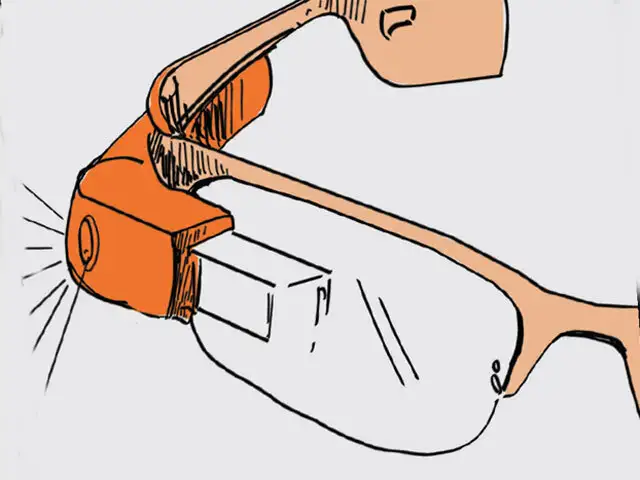
The company with a $364-billion market cap, which is synonymous with its search engine and Android mobile operating system, has been dabbling in various interesting “moonshot” projects, at its semi-secretive Google X lab, and has even got flak from investors for doing too many things.
ET shines a light on some of them:
Google is reportedly planning to launch a ride-sharing service, most likely in its driverless cars, to take on the likes of Uber, in which it is an investor, and Lyft.
The company with a $364-billion market cap, which is synonymous with its search engine and Android mobile operating system, has been dabbling in various interesting “moonshot” projects, at its semi-secretive Google X lab, and has even got flak from investors for doing too many things.
ET shines a light on some of them:







ADVERTISEMENT


