Indians spent over €12 million in rejected Schengen visa applications last year
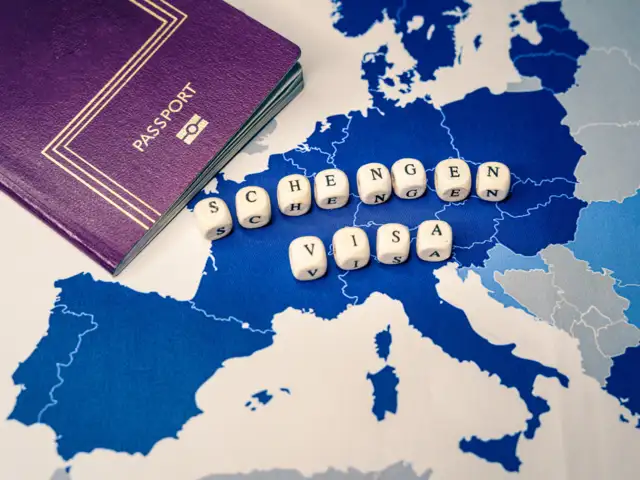
In 2023, Indians faced high rejection rates for Schengen visas, resulting in a loss of €12.1 million. Schengen states rejected 1.6 million visa applications, generating €130 million. Indians, Turks, Algerians, Moroccans, and Chinese were among the...
By ET Online | Updated:

iStock
Indians were among the top five nationalities with the most rejected Schengen visa applications in 2023. Out of the 151,752 visa requests filed by Indian nationals, a substantial number were denied. This led to an estimated loss of €12.1 million in visa application fees for Indian applicants, highlighting the financial burden on those attempting to travel to Schengen countries.
In 2023, Schengen states rejected a total of 1.6 million visa applications, resulting in €130 million in generated funds, according to SchengenNews. Among the affected nationalities, Indian applicants faced significant financial losses due to high visa rejection rates.
Other nationalities facing high rejection rates included Turks, Algerians, Moroccans, and Chinese. Turkish nationals experienced the highest monetary loss, with €13.5 million spent on rejected visa applications. Algerians followed closely, losing €13.3 million, while Moroccans lost €10.9 million, and Chinese applicants faced losses of €4.8 million despite having one of the highest approval rates.
The rejection rate represents the proportion of visas denied relative to the total number of applications. Although the absolute number of rejections for Indians was high, the list of nationalities with the highest rejection rates was dominated by African and Asian countries. Comoros had the highest rejection rate at 57.7%, followed by Pakistan (48.2%), Guinea-Bissau (47.9%), Ghana (46.7%), and Mali (46.4%).
For Indian applicants, the high rejection rates and associated financial losses underscore the challenges faced in securing Schengen visas. Many applicants are left with the frustration of "wasted money" as they bear the cost of application fees without obtaining the desired visa approval.
The European Commission has introduced a new visa "cascade" regime for Indian nationals, easing access to multi-entry visas with extended validity. Indian nationals residing in India can now obtain a two-year multi-entry visa after lawfully using two visas within the previous three years. This can be followed by a five-year visa, allowing short stays of up to 90 days within any 180-day period.
The increased fees and evolving visa policies present both challenges and opportunities for Indian travelers. While the financial burden has grown, the new multi-entry visa regime could simplify travel plans for frequent visitors, potentially encouraging more Indians to explore European destinations.

In 2023, Schengen states rejected a total of 1.6 million visa applications, resulting in €130 million in generated funds, according to SchengenNews. Among the affected nationalities, Indian applicants faced significant financial losses due to high visa rejection rates.
Other nationalities facing high rejection rates included Turks, Algerians, Moroccans, and Chinese. Turkish nationals experienced the highest monetary loss, with €13.5 million spent on rejected visa applications. Algerians followed closely, losing €13.3 million, while Moroccans lost €10.9 million, and Chinese applicants faced losses of €4.8 million despite having one of the highest approval rates.
If you are entering the Schengen Area from a country where there is no visa-free travel agreement, you need to apply for a Schengen visa. The four main Schengen Visa types—A, B, C, and D—are available for these.
The most common kind of Schengen visa, known as a Uniform Schengen Visa, encompasses kinds A, B, and C and allows you to visit any Schengen Zone country once every six months for up to 90 days. It also gives you access to your airport transit visa. If you're traveling to Europe for a short time, you will require this visa.






The rejection rate represents the proportion of visas denied relative to the total number of applications. Although the absolute number of rejections for Indians was high, the list of nationalities with the highest rejection rates was dominated by African and Asian countries. Comoros had the highest rejection rate at 57.7%, followed by Pakistan (48.2%), Guinea-Bissau (47.9%), Ghana (46.7%), and Mali (46.4%).
For Indian applicants, the high rejection rates and associated financial losses underscore the challenges faced in securing Schengen visas. Many applicants are left with the frustration of "wasted money" as they bear the cost of application fees without obtaining the desired visa approval.
ADVERTISEMENT
Schengen Visas became costlier starting June
Starting June 11, 2024, Schengen visa fees increased from €80 to €90 for adult applicants and from €40 to €45 for children aged six to twelve. Countries not cooperating with the readmission of their irregularly staying citizens in the EU may see visa fees rise to €135 or even €180. This fee hike follows a European Commission decision aimed at addressing inflation and civil servants' salary adjustments, reflecting the first increase since February 2020.Indian Travelers to Europe
Indian nationals have shown a growing interest in European travel, with a 43% increase in Schengen visa applications in 2023 compared to 2022. India ranked third in visa applications, with 966,687 filings.The European Commission has introduced a new visa "cascade" regime for Indian nationals, easing access to multi-entry visas with extended validity. Indian nationals residing in India can now obtain a two-year multi-entry visa after lawfully using two visas within the previous three years. This can be followed by a five-year visa, allowing short stays of up to 90 days within any 180-day period.
The increased fees and evolving visa policies present both challenges and opportunities for Indian travelers. While the financial burden has grown, the new multi-entry visa regime could simplify travel plans for frequent visitors, potentially encouraging more Indians to explore European destinations.
ADVERTISEMENT
Applying for a Schengen visa can be a complex process, and avoiding common pitfalls is crucial to ensure a smooth application experience. Here are ten mistakes applicants should steer clear of.









Download
The Economic Times Business News App for the Latest News in Business, Sensex, Stock Market Updates & More.
The Economic Times Business News App for the Latest News in Business, Sensex, Stock Market Updates & More.
ADVERTISEMENT


