Barcelona records the hottest June in over 100 years as a heat wave grips Europe
Barcelona experienced its hottest June since 1914. Other parts of Europe are also facing intense heat. France anticipates temperatures soaring to 40 degrees Celsius. Schools are closing, and tourist spots are affected. Italy is also experiencing a...
By AP |

Reuters
Barcelona has recorded its hottest month of June since records started over a century ago, Spain's national weather service said.
The Can Fabra Observatory, located on a hill overlooking Barcelona, reported an average temperature of 26 degrees Celsius (78 degrees Fahrenheit), breaking records since 1914. The previous hottest average for June was 25.6 C in 2003.
The same weather station said that a single-day high of 37.9 C (100 F) for June was recorded on Monday, June 30.
Barcelona is usually spared the worst heat in Spain, thanks to its location between hills and the Mediterranean in Spain's northeastern corner. But most of the country has been gripped by the first heat wave of the year.
France and the rest of Europe were still in the grips of the first major heat wave this summer with health warnings in effect Tuesday, even as conditions began to improve in some parts of the region.
Punishing temperatures were forecast to reach 40 degrees Celsius (104 degrees Fahrenheit) in Paris and to stay unusually high in Belgium and the Netherlands. In contrast, temperatures were falling in Portugal, where no red heat warnings were issued.
In France, the national weather agency Meteo-France placed several departments under the highest red alert, with the Paris region particularly hard hit. The heat wave - defined as consecutive days of very high temperature - is expected to intensify Tuesday and more than 1,300 schools were expected to be partially or fully closed, the Education Ministry said.
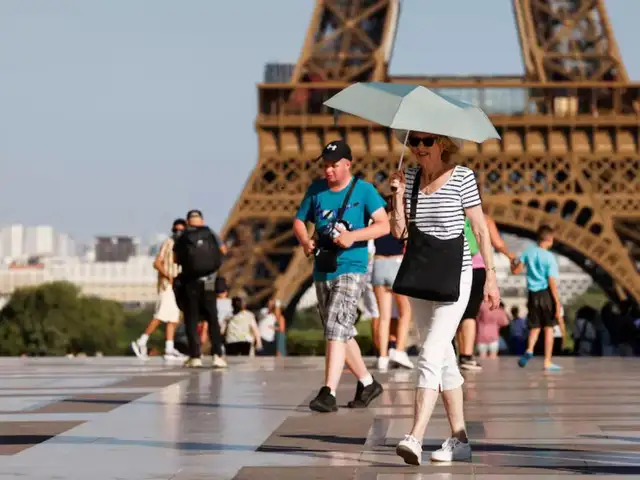
Visitors to the Eiffel Tower without tickets were told to postpone their visits, and the summit of the city's landmark was closed until Thursday.
Farther south, 17 of Italy's 27 major cities were experiencing a heat wave, according to the Health Ministry.
Meteo-France also warned of the heightened risk of wildfires due to the drought-stricken soil, compounded by a lack of rain in June and the recent surge in temperature.
Climate experts warn that future summers are likely to be hotter than any recorded to date. By 2100, France could be up to 4 C (39 F) warmer, with temperatures exceeding 40 C expected every year and extreme heat spikes potentially reaching 50 C (122 F). According to Meteo-France, the country may face a tenfold increase in the number of heat wave days by 2100.
In Portugal, Lisbon was forecast to reach 33 C (91 F), typical for this time of the year, though some inland areas could still see peaks of 43 C (109 F), according to the national weather agency. June temperature records were broken in two locations in Portugal on June 29.
The Can Fabra Observatory, located on a hill overlooking Barcelona, reported an average temperature of 26 degrees Celsius (78 degrees Fahrenheit), breaking records since 1914. The previous hottest average for June was 25.6 C in 2003.
The same weather station said that a single-day high of 37.9 C (100 F) for June was recorded on Monday, June 30.
Barcelona is usually spared the worst heat in Spain, thanks to its location between hills and the Mediterranean in Spain's northeastern corner. But most of the country has been gripped by the first heat wave of the year.
France and the rest of Europe were still in the grips of the first major heat wave this summer with health warnings in effect Tuesday, even as conditions began to improve in some parts of the region.
Punishing temperatures were forecast to reach 40 degrees Celsius (104 degrees Fahrenheit) in Paris and to stay unusually high in Belgium and the Netherlands. In contrast, temperatures were falling in Portugal, where no red heat warnings were issued.
ADVERTISEMENT
In France, the national weather agency Meteo-France placed several departments under the highest red alert, with the Paris region particularly hard hit. The heat wave - defined as consecutive days of very high temperature - is expected to intensify Tuesday and more than 1,300 schools were expected to be partially or fully closed, the Education Ministry said.
Visitors to the Eiffel Tower without tickets were told to postpone their visits, and the summit of the city's landmark was closed until Thursday.
Farther south, 17 of Italy's 27 major cities were experiencing a heat wave, according to the Health Ministry.
Meteo-France also warned of the heightened risk of wildfires due to the drought-stricken soil, compounded by a lack of rain in June and the recent surge in temperature.
ADVERTISEMENT
Climate experts warn that future summers are likely to be hotter than any recorded to date. By 2100, France could be up to 4 C (39 F) warmer, with temperatures exceeding 40 C expected every year and extreme heat spikes potentially reaching 50 C (122 F). According to Meteo-France, the country may face a tenfold increase in the number of heat wave days by 2100.
In Portugal, Lisbon was forecast to reach 33 C (91 F), typical for this time of the year, though some inland areas could still see peaks of 43 C (109 F), according to the national weather agency. June temperature records were broken in two locations in Portugal on June 29.
ADVERTISEMENT
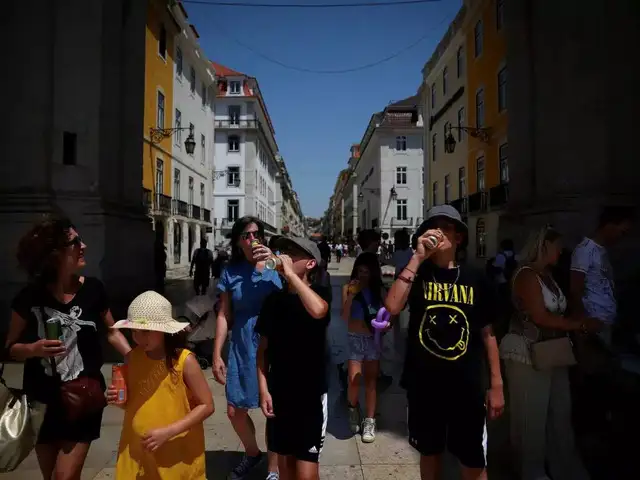
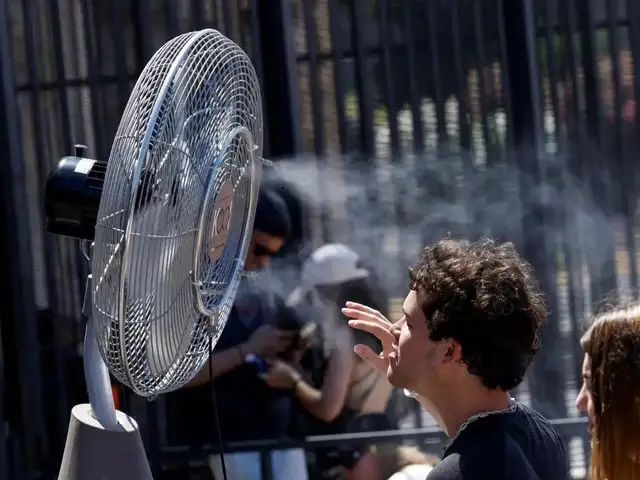
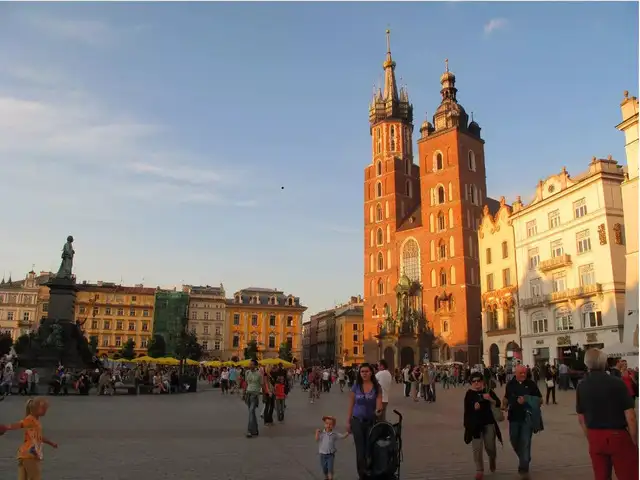
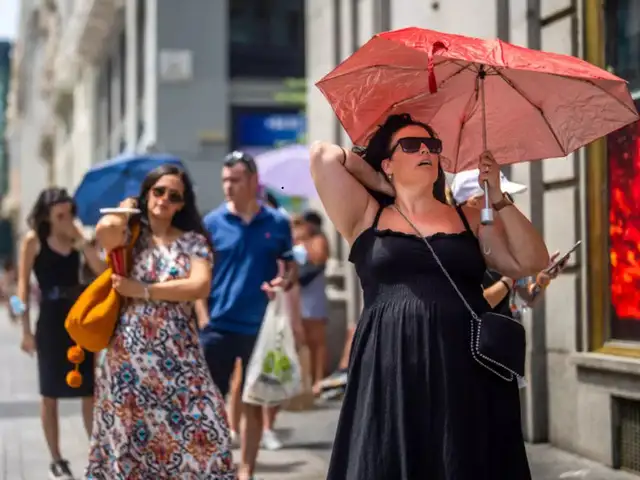
Europe is currently experiencing an intense and widespread heatwave, with several countries seeing record-breaking temperatures and extreme weather alerts. In cities across the continent, authorities are racing to protect vulnerable groups and prevent heat-related emergencies.
The United Nations has warned that such heat is no longer an anomaly but has become “the new normal,” highlighting the growing impact of climate change.





Download
The Economic Times Business News App for the Latest News in Business, Sensex, Stock Market Updates & More.
The Economic Times Business News App for the Latest News in Business, Sensex, Stock Market Updates & More.
ADVERTISEMENT


