Harvard has more money than the GDP of almost 100 countries. Why does Trump's funding freeze matter?
Harvard University, despite its massive $53.2 billion endowment, faces challenges due to a $2.2 billion federal grant freeze imposed by the Trump administration over disagreements on student viewpoints and international student acceptance. While t...
By ET Online |
iStock
Harvard University, with an endowment of $53.2 billion as of 2024, boasts more financial resources than the GDP of nearly 100 countries. Despite this vast wealth, a recent freeze on $2.2 billion in federal grants by the Trump administration has raised important questions about why wealthy institutions like Harvard can’t simply dip into their endowments to make up for lost government funding.
The freeze, announced by the Trump administration this week, came after Harvard rejected the administration’s demands, which included auditing the viewpoints of its students and restricting the acceptance of international students who do not align with American values. Harvard stood firm, saying it would not compromise its independence or constitutional rights. In a statement posted on its X account, the university declared, “The university will not surrender its independence or relinquish its constitutional rights. Neither Harvard nor any other private university can allow itself to be taken over by the federal government.”
Experts say Harvard’s enormous endowment cannot easily replace federal funding due to several factors, including restrictions on how the money is used. According to NBC News, endowments are not simply savings accounts, but rather, investments where much of the money is earmarked for specific purposes by donors. Catharine Bond Hill, former president of Vassar College, explained that endowments are intended to generate earnings over time to support the university’s programs, rather than being used for immediate needs. “They don’t give it as a pot of money to be spent this year,” Hill explained. “They give it as an endowment, so that the earnings can be used over time to support the thing that the donor is interested in the university doing in perpetuity.”
Additionally, there are legal and ethical obligations tied to donor restrictions. Liz Clark, vice president of policy at the National Association of College and University Business Officers, pointed out to NBC News that endowments can be seen as a collection of contracts with donors. These donors may have given money to support specific programs, scholarships, or faculty positions. At Harvard, for example, about 70% of the annual distribution from its endowment is directed toward these specific programs, leaving only 25% available for discretionary spending. “That board-designated money may have been earmarked to support need-based financial aid for undergraduates,” Hill explained. “If they spend it down on covering this research shortfall, they can certainly do it for a while, but when it’s gone, it’s gone.”
Federal funding, particularly for research, has also been crucial to Harvard and other top universities. According to experts, much of this funding comes from agencies like the National Institutes of Health and the National Science Foundation, which support research in areas like STEM, medical advancements, and national security. “It is very difficult for a university like Harvard or Columbia to conduct that kind of cutting-edge research without that kind of infrastructural support that is separate from the actual research itself,” Cecilia Orphan, associate professor of higher education at the University of Denver, told NBC News.
While Harvard's financial buffer from its endowment may help mitigate the impact of the funding freeze in the short term, the long-term consequences could be severe, particularly for research with global implications. As Orphan highlighted, cutting research funding could disrupt critical projects, such as cancer research and national security studies. "When you cut the research funding, that means that research will cease or it will be greatly diminished," she said.
ADVERTISEMENT
The situation underscores the complexities of funding at top universities like Harvard, where private wealth, government support, and institutional autonomy intersect. Despite its financial resources, Harvard faces challenges in navigating the legal, ethical, and strategic constraints of its endowment while dealing with the fallout from a freeze in federal grants.
Trump is going after these American universities. Here's why
1/10
Harvard University is facing the largest funding threat among the institutions targeted by the Trump administration. Federal funding worth approximately $9 billion is at stake, and more than $2.2 billion has already been withdrawn.
The administration accuses Harvard of allowing antisemitism and promoting ideological bias. In response, Harvard rejected the administration’s proposals, including allowing an external auditor to review departments and reporting conduct violations by international students.
President Alan M. Garber said the university “will not surrender its independence or relinquish its constitutional rights.” Despite holding a $53 billion endowment, Harvard recently announced a $750 million bond issue to ensure financial flexibility amid the uncertainty.
Funding at Stake: About $9 billion Already Cut: Over $2.2 billion Trump Demands: External audits, curbs on faculty power, reporting of international student conduct
Harvard University is facing the largest funding threat among the institutions targeted by the Trump administration. Federal funding worth approximately $9 billion is at stake, and more than $2.2 bil..
Read More
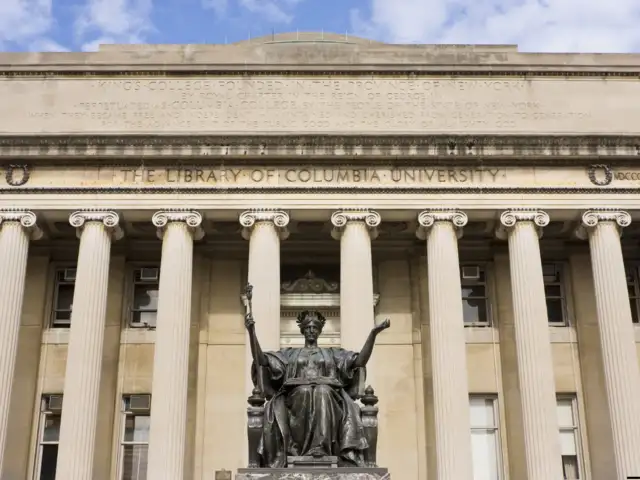
Columbia University is trying to recover about $400 million in federal grants and contracts after accepting demands from the Trump administration. The university’s decision followed widespread protests related to the Israel-Gaza conflict. The administration accused Columbia of not doing enough to prevent antisemitic incidents on campus.
As part of its concessions, Columbia agreed to new oversight for its Middle Eastern, South Asian and African Studies Department, strengthened campus security, and introduced stricter protest and disciplinary policies. The decision has concerned many academic leaders, who see it as a compromise on institutional autonomy.
Funding Loss: $400 million Response: Complied with federal demands Changes Made: - New oversight for Middle Eastern studies - Tighter protest rules - Strengthened campus security
Columbia University is trying to recover about $400 million in federal grants and contracts after accepting demands from the Trump administration. The university’s decision followed widespread protes..
Read More
Brown University has been informed that it could lose up to $510 million in federal funding. The Trump administration has linked its decision to claims that Brown is not doing enough to address antisemitism on campus.
However, the exact reasons and evidence behind the decision have not been made public. The university’s response to the potential funding cuts has not been detailed, but it remains one of several elite institutions under close government scrutiny.
Federal Funds at Risk: $510 million Reason for Targeting: Not specified in detail but broadly aligned with claims of tolerating antisemitism Response: Not publicly specified Current Status: Under scrutiny; outcome uncertain
Brown University has been informed that it could lose up to $510 million in federal funding. The Trump administration has linked its decision to claims that Brown is not doing enough to address antis..
Read More
Cornell University is facing the risk of losing at least $1 billion in federal support. Like other universities on the list, Cornell has been accused of failing to adequately respond to antisemitism and ideological bias.
The government has not specified which programs are affected. Cornell has not made a public response regarding the funding threat or its compliance with any federal demands. The situation remains fluid as discussions continue between campus administrators and federal agencies.
Federal Funds at Risk: At least $1 billion Reason for Targeting: Similar broad allegations of antisemitism and ideological issues Response: Not publicly detailed Current Status: Awaiting further developments
Cornell University is facing the risk of losing at least $1 billion in federal support. Like other universities on the list, Cornell has been accused of failing to adequately respond to antisemitism ..
Read More
Northwestern University may lose up to $790 million in federal funding. The school had already implemented steps to address antisemitism, closely matching the demands made to Columbia University.
Despite this, it was still added to the list of targeted universities. School officials have expressed confusion over the decision and said they were not given advance warning. The administration’s move has raised questions about the consistency and fairness of how schools are being assessed.
Federal Funds at Risk: $790 million Reason for Targeting: Confused educators; school had already implemented measures similar to those demanded of Columbia Response: Officials expressed confusion; measures already in place to combat antisemitism Current Status: Funding still at risk
Northwestern University may lose up to $790 million in federal funding. The school had already implemented steps to address antisemitism, closely matching the demands made to Columbia University.Desp..
Read More
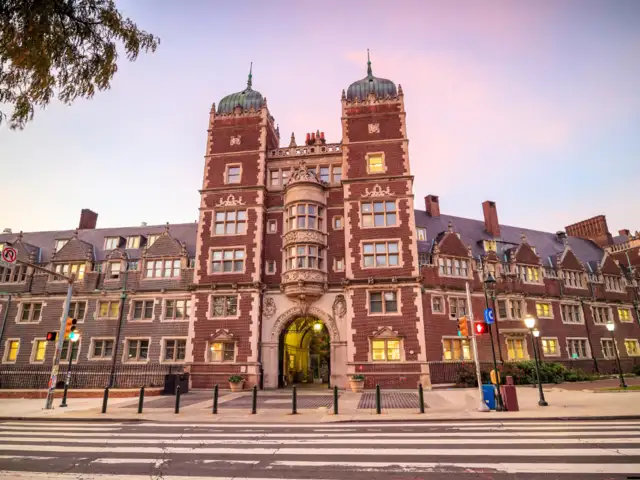
The University of Pennsylvania had $175 million in federal funds suspended. The action was tied to the university’s handling of a transgender athlete’s participation in sports in 2022, not recent campus protests.
Penn said the suspension affected researchers across at least seven schools. President J. Larry Jameson said that the affected research covered topics such as drug screening, hospital-acquired infections, quantum computing, and student loan programs. The university has not confirmed whether it will meet any federal demands to restore the funding.
Federal Funds Suspended: $175 million Reason for Targeting: Linked to a 2022 controversy over transgender athlete participation Response: Affected research across seven schools, including projects on: - Hospital infection prevention - Virus drug screening - Quantum computing - Chemical warfare protections - Student loan programs
The University of Pennsylvania had $175 million in federal funds suspended. The action was tied to the university’s handling of a transgender athlete’s participation in sports in 2022, not recent cam..
Read More
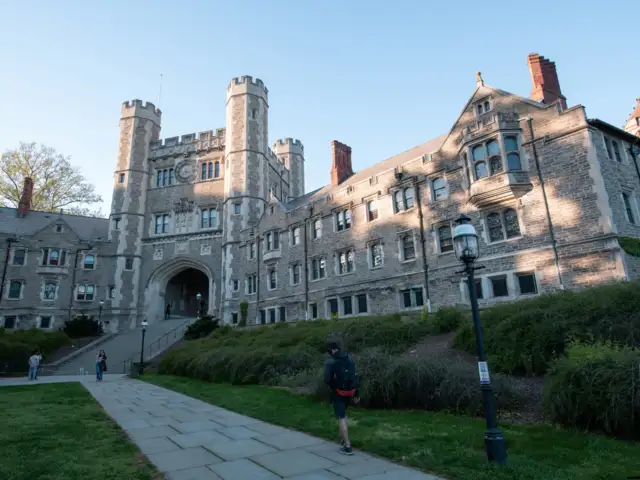
Princeton University has said that dozens of its grants have been suspended and that $210 million in federal funds is at risk. The Trump administration included Princeton in its list of universities under investigation for allegedly tolerating antisemitism. While the university has not disclosed which grants were affected or how it plans to respond, it remains under pressure as the federal review continues.
Federal Funds at Risk: $210 million Grants Suspended: “Dozens,” according to the university Reason for Targeting: Part of the administration’s broader antisemitism-related scrutiny Response: Not fully detailed publicly Current Status: Facing funding uncertainty
Princeton University has said that dozens of its grants have been suspended and that $210 million in federal funds is at risk. The Trump administration included Princeton in its list of universities ..
Read More
Beyond the seven institutions named publicly, the Trump administration’s task force is focusing on 10 universities, including Columbia, Harvard, Northwestern, and several University of California campuses.
Task Force Focus: 10 universities highlighted - Columbia - George Washington University - Harvard - Johns Hopkins University - New York University - Northwestern - UC Berkeley - UCLA - University of Minnesota - USC
All of these schools are in Democratic-leaning states or Washington, D.C. They have been accused of failing to control antisemitic incidents or promoting ideological bias. Investigations are ongoing, and funding for these schools could also be at risk.
Beyond the seven institutions named publicly, the Trump administration’s task force is focusing on 10 universities, including Columbia, Harvard, Northwestern, and several University of California cam..
Read More
The Trump administration has said its actions are a response to rising antisemitism on college campuses. However, critics argue that the move is part of a broader ideological campaign against what some conservatives see as liberal dominance in higher education.
The administration has expressed opposition to diversity, equity, and inclusion programs and has raised concerns about a lack of political viewpoint diversity among faculty members. Many of the targeted universities are viewed by conservatives as promoting “wokeness” rather than academic neutrality.
The Trump administration has said its actions are a response to rising antisemitism on college campuses. However, critics argue that the move is part of a broader ideological campaign against what so..
Read More
Since World War II, U.S. universities have relied on federal funds for research in areas like public health, defense, and technology. Although elite universities have large endowments, much of the money is restricted by donor conditions.
The administration’s funding cuts have affected critical programs, including those related to national security, healthcare, and scientific innovation. University leaders have warned that the cuts could damage not just their institutions, but also the country’s long-term competitiveness and social progress.
Since World War II, U.S. universities have relied on federal funds for research in areas like public health, defense, and technology. Although elite universities have large endowments, much of the mo..
Business News › NRI › Latest Updates › Harvard has more money than the GDP of almost 100 countries. Why does Trump's funding freeze matter?Text Size:AAA