Trump pulls the $2 bn plug: Can Harvard keep the lights on in its labs?
The Trump administration's freeze of over $2 billion in federal funding to Harvard University raises concerns about the future of scientific research. This decision impacts projects related to critical areas like cancer and neurodegenerative disea...
By ET Online | Updated:
As the Trump administration freezes over $2 billion in federal funding to Harvard University, questions arise over why institutions like Harvard receive such support and how they might fill the gap. The freeze comes amid a broader clash between the administration and universities over governance, DEI programs, and academic oversight.
The standoff between President Donald Trump and Harvard University has escalated into a high-stakes battle over control, ideology, and billions in federal funding. The Trump administration has accused the Ivy League institution of resisting oversight and continuing practices it deems problematic, including diversity and inclusion programs and certain hiring and admissions policies.
"Everyone knows that Harvard has “lost its way.” They hired, from New York (Bill D) and Chicago (Lori L), at ridiculously high salaries/fees, two of the WORST and MOST INCOMPETENT mayors in the history of our Country, to “teach” municipal management and government. These two Radical Left fools left behind two cities that will take years to recover from their incompetence and evil. Harvard has been hiring almost all woke, Radical Left, idiots and “birdbrains” who are only capable of teaching FAILURE to students and so-called “future leaders.” Look just to the recent past at their plagiarizing President, who so greatly embarrassed Harvard before the United States States Congress. When it got so bad that they just couldn’t take it anymore, they moved this grossly inept woman into another position, teaching, rather than firing her ON THE SPOT. Since then much else has been found out about her, but she remains in place. Many others, like these Leftist dopes, are teaching at Harvard, and because of that, Harvard can no longer be considered even a decent place of learning, and should not be considered on any list of the World’s Great Universities or Colleges. Harvard is a JOKE, teaches Hate and Stupidity, and should no longer receive Federal Funds. Thank you for your attention to this matter!," Trump said in a post oh his Truth Social.
The decision to freeze more than $2 billion in federal research funds is the most serious financial action yet in a broader campaign targeting universities over alleged antisemitism and left-leaning ideology on campuses. Harvard, a symbol of elite academia, now finds itself at the center of a political and financial confrontation, one that could reshape the relationship between federal power and higher education.
The origins of federal support for university research
Harvard’s reliance on federal funding stems from a longstanding US policy linking public investment to scientific advancement. This model took shape in July 1945, when Vannevar Bush, then-head of the US Office of Scientific Research and Development, submitted a report to President Harry Truman titled “Science — the Endless Frontier.” In it, Bush argued that federal funds should be directed to research universities to promote innovation, marking a shift from earlier eras when most research was financed by private companies and foundations.
ADVERTISEMENT
This philosophy led to the growth of a federally supported research ecosystem across American campuses. Harvard, like many top-tier universities, became a major recipient. According to The Washington Post, in fiscal year 2024, federal funding made up 68 percent of Harvard’s total sponsored research revenue, amounting to $686 million.
What federal money pays for at Harvard
The funds at risk support a broad array of scientific research. Projects related to cancer, organ transplants, obesity, and neurodegenerative diseases are directly impacted. The Harvard T.H. Chan School of Public Health noted that about 46 percent of its fiscal 2025 budget depended on federal funds — both for direct research and administrative expenses.
One of the halted programs includes research into ALS (amyotrophic lateral sclerosis), led by David Walt, a professor at Harvard Medical School and Brigham and Women’s Hospital. He told The Post that he was directed to stop all work immediately. “Lots of people are waiting for cures. If you can diagnose people early, intervene earlier, the hope is you can delay or prevent the disease progression,” Walt said.
Can Harvard use other funds?
To navigate the funding freeze, Harvard has moved to strengthen its liquidity. According to The Post, the university recently borrowed $750 million through a taxable bond sale, with proceeds marked for general operations.
ADVERTISEMENT
Harvard’s endowment — valued at $53.2 billion — is among the largest in the world. While universities do use endowment income to support research, most of that funding is restricted by donor conditions. Endowments are also structured to ensure long-term sustainability rather than short-term cash needs.
A university spokesperson told The Washington Post, “As part of ongoing contingency planning for a range of financial circumstances, Harvard is evaluating resources needed to advance its academic and research priorities.”
ADVERTISEMENT
Why private philanthropy isn’t enough
Even with its massive endowment and donor base, Harvard cannot rely solely on private giving to replace federal support. The Post notes that the National Institutes of Health had a budget of nearly $48 billion in 2024, with over 80 percent directed to university researchers nationwide. By comparison, the Howard Hughes Medical Institute and the American Cancer Society contributed around $800 million and $132 million, respectively, to biomedical research in the same year.
These disparities highlight why the federal government remains the single most important source of research funding in the US university system — and why the freeze could have lasting effects beyond Harvard.
Trump is going after these American universities. Here's why
1/10
Harvard University is facing the largest funding threat among the institutions targeted by the Trump administration. Federal funding worth approximately $9 billion is at stake, and more than $2.2 billion has already been withdrawn.
The administration accuses Harvard of allowing antisemitism and promoting ideological bias. In response, Harvard rejected the administration’s proposals, including allowing an external auditor to review departments and reporting conduct violations by international students.
President Alan M. Garber said the university “will not surrender its independence or relinquish its constitutional rights.” Despite holding a $53 billion endowment, Harvard recently announced a $750 million bond issue to ensure financial flexibility amid the uncertainty.
Funding at Stake: About $9 billion Already Cut: Over $2.2 billion Trump Demands: External audits, curbs on faculty power, reporting of international student conduct
Harvard University is facing the largest funding threat among the institutions targeted by the Trump administration. Federal funding worth approximately $9 billion is at stake, and more than $2.2 bil..
Read More
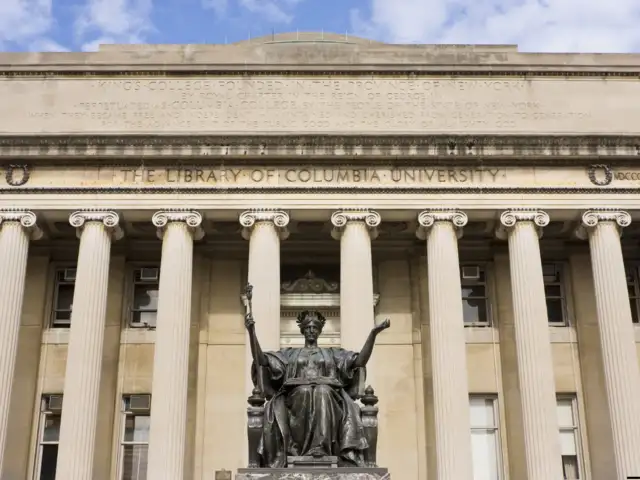
Columbia University is trying to recover about $400 million in federal grants and contracts after accepting demands from the Trump administration. The university’s decision followed widespread protests related to the Israel-Gaza conflict. The administration accused Columbia of not doing enough to prevent antisemitic incidents on campus.
As part of its concessions, Columbia agreed to new oversight for its Middle Eastern, South Asian and African Studies Department, strengthened campus security, and introduced stricter protest and disciplinary policies. The decision has concerned many academic leaders, who see it as a compromise on institutional autonomy.
Funding Loss: $400 million Response: Complied with federal demands Changes Made: - New oversight for Middle Eastern studies - Tighter protest rules - Strengthened campus security
Columbia University is trying to recover about $400 million in federal grants and contracts after accepting demands from the Trump administration. The university’s decision followed widespread protes..
Read More
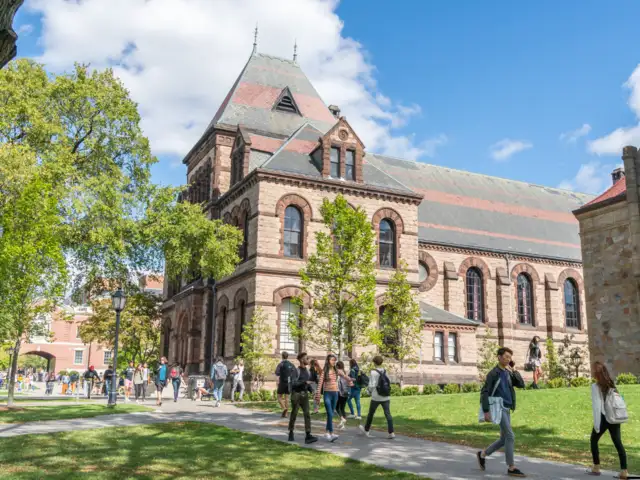
Brown University has been informed that it could lose up to $510 million in federal funding. The Trump administration has linked its decision to claims that Brown is not doing enough to address antisemitism on campus.
However, the exact reasons and evidence behind the decision have not been made public. The university’s response to the potential funding cuts has not been detailed, but it remains one of several elite institutions under close government scrutiny.
Federal Funds at Risk: $510 million Reason for Targeting: Not specified in detail but broadly aligned with claims of tolerating antisemitism Response: Not publicly specified Current Status: Under scrutiny; outcome uncertain
Brown University has been informed that it could lose up to $510 million in federal funding. The Trump administration has linked its decision to claims that Brown is not doing enough to address antis..
Read More
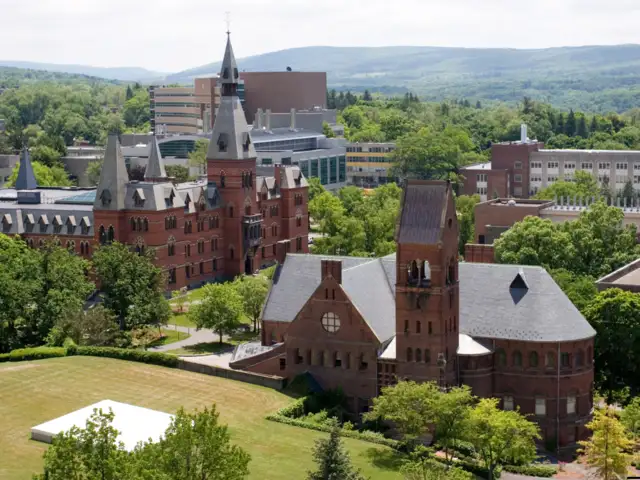
Cornell University is facing the risk of losing at least $1 billion in federal support. Like other universities on the list, Cornell has been accused of failing to adequately respond to antisemitism and ideological bias.
The government has not specified which programs are affected. Cornell has not made a public response regarding the funding threat or its compliance with any federal demands. The situation remains fluid as discussions continue between campus administrators and federal agencies.
Federal Funds at Risk: At least $1 billion Reason for Targeting: Similar broad allegations of antisemitism and ideological issues Response: Not publicly detailed Current Status: Awaiting further developments
Cornell University is facing the risk of losing at least $1 billion in federal support. Like other universities on the list, Cornell has been accused of failing to adequately respond to antisemitism ..
Read More
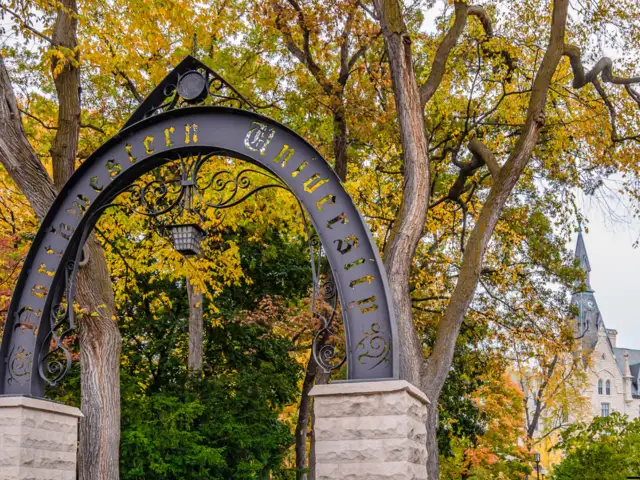
Northwestern University may lose up to $790 million in federal funding. The school had already implemented steps to address antisemitism, closely matching the demands made to Columbia University.
Despite this, it was still added to the list of targeted universities. School officials have expressed confusion over the decision and said they were not given advance warning. The administration’s move has raised questions about the consistency and fairness of how schools are being assessed.
Federal Funds at Risk: $790 million Reason for Targeting: Confused educators; school had already implemented measures similar to those demanded of Columbia Response: Officials expressed confusion; measures already in place to combat antisemitism Current Status: Funding still at risk
Northwestern University may lose up to $790 million in federal funding. The school had already implemented steps to address antisemitism, closely matching the demands made to Columbia University.Desp..
Read More
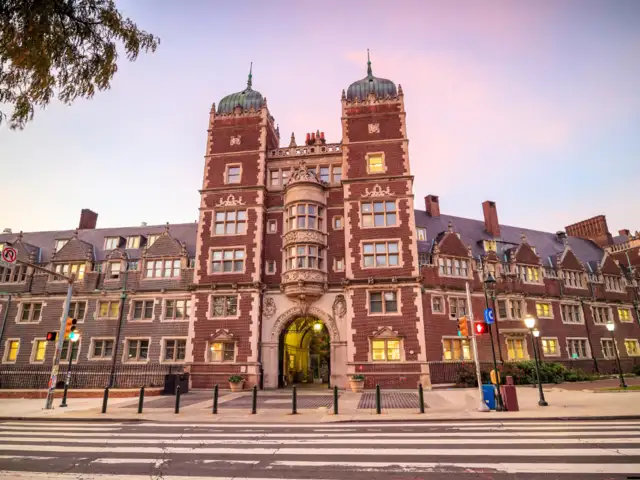
The University of Pennsylvania had $175 million in federal funds suspended. The action was tied to the university’s handling of a transgender athlete’s participation in sports in 2022, not recent campus protests.
Penn said the suspension affected researchers across at least seven schools. President J. Larry Jameson said that the affected research covered topics such as drug screening, hospital-acquired infections, quantum computing, and student loan programs. The university has not confirmed whether it will meet any federal demands to restore the funding.
Federal Funds Suspended: $175 million Reason for Targeting: Linked to a 2022 controversy over transgender athlete participation Response: Affected research across seven schools, including projects on: - Hospital infection prevention - Virus drug screening - Quantum computing - Chemical warfare protections - Student loan programs
The University of Pennsylvania had $175 million in federal funds suspended. The action was tied to the university’s handling of a transgender athlete’s participation in sports in 2022, not recent cam..
Read More
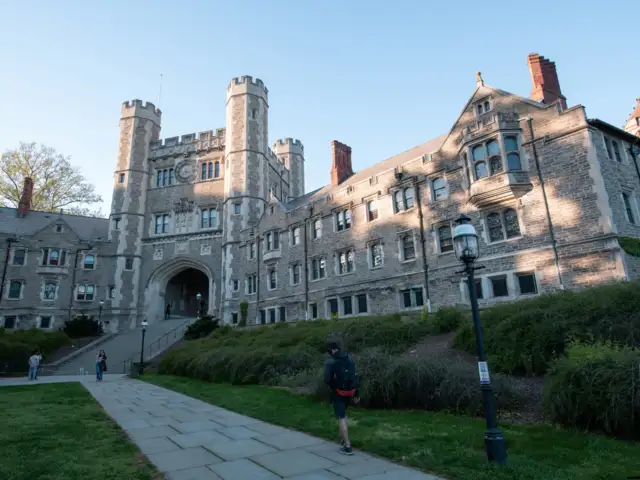
Princeton University has said that dozens of its grants have been suspended and that $210 million in federal funds is at risk. The Trump administration included Princeton in its list of universities under investigation for allegedly tolerating antisemitism. While the university has not disclosed which grants were affected or how it plans to respond, it remains under pressure as the federal review continues.
Federal Funds at Risk: $210 million Grants Suspended: “Dozens,” according to the university Reason for Targeting: Part of the administration’s broader antisemitism-related scrutiny Response: Not fully detailed publicly Current Status: Facing funding uncertainty
Princeton University has said that dozens of its grants have been suspended and that $210 million in federal funds is at risk. The Trump administration included Princeton in its list of universities ..
Read More
Beyond the seven institutions named publicly, the Trump administration’s task force is focusing on 10 universities, including Columbia, Harvard, Northwestern, and several University of California campuses.
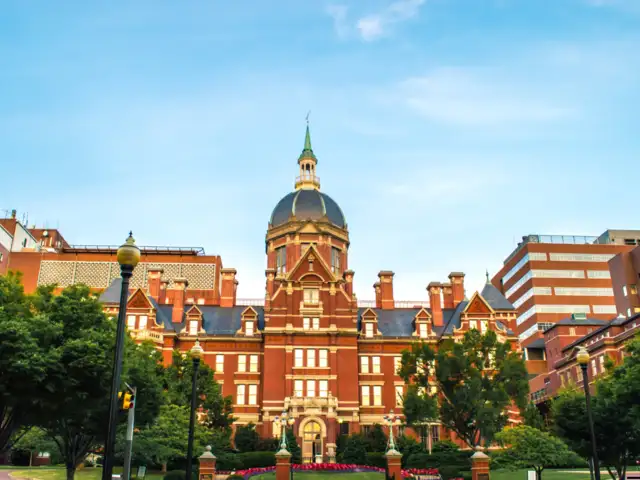
Task Force Focus: 10 universities highlighted - Columbia - George Washington University - Harvard - Johns Hopkins University - New York University - Northwestern - UC Berkeley - UCLA - University of Minnesota - USC
All of these schools are in Democratic-leaning states or Washington, D.C. They have been accused of failing to control antisemitic incidents or promoting ideological bias. Investigations are ongoing, and funding for these schools could also be at risk.
Beyond the seven institutions named publicly, the Trump administration’s task force is focusing on 10 universities, including Columbia, Harvard, Northwestern, and several University of California cam..
Read More
The Trump administration has said its actions are a response to rising antisemitism on college campuses. However, critics argue that the move is part of a broader ideological campaign against what some conservatives see as liberal dominance in higher education.
The administration has expressed opposition to diversity, equity, and inclusion programs and has raised concerns about a lack of political viewpoint diversity among faculty members. Many of the targeted universities are viewed by conservatives as promoting “wokeness” rather than academic neutrality.
The Trump administration has said its actions are a response to rising antisemitism on college campuses. However, critics argue that the move is part of a broader ideological campaign against what so..
Read More
Since World War II, U.S. universities have relied on federal funds for research in areas like public health, defense, and technology. Although elite universities have large endowments, much of the money is restricted by donor conditions.
The administration’s funding cuts have affected critical programs, including those related to national security, healthcare, and scientific innovation. University leaders have warned that the cuts could damage not just their institutions, but also the country’s long-term competitiveness and social progress.
Since World War II, U.S. universities have relied on federal funds for research in areas like public health, defense, and technology. Although elite universities have large endowments, much of the mo..