What is India's next space mission after moon landing?
India's space agency, ISRO, has announced plans to launch its first space observatory for solar research, Aditya-L1, in September. The spacecraft will study solar winds and their impact on Earth's climate patterns. Aditya-L1 will travel 1.5 millio...
By Reuters | Updated:
Mission Aditya-L1: Here's what we know about Isro’s space probe to study the Sun
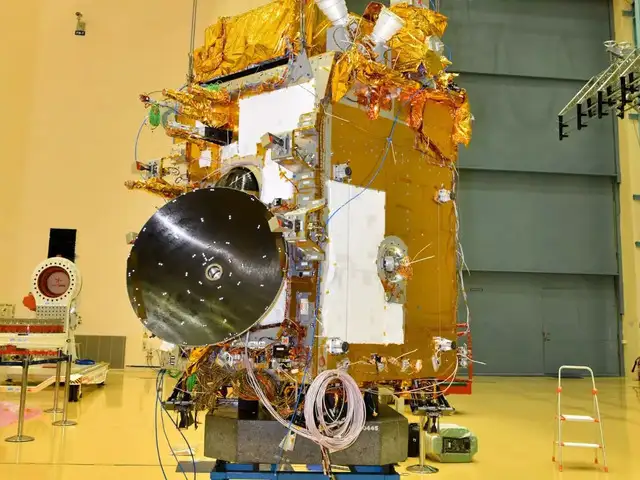
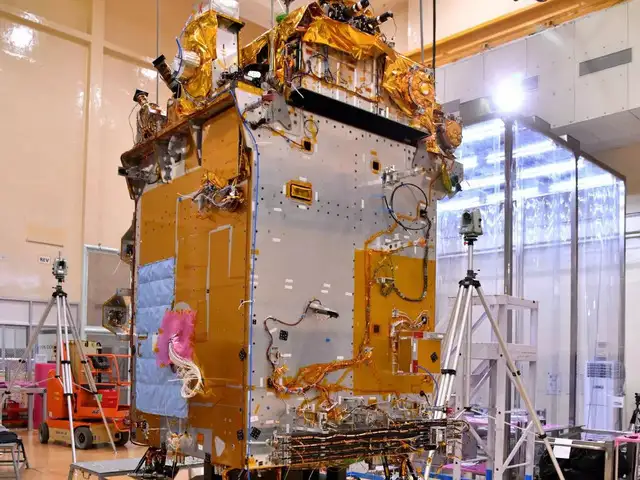
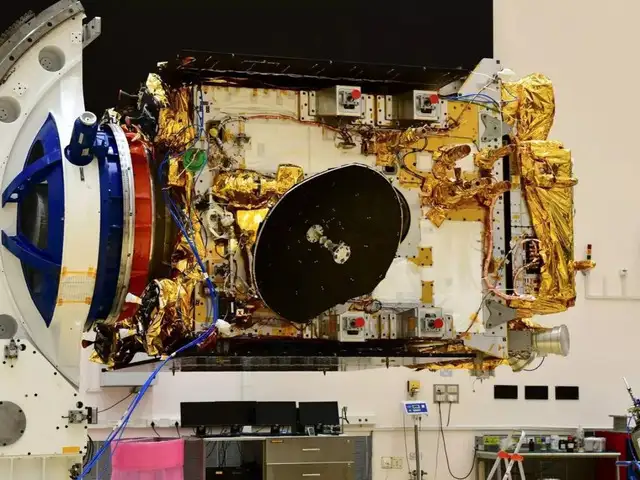
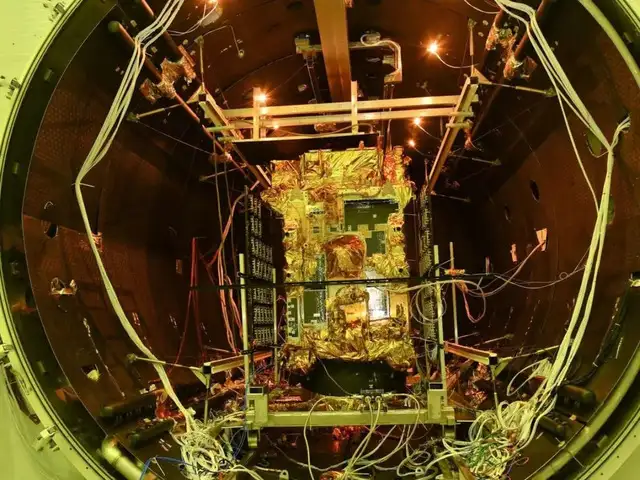
The Aditya-L1, India's first space observatory for solar research, is getting ready for launch at the country's main spaceport in Sriharikota, the Indian Space Research Organisation (ISRO) told reporters at its satellite command centre this week, as scientists and crew celebrated the moon mission's success.
"We are planning to launch in the first week of September," said ISRO chairman S. Somanath.
WHAT WILL ADITYA-L1 DO?
Named after the Hindi word for the sun, the spacecraft is India's first space-based solar probe. It aims to study solar winds, which can cause disturbance on earth and are commonly seen as "auroras".
Longer term, data from the mission could help better understand the sun's impact on earth's climate patterns.
ADVERTISEMENT
Recently, researchers said the European Space Agency/NASA Solar Orbiter spacecraft had detected numerous relatively small jets of charged particles expelled intermittently from the corona - the sun's outer atmosphere - which could help shed light on the origins of solar wind.
To Sun and the Stars: Upcoming missions of ISRO
1/6
As per ISRO's websote, Aditya L1 will be the first space based Indian mission to study the Sun, where the placed in a halo orbit around the Lagrange point 1 (L1) of the Sun-Earth system, which is about 1.5 million km from the Earth. A satellite placed in the halo orbit around the L1 point has the major advantage of continuously viewing the Sun without any occultation/ eclipse. This will provide a greater advantage of observing the solar activities continuously. The launch is scheduled for August 26.
As per ISRO's websote, Aditya L1 will be the first space based Indian mission to study the Sun, where the placed in a halo orbit around the Lagrange point 1 (L1) of the Sun-Earth system, which is abo..
Read More
A collaboration between ISRO and NASA, the NISAR mission is scheduled for January 2024. NISAR is a low-earth orbit observatory mission, which will map the earth once every 12 days. With an estimated project cost of $1.5 billion, the mission will provide data for "understanding changes in Earth’s ecosystems, ice mass, vegetation biomass, sea level rise, ground water and natural hazards including earthquakes, tsunamis, volcanoes and landslides."
A collaboration between ISRO and NASA, the NISAR mission is scheduled for January 2024. NISAR is a low-earth orbit observatory mission, which will map the earth once every 12 days. With an estimated ..
Read More
A short form of space docking experiment, the Spadex project of ISRO is a twin spacecraft mission to mature technologies related to orbital rendezvous, docking, formation flying, with scope of applications in human spaceflight, in-space satellite servicing and other proximity operations. The mission cost is projected at Rs 124.47 crore. The launch is scheduled for the third quarter of 2024.
A short form of space docking experiment, the Spadex project of ISRO is a twin spacecraft mission to mature technologies related to orbital rendezvous, docking, formation flying, with scope of applic..
Read More
The second mission to Mars, Mangalyaan 2, also called the Mars Orbiter Mission 2, will be an inter-planetary mission by ISRO with a planned launch date in 2024. The spacecraft will carry "a hyperspectral camera, a high resolution panchromatic camera and a radar to understand early Martian crust, recent basalts and boulder falls."
The second mission to Mars, Mangalyaan 2, also called the Mars Orbiter Mission 2, will be an inter-planetary mission by ISRO with a planned launch date in 2024. The spacecraft will carry "a hyperspec..
Read More
Gaganyaan project envisages demonstration of human spaceflight capability by launching crew of 3 members to an orbit of 400 km for a 3 days mission and bring them back safely to earth, by landing in Indian sea waters. Gaganyaan 3 would be India's first human space mission. This mission is scheduled for a 2024 launch.
Gaganyaan project envisages demonstration of human spaceflight capability by launching crew of 3 members to an orbit of 400 km for a 3 days mission and bring them back safely to earth, by landing in ..
Read More
Shukrayaan is a planned orbiter to Venus to study the surface and atmosphere of the planet. It has a projected launch date of 2024-end. ISRO is also working on its very own space tourism project, where one can explore the space by purchasing a single ticket worth Rs 6 crore. The project is estimated to open by 2030.
Shukrayaan is a planned orbiter to Venus to study the surface and atmosphere of the planet. It has a projected launch date of 2024-end. ISRO is also working on its very own space tourism project, whe..
Hitching a ride on India's heavy-duty launch vehicle, the PSLV, the Aditya-L1 spacecraft will travel 1.5 million km in about four months to study the sun's atmosphere.
It will head to a kind of parking lot in space where objects tend to stay put because of balancing gravitational forces, reducing fuel consumption for the spacecraft.
ADVERTISEMENT
Those positions are called Lagrange Points, named after Italian-French mathematician Joseph-Louis Lagrange.
HOW MUCH DOES THE MISSION COST?
ADVERTISEMENT
In 2019, the government sanctioned the equivalent of about $46 million for the Aditya-L1 mission. ISRO has not given an official update on costs.
The Indian space agency has earned a reputation for world-beating cost competitiveness in space engineering that executives and planners expect will boost its now-privatised space industry.
The Chandrayaan-3 mission, which landed a spacecraft on the lunar south pole, had a budget of about $75 million.
All you need to know about Aditya L1, ISRO's mission to Sun
1/5
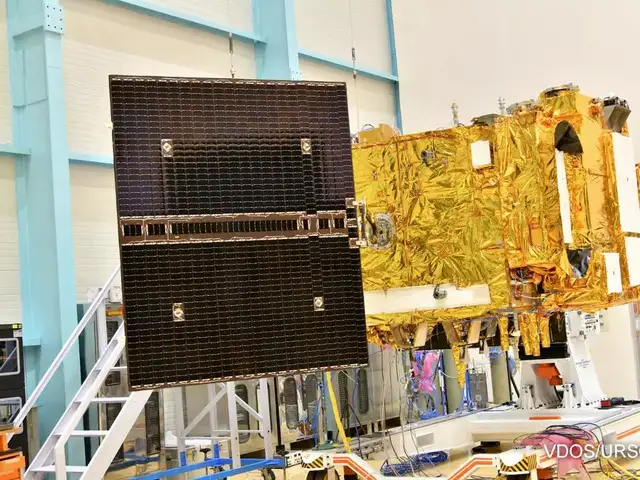
Aditya-L1, the first space-based Indian observatory to study the Sun, is getting ready for its launch soon, ISRO said on Monday. In a tweet with photos, ISRO said, "Aditya-L1, the first space-based Indian observatory to study the Sun, is getting ready for the launch. The satellite realised at the U R Rao Satellite Centre (URSC), Bengaluru has arrived at SDSC-SHAR, Sriharikota."
Aditya-L1, the first space-based Indian observatory to study the Sun, is getting ready for its launch soon, ISRO said on Monday. In a tweet with photos, ISRO said, "Aditya-L1, the first space-based I..
Read More
As mentioned before, Aditya L1 will be the first space based Indian mission to study the Sun. "The sun is the nearest star and therefore can be studied in much more detail as compared to other stars. By studying the sun we can learn much more about stars in our Milky Way as well as about stars in various other galaxies," ISRO said on its website.
As mentioned before, Aditya L1 will be the first space based Indian mission to study the Sun. "The sun is the nearest star and therefore can be studied in much more detail as compared to other stars...
Read More
The spacecraft carries seven payloads to observe the photosphere, chromosphere and the outermost layers of the Sun (the corona) using electromagnetic and particle and magnetic field detectors. Using the special vantage point L1, four payloads will directly view the Sun and the remaining three payloads would carry out in-situ studies of particles and fields at the L1, thus providing important scientific studies of the propagatory effect of solar dynamics in the interplanetary medium.
The spacecraft carries seven payloads to observe the photosphere, chromosphere and the outermost layers of the Sun (the corona) using electromagnetic and particle and magnetic field detectors. Using ..
Read More
The major study objectives include:
Study of Solar upper atmospheric (chromosphere and corona) dynamics.
Study of chromospheric and coronal heating, physics of the partially ionized plasma, initiation of the coronal mass ejections, and flares
Observe the in-situ particle and plasma environment providing data for the study of particle dynamics from the Sun.
Physics of solar corona and its heating mechanism.
Diagnostics of the coronal and coronal loops plasma: Temperature, velocity and density.
Development, dynamics and origin of CMEs.
Identify the sequence of processes that occur at multiple layers (chromosphere, base and extended corona) which eventually leads to solar eruptive events.
Drivers for space weather (origin, composition and dynamics of solar wind .
The major study objectives include:Study of Solar upper atmospheric (chromosphere and corona) dynamics.Study of chromospheric and coronal heating, physics of the partially ionized plasma, initiation..
Read More
"Mostly September first week," an ISRO official told PTI when asked about the date of the launch. The spacecraft is expected to be placed in a halo orbit around the Lagrange point 1 (L1) of the Sun-Earth system, which is about 1.5 million kilometres from the Earth. A satellite placed in the halo orbit around the L1 point has a major advantage of continuously viewing the Sun without any occultation/eclipses, ISRO noted. "This will provide a greater advantage of observing the solar activities and its effect on space weather in real time," it said.
"Mostly September first week," an ISRO official told PTI when asked about the date of the launch. The spacecraft is expected to be placed in a halo orbit around the Lagrange point 1 (L1) of the Sun-E..