ET GBS: US commitment to openness in trade and commerce vital for India, says CEA Arvind Subramanian
Chief economic advisor Arvind Subramanian says US Senate bill on immigration is adverse, even hostile, to Indian skilled labour exports
By ET Bureau | Updated:

NEW DELHI: Reservations about globalization in the US could undermine its commitment to openness in trade and commerce, chief economic advisor Arvind Subramanian said, flagging this as a key concern for countries such as India with protectionist voices seemingly growing louder in the world’s biggest economy.
“You cannot grow at 8 per cent sustainably based on the domestic market that is completely inconsistent. So for us, it is really important that foreign markets remain open,” he said at the Economic Times Global Business Summit on Saturday. Subramanian amplified on the point about public intellectuals appearing to circle the wagons in the US.
“What is common to Paul Samuelson, Larry Summers, Alan Blinder, Joe Stiglitz, Michael Spence and Paul Krugman,” he asked at the discussion on American Revival: What it means for the World Economy and India. What makes the rest of the world nervous? “It’s commitment to openness is in question,” Subramanian said during a discussion that also featured Nobel laureate Paul Krugman and MIT professor Abhijit Banerjee.
“One has to worry about the ability of the United States even if it is growing because it is not growing with gains distributed across the spectrum.”
Subramanian said continued US commitment to openness is very important for India and the world in the backdrop of immigration policy and the International Monetary Fund’s quota reforms.
Saying “US commitment to openness is actually now under question,” he pointed to two manifestations of this tendency. First, the US is the only major country that has not signed up to IMF quota replenishment since 2010 when it was negotiated. Second, the Senate bill on immigration is adverse, even hostile, to Indian skilled labour exports, he said.
Subramanian’s comments assume significance in the backdrop of US President Barack Obama’s forthcoming India visit as both countries strive to improve relations.
On the impact of a possible rise in interest rates in the US, he said India was in a better situation to face it now than when the “taper tantrum” hit financial markets in 2013, leading to markets and the rupee plunging. “Since December, my calculation is we had about $40 billion in inflows, of which about 60 per cent is actually interest-sensitive debt inflows. So any increase in interest rates potentially could lead to disruption,” he said.
“(But) I think this time around it is going to be very different because the India situation, the macroeconomic situation, is fundamentally different from what it was about 16-17 months ago,” he said.
He noted that the India-US relationship is “underpinned fundamentally by human capital flows but with a lot of unrealised potential.”
Subramanian said the people-topeople relationship is strong but the rest of the engagement between India and the US, especially government-to-government ties, has been wanting in many areas and the potential is unrealised.
“The US is the world’s largest economy not in PPP (purchasing power parity) terms but in market exchange rate terms and India is much smaller, per-capita GDP much lower… so this is an asymmetric relationship.” he said. Both are “under traders” with huge unrealised trade potential, he said.
“The US is our largest market for our exports. It is probably the second largest source of our imports but the other way around, we matter less for the US both in terms of export markets and sources of imports and that is the sense in which the US-India relationship is kind of asymmetric,” he said, adding that Indians contributed $3 billion every year through social security contributions in the US and this needed to be changed.
“You cannot grow at 8 per cent sustainably based on the domestic market that is completely inconsistent. So for us, it is really important that foreign markets remain open,” he said at the Economic Times Global Business Summit on Saturday. Subramanian amplified on the point about public intellectuals appearing to circle the wagons in the US.
“What is common to Paul Samuelson, Larry Summers, Alan Blinder, Joe Stiglitz, Michael Spence and Paul Krugman,” he asked at the discussion on American Revival: What it means for the World Economy and India. What makes the rest of the world nervous? “It’s commitment to openness is in question,” Subramanian said during a discussion that also featured Nobel laureate Paul Krugman and MIT professor Abhijit Banerjee.
“One has to worry about the ability of the United States even if it is growing because it is not growing with gains distributed across the spectrum.”
Subramanian said continued US commitment to openness is very important for India and the world in the backdrop of immigration policy and the International Monetary Fund’s quota reforms.
Saying “US commitment to openness is actually now under question,” he pointed to two manifestations of this tendency. First, the US is the only major country that has not signed up to IMF quota replenishment since 2010 when it was negotiated. Second, the Senate bill on immigration is adverse, even hostile, to Indian skilled labour exports, he said.
ADVERTISEMENT
Subramanian’s comments assume significance in the backdrop of US President Barack Obama’s forthcoming India visit as both countries strive to improve relations.
On the impact of a possible rise in interest rates in the US, he said India was in a better situation to face it now than when the “taper tantrum” hit financial markets in 2013, leading to markets and the rupee plunging. “Since December, my calculation is we had about $40 billion in inflows, of which about 60 per cent is actually interest-sensitive debt inflows. So any increase in interest rates potentially could lead to disruption,” he said.
“(But) I think this time around it is going to be very different because the India situation, the macroeconomic situation, is fundamentally different from what it was about 16-17 months ago,” he said.
He noted that the India-US relationship is “underpinned fundamentally by human capital flows but with a lot of unrealised potential.”
ADVERTISEMENT
Subramanian said the people-topeople relationship is strong but the rest of the engagement between India and the US, especially government-to-government ties, has been wanting in many areas and the potential is unrealised.
“The US is the world’s largest economy not in PPP (purchasing power parity) terms but in market exchange rate terms and India is much smaller, per-capita GDP much lower… so this is an asymmetric relationship.” he said. Both are “under traders” with huge unrealised trade potential, he said.
ADVERTISEMENT
“The US is our largest market for our exports. It is probably the second largest source of our imports but the other way around, we matter less for the US both in terms of export markets and sources of imports and that is the sense in which the US-India relationship is kind of asymmetric,” he said, adding that Indians contributed $3 billion every year through social security contributions in the US and this needed to be changed.
Download
The Economic Times Business News App for the Latest News in Business, Sensex, Stock Market Updates & More.
The Economic Times Business News App for the Latest News in Business, Sensex, Stock Market Updates & More.
Download
The Economic Times News App for Quarterly Results, Latest News in ITR, Business, Share Market, Live Sensex News & More.
The Economic Times News App for Quarterly Results, Latest News in ITR, Business, Share Market, Live Sensex News & More.
Related Articles
 No IIT, No MIT: After facing financial crisis during COVID-19, a 19-year-old is now earning Rs 1 crore by selling courses2026-06-24T03:48:14Z
- MIT researchers channel AI to turn hand gestures into robot training data2026-06-09T12:09:58Z
- US company rejects Indian techie saying it only hires from MIT, Stanford or Ivy League. 6 months later, karma hits the US company2026-06-08T06:42:29Z
ET Bureau
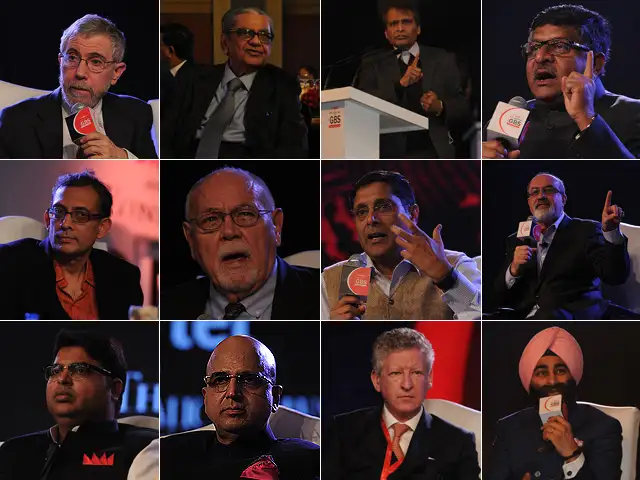
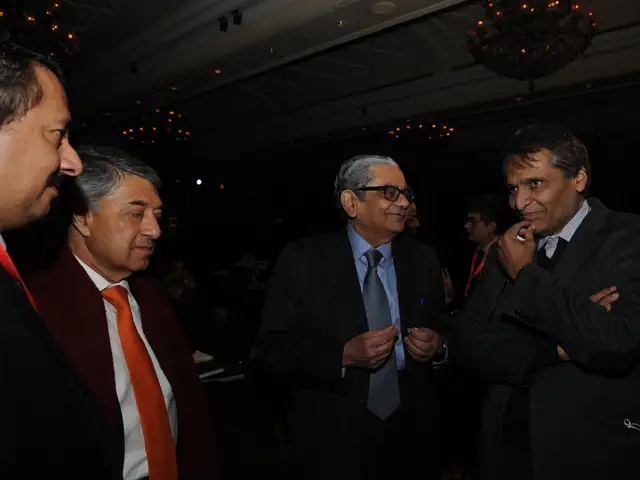
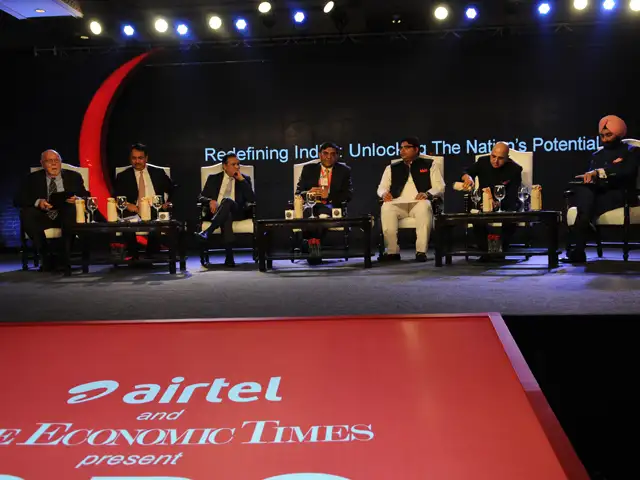
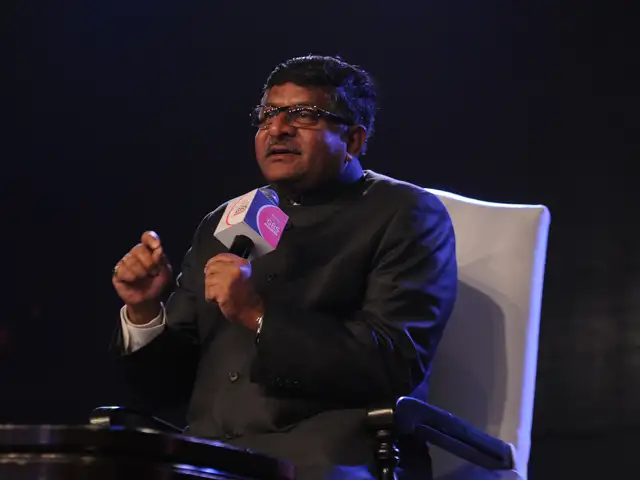
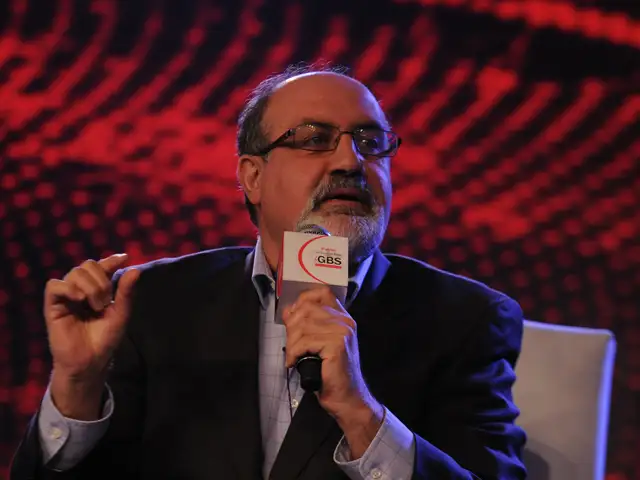
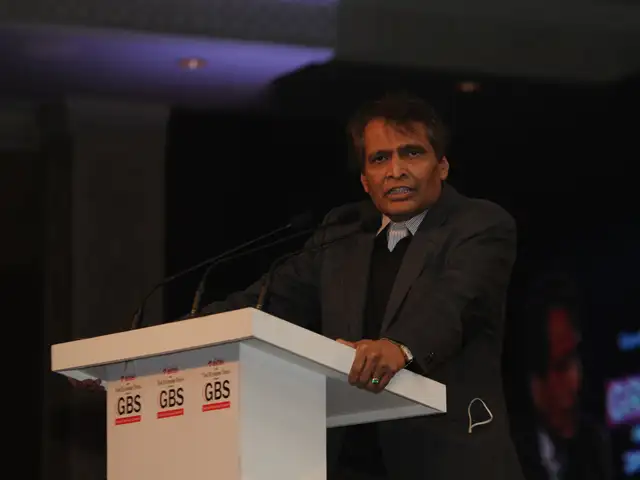
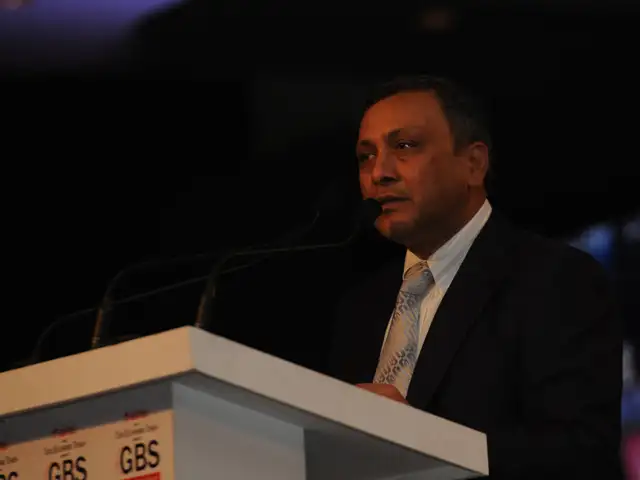
It was indeed a thought-provoking two-days of ET Global Summit! With PM Modi’s $20 tn economy dream, and ministers' steps to make it a reality, it was indeed a befitting end to have Jagdish Bhagwati repose faith in the new government.
Click through to see choicest images from the Summit. Here's what you may have missed!
Images by: Amrendra Jha, BCCL
It was indeed a thought-provoking two-days of ET Global Summit! With PM Modi’s $20 tn economy dream, and ministers' steps to make it a reality, it was indeed a befitting end to have Jagdish Bhagwati repose faith in the new government.
Click through to see choicest images from the Summit. Here's what you may have missed!
Images by: Amrendra Jha, BCCL

ADVERTISEMENT


