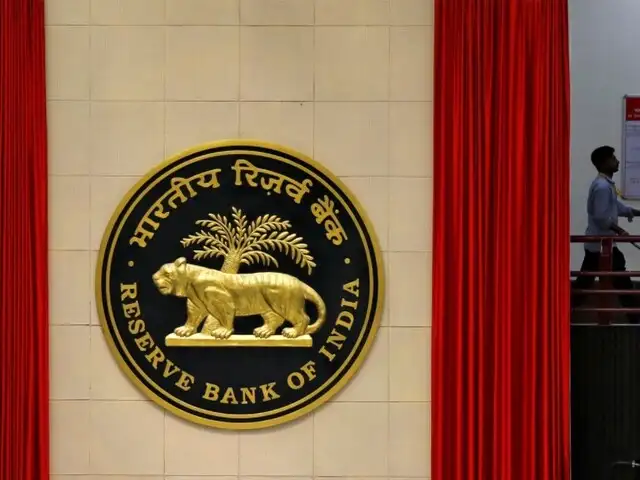
Economists see the Reserve Bank of India taking a grin-and-bear it approach to price pressures as it seeks to help Asia’s No. 3 economy recover from one of the world’s worst coronavirus outbreaks.
By Bloomberg | Updated:
Reuters
The six-member Monetary Policy Committee is convinced that sticky inflation is due to supply-side problems and doesn’t yet warrant withdrawal of the extraordinary measures.
Indian monetary policy makers are tolerating inflation rates higher than their 4 per cent medium-term target while they focus resources on an economic rebound.
Economists see the Reserve Bank of India taking a grin-and-bear it approach to price pressures as it seeks to help Asia’s No. 3 economy recover from one of the world’s worst coronavirus outbreaks. The RBI has chosen to look through a recent surge in inflation because it was supply-side driven, and will only turn persistent when demand kicks in, Deputy Governor Michael Patra said at a briefing June 4.
While the wholesale price print due Monday will probably make for another grim reading, retail inflation is seen hovering above the 5 per cent mark for the third out of five months this year. Monetary policy makers ignored the acceleration and earlier this month retained an “accommodative” stance for as long as needed to restore growth on a durable basis.
“The RBI has clearly turned more tolerant of inflation and by the looks of it, they seem to be OK with the headline rate above the mid-point target of 4 per cent,” said Priyanka Kishore, head of India and Southeast Asia Economics at Oxford Economics in Singapore. “We expect growth concerns to dominate and push out policy normalization well into 2022.”
The RBI isn’t thinking about normalization at the moment, Governor Shaktikanta Das said this month. His rate-setting committee, which cut borrowing costs by 115 basis points in 2020, has kept rates unchanged at a record low for more than a year to support growth after a rare contraction last year. While the central bank sees the economy expanding 9.5 per cent in the year started April 1, that is slower than the 10.5 per cent pace it had forecast before a deadly second wave of coronavirus swept through the nation of more than 1.3 billion people.
ADVERTISEMENT
A string of lockdowns to stem the pandemic crippled activity and throttled demand in an economy that’s primarily driven by domestic consumption. High taxes and rising unemployment has also left consumers wary of spending, as well as glum about future prospects.
So although data on Monday might show wholesale prices grew 13.4 per cent, the highest rate in almost three decades, it’s unlikely yet to fully feed into consumer prices. Companies have absorbed some of the increase in producer prices given weak demand in the economy. Consumer price growth data for May is also due Monday, forecast in Bloomberg survey to rise 5.38 per cent from a year ago.
The six-member Monetary Policy Committee is convinced that sticky inflation is due to supply-side problems and doesn’t yet warrant withdrawal of the extraordinary measures.
A group of researchers led by a former MPC member Ravindra Dholakia went as far as suggesting that a looser inflation target could help boost growth. They, in an RBI-sponsored working paper last month, concluded that a higher threshold for inflation is conducive for growth in emerging economies.
ADVERTISEMENT
How different central banks are readying for tapering
1/11
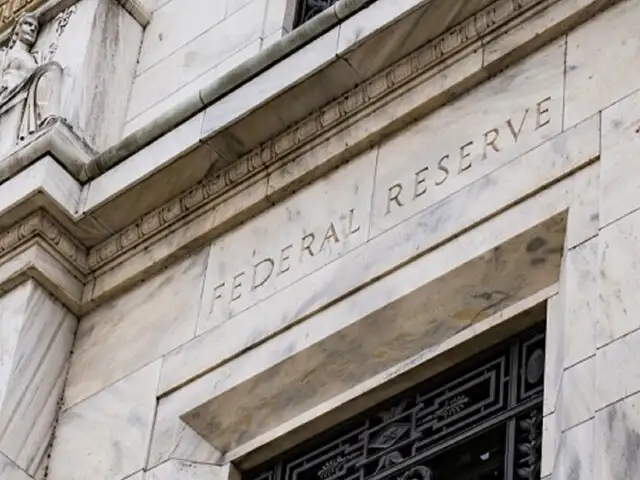
Haunted by memories of the past US interest rate hikes, the world's central banks are laying the groundwork for a transition to life with less global stimulus and with many countries already signalling moves to the exit. The US Fed is publicly committed to keeping interest rates near zero -- and no hikes are priced in until late next year at the earliest -- official comments about inflationary pressures could become a chorus in months ahead, making tapering a more concrete prospect and likely heightening volatility in global financial markets.
Haunted by memories of the past US interest rate hikes, the world's central banks are laying the groundwork for a transition to life with less global stimulus and with many countries already signalli..
Read More
More vulnerable central banks are fortifying their financial systems to ward off the type of capital flight that hit emerging markets during the 2013 "taper tantrum," which was triggered by mere hints of Fed tightening after years of super-easy policy deployed during the Global Financial Crisis. Markets are bracing for the chance the Fed will start to communicate its taper strategy at its Jackson Hole symposium in August, with possible action later in the year.
More vulnerable central banks are fortifying their financial systems to ward off the type of capital flight that hit emerging markets during the 2013 "taper tantrum," which was triggered by mere hint..
Read More
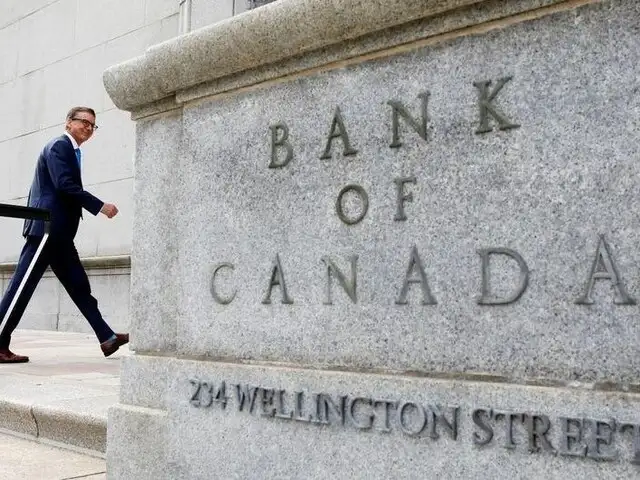
Some central banks are already responding to Taper talks. In April, Canada's central bank became the first among Group of Seven nations to withdraw its pandemic era stimulus and signalled rates could begin to rise in 2022.
Some central banks are already responding to Taper talks. In April, Canada's central bank became the first among Group of Seven nations to withdraw its pandemic era stimulus and signalled rates could..
Read More
The Norwegian central bank has already announced plans to raise rates in the third or fourth quarter of 2021.
The Norwegian central bank has already announced plans to raise rates in the third or fourth quarter of 2021.
New Zealand and South Korea have similarly dropped loud hints that policy tightening is on the agenda as conditions improve. While decisions would primarily be driven by domestic considerations, the Fed's eventual withdrawal of support looms large as a global risk for every central bank.
New Zealand and South Korea have similarly dropped loud hints that policy tightening is on the agenda as conditions improve. While decisions would primarily be driven by domestic considerations, the ..
Read More
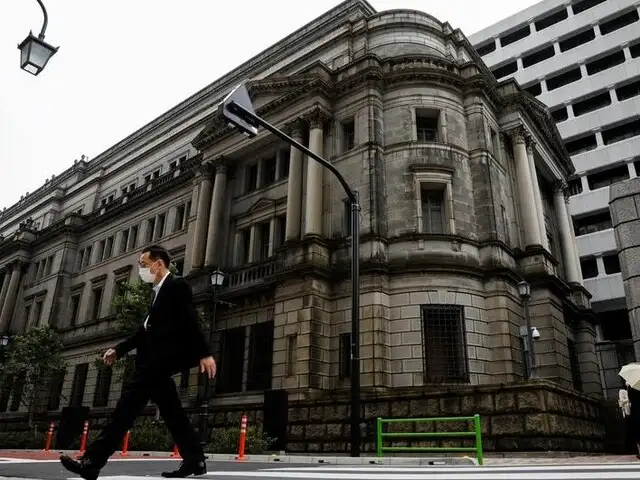
Even Japan's central bank, which has hardly budged from its ultra-accommodative settings through decades of global cycles, may see an opportunity to dial back stimulus. "A Fed rate hike may give the BOJ a perfect opportunity to normalise policy, without worrying too much about triggering a yen spike," Nomura's Kiuchi said.
Even Japan's central bank, which has hardly budged from its ultra-accommodative settings through decades of global cycles, may see an opportunity to dial back stimulus. "A Fed rate hike may give the ..
Read More
In the past, rising US interest rates attracted funds into dollar assets and away from emerging markets. It happened in 1998 and 2013. Asian markets are in a significantly better shape with strong foreign reserves to support any currency route. India's central bank governor last week said its reserves now exceed $600 billion, which it expects will help against challenges from "global spillovers."
In the past, rising US interest rates attracted funds into dollar assets and away from emerging markets. It happened in 1998 and 2013. Asian markets are in a significantly better shape with strong fo..
Read More
Among nations looking warily at the Fed is Indonesia, which relies on overseas inflows to fund its current account deficit.
"Next year we must prepare for possibilities of the U.S. central bank, the Fed, to shift its monetary policy, reducing its liquidity intervention," Bank Indonesia Governor Perry Warjiyo said last month, adding such U.S. policy shifts would likely impact local bond yields.
Among nations looking warily at the Fed is Indonesia, which relies on overseas inflows to fund its current account deficit."Next year we must prepare for possibilities of the U.S. central bank, the F..
Read More
The more vulnerable emerging market central banks, such as Brazil, Ghana and Armenia, have already started their tightening cycle on rising inflation pressures.
The more vulnerable emerging market central banks, such as Brazil, Ghana and Armenia, have already started their tightening cycle on rising inflation pressures.
Russia's central bank raised its key interest rate by 50 basis points to 5.5% on Friday and said more hikes would be needed to rein in high inflation. Turkey aggressively tightened last year, a move its central bank governor hopes will serve as a "shield" against any Fed pivot. But heavy foreign debt keeps Turkey vulnerable to talk of Fed tapering. Rising US yields recently helped push the lira to all-time lows, delaying planned rate cuts.
Russia's central bank raised its key interest rate by 50 basis points to 5.5% on Friday and said more hikes would be needed to rein in high inflation. Turkey aggressively tightened last year, a move ..
For India, growth is maximized if inflation is allowed to rule around 6 per cent, and minimized once prices spike to 9.5 per cent, the researchers wrote.
This isn’t the first time that there’s been a call for a looser inflation target. However, the government earlier this year renewed the RBI’s inflation targeting mandate that requires it to keep price-growth at the 4 per cent midpoint of a 2 per cent-6 per cent target band. The central bank expects inflation to end up at 5.1 per cent in the fiscal year ending March.
ADVERTISEMENT
The latest pick up in inflationary pressures is caused by higher food and fuel prices along with stubborn underlying price pressures, according to Bloomberg Economics’ Abhishek Gupta, who doesn’t expect a hawkish response from the RBI.
“The RBI sees inflation staying below the 6 per cent upper end of its target range this fiscal year,” he wrote. “And its focus now is on supporting a recovery with an accommodative stance.”