Bond funds cheer emerging markets moving fast to choke inflation
Central bankers in the developing world are treading a fine line managing price pressures in places where the scars of hyperinflation are fresh and also nurturing economies still struggling with the coronavirus pandemic.
By Bloomberg |
Agencies
The pattern is far from consistent, climbing commodity prices and undervalued exchange rates are turning up the heat across the board, with attention this week shifting to inflation data in Argentina, India and Poland.
By Lilian Karunungan and Selcuk Gokoluk
Global bond investors are on the prowl for emerging markets that are ahead of the game on inflation.
TS Lombard recommends funds buy local debt from Brazil, where a third interest-rate hike is expected when officials meet Wednesday. PineBridge Investments praised inflation tough talk from Bank of Russia Governor Elvira Nabiullina and predicted gains for the nation’s longer-maturity bonds.
Central bankers in the developing world are treading a fine line managing price pressures in places where the scars of hyperinflation are fresh and also nurturing economies still struggling with the coronavirus pandemic.
While the pattern is far from consistent, climbing commodity prices and undervalued exchange rates are turning up the heat across the board, with attention this week shifting to inflation data in Argentina, India and Poland.
ADVERTISEMENT
“Investors will ultimately favor those countries in which central banks are able to get ahead of inflation,” said Jon Harrison, the London-based managing director for emerging-market macro strategy at TS Lombard. “It’s essential that central banks react pro-actively.”
So far, Brazil and Russia stand out, he said.
Central bank chief Roberto Campos Neto has said he’s willing to do whatever is needed to keep Brazil’s inflation within target, and economists are unanimous in predicting another hike this week for Latin America’s largest economy.
The nation’s bonds have returned about 10 per cent since the first rate increase in March, while the currency has appreciated 9.2 per cent to lead emerging-market gains during that span. In contrast, a gauge of developing-nation local-currency debt has increased less than 1 per cent this year.
ADVERTISEMENT
Loomis Sayles & Co. is another fan of Brazilian bonds and says further currency strength should help contain the pace of price growth.
“Appreciation limits the number of hikes as it lessens the risk of pass-through inflation,” said Edgardo Sternberg, co-manager for emerging-market debt portfolios in Boston at Loomis Sayles, which oversees $346 billion. The firm favors the shorter-end of the yield curve and prefers not to hedge against the dollar, he said.
ADVERTISEMENT
Elsewhere, hawkish comments from Russia’s central bank chief will probably support the ruble, which may help to stabilize inflation expectations, said Anders Faergemann, a money manager at PineBridge Investments in London.
A fourth rate hike is “very likely” in July, Nabiullina told an online briefing Friday after lifting the key rate by a half percentage point.
How different central banks are readying for tapering
1/11
Haunted by memories of the past US interest rate hikes, the world's central banks are laying the groundwork for a transition to life with less global stimulus and with many countries already signalling moves to the exit. The US Fed is publicly committed to keeping interest rates near zero -- and no hikes are priced in until late next year at the earliest -- official comments about inflationary pressures could become a chorus in months ahead, making tapering a more concrete prospect and likely heightening volatility in global financial markets.
Haunted by memories of the past US interest rate hikes, the world's central banks are laying the groundwork for a transition to life with less global stimulus and with many countries already signalli..
Read More
More vulnerable central banks are fortifying their financial systems to ward off the type of capital flight that hit emerging markets during the 2013 "taper tantrum," which was triggered by mere hints of Fed tightening after years of super-easy policy deployed during the Global Financial Crisis. Markets are bracing for the chance the Fed will start to communicate its taper strategy at its Jackson Hole symposium in August, with possible action later in the year.
More vulnerable central banks are fortifying their financial systems to ward off the type of capital flight that hit emerging markets during the 2013 "taper tantrum," which was triggered by mere hint..
Read More
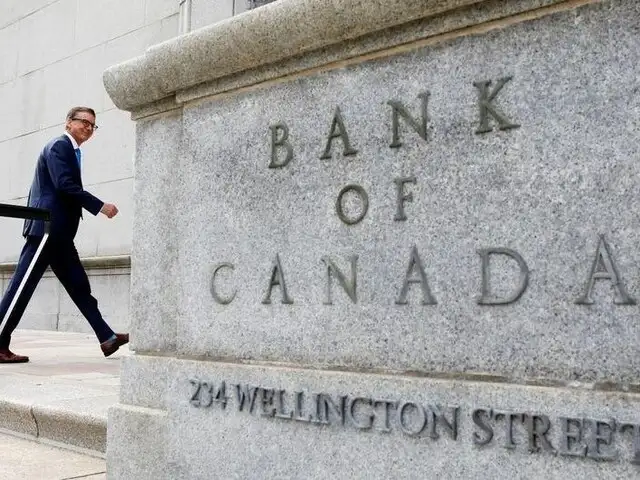
Some central banks are already responding to Taper talks. In April, Canada's central bank became the first among Group of Seven nations to withdraw its pandemic era stimulus and signalled rates could begin to rise in 2022.
Some central banks are already responding to Taper talks. In April, Canada's central bank became the first among Group of Seven nations to withdraw its pandemic era stimulus and signalled rates could..
Read More
The Norwegian central bank has already announced plans to raise rates in the third or fourth quarter of 2021.
The Norwegian central bank has already announced plans to raise rates in the third or fourth quarter of 2021.
New Zealand and South Korea have similarly dropped loud hints that policy tightening is on the agenda as conditions improve. While decisions would primarily be driven by domestic considerations, the Fed's eventual withdrawal of support looms large as a global risk for every central bank.
New Zealand and South Korea have similarly dropped loud hints that policy tightening is on the agenda as conditions improve. While decisions would primarily be driven by domestic considerations, the ..
Read More
Even Japan's central bank, which has hardly budged from its ultra-accommodative settings through decades of global cycles, may see an opportunity to dial back stimulus. "A Fed rate hike may give the BOJ a perfect opportunity to normalise policy, without worrying too much about triggering a yen spike," Nomura's Kiuchi said.
Even Japan's central bank, which has hardly budged from its ultra-accommodative settings through decades of global cycles, may see an opportunity to dial back stimulus. "A Fed rate hike may give the ..
Read More
In the past, rising US interest rates attracted funds into dollar assets and away from emerging markets. It happened in 1998 and 2013. Asian markets are in a significantly better shape with strong foreign reserves to support any currency route. India's central bank governor last week said its reserves now exceed $600 billion, which it expects will help against challenges from "global spillovers."
In the past, rising US interest rates attracted funds into dollar assets and away from emerging markets. It happened in 1998 and 2013. Asian markets are in a significantly better shape with strong fo..
Read More
Among nations looking warily at the Fed is Indonesia, which relies on overseas inflows to fund its current account deficit.
"Next year we must prepare for possibilities of the U.S. central bank, the Fed, to shift its monetary policy, reducing its liquidity intervention," Bank Indonesia Governor Perry Warjiyo said last month, adding such U.S. policy shifts would likely impact local bond yields.
Among nations looking warily at the Fed is Indonesia, which relies on overseas inflows to fund its current account deficit."Next year we must prepare for possibilities of the U.S. central bank, the F..
Read More
The more vulnerable emerging market central banks, such as Brazil, Ghana and Armenia, have already started their tightening cycle on rising inflation pressures.
The more vulnerable emerging market central banks, such as Brazil, Ghana and Armenia, have already started their tightening cycle on rising inflation pressures.
Russia's central bank raised its key interest rate by 50 basis points to 5.5% on Friday and said more hikes would be needed to rein in high inflation. Turkey aggressively tightened last year, a move its central bank governor hopes will serve as a "shield" against any Fed pivot. But heavy foreign debt keeps Turkey vulnerable to talk of Fed tapering. Rising US yields recently helped push the lira to all-time lows, delaying planned rate cuts.
Russia's central bank raised its key interest rate by 50 basis points to 5.5% on Friday and said more hikes would be needed to rein in high inflation. Turkey aggressively tightened last year, a move ..
Unanchoring Risk At the other end of the spectrum, investors are shunning markets where policy makers are letting price pressures escalate. Poland and Hungary, where bond returns are more modest, have prompted particular caution.
“We are cautious in the lower-yielding markets with high correlation to core rates and where risks of inflation becoming ‘un-anchored’ are most concerning,” said Mary-Therese Barton, head of emerging-market debt in London at Pictet Asset Management Ltd.
Hungary’s annual consumer price index climbed to 5.1 per cent in both April and May, the highest since 2012 and the fastest pace in the European Union, while the level in Poland has escalated to 4.8 per cent, the quickest in a decade.
The headline consumer-price index is also above target in countries including Turkey, Mexico, India, the Philippines and South Korea, HSBC Holdings Plc said in a research note this month.
Regardless of central bank efforts to contain inflation, any external inflation shock emanating from the U.S. would stymie even the most aggressive stance.
A quick rise in U.S. rates “can have negative repercussions,” said Michel Vernier, head of fixed income at Barclays Private Bank in London. “We have seen this during the 2013 taper tantrum when rates spikes at the U.S. long end caused major emerging-market outflows.”
Hike or Hold
Bank Indonesia’s rate decision will be in focus on Thursday as traders see how the central bank balances its twin objectives of currency stability and supporting growth. Policy makers are expected to keep the seven-day reverse repurchase rate steady at 3.5 per cent. The central bank has cut the policy rate by 150 basis points since the pandemic last year
Brazil’s central bank is set to meet on Wednesday, likely following through on its plans to raise the Selic rate to its pre-pandemic level. The real was Latin America’s worst-performing currency last week. A reading of Brazil’s economic activity index for April on Monday will likely reflect a pickup amid emergency cash handouts and relaxed restrictions
Turkey’s central bank will likely keep its benchmark rate unchanged for a third month at 19 per cent on Thursday. While the economic case for a rate cut is weak, with inflation set to rise again and the currency vulnerable, the central bank “may adjust the language of its statement to lay the ground for a possible easing later in the summer,” Bloomberg Economics said in a report. Governor Sahap Kavcioglu has sought to assuage concerns of premature easing after President Recep Tayyip Erdogan renewed his calls for lower borrowing, giving a vague reference to summer months as a target date
Ukraine’s central bank may raise its benchmark rate by 50 basis points to 8 per cent the same day after inflation jumped to a two-year high. The hryvnia, one of the region’s best-performing currencies this year, may help to relieve price pressure in the coming months
Policy makers in Egypt will also probably leave the key rate unchanged on Thursday
Biden Talks
On Monday, President Joe Biden will meet Turkey’s Erdogan in Brussels, where their talks will focus on military matters, as NATO allies hold a summit
Biden will also meet Russian President Vladimir Putin in Geneva on Wednesday -- their first direct encounter since Biden took office in January. The summit is expected to be tense, as Washington and Moscow are at odds over a range of issues, including cybersecurity, Ukraine and the Kremlin’s persecution of Putin’s political opponents
What Else to Watch
The People’s Bank of China is likely to refrain from boosting fund injections as 200 billion yuan ($31 billion) of one-year policy loans come due Tuesday. Eight out of 10 traders and analysts surveyed by Bloomberg expect a cash rollover without pumping in extra funds. This signal from the central bank will come as liquidity in the banking system is expected to tighten this month with local governments set to sell more debt and banks hoarding cash for quarter-end regulatory checks. China will announce data on Wednesday that is likely to show that the economy continued to gain momentum in May. Industrial production growth likely held firm, although retail sales probably rose at a slower pace than the previous month, according to analysts’ estimates
On Monday, India announced that May consumer-price inflation quickened to 6.3 per cent in May, surpassing economists’ expectations. Indian monetary policy makers are tolerating inflation rates higher than their 4 per cent medium-term target while they focus resources on an economic rebound. Wholesale prices rose 12.94 per cent in May year-on-year, just missing the 13.4 per cent jump predicted in a Bloomberg survey of economists
Indonesia and India will post trade figures for May on Tuesday
Poland’s CPI data will be in focus after the head of the country’s central bank snuffed out any final doubts about his pledge to maintain record-low interest rates, hammering home the message that price pressure is temporary. The zloty posted its first weekly decline since April against the euro in the five days through Friday
Investors will monitor El Salvador’s bonds after the nation became the world’s first to formally make Bitcoin a legal tender
Colombian retail sales data for April, scheduled for Tuesday, will probably show a large jump from a year earlier, according to Bloomberg Economics. April industrial production numbers on the same day will also likely flag an annual rise. On Friday, investors will watch a reading of April economic activity for a large advance from a year earlier
Peru is slated to release a reading of its April economic activity index on Tuesday, which Bloomberg Economics expects to show a jump of 60.3 per cent from a year earlier
Traders will watch Argentina’s May CPI data on Wednesday for signs that inflation stayed high