So are you on keto? Or, maybe gluten-free? Avoiding dairy? Eating ancient grains? Or, perhaps just eating that black-fleshed Kadaknath chicken that the Krishi Vigyan Kendra in Jhabua has written about to the Board of Control for Cricket in India, recommending Virat Kohli eats it rather than be, as he is now, vegan (and doesn’t seem to be doing too badly on that in Australia)?
Maybe you are not exactly calling them notoriously hard-to-keep New Year resolutions, but the start of a calendar year always seems a good time to consider making dietary changes. And every year there seems to be a new set of foods and diets that are in fashion, though a little examination shows that most are old ideas in new packaging.
The high-fat, low-carbohydrate ketogenic diet (keto), for example, seems to be the latest iteration of the Paleo and, before that, the Atkins diet. The reasons given for the efficacy of the diet can vary. Paleo was said to be a return to how our cavemen ancestors ate. Keto, which has a rather surprising origin in a highly specific diet for epilepsy patients, has a theory built on controlling glucose in the blood. Most of these diets have some such niche medical justification which their devotees can become remarkably knowledgeable about.
The high-fat, lowcarbohydrate ketogenic diet seems to be the latest iteration of the Paleo and, before that, the Atkins diet. This is not to say that such diets can’t work. With the possible exception of the Tapeworm Diet, which, yes, advocated swallowing tapeworm eggs to give your own friendly, body-consuming parasite, almost any diet has some potential to help those following it, if only by making them more mindful about the food they eat. Not every diet works for everyone, but perhaps the benefit of repeated waves of diet fads is that they can help people find a long-term pattern of eating that works for their bodies.
Grain Gains These seasonal diet fads also have the benefit of bringing attention to otherwise neglected ingredients. India has a wealth of millets and pseudo-cereals like buckwheat and amaranth, most of them with long-standing usage as staple foods in different parts of the country, or for consumption during religious rituals like upvas fasts. These have been sidelined by rice and wheat, seen as desirable grains for more prosperous consumers, and also promoted by government policies that encourage farmers to focus on these two grains, which are also the only ones given consistent procurement support.
ADVERTISEMENT
Seasonal diet fads have the benefit of bringing attention to neglected ingredients like millets and pseudocereals like buckwheat and amaranth. These other grains had become, as an excellent book on them published by Navdanya dubbed them, Bhoole Bisre Anaj (lost and forgotten foods) until they were resurrected by gluten-free and alkaline diets. They are now known as ancient grains, a term that is rather more market-friendly, if not entirely clear — does that mean that rice and wheat aren’t ancient? Supermarket now have gluten-free granola and hip restaurants offer porridges, pancakes and even pizzas made from ancient grains.
Greater choice in food is always a benefit, even if the ostensible reason for it can be queried. Some scepticism can be raised, for example, on whether gluten is really such a major problem for all the people claiming allergies to it — but it unquestionably is a problem for the small group of people suffering from celiac disease, whose gluten intolerance is medically proven and who now have a much larger and easier-to-access range of foods.
Lactose intolerance is another condition whose sudden upsurge seems surprising. A small number of people appear to be severely lactose intolerant, while a larger group has a spectrum of intolerance where, at one end, milk might cause just mild discomfort. (It’s been suggested that such mild discomfort can be helped by eating something with the milk, which could give medical validation to the classic cookies and milk combination!)
ADVERTISEMENT
These levels of lactose intolerance might not seem to justify the rise in dairy-free milks made from almond, soybean, coconut, hazelnut, hemp, oats and other oily plant sources. (Milk is an emulsion of dairy fats and water. Plant-based milks create similar emulsions by forcibly extracting their fats in combination with water, as with making coconut milk at home.)
The real problem with milk might not be lactose intolerance, but all the cruelties of dairying, like the forcible separation of calves from their mothers, and the controversies resulting from the government’s gau rakshak programme. Plant-based milks offer a long-term solution to the dilemmas of dairying, and the spectre of lactose intolerance can serve as a convenient catalyst.
ADVERTISEMENT
Kadaknath chicken, whose sudden visibility was one of the food surprises of last year, is a (slightly dubious) solution to a similar problem. Chicken is one of the fastest-growing food sources in India. It is politically safe, offers protein to our still severely protein-deficient country, can be scaled up rapidly in production and retail and is easily cooked and consumed.
Many Indians who don’t eat other meats are starting to eat chicken.
Chicken is one of the fastest-growing food sources in India. But its industrial production is achieved through broilers that lead unnatural lives. But all this comes with horrific hidden costs. Industrial production of chicken is achieved through broilers that lead entirely unnatural lives, pumped with growth hormones (they are generally killed in two months, which is shorter than the growing season of most plants) and antibiotics to overcome the diseases that come from over-crowded cages in which they are raised (antibiotics also help with weight gain). The cruelty is terrible, and so are the medical issues for consumers, as those hormones and antibiotics find their way onto our plates.
And what does it result in? Meat so tasteless that chefs, who privately detest broiler chicken, even as they like the profits it brings, call it the paneer of meats. Chefs will confess their personal preference for desi chicken, raised with greater freedom to roam, more variety in their diets (chickens are omnivores, but broilers are fed a standardised diet, much of it based on unsustainably harvested fish meal). However, desi chicken is tough and has less meat than broilers and few consumers see the value of it.
Kadaknath chicken could bridge this gap. Because it is visibly striking, consumers feel they are getting something different, and the claims being made for its health benefits are further reinforcement. Some of these claims sound questionable — for example, the claim that Kadaknath has much more protein. Kadaknath is a kind of desi chicken, and like any free-ranging, desi chicken it has less fat and more muscle than broilers, but it isn’t clear how its protein is somehow concentrated.
Krishi Vigyan Kendra in Jhabua has written to BCCI, recommending Virat Kohli eats Kadaknath chicken rather than be, as he is now, vegan (and doesn’t seem to be doing too badly on that in Australia.) As of now, at least, because of their small number and high value, Kadaknath chickens are raised with space to roam and multiple food sources to peck at, and their eggs, which are small and dark, are valued as much as the meat. Kadaknath offers consumers a chance to have chicken as it should be consumed — but there’s nothing stopping industrial farmers from raising them broiler-style, and this could happen if we demand Kadaknath only as black, “healthy” chicken, rather than as properly raised poultry.
Trust the Taste Buds So, does it matter what diets we follow if the ultimate results can be good, even if not intended? In just one way all these diets seem rather sadly, and perhaps unnecessarily, failing. Every diet and fad ingredient comes with copious recommendations of health benefits, purificatory potential, ancestral appeal and every other value one could want, except the one that might seem most intrinsic to food, and that is flavour. When it comes to trendy diets, taste is the one aspect that doesn’t seem to be trusted.
All these diets start by approaching food with suspicion. When food is examined with suspicion, and not from its fundamental ability to provide sustenance and savour, then you are closing off the essential reasons why we eat and limiting yourself to a clinical kind of consumption that might lose some calories, at least initially, but doesn’t build a great relationship with food. Many foods sold for specific diets can be delicious, but how often will we really admit to wanting them? Diets make us divide food into healthy = dull; and yummy = bad.
This could really be a mistake. For one, it is why diets are notoriously short-lived. Anyone who seriously switches to millets may end up realising why people prefer rice and wheat. There are many millets, each with their own characteristics, but most are heavy to eat, or have to be eaten hot, since they can cool to coarse ( jowar) or chokingly jellylike (ragi) consistencies. The awkward truth is that millets are often best eaten mixed with rice or wheat, making them more palatable and easier to cook.
In his book The Doritos Effect, Mark Schatzker explores the links between flavour and nutrition and comes to a surprising conclusion — food that tastes better is often more nutritious. Schatzker starts by looking at produce typically sold in supermarkets abroad, which is selected for its looks (bright red tomatoes), ability to be transported long distances without spoiling and low cost. Taste is a relatively minor concern, which is why many food lovers prefer to shop in farmer’s markets where they can get produce that isn’t as perfect looking, but which tastes way better. This might seem like an indulgence, but when scientists have tested the nutritional profile of these foods they nearly always score higher than supermarket produce. Because they are not artificially sped to maturity, not pumped with water and chemicals, and allowed to mature to peak condition, they taste better, and also contain far more nutrients.
In The Doritos Effect, Mark Schatzker explores the links between flavour and nutrition and comes to a surprising conclusion — food that tastes better is often more nutritious. Schatzker’s book is an exploration of how this relationship has been thrown out of gear by the science of flavouring, which has found ways to trick our taste buds into craving foods, like the titular Doritos, that hook us onto unhealthy foods. The really sad consequence is that this has made us distrust taste — if I like this so much it can’t be good for me. But Schatzker tracks down producers of chicken, tomatoes and other food grown for its flavour and shows how it is generally more nutritious as well. We need to trust our taste buds — and that might come by training them to appreciate a diversity of flavours, rather than a lot of just a few. Sugar provides a perhaps controversial example. It is now one of the most demonised of foods, much as we crave it. But long before we developed mass production of sugar and overdosed on it, sugar was a seasoning, like spices, and used sparingly to help develop the overall flavour of a dish. It isn’t uncommon in traditional Indian cooking to add small amounts of sugar this way, and this gives us the sweetness we crave, but in a controlled way.
Diets also tend to prescribe us foods, rather than really encouraging us to explore what is around us and which might work as well. Almond milk is widely available because it is prescribed as the alternative to dairy, but it is a product with considerable problems. It is an ecologically draining crop, exacerbating droughts in California where most of the world’s almonds come from, and adds further environmental costs in its shipping — and it doesn’t even taste that good.
Cashew milk is delicious in a way that almond milk is not, yet it is not being sold the same way here since the diet diktats that we receive only talk about almond milk. Cashew milk could count as a local product, given the wide cultivation of cashew in India, where it grows on scrub lands where little else grows. It is a product that provides huge amounts of employment in places like Kerala, and has secondary benefits in the cashew apple. And cashew milk is delicious in a way that almond milk is not, yet it is not being sold the same way here since the diet diktats that we receive only talk about almond milk. It is an example of a healthy, ethically sound and sustainable product that is also really worth making part of our diet simply because it tastes so good.
Fitness With Tech: Apps And Gadgets To Track Diet And Workout Results
1/10
By Karan Bajaj
Our hectic lifestyles sometimes leave little time for a proper diet and exercise regime. Thankfully, tech can help you plan your diet, nutrition, exercise and track results for a healthier you. Karan Bajaj talks about some of his favorites.
(Image: Getty)
By Karan BajajOur hectic lifestyles sometimes leave little time for a proper diet and exercise regime. Thankfully, tech can help you plan your diet, nutrition, exercise and track results for a health..
Read More
This free app offers various tools including a BMR (Basal Metabolic Rate) calculator, body fat percentage calculator, diet tool and even tells you your recommended heart rate for exercise basis your age. The app has its own social network where you can follow other users, join groups and interact with them. Plus, you can also choose a coach as per your fitness requirement (you will have to take one of the paid packages for the coaching service).
(Image: play.google.com)
This free app offers various tools including a BMR (Basal Metabolic Rate) calculator, body fat percentage calculator, diet tool and even tells you your recommended heart rate for exercise basis your ..
Read More
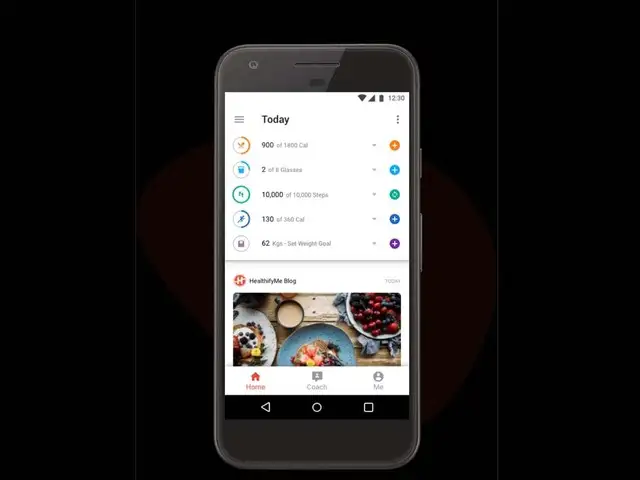
HealthifyMe lets you track your weight, activity as well as your food and water intake. You can set reminders, create a diary, maintain health logs and get a weekly report based on your inputs. In the basic plan (Rs 199/month), the app offers an AI coach called Ria that helps you stay motivated and interacts with you for any queries. If you prefer human coaches, you can opt for paid personalized coaching where you can choose from nutritionists, fitness instructors or yoga coaches.
(Image: www.healthifyme.com)
HealthifyMe lets you track your weight, activity as well as your food and water intake. You can set reminders, create a diary, maintain health logs and get a weekly report based on your inputs. In th..
Read More
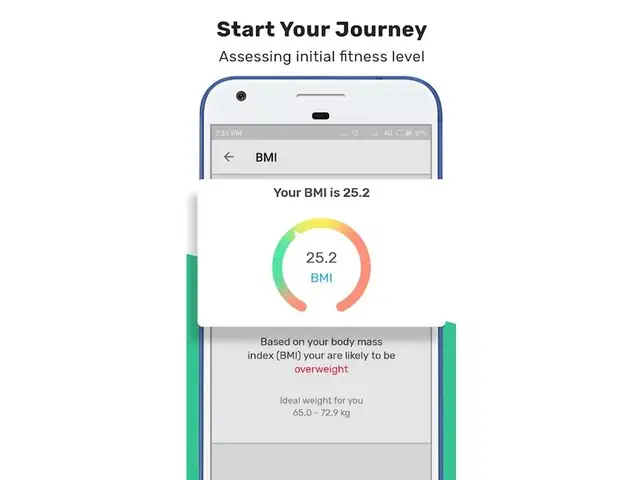
Fitso gives you recommendations on the basis of your BMI (which it calculates according to the height and weight your input). If you want to lose weight, it will give you the option to track your daily calories intake with a diet journal as well as ask you to burn calories with physical activity. You need to set a target weight and choose whether you want to do only a diet or diet & exercise. We like the clean app interface. You can also opt for a coach service which starts at just Rs 149/week.
(Image: play.google.com)
Fitso gives you recommendations on the basis of your BMI (which it calculates according to the height and weight your input). If you want to lose weight, it will give you the option to track your dai..
Read More
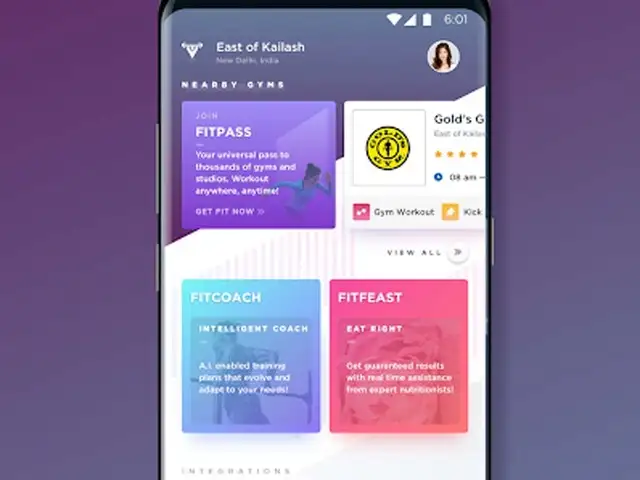
If you’re more of a gym person and do not want to miss workouts while traveling, Fitpass gives you access to 1500+ gyms. The app currently works in selected cities and you pay Rs 999/month for the service. You can view the fitness centers around you based on your locations along with details on their address, timing and the types of workout they provide. They also have plans for dieting and coaching plus an in-app store for purchasing supplements.
(Image: play.google.com)
If you’re more of a gym person and do not want to miss workouts while traveling, Fitpass gives you access to 1500+ gyms. The app currently works in selected cities and you pay Rs 999/month for the se..
Read More
As the name suggests, this free app helps you calculate your calorie intake basis what you eat and drink. We liked that it has an option of adding how much weight you want to gain/lose per week (and it accordingly informs how many calories you should consume each day). As long as you input your food and drink correctly, the app shows you a nutrient breakdown, making it easy to see how much protein, fat and sugar you have consumed. You can view your progress in a graphic form, sync data with third party devices and apps as well as have the app remind you to eat food on time.
(Image: play.google.com)
As the name suggests, this free app helps you calculate your calorie intake basis what you eat and drink. We liked that it has an option of adding how much weight you want to gain/lose per week (and ..
Read More
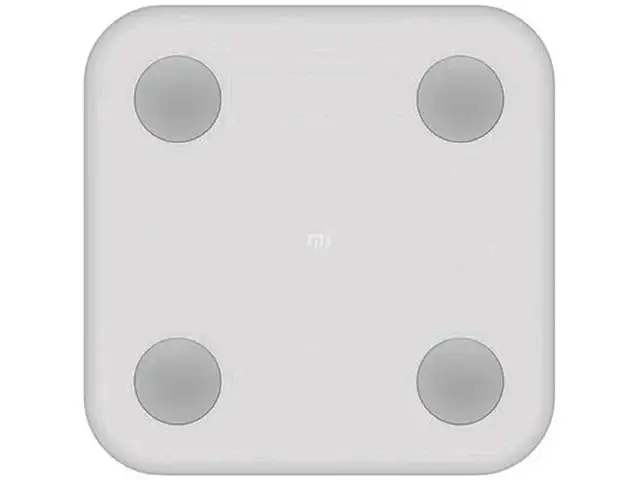
A smart weighing scale helps you keep a track of various parameters. Apart from your weight, a smart scale can typically measure BMI, muscle mass, bone mass, body fat, basal metabolism and visceral fat. All the data is synced with a companion app for easy tracking. Some apps even let you create individual profiles — so that all the people using it can track weight loss progress individually. Some of the better options we reviewed include the Mi Body Composition Scale (Rs 1,999) and the Lenovo HS10 Smart Scale (Rs 2,799).
A smart weighing scale helps you keep a track of various parameters. Apart from your weight, a smart scale can typically measure BMI, muscle mass, bone mass, body fat, basal metabolism and visceral f..
Read More
A dedicated fitness band is great for tracking your daily activity (as opposed to having an app on your phone). You can buy one starting as low as Rs 1,200 going up to Rs 20,000 or more. We recommend getting a fitness band that offers a heart rate tracker, good battery life and water resistance. We always recommend Fitbit if you can spend more. They have some of the best fitness bands like the Alta HR and upcoming Charge 3. However, their products are usually priced Rs 10k onwards. If you want to spend less, check out the following options.
A dedicated fitness band is great for tracking your daily activity (as opposed to having an app on your phone). You can buy one starting as low as Rs 1,200 going up to Rs 20,000 or more. We recommend..
Read More
Priced at Rs 1,999, this is easily the best option for anyone on a budget. Spending less doesn’t mean you want to compromise on features right? Mi Band 3 has everything: a large OLED display, continuous heart rate tracking, sleep tracking, water resistance and show you notifications from your phone. Battery life is up to 20 days on a single charge!
(Image: www.mi.com)
Priced at Rs 1,999, this is easily the best option for anyone on a budget. Spending less doesn’t mean you want to compromise on features right? Mi Band 3 has everything: a large OLED display, continu..
Read More
For Rs 3,499, what makes this one stand out is the personalized coaching service. The latest fitness tracker from Goqii has an OLED colour display and it tracks steps covered, distance, sleep, heart rate and even blood pressure. A dedicated exercise mode helps you track your fitness activity and it offers a battery life of up to 7 days.
For Rs 3,499, what makes this one stand out is the personalized coaching service. The latest fitness tracker from Goqii has an OLED colour display and it tracks steps covered, distance, sleep, heart ..