Young working professionals to cut down expenses as post-Covid world brings uncertainty, job loss
Categories like essentials, at-home entertainment, health and insurance continue to show greater resiliency.
By PTI | Updated:
ThinkStock Photos
Youth has become more pessimistic about their future incomes, spends, and loan repayments.
MUMBAI: As the country enters the final week of the third phase of the COVID-19-induced lockdown, public sentiment is getting into negative territories with over 50 per cent of those polled having a negative outlook on income. What is more, younger and those in the middle-income consumers are more worried about their income post-COVID, loan repayments and spending, says an international survey.
According to a survey by international consultancy Boston Consulting Group, as much as 85 per cent of those in the poll are worried about servicing loans post-moratorium, while more than 40 per cent are planning to cut down spending in the next six months as they fear about their jobs and income.
The survey, carried out during the third phase of lockdown (May 4-17) among 1,300 consumers in metros and Tier 1 & 2 cities, is part of a global COVID-19 consumer sentiment research.
"Despite lockdown relaxations, concerns across health, economic situation and daily lifestyle continue to remain high as consumers have become more pessimistic about their future incomes, spends, and loan repayments," says the survey.
These concerns are much higher among younger consumers, SEC-B households and small business owners.
Even among these categories, essentials, at-home entertainment, health and insurance continue to show greater resiliency, while travel, out-of-home entertainment, apparel, large ticket purchases emerge as categories with significant reductions. One-third of them are also thinking of trading down.
ADVERTISEMENT
Despite lockdown relaxations, concerns across health, economic situation and daily lifestyle continue to remain high. The lockdown has also boosted digital payments/ media consumption, etc with many trying out digital payments for the first time.
While online newspaper reading has added 20 per cent, additional new users, there has been a 40 per cent growth in new users shopping for staples online, and a 20 per cent addition to digital wallets.
Despite the fear of loss of jobs and the resultant financial burden, many consumers think lifting the restrictions on movements is good to bring the pandemic under control.
ADVERTISEMENT
"More than 50 per cent consumers believe the availability of vaccine and containment of cases are the strongest indicators that the virus is in control, while only around 24 per cent consider this as part of lifting the lockdown," says the survey.
Around 60 per cent of the polled consumers believe that local retail and local transport are likely to return to normalcy first. But a similar number of consumers also believe that it will take at least a few months more for normal barrel back.
ADVERTISEMENT
Tired Of Never-Ending Working From Home Shift? 4 Tips To Maintain A Work-Life Balance
1/6
Working from home has become the new normal as companies try to minimise disruptions and keep operations running as close to normal as possible. But with most of us working from home, the lines between "work" and "home" could become quickly blurred.
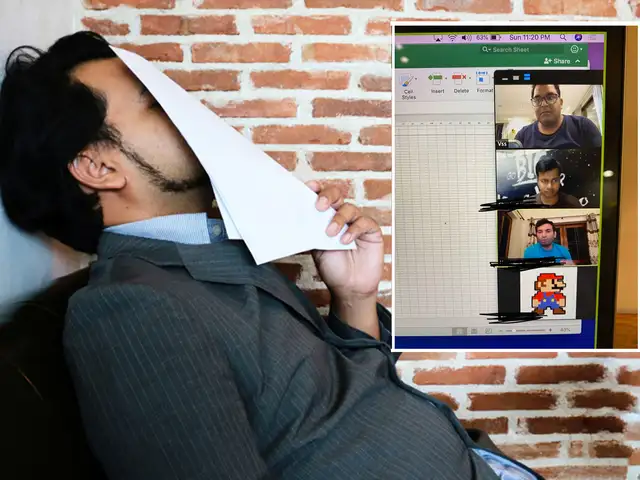
A few weeks ago, Paytm founder Vijay Shekhar Sharma took to Twitter to announce that he had been so wrapped up in Zoom meetings (inset from Sharma's Twitter account) that he forgot it was Sunday. And that seems to be the case with most entrepreneurs who are dealing with investor pressure and the stress of a looming economic slowdown.
Working from home has become the new normal as companies try to minimise disruptions and keep operations running as close to normal as possible. But with most of us working from home, the lines betwe..
Read More
In a recent media interview, Zerodha CEO Nithin Kamath (L) confessed, “I start work around 8.30 am and work till I sleep. I am definitely overworking, so are a few of my colleagues.”
“I had assumed that there would be more family time than before (but) the opposite has happened. Maybe I am spending lesser time than before because the boundary between work and personal time has disappeared. That said, daily I work out with my wife and play music with my son, and enjoy a drink with my brother and father once in a few days.”
If you find yourself in a similar situation as Kamath or Paytm's Vijay Shekhar Sharma (R), here are a few practical ways you can quickly establish boundaries.
In a recent media interview, Zerodha CEO Nithin Kamath (L) confessed, “I start work around 8.30 am and work till I sleep. I am definitely overworking, so are a few of my colleagues.”“I had assumed t..
Read More
Working from home can be invasive to your personal life. Without scheduled work hours, work can creep into your home life and just as personal errands can creep into work hours. To avoid this, start and end your workday at the same time every day. Don’t mix household chores into work hours and vice-versa.
Working from home can be invasive to your personal life. Without scheduled work hours, work can creep into your home life and just as personal errands can creep into work hours. To avoid this, start ..
Read More
Studies have shown that having a designated workspace helps put your brain into work mode and enhances productivity. If you can’t set aside a designated workspace (due to a space crunch), try to create barriers in other ways. For example, use your laptop for work calls/meetings and use your phone to check social media or chat with friends. Having different devices for different purposes will help your brain switch from work to play mode.
Studies have shown that having a designated workspace helps put your brain into work mode and enhances productivity. If you can’t set aside a designated workspace (due to a space crunch), try to crea..
Read More
A shutdown ritual is a set routine of actions that you perform at the end of each workday to finalize your day and signify that your workday is done. Cal Newport, the author of Deep Work, initiated it as a New Years’ resolution to get the most of his relaxation time.
“It has worked better than I imagined. I’ve basically eliminated stressful work-related thoughts from my evenings and weekends. This has really improved my ability to relax and focus on other things,” he wrote on his website.
Some activities you can include in your shutdown ritual are preparing a to-do list for the next day, going for a walk, signing up for an evening fitness class among others. The goal isn’t what you do but that you do something to replace and simulate your commute, which is a built-in shutdown ritual.
A shutdown ritual is a set routine of actions that you perform at the end of each workday to finalize your day and signify that your workday is done. Cal Newport, the author of Deep Work, initiated i..
Read More
One way to ensure that you’re not blurring the lines between work and home is to create a no-work zone for at least an hour before you go to bed and after you wake up. This will keep your mind ample time to properly recharge.
Research shows that what you do before you go to sleep has an impact on the quality of sleep, and your engagement, your ability to focus, the next day. Passive leisure activities, like watching TV or reading a book, were associated with better sleep than doing something like answering work emails.
One way to ensure that you’re not blurring the lines between work and home is to create a no-work zone for at least an hour before you go to bed and after you wake up. This will keep your mind ample ..