Write it all down, take time off: How to manage anxiety in the new normal
Ajeeta Mulye, Psychologist & Outreach Associate, Mpower tells us how we can better cope with anxiety in the pandemic.

Ajeeta Mulye, Psychologist & Outreach Associate, Mpower, tells us, “It has become imperative to carry a mask, and sanitizer, along with following social distancing norms. This has created a strong emotion among people like anger, sadness, anxiety, panic, tension as well as stress amongst people.”
Staying calm and fighting anxiety is important says Mulye who share tips on how to deal with the stress and anxiety of the new normal.
Filter out the noise: Avoid watching or reading to the news related to COVID-19 on social media platform constantly or listening to rumors. Detach from people who constantly talk about it. Hearing frequently about the number of cases, death count or how it’s spreading while we are not ready with the vaccine can increase the anxiety and stress level creating a panic. While talking about situations, issues, or worries can be helpful, it is important to not overdo it.
Write it out: Maintain a diary or journal to express yourself. Writing down your thoughts can be a great form of expression, and will help you analyse a situation with a clearer mind, This will help to reduce passing the anxiety from one to another.
Safety first: Follow the safety measures suggested by experts of WHO which is listed on their websites or as suggested by your Doctor. Take care of yourself first and then your loved ones by reminding them too to follow it.
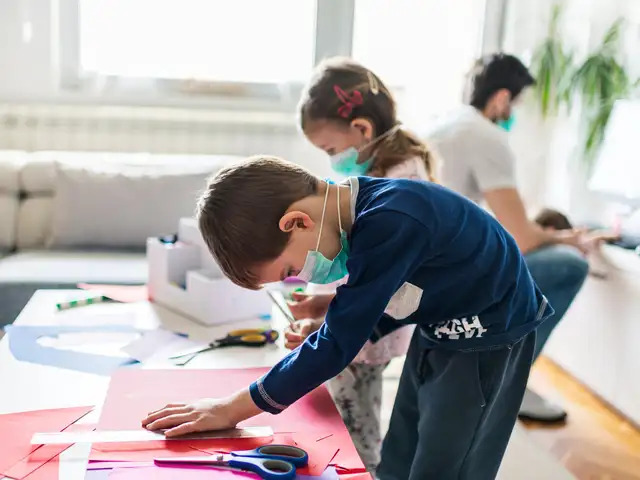
Talk to your kids: Educating children about the virus as well as about the safety measures will help them to stay safe and follow these measures. Using the language that children can understand will benefit or a use of drawing or pictorial method can be used to educate them on what kind of precautions they need to take while and if they go out to play with peers.
Take time off: Do meditation or some form of exercise to relax self. it can be Walking, Jogging, Yoga, Dance, Zumba, skipping or as simple as taking deep breaths, stretch body, tightening the muscles of body and relaxing it. Don’t forget to rethink of the risk factors and the precautionary methods followed if one wants to go to gym for exercise.
Down time: Find ways to calm down by involving self into recreational activities- dancing, listening to music, and using art and craft work as a medium to express self, cooking, connecting with friends for lighter and fun filled conversation/online gaming, watching comedy movies, or reading jokes. Find ways to calm down by involving yourself in recreational activities- dancing, listening to music, and using art and craft work as a medium of expression.
Is it important: Ask yourself- Do I really need to go for this outing? Check for the risk factors and try to minimize the risk of virus contraction. Prepare self mentally for going out through imagining step by step procedure right from leaving the house to reaching the desired destination. As required and suggested rule out Covid-19 contracting through testing.

The Covid-crisis has increased the instance of anxiety and depression four-fold across the world. These challenging times have highlighted the importance of mental health.
Even before the pandemic hit, mental health impacted over 10 per cent of the global population across their lifetime, and more than 20 per cent of adolescents and children had mental health concerns.
Over 90 per cent of school children are confined at home for the past six months due to the pandemic.
Now, more than ever, children need to build skills to cope with stressors. And, parents play an important role in helping nurture skills of resilience.
On World Suicide Prevention Day, Dr Rajesh Parikh, MD, Director Medical Research & Hon. Neuropsychiatrist at Jaslok Hoapital & Research Centre, Mumbai, shares ways in which parents can help.






The Economic Times Business News App for the Latest News in Business, Sensex, Stock Market Updates & More.


