With robots serving meals & ghostly figures in hazmat suits, quarantine in China looks like a scene from sci-fi horror film
Authorities have taken steps to ensure that people do not break rules.
By AFP | Updated:
iStock
People under home quarantine elsewhere in the city have had silent electronic alarms installed on their doors.
BEIJING: Robots delivering meals, ghostly figures in hazmat suits and cameras pointed at front doors: China's methods to enforce coronavirus quarantines have looked like a sci-fi dystopia for legions of people.
Authorities have taken drastic steps to ensure that people do not break isolation rules after China largely tamed the virus that had paralysed the country for months.
With cases imported from abroad threatening to unravel China's progress, travellers arriving from overseas have been required to stay home or in designated hotels for 14 days.
Beijing loosened the rule in the capital this week -- except for those arriving from abroad and Hubei, the province where the virus first surfaced late last year.
At one quarantine hotel in central Beijing, a guard sits at a desk on each floor to monitor all movements.
The solitude is broken by one of the few visitors allowed near the rooms: A three-foot-tall cylindrical robot that delivers water bottles, meals and packages to hotel guests.
ADVERTISEMENT
The robot rides the elevator and navigates hallways on its own to minimise contact between guests and human staff.
When the robot arrives at its destination, it dials the landline phone in the room and informs the occupant in an eerie, childlike voice: "Hello, this is your service robot. Your order has arrived outside your room."
Its belly opens and the guest takes the delivery items before the robot turns and rolls away.
Doctors in hazmat suits go from room to room daily reminding occupants, including an AFP journalist who had been in Hubei, to take their temperatures with the mercury thermometer provided at check-in, and to ask if any are experiencing symptoms.
ADVERTISEMENT
People under home quarantine elsewhere in the city have had silent electronic alarms installed on their doors.
Officials put up a notice on each quarantined household's door asking neighbours to keep an eye on the confined inhabitants.
ADVERTISEMENT
In one Beijing residential compound, officials told AFP that people under home quarantine must inform community volunteers whenever they open their doors.
Not all people under quarantine are as closely watched as those in Beijing, however. Friederike Boege, a German journalist, began her second quarantine in Beijing this year on Sunday after returning from Hubei's capital Wuhan.
Her building's management installed a camera in front of her door to monitor her movements.
"It's quite scary how you get used to such things," she told AFP.
"Apart from the camera I do believe that the guards and the cleaner on the compound would denunciate me if I were to go out," Boege said.
During her previous quarantine experience in March after returning from a trip to Thailand, she was reported to building management by a cleaner for going downstairs to take out the trash.
Total isolation has become a temporary norm for those under strict quarantine, without even a single trip to the grocery store or walk to break up the monotony.
Joy Zhong, a 25-year-old media professional returning to Beijing from a work trip in the virus epicentre of Wuhan, spent three weeks without leaving a cramped room at another hotel in the Chinese capital.
There, guests were not allowed to order their own food and were instead given standardised meals.
Friends were allowed to bring packages to the front desk, which were then left outside hotel rooms by staff who avoided direct contact with guests.
"Spending 21 days in a row without seeing a single person, it felt like time was passing extremely slowly," Zhong told AFP.
Not all people under quarantine are as closely watched as those in Beijing, however.
Charlotte Poirot, a French teacher who arrived in China in late March -- just before a ban on foreigners entering the country was introduced -- spent two weeks under quarantine at a hostel in the southeastern city Guangzhou.
She was confined alone in a 10-bunk room, with meals delivered to her door and medical personnel coming to check her temperature multiple times a day.
"They never locked the door and the (whole) process was based on reliance," Poirot told AFP. "We all played the game without contesting."
From OnePlus To Xiaomi, Smartphone Makers Bring Their A-Game, Launch High-Tech Phones Amid Covid-19 Crisis
1/7
The Covid-19 pandemic has changed the world as we knew it. With almost the entire world in lockdown and a large number of people in self-quarantine, the struggle to get basic necessities is taking a toll on the health of the global citizen.
However, the ongoing crisis didn’t stop some of the best smartphone makers in the world from launching their flagship phones. Several smartphone makers, like Oppo, OnePlus, Xiaomi and Huawei held ‘online-only’ launch events and announced the release of their upcoming phones.
In a bid to live up to the expectations of the tech enthusiasts amid the global pandemic, the smartphone makers brought their A-game and released nifty pieces of gadgets which were running high on tech. Here’s a look at all the smartphones that were launched in the pandemic.
The Covid-19 pandemic has changed the world as we knew it. With almost the entire world in lockdown and a large number of people in self-quarantine, the struggle to get basic necessities is taking a ..
Read More
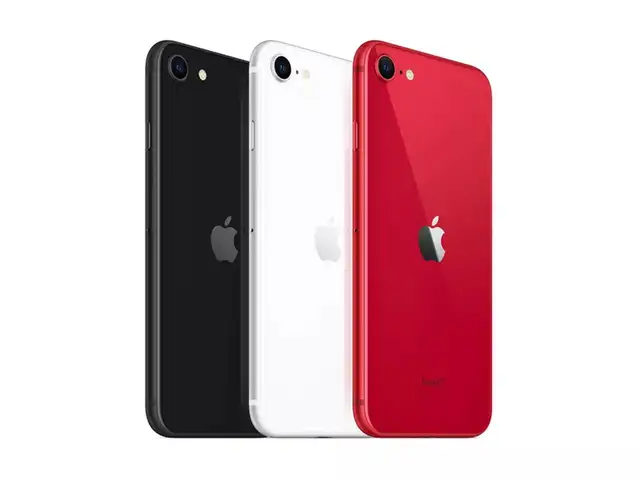
Industries and businesses across the globe are taking a hit due to the Covid-19 crisis and the world economy is in a bad shape. On April 15, in order to appeal to consumers struggling to copy with a bleak economic backdrop, Apple launched an entry level iPhone SE, which costs $399 (approximately Rs 30,642).
Apple made the announcement in a statement, forgoing the normal splashy product launch events of the past few years.
Apple chief executive Tim Cook, who in the past hosted large media events, limited his comments to a tweet, calling the new handset "our most affordable iPhone,"and a "fantastic option in our lineup to help you stay connected, informed and entertained."
Apple trimmed costs by leaving out some of high-end features such as facial recognition, giving iPhone SE a fingerprint sensor and a home-screen button which fans will remember from previous generations. It features a single rear camera instead of the multiple lens in the newest iPhone 11.
(With inputs from AFP)
Industries and businesses across the globe are taking a hit due to the Covid-19 crisis and the world economy is in a bad shape. On April 15, in order to appeal to consumers struggling to copy with a ..
Read More
One of the launches that was probably the most-awaited and was being looked forward to by tech enthusiasts all around the world was the OnePlus event where OnePlus 8 and 8 Pro were revealed. The Chinese smartphone maker’s first ever online-only event took place on 14 April, as countries around the world struggled to cope with the Covid-19 crisis.
OnePlus 8, in terms of design is light, curvy and thin. In addition to Onyx Black and Glacial Green, the OnePlus 8 will be available in Interstellar Glow. It will come in two storage variants - 8GB + 128GB at $699 (approximately Rs 53,730) and 12GB + 256GB at $799 (approximately Rs 61,417).
OnePlus 8 Pro, on the other hand, sports a 120 Hz QHD+ AMOLED Display, and silky-smooth, matte-frosted touch and increased haze levels. It will come in two storage variants - 8GB + 128GB at $899 (approximately Rs 69,112) and 12GB + 256GB at $999 (approximately Rs 76,800).
Also launched at the event were Warp Charge 30 Wireless which charges 60 per cent in 30 minutes and lightweight OnePlus Bullets Wireless Z.
One of the launches that was probably the most-awaited and was being looked forward to by tech enthusiasts all around the world was the OnePlus event where OnePlus 8 and 8 Pro were revealed. The Chin..
Read More
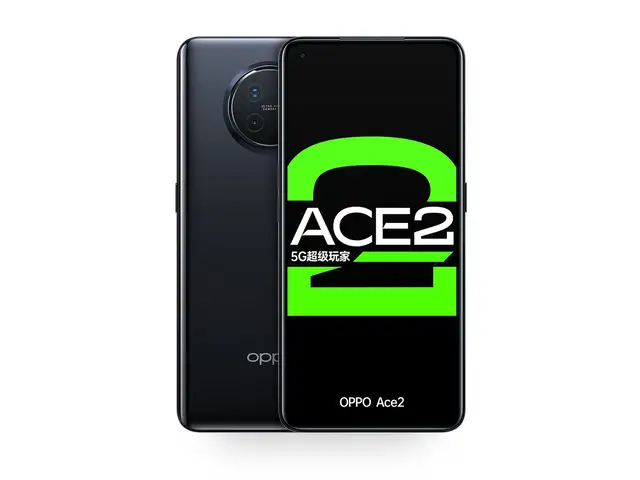
With a powerful Snapdragon 865 processor, quad camera and 40W wireless charging, Oppo Ace 2 is a force to be reckoned with in the smartphone space. The new offering from the Chinese smartphone maker was launched on April 13 when the Covid-19 pandemic had reached its peak in several countries around the world.
Ironically, Oppo Ace 2 was first launched in China, which also happens to be the epicentre of the novel coronavirus outbreak. Not much is known about its global availability. Interestingly, Oppo let go the ‘Reno’ brand name completely and marketed ‘Ace’ as an entirely different series.
Apart from having the fastest wireless charging, Oppo Ace 2 has a 90 Hz refresh rate along with a 65W wired charging support much like its predecessor.
The Oppo Ace 2 has been launched in China for CNY 3,999 (roughly Rs 44,000) for the 8GB/128GB version, CNY 4,399 (approximately Rs 48,000) for the 8GB/256GB model, and CNY 4,599 (roughly Rs 50,000) for the 12GB/256GB storage model.
With a powerful Snapdragon 865 processor, quad camera and 40W wireless charging, Oppo Ace 2 is a force to be reckoned with in the smartphone space. The new offering from the Chinese smartphone maker ..
Read More
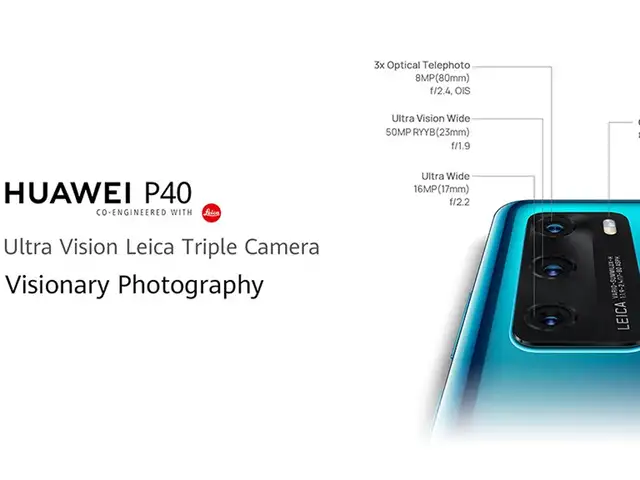
Come 2020, Huawei launched 3 of its much-awaited smartphone variants which are a part of the P Series: P40, P40 Pro and P40 Pro+. Huawei launched the three variants on March 26 in an online launch event.
Huawei P40 offers 5G connectivity and so do the other variants, P40 Pro and P40 Pro+. P40 also comes with a HiSilicon Kirin processor and a 22.5W fast-charging support. It costs €799 which is approximately Rs 66,780.
Huawei P40 Pro comes with a HiSilicon Kirin processor, a triple rear camera setup (50 MP+40MP+12MP), 8 GB RAM and a powerful 4,200 mAh battery. The P40 Pro costs €999 which is approximately Rs 83,400.
P40 Pro+, on the other hand, also has a 4,200 mAh battery, offers a 40W wireless charging support, 8 GB RAM along with a penta rear camera setup. P40 Pro+ costs €1399 which is approximately Rs 1,16,891.
Come 2020, Huawei launched 3 of its much-awaited smartphone variants which are a part of the P Series: P40, P40 Pro and P40 Pro+. Huawei launched the three variants on March 26 in an online launch ev..
Read More
Smartphone maker Xiaomi unveiled two smartphones, Redmi Note 9 Pro and Redmi Note 9 Pro Max in an online event on March 12, which was week 2 of the coronavirus outbreak in India. Xiaomi had reportedly planned an on-ground launch event for around 2,000 people but had to cancel it due to the Covid-19 outbreak.
While the sale of Redmi Note 9 Pro was scheduled to happen on March 24 at noon, the sale for 9 Pro Max was postponed after Xiaomi’s Global VP and India MD, Manu Kumar Jain sent out a tweet announcing the sale being pushed to a later date.
Xiaomi’s Redmi series is known for striking a good balance between the price point and the features of the phone. Both 9 Pro and 9 Pro Max come with an 8nm chipset, powered by Qualcomm Snapdragon 720G. While 9 Pro Max comes in 6 GB and 8 GB RAM variants, 9 Pro comes in 4 GB and 6 GB variants.
Both 9 Pro and 9 Pro Max come with quad rear camera setup. With 9 Pro sports a 48+8+5+2 MP setup, Pro Max offers a 64+8+5+2 MP setup. Redmi Note 9 Pro Max 6GB/64GB variant is priced at Rs 14, 999, while the 6GB/128GB storage variant costs Rs 16,999 and the top 8 GB variant is priced at Rs 18,999.
Smartphone maker Xiaomi unveiled two smartphones, Redmi Note 9 Pro and Redmi Note 9 Pro Max in an online event on March 12, which was week 2 of the coronavirus outbreak in India. Xiaomi had reportedl..
Read More
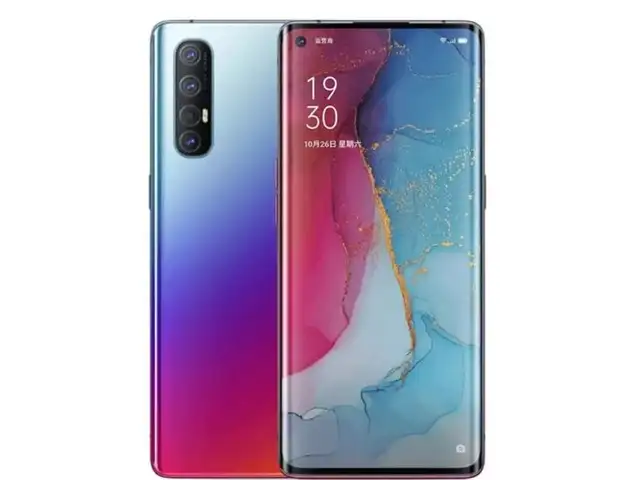
Oppo Reno 3 Pro, the next in the Chinese smartphone maker’s list of the Reno-series, was launched at an event in New Delhi on March 2. That was the time when the number of Covid-19 cases in India were quite low and the lockdown hadn’t been imposed yet.
The Reno 3 Pro packs a powerful 4025 mAh battery with a MediaTek Helio P95 processor, 8 GB RAM, 44MP + 2MP front camera and a 64+13+8+2 MP quad rear camera.
With a 6.4 inch Super AMOLED display, Oppo Reno 3 costs Rs 29,990.
Oppo Reno 3 Pro, the next in the Chinese smartphone maker’s list of the Reno-series, was launched at an event in New Delhi on March 2. That was the time when the number of Covid-19 cases in India wer..
Business News › Magazines › Panache › With robots serving meals & ghostly figures in hazmat suits, quarantine in China looks like a scene from sci-fi horror filmText Size:AAA