Tech reaches new heights, climbers to Mount Everest can now enjoy high-speed 5G coverage
5G is the fifth generation of wireless communication technologies.
By PTI |
Agencies
The building of 5G infrastructure is in tandem with the measuring of the height of the peak, which officially started on Thursday.
BEIJING: Climbers to Mount Everest from the Chinese side can now enjoy high-speed 5G coverage after the world's highest-altitude base station started operation in the remote Himalayan region of Tibet, the state media reported on Friday.
Built at an altitude of 6,500 metres, the base station which became operational on Thursday, is located at the advance base camp of Mount Everest, the world's highest peak, according to state-run telecom giant China Mobile.
The base station, along with another two that were previously built at altitudes of 5,300 metres and 5,800 metres respectively, realises the full coverage of 5G signal of Mount Everest on the north ridge as well as the summit, Xinhua news agency reported.
Located at the China-Nepal border, Mount Everest has an altitude of more than 8,840 metres, with its north part located in Xigaze prefecture of Tibet Autonomous Region.
5G is the fifth generation of wireless communication technologies. In addition to faster speeds, 5G offers greater bandwidth and network capacity, paving the way for a future of driverless cars, more connected devices and high-definition connections for virtual meetings and telemedicine.
Zhou Min, general manager of Tibet branch of China Mobile, said the facility will ensure telecommunication for the activities of mountain climbing, scientific research, environmental monitoring and high-definition livestreaming.
ADVERTISEMENT
The building of 5G infrastructure is in tandem with the measuring of the height of the peak, which officially started on Thursday.
At the attitude of 5,300 metrer, the 5G download speed exceeded 1.66 Gbps, where the upload speed tops 215 Mbps, it said. The base station at 5,300 metres is expected to serve the base camp area. Once 5G is commercially available, climbers, tourists and local residents will be able to use the service in the base camp area, the report said.
The base stations at 5,800 metres and 6,500 metres above sea level are temporary base stations to provide signal coverage over the climbing route to the summit. The base stations are expected to be dismantled after the completion of the elevation survey in 2020, the Xinhua report said.
ADVERTISEMENT
Meanwhile, Huawei, the Chinese telecom giant said it has teamed up with China Telecom to set up the world's highest 5G base station on the altitude of 6500 metres.
"Together with the launch of the Gigabit optical fibre network at the attitude of 6,500 metres, Huawei enables China Mobile to run its dual Gigabit network on Mount Everest," the company said in a statement.
ADVERTISEMENT
At the attitude of 5,300 metrer, the 5G download speed exceeded 1.66 Gbps, where the upload speed tops 215 Mbps, it said.
On the occasion of the 60th anniversary of the first successful arrival at Mount Everest from the northern slope, and the 45th anniversary of China's first official accurate measurement and announcement of Mount Everest, the 5G network on Mount Everest will provide communication services for this 2020 Mount Everest re-measurement is of great significance, the statement added.
From OnePlus To Xiaomi, Smartphone Makers Bring Their A-Game, Launch High-Tech Phones Amid Covid-19 Crisis
1/7
The Covid-19 pandemic has changed the world as we knew it. With almost the entire world in lockdown and a large number of people in self-quarantine, the struggle to get basic necessities is taking a toll on the health of the global citizen.
However, the ongoing crisis didn’t stop some of the best smartphone makers in the world from launching their flagship phones. Several smartphone makers, like Oppo, OnePlus, Xiaomi and Huawei held ‘online-only’ launch events and announced the release of their upcoming phones.
In a bid to live up to the expectations of the tech enthusiasts amid the global pandemic, the smartphone makers brought their A-game and released nifty pieces of gadgets which were running high on tech. Here’s a look at all the smartphones that were launched in the pandemic.
The Covid-19 pandemic has changed the world as we knew it. With almost the entire world in lockdown and a large number of people in self-quarantine, the struggle to get basic necessities is taking a ..
Read More
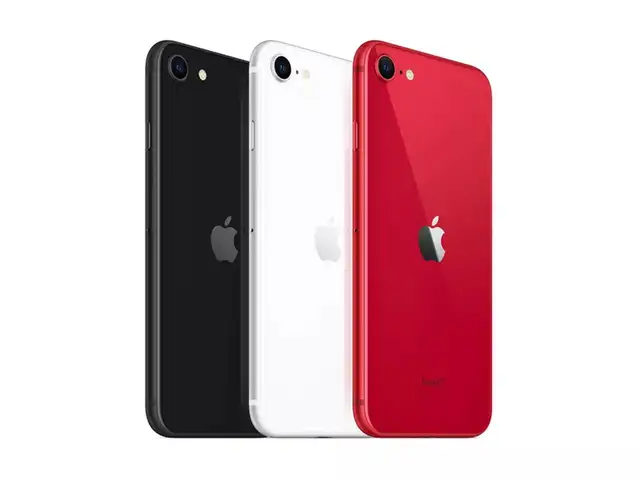
Industries and businesses across the globe are taking a hit due to the Covid-19 crisis and the world economy is in a bad shape. On April 15, in order to appeal to consumers struggling to copy with a bleak economic backdrop, Apple launched an entry level iPhone SE, which costs $399 (approximately Rs 30,642).
Apple made the announcement in a statement, forgoing the normal splashy product launch events of the past few years.
Apple chief executive Tim Cook, who in the past hosted large media events, limited his comments to a tweet, calling the new handset "our most affordable iPhone,"and a "fantastic option in our lineup to help you stay connected, informed and entertained."
Apple trimmed costs by leaving out some of high-end features such as facial recognition, giving iPhone SE a fingerprint sensor and a home-screen button which fans will remember from previous generations. It features a single rear camera instead of the multiple lens in the newest iPhone 11.
(With inputs from AFP)
Industries and businesses across the globe are taking a hit due to the Covid-19 crisis and the world economy is in a bad shape. On April 15, in order to appeal to consumers struggling to copy with a ..
Read More
One of the launches that was probably the most-awaited and was being looked forward to by tech enthusiasts all around the world was the OnePlus event where OnePlus 8 and 8 Pro were revealed. The Chinese smartphone maker’s first ever online-only event took place on 14 April, as countries around the world struggled to cope with the Covid-19 crisis.
OnePlus 8, in terms of design is light, curvy and thin. In addition to Onyx Black and Glacial Green, the OnePlus 8 will be available in Interstellar Glow. It will come in two storage variants - 8GB + 128GB at $699 (approximately Rs 53,730) and 12GB + 256GB at $799 (approximately Rs 61,417).
OnePlus 8 Pro, on the other hand, sports a 120 Hz QHD+ AMOLED Display, and silky-smooth, matte-frosted touch and increased haze levels. It will come in two storage variants - 8GB + 128GB at $899 (approximately Rs 69,112) and 12GB + 256GB at $999 (approximately Rs 76,800).
Also launched at the event were Warp Charge 30 Wireless which charges 60 per cent in 30 minutes and lightweight OnePlus Bullets Wireless Z.
One of the launches that was probably the most-awaited and was being looked forward to by tech enthusiasts all around the world was the OnePlus event where OnePlus 8 and 8 Pro were revealed. The Chin..
Read More
With a powerful Snapdragon 865 processor, quad camera and 40W wireless charging, Oppo Ace 2 is a force to be reckoned with in the smartphone space. The new offering from the Chinese smartphone maker was launched on April 13 when the Covid-19 pandemic had reached its peak in several countries around the world.
Ironically, Oppo Ace 2 was first launched in China, which also happens to be the epicentre of the novel coronavirus outbreak. Not much is known about its global availability. Interestingly, Oppo let go the ‘Reno’ brand name completely and marketed ‘Ace’ as an entirely different series.
Apart from having the fastest wireless charging, Oppo Ace 2 has a 90 Hz refresh rate along with a 65W wired charging support much like its predecessor.
The Oppo Ace 2 has been launched in China for CNY 3,999 (roughly Rs 44,000) for the 8GB/128GB version, CNY 4,399 (approximately Rs 48,000) for the 8GB/256GB model, and CNY 4,599 (roughly Rs 50,000) for the 12GB/256GB storage model.
With a powerful Snapdragon 865 processor, quad camera and 40W wireless charging, Oppo Ace 2 is a force to be reckoned with in the smartphone space. The new offering from the Chinese smartphone maker ..
Read More
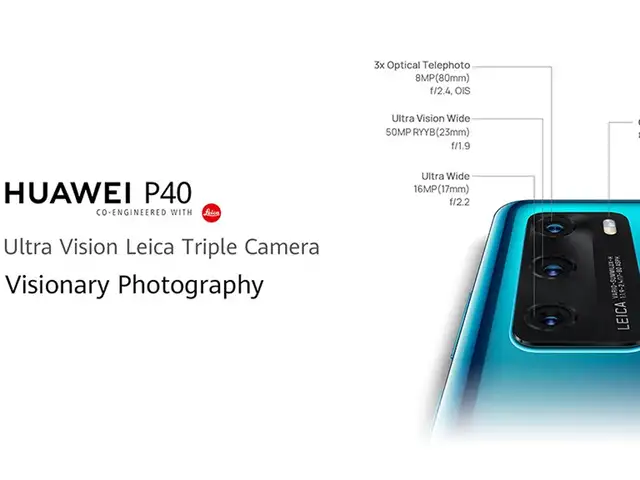
Come 2020, Huawei launched 3 of its much-awaited smartphone variants which are a part of the P Series: P40, P40 Pro and P40 Pro+. Huawei launched the three variants on March 26 in an online launch event.
Huawei P40 offers 5G connectivity and so do the other variants, P40 Pro and P40 Pro+. P40 also comes with a HiSilicon Kirin processor and a 22.5W fast-charging support. It costs €799 which is approximately Rs 66,780.
Huawei P40 Pro comes with a HiSilicon Kirin processor, a triple rear camera setup (50 MP+40MP+12MP), 8 GB RAM and a powerful 4,200 mAh battery. The P40 Pro costs €999 which is approximately Rs 83,400.
P40 Pro+, on the other hand, also has a 4,200 mAh battery, offers a 40W wireless charging support, 8 GB RAM along with a penta rear camera setup. P40 Pro+ costs €1399 which is approximately Rs 1,16,891.
Come 2020, Huawei launched 3 of its much-awaited smartphone variants which are a part of the P Series: P40, P40 Pro and P40 Pro+. Huawei launched the three variants on March 26 in an online launch ev..
Read More
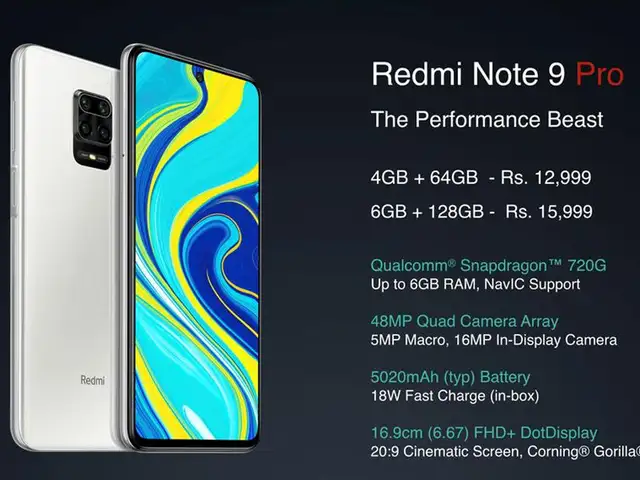
Smartphone maker Xiaomi unveiled two smartphones, Redmi Note 9 Pro and Redmi Note 9 Pro Max in an online event on March 12, which was week 2 of the coronavirus outbreak in India. Xiaomi had reportedly planned an on-ground launch event for around 2,000 people but had to cancel it due to the Covid-19 outbreak.
While the sale of Redmi Note 9 Pro was scheduled to happen on March 24 at noon, the sale for 9 Pro Max was postponed after Xiaomi’s Global VP and India MD, Manu Kumar Jain sent out a tweet announcing the sale being pushed to a later date.
Xiaomi’s Redmi series is known for striking a good balance between the price point and the features of the phone. Both 9 Pro and 9 Pro Max come with an 8nm chipset, powered by Qualcomm Snapdragon 720G. While 9 Pro Max comes in 6 GB and 8 GB RAM variants, 9 Pro comes in 4 GB and 6 GB variants.
Both 9 Pro and 9 Pro Max come with quad rear camera setup. With 9 Pro sports a 48+8+5+2 MP setup, Pro Max offers a 64+8+5+2 MP setup. Redmi Note 9 Pro Max 6GB/64GB variant is priced at Rs 14, 999, while the 6GB/128GB storage variant costs Rs 16,999 and the top 8 GB variant is priced at Rs 18,999.
Smartphone maker Xiaomi unveiled two smartphones, Redmi Note 9 Pro and Redmi Note 9 Pro Max in an online event on March 12, which was week 2 of the coronavirus outbreak in India. Xiaomi had reportedl..
Read More
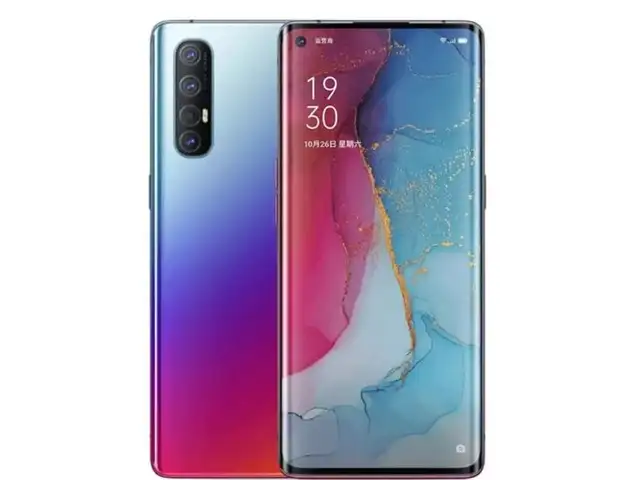
Oppo Reno 3 Pro, the next in the Chinese smartphone maker’s list of the Reno-series, was launched at an event in New Delhi on March 2. That was the time when the number of Covid-19 cases in India were quite low and the lockdown hadn’t been imposed yet.
The Reno 3 Pro packs a powerful 4025 mAh battery with a MediaTek Helio P95 processor, 8 GB RAM, 44MP + 2MP front camera and a 64+13+8+2 MP quad rear camera.
With a 6.4 inch Super AMOLED display, Oppo Reno 3 costs Rs 29,990.
Oppo Reno 3 Pro, the next in the Chinese smartphone maker’s list of the Reno-series, was launched at an event in New Delhi on March 2. That was the time when the number of Covid-19 cases in India wer..