Who's paying for your WFH setup? Pick your battles and think beyond tech
About two-thirds of companies are providing or reimbursing for needs of newly remote workers.
By Reuters |
iStock
A Mercer survey found out that only 4% of companies report helping out with the cost of home utilities.
NEW YORK: In the past, home offices were often an afterthought: Ill-equipped, cramped, and a little dusty from only occasional use.
Now in 2020, many home offices are looking more like the command centre at NORAD: Multiple screens, high-tech capabilities, and professional Zoom-ready surroundings.
And all that costs money.
Good thing about two-thirds of companies are providing or reimbursing for needs of newly remote workers, according to a survey by HR consultancy Mercer: 55% are covering laptops, 33% mobile phones, 26% printers and 24% ergonomic equipment.
Only 32% of companies said they were not helping out with those costs.
"The shift to working remotely means many employees are now having to ask their firms to cover costs associated with setting up and maintaining a home office," says Kathleen Burns Kingsbury, a wealth psychology expert and author of "Breaking Money Silence." "This has many looking for best practices, for engaging in a home-office expense negotiation."
ADVERTISEMENT
Of course, we are in a new and fluid situation, and companies as well as employees are learning as they go.
The questions on most people's minds: What exactly can you get reimbursed for? What can you deduct on your taxes? And how do you make an airtight case to your boss for things you think your company should really be paying for?
When considering the costs of a home-office setup, here are some issues to keep in mind.
Focus on the items where you have the best rationale for financial support.
ADVERTISEMENT
DUST OFF YOUR NEGOTIATION SKILLS Getting reimbursed for home-office expenses is not always a black-and-white issue - your bosses may need some convincing. So "think like the CFO," advises Kingsbury. "Tie your request to an increase in productivity and revenue if at all possible."
Do not try to bust their budget completely, with only top-of-the-line equipment, but give them a range of different options to choose from. And if you do get an initial 'No' ask what would have to change for your request to be granted, Kingsbury says. "Then work towards a second ask in a month or two," she adds.
ADVERTISEMENT
PICK YOUR BATTLES Not every cost is going to get covered by your employer, so instead of aiming for the moon and asking for everything, focus on the items where you have the best rationale for financial support.
For example, in the Mercer survey, only 4% of companies report helping out with the cost of home utilities - so that area may not represent your best chance of success. In comparison, according to a new survey by the nonprofit organization WorldatWork, 25% of companies are covering Internet access for work-from-home employees - which could be a big help on a monthly basis.
CONSIDER TAX ISSUES For salaried employees, your best route is to get employers to pay for home-office equipment and supplies up-front, or to get reimbursed for them. Under current tax law, such employees are not allowed to deduct those out-of-pocket expenses on their own taxes come April 15, says Michael Hennessy, a financial planner with Harbor Crest Wealth Advisors in Fort Lauderdale, Florida.
If you are not a salaried employee, however - maybe you are a solo entrepreneur who does a variety of contract work, for instance - those rules do not necessarily apply.
"As long as you are self-employed and part of your home is used for business use, you can take advantage of the home office deduction," Hennessy says. That way a percentage of related costs like mortgage interest, insurance, supplies, utilities and repairs will be deductible.
THINK BEYOND TECH A laptop and an Internet connection are the most obvious building blocks for a work-from-home setup. But other elements are important, too, like the chair you sit on for multiple hours a day.
Among organizations that transitioned to full-time work-from-home arrangements during the pandemic, 27% are offering company group discounts on furniture, 21% are providing it directly, and 18% are supplying a stipend, according to a survey by office furniture giant Steelcase.
"We believe we'll see even more company support over time," says Caroline Kelly, a research manager at Steelcase. "Employee expectations are changing right now, and companies are navigating their way through them."
Stop Using Your Bed For Work. 5 Tips To Create The Right WFH Space
1/6
Since working from home is the new norm, its best to get it right. Rhea Khurrana, Founder of Re | Arrange, shares her easy tips on how to make sure your work space helps you get into office mode.
Since working from home is the new norm, its best to get it right. Rhea Khurrana, Founder of Re | Arrange, shares her easy tips on how to make sure your work space helps you get into office mode.
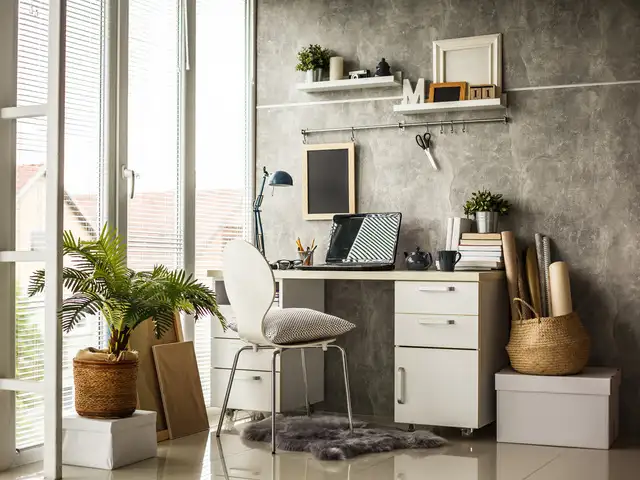
One of the most important things would be to avoid using your bed as it’s easier to slip into a lazy mode. Instead try and find a small nook/corner where you can sit up and work. Decorate the space in a way that would look like your work desk so you feel the same energy as you would get from sitting on your office desk. This could be anything such as your pen stand at work, etc.
One of the most important things would be to avoid using your bed as it’s easier to slip into a lazy mode. Instead try and find a small nook/corner where you can sit up and work. Decorate the space i..
Read More
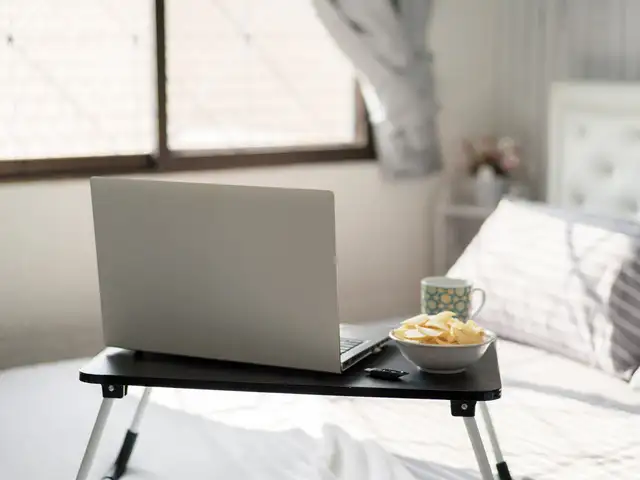
If you have no option but to use your bed or if you are someone who loves working from your bed, it’s important to have some sort of a table. This could be in the form of a movable folding tray, trolley, side table, etc. This would keep your alignment right during work and give your some form of formality.
If you have no option but to use your bed or if you are someone who loves working from your bed, it’s important to have some sort of a table. This could be in the form of a movable folding tray, trol..
Read More
If you do not want to occupy too much space in your room with a table, make use of a floating table that you can pull in and out as and when required. This is ideal for the work from home feel and you can keep customising it as per your frame of mind.
If you do not want to occupy too much space in your room with a table, make use of a floating table that you can pull in and out as and when required. This is ideal for the work from home feel and yo..
Read More
Placing the home desk near a window is also great to get sufficient natural light for warmth and positivity. It really helps in productivity. Keeping planters and essence on the desk also improves the concentration and focus while working.
Placing the home desk near a window is also great to get sufficient natural light for warmth and positivity. It really helps in productivity. Keeping planters and essence on the desk also improves th..
Read More
Lastly, it’s important to ensure all your supplies are accessible to you. This can be done by placing all the work stuff together on a shelf or using a vertical storage method.
Lastly, it’s important to ensure all your supplies are accessible to you. This can be done by placing all the work stuff together on a shelf or using a vertical storage method.