What Stephen Hawking thought about the multiverse might surprise you
Many scientists including Hawking don't like the idea of the multiverse.
By PTI | Updated:
PARIS: With a science paper published after his death, Stephen Hawking has revived debate on a deeply divisive question for cosmologists: Is our Universe just one of many in an infinite, ever-expanding "multiverse"? According to one school of thought, the cosmos started expanding exponentially after the Big Bang.
In most parts, this expansion or "inflation" continues eternally, except for a few pockets where it stops.
These pockets are where universes like ours are formed -- multitudes of them that are often likened to "bubbles" in an ever-expanding ocean dubbed the multiverse.
Many scientists don't like the idea, including Hawking, who said in an interview last year: "I have never been a fan of the multiverse."
If we do live in an ever-inflating multiverse, it would mean the laws of physics and chemistry can differ from one universe to another, a concept that scientists struggle to accept.
ADVERTISEMENT
In his last contribution to cosmology, Hawking -- with co-author Thomas Hertog from the KU Leuven university in Belgium -- does not dismiss the multiverse concept, but proposes dramatically scaling it down.
"We are not down to a single, unique universe," the University of Cambridge quoted Hawking as saying of the paper submitted before his death on March 14 and published this week in the Journal of High Energy Physics.
However, "our findings imply a significant reduction of the multiverse, to a much smaller range of possible universes." The new hypothesis relies on a branch of theoretical physics known as string theory, and concludes that the cosmos is "clearly finite", Hertog told AFP, though still composed of numerous universes.
"It is a debate that touches on the very foundations of cosmology," Hertog said.
ADVERTISEMENT
"The underlying question is whether we can achieve a deeper understanding of where the laws of nature come from, and whether they are unique." Not everyone likes the new theory.
"The idea that we live in a 'multiverse' is a fringe idea in a small part of a subfield of the physics community," said theoretical physicist Sabine Hossenfelder of the Frankfurt Institute for Advanced Studies.
ADVERTISEMENT
"Nobody who does serious science works with the multiverse because it's utterly useless," she told AFP.
The main problem, Hossenfelder explains, is that any multiverse theory is "underdetermined" and "doesn't contain enough information to make calculations".
For detractors, a multiverse theory complicates our understanding of our own Universe. But it has its defenders too.
"It is remarkable that today numerous types of universe can be envisaged. Several theories, reliable for some and speculative for others, lead to the prediction of a multiverse," he said.
For Hertog, the new theory is a step in the right direction. It "makes the cosmology based on our new theory a lot more predictive, a lot... stronger as a scientific theory and therefore ultimately, we hope, testable", he explains on the UK Leuven website.
Hossenfelder disagrees. She described the new theory as just another "variant" of eternal inflation, "with some additional assumptions on top of it."
Stephen Hawking Leaves Behind His Legacy In The Form Of Books
1/6
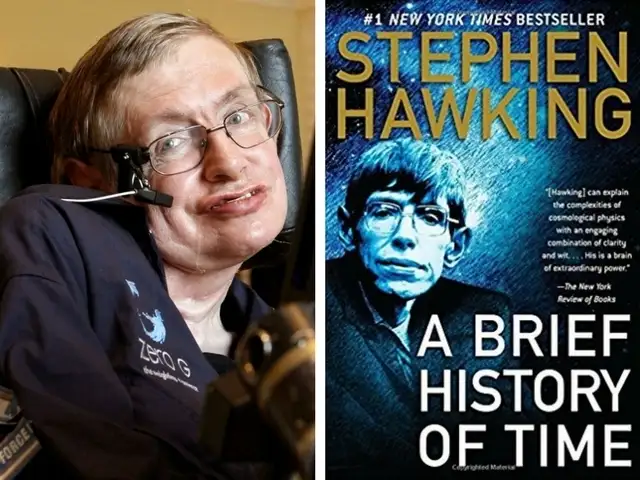
Stephen Hawking was a prolific author with a knack for making books on challenging scientific topics engaging to a wide spectrum of readers.
The physicist is best known for his best-selling 1988 classic 'A Brief History of Time: From the Big Bang to Black Holes,' which was intended to help people without a strong scientific background understand key questions of physics and human existence. In it, he discusses the origins of the universe and its future. Among his other books are:
(Image: Reuters & www.hawking.org.uk)
Stephen Hawking was a prolific author with a knack for making books on challenging scientific topics engaging to a wide spectrum of readers.
The physicist is best known for his best-selling 1988 cla..
Read More
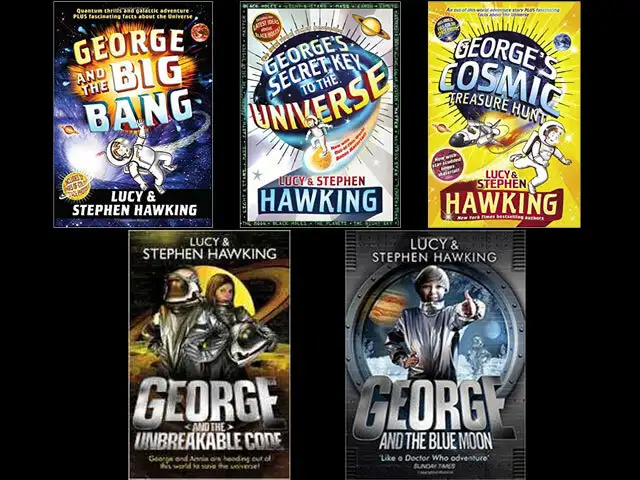
Written by Hawking and his daughter, Lucy, this was a series of illustrated children's books to explain 'secret keys to the universe' to younger readers. The books deal with complex topics including the Big Bang.
(Image: www.hawking.org.uk)
Written by Hawking and his daughter, Lucy, this was a series of illustrated children's books to explain 'secret keys to the universe' to younger readers. The books deal with complex topics including ..
Read More
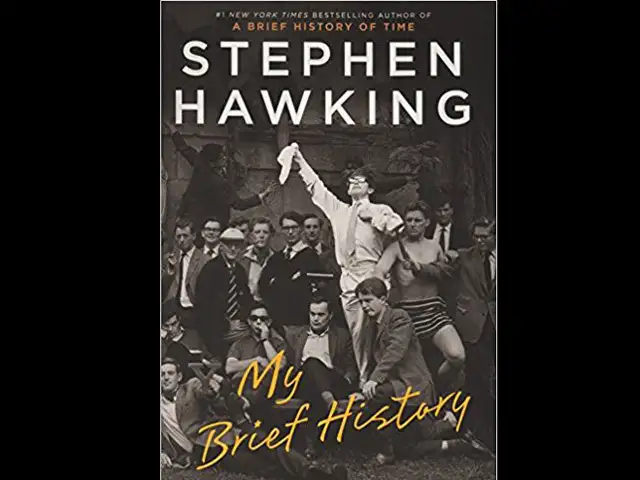
A very personal memoir published in 2013 in which Hawking deals among other things with his childhood, his evolution as a thinker and scientist, the impact of his ALS diagnosis when he was 21 and the ways in which the prospect of an early death affected his work.
(Image: www.hawking.org.uk)
A very personal memoir published in 2013 in which Hawking deals among other things with his childhood, his evolution as a thinker and scientist, the impact of his ALS diagnosis when he was 21 and the..
Read More
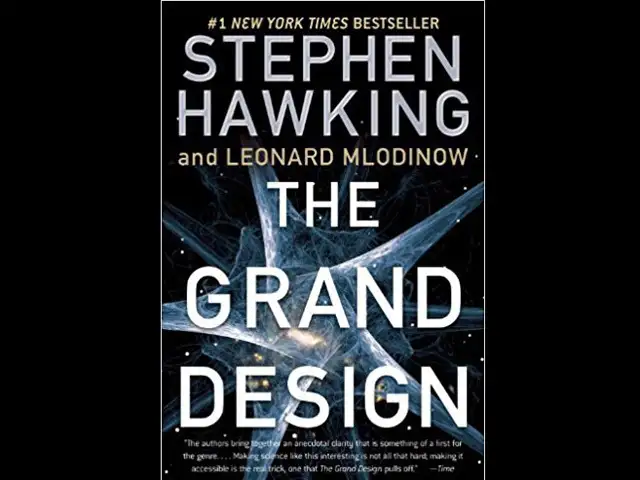
Hawking said this 2010 book co-written with American physicist Leonard Mlodinow was intended to address important unanswered questions such as why there is a universe and whether the universe needed a creator and designer. Hawking said his thinking had been influenced by significant advancements in physics that had followed publication of 'A Brief History of Time.'
(Image: www.hawking.org.uk)
Hawking said this 2010 book co-written with American physicist Leonard Mlodinow was intended to address important unanswered questions such as why there is a universe and whether the universe needed ..
Read More
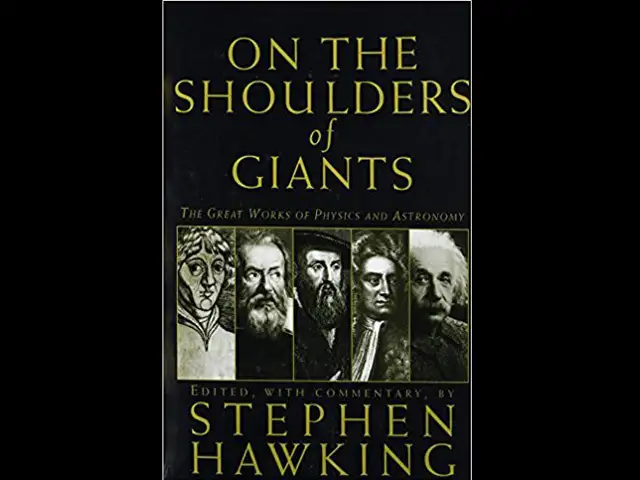
Published in 2003, Hawking writes about the great astronomers and physicists who preceded them, presenting in a single volume a vast history of the field that makes heavy use of original papers by Einstein, Copernicus, Newton and many others. Hawking puts each in context and explains their role in altering the course of science as mankind moved out of the Middle Ages.
(Image: www.hawking.org.uk)
Published in 2003, Hawking writes about the great astronomers and physicists who preceded them, presenting in a single volume a vast history of the field that makes heavy use of original papers by Ei..
Read More
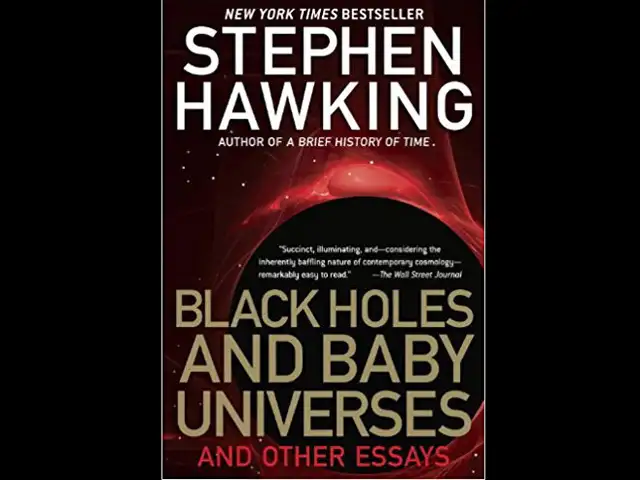
This best-selling 1994 collection includes a mix of personal and scientific essays.
(Image: www.hawking.org.uk)
(Text: AP)
This best-selling 1994 collection includes a mix of personal and scientific essays.
(Image: www.hawking.org.uk)
(Text: AP)