Stephen Hawking couldn't prove black holes are mortal - and his Nobel Prize remained elusive
However, his theory is firmly accepted in theoretical physics.

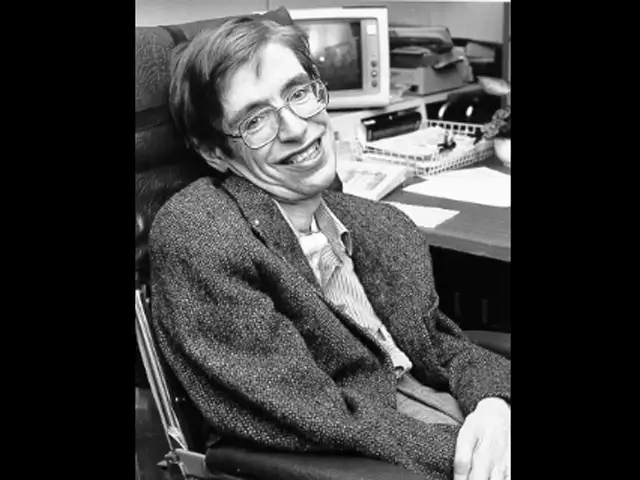
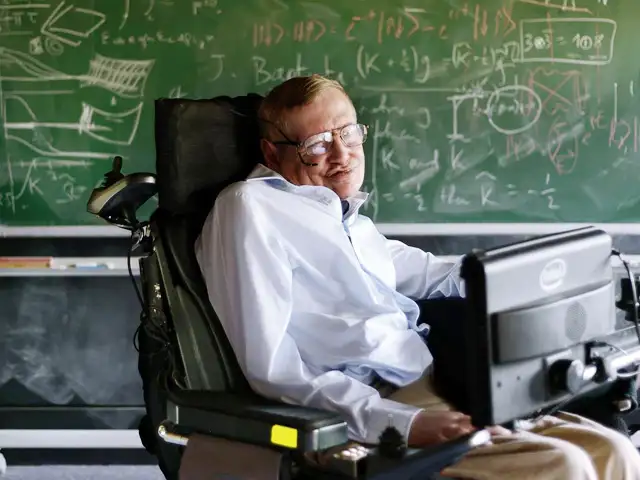
NEW DELHI: For legendary astrophysicist Stephen Hawking, who redefined cosmology by proposing that black holes are mortal, the Nobel Prize for Physics remained elusive as his theory cannot be observed or verified.
Even though his theory is now firmly accepted in theoretical physics, there was no way to verify if black holes are mortal, according to Timothy Ferris, author of 'The Science of Liberty'.
"Black holes are too long-lived to be observed today in their death throes," Ferris wrote in The National Geographic.
Hawking, known for his work on black holes and relativity, died peacefully in his home near Cambridge University in the UK at the age of 76.
He was regarded as one of the most brilliant theoretical physicists since Albert Einstein.

"Hawking probably would have won the prize had nature provided observational confirmation. But that won't happen for billions of years, not until the first star-size black holes start exploding," according to Ferris.
The Nobel Prize can not be awarded posthumously.
It was in 1970, Hawking had an idea that filled him with what he later described as a "moment of ecstasy."
He thought that black holes, previously assumed to be more or less immortal, could instead slowly lose mass and eventually evaporate, exploding in a flash of gamma rays.
The eminent scientist's black hole research is now firmly embedded in theoretical physics. It united relativity (a classical theory, in which everything is smooth as silk) with quantum mechanics (in which everything is grainy) and spurred progress in information theory.
While Hawking may not have won the coveted Nobel Prize, he, however, has over a dozen honorary degrees and was awarded the Commander of the Most Excellent Order of the British Empire (CBE) in 1982 and the Gold Medal of the Royal Astronomical Society in 1985.
He was also a fellow of the Royal Society and a member of the US National Academy of Science.
The world-famous physicist and cosmologist was the subject of the 2014 film 'The Theory Of Everything', which starred Eddie Redmayne and Felicity Jones.The Economic Times Business News App for the Latest News in Business, Sensex, Stock Market Updates & More.
Related Articles
 Quote of the day by T.S. Eliot: 'What we call the beginning is often the end. And to make an end is to make a...' - Nobel Prize-winning poet of The Love Song of J. Alfred Prufrock reveals why every ending leads to a new beginning2026-06-17T17:29:59Z
- Life lesson of the day by George Bernard Shaw: 'We don't stop playing because we grow old, we grow old because...' - Nobel Prize-winning writer of Pygmalion's quote on aging reveals one habit that keep people young at heart and mind2026-06-17T14:30:01Z
- Quote of the Day by Nobel Prize-winning poet Pablo Neruda: ‘I want to do with you what spring does with…’2026-06-14T09:24:40Z
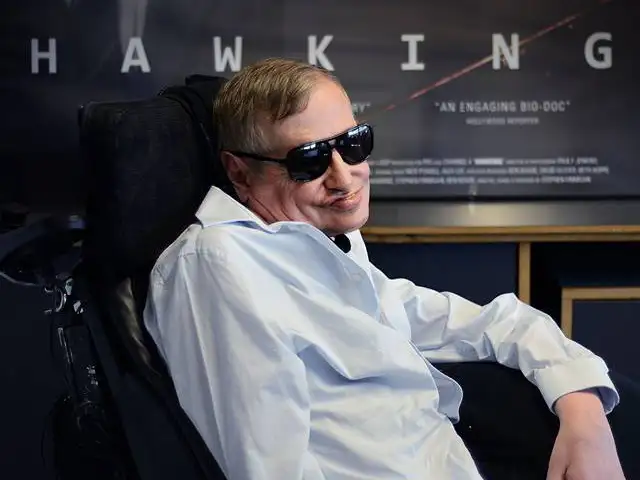
Here's a quick glimpse at his life...
(Image: Stephen Hawking's Facebook Page)