Parents should make the most of this lockdown period.
Presenting pitches from your sofa, collaborating on team decks remotely and bringing your laptop to the breakfast table. Working from home is an adjustment for many. But adding children to the mix brings its own complexities.
How do parents keep their children entertained and engaged while they juggle team video conference calls and draft presentations? What happens to snack time, play-time and me-time?
ETPanache spoke to a few pediatricians, counsellors and parenting consultants to understand how parents and children can adjust to this new normal.
Talk to your children “First, explain clearly to children why we are all forced to be indoors and the importance of adhering to this restriction,” says Parul Ohri, founding member, Momspresso.com. “Once they understand the reasoning, you will be surprised at how much more willing they will be to comply.”
Set up a routine “It starts with a routine, not only for kids but also for us parents,” says Ohri. “Children need to understand this is not a vacation and that they must have fixed mealtimes and bedtimes. Many schools have started online study sessions already, which would take up a large part of their day. It would be useful to have a time-table of different activities they can do on their own while you finish your work. Chores like making their bed and cleaning up their room do not require your supervision. ”
Don’t fight screen time. Use digital media strategically to get you through the most difficult times of the day. Ohri believes chores are a golden opportunity for parents to teach children to develop critical life skills and have them take up ageappropriate and gender-neutral responsibilities of housework.
ADVERTISEMENT
Use nap times According to parenting consultant Sonali Shivlani, it’s the younger children that will be the toughest to keep engaged. “Older kids are easier — involve them in housework, assign duties since the staff is not coming in. Maximum entertainment and parent attention is needed for the younger age group. Parents should try and get maximum work done during their naptimes. Since both parents are home, they can take turns. Try and ensure that (the child’s) sleep time is maintained.”
Gadgets or no gadgets In times like this, some parents are wary of giving their children too much screen time even while they struggle to keep them occupied. “Don’t fight screen time,” suggests Ohri. “(Instead) keep an age appropriate quota and use digital media strategically to get you through the most difficult times of the day.”
Benaaz Irani, senior school counselor at Aditya Birla World Academy, agrees, saying it is almost impossible to limit and supervise screen time. Instead, she advises parents to find ways to make screen time more productive such as attending virtual classes via Skype and Zoom, reading e-books, opting for virtual museum or zoo tours and watching YouTube videos for easy revision of concepts. “Children can even sign up for short courses online on photography, sketching or coding,” she says.
ADVERTISEMENT
Cchores are a golden opportunity for parents to teach children to develop critical life skills. Nurture a hobby Parents should make the most of this period. “If the goal is to raise well-balanced, well-adjusted children with a broad base of knowledge, we need to move away from the idea that education is only what is taught in schools,” says Dr Jyoti Suvarna, HOD-Pediatrics, Holy Spirit Hospital. “Some kids have a passion for painting or drawing or storytelling. Develop tasks that tap that passion. For younger kids, you could give them building blocks or a stepping stool that they can exercise on. Use this time to connect with your children and bond with them as a family.”
ADVERTISEMENT
Exercise is one great way. Shivlani advises setting aside some time each day to work out with them indoors.
“This not only engages the child but helps let off some pent-up energy.”
Coronavirus Can Get Children Worried: Here's How To Have The Talk
1/7
In the wake of coronavirus, several schools and colleges have been shut in many parts of the world to contain the spread of COVID-19. As public awareness and conversations around the novel virus increase, the situation can get the children anxious and worried for their family members and friends.
Parents, family members, teachers, healthcare professionals and trusted adults play a significant role in helping children make sense of what they hear in a way that is honest, accurate and minimise their fear or anxiety.
Dr Sreenath Manikanti, Senior Consultant Neonatologist & HOD Fortis La Femme Hospital, Richmond Road, Bangalore shares a few tips to help make the corona conversation easier around children.
In the wake of coronavirus, several schools and colleges have been shut in many parts of the world to contain the spread of COVID-19. As public awareness and conversations around the novel virus incr..
Read More
- Remember that children react to how and what things are said
- Children pick up cues from conversations you have with them and others
- Patiently listen to what they say, and allow them to ask questions
- Avoid using words that might blame others and lead to stigma
- Remember that the virus can make anyone sick. Avoid making assumptions about who might have COVID-19
- Pay attention to what children see, hear or read on television, radio or online
- Reduce the amount of screen time for children focused on COVID-19. Too much information on any one topic can lead to anxiety and worry
- Provide information to kids that is honest and accurate. Give information that is truthful and appropriate for the age and developmental level of the child
- Talk to children about how some stories on COVID-19 on the internet and social media may be based on rumours and inaccurate information
- Teach chilren everyday actions to reduce the spread of germs
- Stay calm and keep information simple
- Reassure children that health and school authorities are working very hard to keep everyone safe and healthy
- Teach dos and don'ts at home, schools and play areas
- Remember that children react to how and what things are said
- Children pick up cues from conversations you have with them and others
- Patiently listen to what they say, and allow them to ask qu..
Read More
- Stay 6 feet away from people who are coughing or sneezing or sick
- Cough or sneeze into a tissue or your elbow, and then throw the tissue into a closed bin
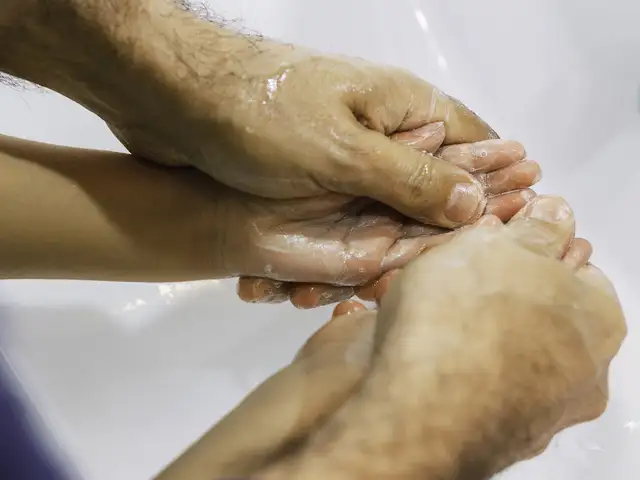
- Wash hands with soap and water for at least 20 seconds, especially after blowing nose, coughing or sneezing, after using restroom, and before eating or learning to prepare food
- If soap and water are not available, teach children to use hand sanitiser
- Stay 6 feet away from people who are coughing or sneezing or sick
- Cough or sneeze into a tissue or your elbow, and then throw the tissue into a closed bin
- Wash hands with soap and water for a..
Read More
- Avoid touching mouth, nose, eyes and face with unclean hands
- Avoid coughing or sneezing into hands
- Avoid crowded places
- Avoid touching surfaces in public places and play areas unnecessarily
- Avoid touching mouth, nose, eyes and face with unclean hands
- Avoid coughing or sneezing into hands
- Avoid crowded places
- Avoid touching surfaces in public places and play areas unnecessaril..
Read More
What is COVID-19?
- COVID-19 is the short name for 'coronavirus disease 2019'
- It is a new virus. Doctors are still learning more about it
- Recently, this virus has made a lot of people sick
- Doctors and scientists think that most people will be alright, especially kids, but some people might get very sick
- Doctors and experts are working hard to help people stay healthy
What is COVID-19?
- COVID-19 is the short name for 'coronavirus disease 2019'
- It is a new virus. Doctors are still learning more about it
- Recently, this virus has made a lot of people sick
- ..
Read More
- Practice healthy habits at home, school and play to help protect against the spread of COVID-19
- Cough or sneeze into a tissue or your elbow. If you sneeze or cough into a tissue, throw it in the dustbin right away
- Keep your hands out of your mouth, nose and eyes. This will help keep germs out of your body
- Wash your hands with soap and water for at least 20 seconds. If you don’t have soap and water, use hand sanitiser to clean the germs
- Keep things clean and hygienic
- If you have cough & fever, stay home. Just like you don’t want to get other people’s germs in your body, other people don’t want to get your germs either
- If you are old enough, you can help adults at home and school clean the things we touch the most like desks, doorknobs, light switches and remote controls
- Practice healthy habits at home, school and play to help protect against the spread of COVID-19
- Cough or sneeze into a tissue or your elbow. If you sneeze or cough into a tissue, throw it in the..
Read More
- COVID-19 can look different in different people. From what doctors have seen so far, most kids don’t seem to get very sick
- Being sick with COVID-19 would be a little bit like having the flu. Children may get a fever, cough or have a hard time taking deep breaths
- Most people who have contracted COVID-19 don't get very sick. Only a small group of people who get it have had more serious problems
- If you suspect your child may have COVID-19, call Government of India helpline +91-11-23978046 or contact nearest healthcare facility to let them know before you bring your child in to see them
- COVID-19 can look different in different people. From what doctors have seen so far, most kids don’t seem to get very sick
- Being sick with COVID-19 would be a little bit like having the flu. Chi..