'It is OK to feel scared': Norway PM tells kids amidst coronavirus outbreak
Most children are at home and are refraining from meeting friends and relatives, especially elderly ones.
By Reuters |
Reuters
It is not the first time Norwegian politicians addressed children on national television.
OSLO: Norwegian Prime Minister Erna Solberg told the country's children on Monday it was OK to feel scared during the "special days" of the coronavirus outbreak.
The Nordic country has invoked emergency powers to close a wide range of public and private institutions, including schools and kindergartens, in a bid to combat the spread of coronavirus.
"It has been special days ... Many children think it is scary," Solberg said during a news conference at her office dedicated to answer children's questions about the pandemic. "It is OK to be scared when so many things happen at the same time."
"Even if your school has been contaminated, it will go well with nearly everyone. The same with Mummy and Daddy, if they are infected," she added, flanked by her ministers for education and for family and children.
Coronavirus Can Get Children Worried: Here's How To Have The Talk
1/7
In the wake of coronavirus, several schools and colleges have been shut in many parts of the world to contain the spread of COVID-19. As public awareness and conversations around the novel virus increase, the situation can get the children anxious and worried for their family members and friends.
Parents, family members, teachers, healthcare professionals and trusted adults play a significant role in helping children make sense of what they hear in a way that is honest, accurate and minimise their fear or anxiety.
Dr Sreenath Manikanti, Senior Consultant Neonatologist & HOD Fortis La Femme Hospital, Richmond Road, Bangalore shares a few tips to help make the corona conversation easier around children.
In the wake of coronavirus, several schools and colleges have been shut in many parts of the world to contain the spread of COVID-19. As public awareness and conversations around the novel virus incr..
Read More
- Remember that children react to how and what things are said
- Children pick up cues from conversations you have with them and others
- Patiently listen to what they say, and allow them to ask questions
- Avoid using words that might blame others and lead to stigma
- Remember that the virus can make anyone sick. Avoid making assumptions about who might have COVID-19
- Pay attention to what children see, hear or read on television, radio or online
- Reduce the amount of screen time for children focused on COVID-19. Too much information on any one topic can lead to anxiety and worry
- Provide information to kids that is honest and accurate. Give information that is truthful and appropriate for the age and developmental level of the child
- Talk to children about how some stories on COVID-19 on the internet and social media may be based on rumours and inaccurate information
- Teach chilren everyday actions to reduce the spread of germs
- Stay calm and keep information simple
- Reassure children that health and school authorities are working very hard to keep everyone safe and healthy
- Teach dos and don'ts at home, schools and play areas
- Remember that children react to how and what things are said
- Children pick up cues from conversations you have with them and others
- Patiently listen to what they say, and allow them to ask qu..
Read More
- Stay 6 feet away from people who are coughing or sneezing or sick
- Cough or sneeze into a tissue or your elbow, and then throw the tissue into a closed bin
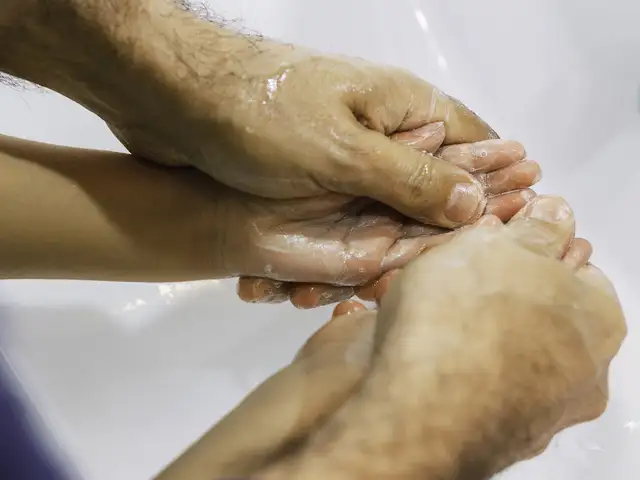
- Wash hands with soap and water for at least 20 seconds, especially after blowing nose, coughing or sneezing, after using restroom, and before eating or learning to prepare food
- If soap and water are not available, teach children to use hand sanitiser
- Stay 6 feet away from people who are coughing or sneezing or sick
- Cough or sneeze into a tissue or your elbow, and then throw the tissue into a closed bin
- Wash hands with soap and water for a..
Read More
- Avoid touching mouth, nose, eyes and face with unclean hands
- Avoid coughing or sneezing into hands
- Avoid crowded places
- Avoid touching surfaces in public places and play areas unnecessarily
- Avoid touching mouth, nose, eyes and face with unclean hands
- Avoid coughing or sneezing into hands
- Avoid crowded places
- Avoid touching surfaces in public places and play areas unnecessaril..
Read More
What is COVID-19?
- COVID-19 is the short name for 'coronavirus disease 2019'
- It is a new virus. Doctors are still learning more about it
- Recently, this virus has made a lot of people sick
- Doctors and scientists think that most people will be alright, especially kids, but some people might get very sick
- Doctors and experts are working hard to help people stay healthy
What is COVID-19?
- COVID-19 is the short name for 'coronavirus disease 2019'
- It is a new virus. Doctors are still learning more about it
- Recently, this virus has made a lot of people sick
- ..
Read More
- Practice healthy habits at home, school and play to help protect against the spread of COVID-19
- Cough or sneeze into a tissue or your elbow. If you sneeze or cough into a tissue, throw it in the dustbin right away
- Keep your hands out of your mouth, nose and eyes. This will help keep germs out of your body
- Wash your hands with soap and water for at least 20 seconds. If you don’t have soap and water, use hand sanitiser to clean the germs
- Keep things clean and hygienic
- If you have cough & fever, stay home. Just like you don’t want to get other people’s germs in your body, other people don’t want to get your germs either
- If you are old enough, you can help adults at home and school clean the things we touch the most like desks, doorknobs, light switches and remote controls
- Practice healthy habits at home, school and play to help protect against the spread of COVID-19
- Cough or sneeze into a tissue or your elbow. If you sneeze or cough into a tissue, throw it in the..
Read More
- COVID-19 can look different in different people. From what doctors have seen so far, most kids don’t seem to get very sick
- Being sick with COVID-19 would be a little bit like having the flu. Children may get a fever, cough or have a hard time taking deep breaths
- Most people who have contracted COVID-19 don't get very sick. Only a small group of people who get it have had more serious problems
- If you suspect your child may have COVID-19, call Government of India helpline +91-11-23978046 or contact nearest healthcare facility to let them know before you bring your child in to see them
- COVID-19 can look different in different people. From what doctors have seen so far, most kids don’t seem to get very sick
- Being sick with COVID-19 would be a little bit like having the flu. Chi..
The trio then answered questions posted via children's TV programme NRK Super and children's paper Aftenposten Junior, such as "Can I have a birthday party?", "Can I visit my grandparents after I went to a shopping centre?", "How long does it take to make a vaccine?" or "What can I do to help?"
ADVERTISEMENT
"By being home you are helping other people not be contaminated and get sick. It is important for those who already have a disease or who are very old," Solberg said.
Most children are at home and are refraining from meeting friends and relatives, especially elderly ones. Children of key workers, such as nurses and doctors, are still able to go kindergartens and schools.
It is not the first time Norwegian politicians addressed children on national television.
During local elections last September, political leaders including Solberg took part in a special debate on children's TV.
ADVERTISEMENT
The country's national day on May 17 is a celebration of children, with school parades throughout the country.
Keeping Your Phone Clean, And Safe, In The Time Of Coronavirus
1/5
Holding hands, an affectionate gesture with romantic undertones, has become taboo in the time of the coronavirus. Handshakes, too, have been outlawed in the boardroom as well as stadiums - and after closing a deal, folks now pick up their phones and send each other formal emails.
Lovers in parks sit on benches, their hands skidding across smartphone screens, sending emoji-laced messages. However, exercising one’s primary tactile organs to communicate through gestures might not be as dangerous as using a mobile phone.
Holding hands, an affectionate gesture with romantic undertones, has become taboo in the time of the coronavirus. Handshakes, too, have been outlawed in the boardroom as well as stadiums - and after ..
Read More
The World Health Organization has explained how people should wash their hands to safeguard against infection and to prevent the spread of the coronavirus. However, the benefits of smearing hands with sanitizers is an exercise in futility if people then pick up their phones and expose themselves to germs all over again.
The World Health Organization has explained how people should wash their hands to safeguard against infection and to prevent the spread of the coronavirus. However, the benefits of smearing hands wit..
Read More
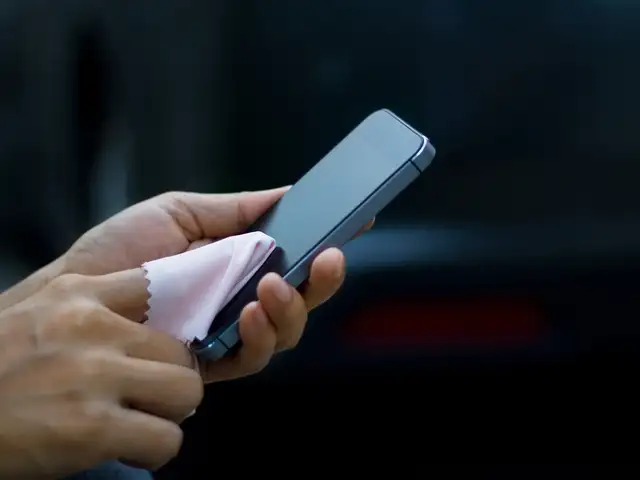
Phone screens are a hotbed of different types of germs. Phone hygiene, therefore, becomes an imperative to ward off contagious germs. Apple recommends using felt cloth, the type used to clean spectacles.
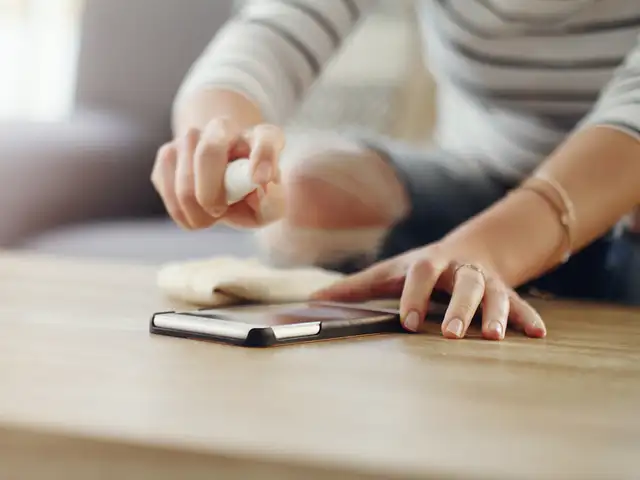
The iPhone 7 and upwards, which are water-resistant, can be cleaned using a cloth dabbed with soapy water, as long as the different orifices of the devices are covered. Other manufacturers do not specify water-tolerance, but most new models are partially resistant to fluids, meaning that cleaning your phone display with a wet cloth is the least you could do.
Phone screens are a hotbed of different types of germs. Phone hygiene, therefore, becomes an imperative to ward off contagious germs. Apple recommends using felt cloth, the type used to clean spectac..
Read More
Samsung and Apple advise against using cleaning fluids as they could potentially damage fingerprint-resistant coatings on their screens. Some new phones have in-display fingerprint sensors which make the task of cleaning your phone more complex. However, this could be remedied by using a screen protector, which in turn, could be wiped clean using diluted alcohol.
The back and sides of the phone should also be cleaned thoroughly. Germs will invariably accumulate on phone screens. The best possible remedy seems to be washing one’s hands before and after touching one’s phone, especially when in public spaces or commuting to work.
Samsung and Apple advise against using cleaning fluids as they could potentially damage fingerprint-resistant coatings on their screens. Some new phones have in-display fingerprint sensors which make..
Read More
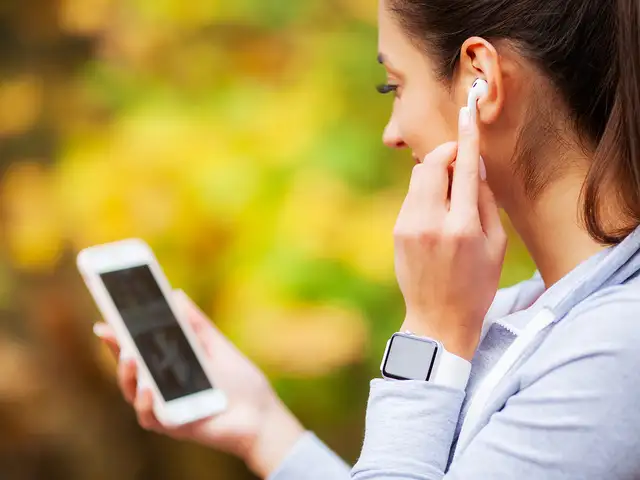
Users given to making a lot of phone calls are advised to use headphones or Bluetooth earphones to prevent the germs on phone screens from coming in contact with their faces. Bluetooth earphones aren’t germ-proof either, but their exteriors can be cleaned with cotton swabs dipped in antiseptic fluids or isopropyl alcohol.
Be careful to not get any inside your audio device as it could damage the circuitry. Boozy headphones can make one grin from ear to ear.
Users given to making a lot of phone calls are advised to use headphones or Bluetooth earphones to prevent the germs on phone screens from coming in contact with their faces. Bluetooth earphones aren..