Ambareesh Murty enjoys the mental aspect of trekking.
What once started out as research for Pepperfry’s Ambareesh Murty is now an annual high-altitude bonding exercise for the entire senior management team.
“In September 2015, I was researching places in India with low population density and thought it would be interesting to visit Zanskar Valley in Ladakh. So Ashish [Shah], my cofounder, one of our colleagues and I decided to drive to Leh and trek from there. That’s how we got hooked,” recalls Murty over a phone call. Since that initial trip, the group (now 12 people) has also done the Chadar trek, the Hampta Pass, the Wari La pass and Zanskar a second time.
Mountain to boardroom
“A lot of the rules that work for organisations work when you’re trekking,” Murty says. “It starts with the fact that you have to trust the people you’re going with. You have to be comfortable with them; you have to be able to solve problems together.”
Ambareesh Murty and his team at the Zoji La mountain pass. Asked if their board is apprehensive about the entire senior management team going out together, Murty brushes it away. “We are careful. All the work that the senior team does gets delegated to their seconds-in-command. We only go with great trek operators with local knowledge. We get ourselves physically fit prior to treks. We get medical check-ups done.”
Pushing the limits
ADVERTISEMENT
The team often climbed the equivalent of a gruelling 200-300 floors a day, only to return to base camp exhausted and set up camp for the night. “You share a very small tent with at least one person, if not two,” Murty says. “You climb seven hours but your day is not over. You have to set up your tent, your sleeping bags, etc. In the morning when you get up and it’s freezing outside, just the task of putting your sleeping bag back into the pouch (at 3,500 metres) is as good as running around Priyadarshini Park three times.”
But Murty enjoys the mental aspect of trekking. Ambareesh Murty and his group at Khardungla pass in Ladakh. “I’m a fairly chubby 40-year-old. I don’t have a six-pack. But trekking is mental,” he says. “I’ve seen people who you would have never thought could trek — they’re overweight or too old or something — but it’s just their mental strength and how they display it that comes out in a trek.”
Pack Lightly One of the important organisational virtues Murty mastered on a trek was the art of packing his bag, right down to the number of sunscreen bottles. “Should you carry one bottle or two? Deciding what to carry is the biggest task of prioritisation you will do,” he says. “You might think on a five-day trek, I might bathe once and therefore carry extra clothes. But you never bathe on a five-day trek, so why carry extra clothes?”
ADVERTISEMENT
However, one item always makes it to his trekking bag — his laptop. In an earlier interview, he confessed to sitting with it in the evenings, pondering over Excel sheets and problems he wouldn’t have had the time for at work. You can take a man out of the office and all that.
A Run For Their Money: Unique Races Around The World
1/5
Marathons are a dime a dozen these days. But if adventure and wanting to beat the odds is more your thing, give these unique races around the world a shot.
Last man standing
This world run has a moving finish line in the form of a car. The vehicle starts moving 30 minutes into the race, and gradually increases its speed to out-run participants. The last person left running is declared the winner with all proceeds from the race going to fund spinal cord research. Participants from 58 countries across the world set off at exactly at the same time for this race. Last year, Polish runner Bartosz Olszewski ran 88.24km.
(Text: Shannon Tellis)
Marathons are a dime a dozen these days. But if adventure and wanting to beat the odds is more your thing, give these unique races around the world a shot.
Last man standing
This world run has a mo..
Read More
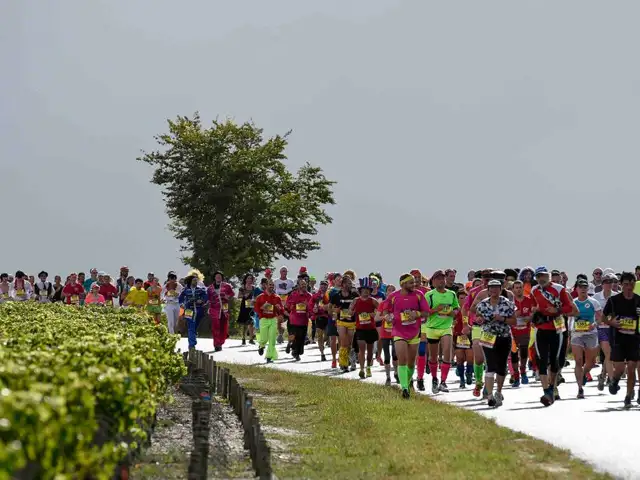
If you’re going to only participate in one marathon, Bordeaux’s Marathon du Médoc is the way to go. Created in 1984 by a group of passionate marathoners, the 42.195 km circuit winds through the scenic vineyards of Médoc. Runners in fancy-dress costumes are encouraged to sample a variety of wines and gourmet food like oysters, steak, cheese and ice cream while enjoying the dulcet tones of 23 orchestras scattered across the course. Be warned though, registrations close at 8,500 participants, so book your spot early.
If you’re going to only participate in one marathon, Bordeaux’s Marathon du Médoc is the way to go. Created in 1984 by a group of passionate marathoners, the 42.195 km circuit winds through the sceni..
Read More
If you thought running a marathon was tough, try doing it semi-naked. Last month, Manila held the city’s first underwear run which saw hundreds of near naked people pounding the pavement. Underwear runs have been around for over a decade and are generally held for a cause. Some crowd favourites are the annual Cupid’s Undie Run held on Valentine’s Day and the Gildan Underwear Run in New York which sees thousands strip and run a 1.7 mile course through Central Park.
If you thought running a marathon was tough, try doing it semi-naked. Last month, Manila held the city’s first underwear run which saw hundreds of near naked people pounding the pavement. Underwear r..
Read More
Imagine sprinting alongside a 15,000-strong crowd of Han Solos, Jedis and Chewies while R2D2 and Stormtroopers cheer you on. A Galaxy fan’s paradise, the Star Wars Half Marathon sees racers run across a 13.1-mile course. Some daring participants even attempt the Darth Vader Challenge, a trifecta of the 5K, 10K and halfmarathon. Whether you run for the light or run for the dark, there is a sweet Star Wars-themed finishers medal up for grabs.
Imagine sprinting alongside a 15,000-strong crowd of Han Solos, Jedis and Chewies while R2D2 and Stormtroopers cheer you on. A Galaxy fan’s paradise, the Star Wars Half Marathon sees racers run acros..
Read More
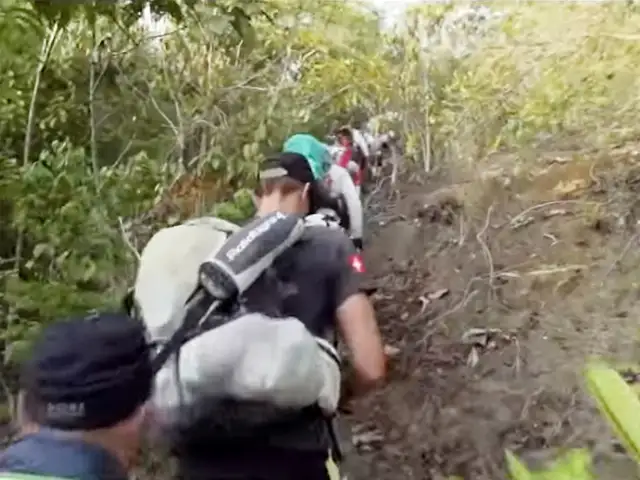
Said to be the world’s most dangerous race, the Jungle Marathon is a deadly 254 km course that winds through the Amazon rainforest in Brazil. Runners have six days to battle their way across inhospitable jungle terrain, including swamps with lurking snakes and crocs, with nothing more than a map, compass and kit with essentials like hammock, bottles, first aid etc. Designed to test the stamina and endurance of any ultra race competitor, runners are forced to use their skills, speed and navigation to make it safely from checkpoint to checkpoint.
Said to be the world’s most dangerous race, the Jungle Marathon is a deadly 254 km course that winds through the Amazon rainforest in Brazil. Runners have six days to battle their way across inhospit..