Swedish businessman gifts Einstein's first paper on relativity theory after Nobel Prize to museum
Per Taube had bought the document at an auction for nearly $128K.
By PTI |
Getty Images
The paper was written in November 1922 while Albert Einstein was attending conferences in south-east Asia.
STOCKHOLM: The Nobel Museum in Stockholm has been gifted Albert Einstein's first paper published after he received the Nobel Prize in 1922 and discussing his then still controversial relativity theory. Swedish businessman Per Taube bought the handwritten two-page document at an auction for 1.2 million krona (110,000 euros) in December last year.
He has now made good on his promise to gift the manuscript to the Nobel Museum, which will put it on display in a glass frame this autumn.
The paper, written in November 1922 while Einstein was attending conferences in south-east Asia, was published a month later by the Prussian Academy of Sciences.
Incomprehensible to many, the text is a rebuttal of an article by German mathematician Erich Trefftz debating the "large-scale geometrical structure of the universe" -- notably the forces and masses separating and enveloping celestial bodies. Trefftz claimed he had found a "static" solution to Einstein's theory of general relativity.
However, Einstein rejected the hypothesis in a series of complex equations, concluding: "It became apparent... that Trefftz's solution does not permit this physical interpretation at all." Significantly, the document contains a modified version of the relativity theory and shows that Einstein was facing fierce resistance within the scientific community.
ADVERTISEMENT
"This letter shows that even though Albert Einstein had received the Nobel prize, his physics was very much part of the debate among scientists at that time and Albert Einstein himself was also part of this debate," Gustav Kallstrand, senior curator a the Nobel Prize museum, told AFP.
Moreover, Einstein received the Nobel Prize of Physics on November 10, 1922, for his discovery of the law of the photoelectric effect, not for the relativity theory.
The paper also has handwritten editor's annotations by German physicist Max von Laue who won the Nobel Prize in 1914.
ADVERTISEMENT
Von Laue owned the manuscript until 1948 before it passed into the hands of private collectors.
For Kallstrand, Einstein -- who was born in 1879 and died in 1955 -- remains "the archetypal image of a scientific genius".
ADVERTISEMENT
"If you say 'scientist', most people will get an image in their head of Albert Einstein."
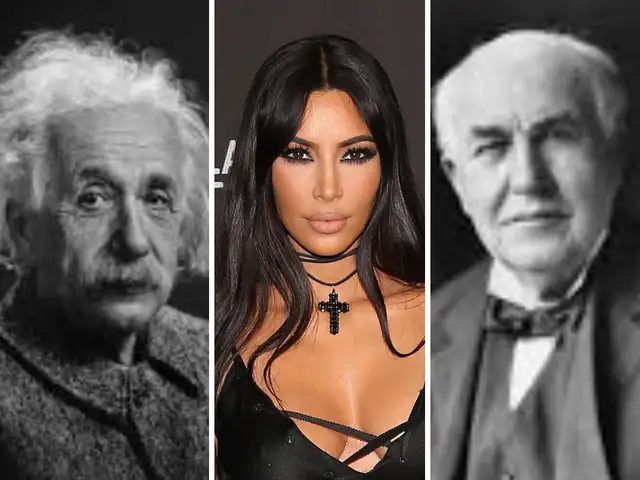
Einstein, Kardashian, Edison: 5 People Whose Physical Traits Contributed To Their Achievements
1/6
Text by Divya Verma
From Da Vinci’s eye condition, Kim Kardashian’s famous rear-end to Albert Einstein’s brain, here are the physical traits that added to their achievements.
Text by Divya VermaFrom Da Vinci’s eye condition, Kim Kardashian’s famous rear-end to Albert Einstein’s brain, here are the physical traits that added to their achievements.
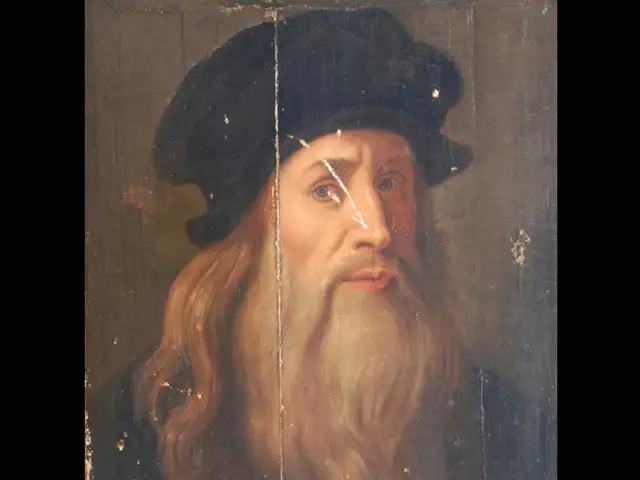
Leonardo da Vinci may not have been such a great artist, if not for an eye problem. A recent study found that a condition known as exotropic strabismus gave Da Vinci an unusual ability to recreate three-dimensional shapes in his sculptures and paintings. Strabismus is a common vision disorder where one of the eyes looks inward, outward, up or down when the other eye is focused on an object.
Leonardo da Vinci may not have been such a great artist, if not for an eye problem. A recent study found that a condition known as exotropic strabismus gave Da Vinci an unusual ability to recreate th..
Read More
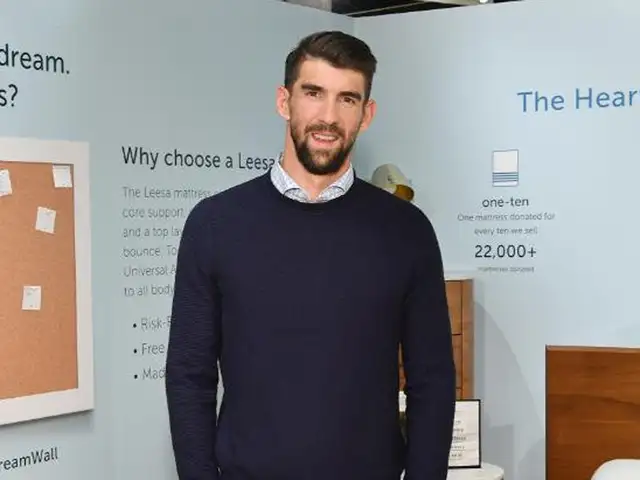
The most decorated Olympian swimmer, Michael Phelps, is a man made for the water. With his long arms, big feet and towering over others with his 6'4" frame, Phelps has physical advantages over his fellow swimmers. Nicknamed ‘The Flying Fish’, Phelp’s wide wingspan is the key to success for his signature butterfly stroke, which relies heavily on the upper arms and back to push and pull a swimmer. His long, lean and triangle-shaped torso helps him move through the water with less drag. His legs, which are comparatively shorter but equally powerful, also contribute to his power in the pool.
The most decorated Olympian swimmer, Michael Phelps, is a man made for the water. With his long arms, big feet and towering over others with his 6'4" frame, Phelps has physical advantages over his fe..
Read More
Considered one of the greatest inventors of all times, Thomas Edison had experienced hearing loss in both ears at a young age. But the inventor of the phonograph and the incandescent light bulb considered his deafness to be a blessing, as it allowed him to think and read with total concentration. In an April 1925 article that appeared in a magazine, he wrote: “…I have been deaf enough for many years to know the worst, and my deafness has not been a handicap but a help to me.”
Considered one of the greatest inventors of all times, Thomas Edison had experienced hearing loss in both ears at a young age. But the inventor of the phonograph and the incandescent light bulb consi..
Read More
Few body parts are more recognisable — or more controversial — than Kim Kardashian’s derriere. Speculations of implants and rumours of cosmetic surgery have followed the entrepreneur’s rise to fame. In 2014, the reality TV star made headlines after she appeared on a magazine cover baring her famous behind. No wonder Kardashian is rumoured to have insured her most famous asset for $21 million.
Few body parts are more recognisable — or more controversial — than Kim Kardashian’s derriere. Speculations of implants and rumours of cosmetic surgery have followed the entrepreneur’s rise to fame. ..
Read More
Albert Einstein was not just a genius physicist but also a master violinist. His brilliance may be linked to the fact that both his brain hemispheres were well-connected, according to a study. The ability to use the right side of the brain creativity and the left side for logic simultaneously may have been what made him a genius. After Einstein died, his brain was removed and photographed from multiple and unconventional angles. The study found that Einstein’s corpus callosum, a thick bundle of nerves connecting the brain’s hemispheres, was thicker than a group of 15 elderly men and 52 men the same age as Einstein during his famous Miracle Year in 1905.
Albert Einstein was not just a genius physicist but also a master violinist. His brilliance may be linked to the fact that both his brain hemispheres were well-connected, according to a study. The ab..