'Stock' it up! OTT drives demand for Shutterstock, Getty Images amid lockdown & shooting constraints

Stock footage refers to movie or video snippets that can be re-used in new productions.

Agencies
Over-the-top (OTT) platforms contributed to 70% of the increased demand. (Illustration: Rahul Awasthi)
MUMBAI: Video streaming platforms such as Amazon Prime Video, Netflix, Hotstar and Zee5 are driving demand for stock footage amid shooting constraints due to the nationwide lockdown, companies and industry executives said.

Stock footage refers to movie or video snippets that can be re-used in new productions when shooting material is not available or filmed afresh.

Since stay-at-home orders to stem the spread of the Covid-19 virus outbreak brought all film-shooting schedules to a halt, global stock footage sellers like Getty Images and Shutterstock have seen a spike in demand from India over the last three months.


The demand has been largely driven by streaming sites serving an audience eager to binge-watch content including web series, films and documentaries.

Over-the-top (OTT) platforms contributed to 70% of the increased demand, while the rest of the enquiries came from brands actively advertising through the lockdown period.

Stock & Found, a Reliance Entertainment company that is the “enterprise business partner” of Shutterstock in India, sold three times the footage during the lockdown than it would have under normal circumstances.

ADVERTISEMENT

Stock & Found sold three times the footage during the lockdown than it would have under normal circumstances.

For Avinash Malani, founder of The Ad Footage Company, the licensed reseller for Depositphotos and Dreamstime in India, business jumped 150% in the last three months compared to the same period last year.

Homegrown companies, like Imagesbazaar, and resellers for other global companies such as Pond5 and Alamy, are also catering to the unusual rise in demand from the media and entertainment industry.

“Some of the editorial footage around the pandemic is priced at over Rs 1 lakh right now,” Malani told ET.

ADVERTISEMENT
The spike in demand is unprecedented, Malani said, because March to June is traditionally a slow period. “It was considered an exams season, so no big-budget projects would be underway earlier,” he said.

Last week, he finished three projects for OTT channels, including a Hindi feature film whose lead actress recently tweeted that it would premiere worldwide on a popular streaming platform.

ADVERTISEMENT
“With no timeframe for shooting, stock footage comes in as a quicker, smarter, and safer way of creating transition or establishing shots,” said Aparna Acharekar, programming head at OTT channel ZEE5.

Amazon Prime and MX Player did not share inputs for the story despite requests.

MX Player is owned by Times Internet, part of the Times group that also publishes this newspaper.

Location shots - both foreign and domestic - to establish the whereabouts of a story, shots of historical events for period films or web series, and editorial content related to news-related developments from the past, are in high demand right now.

Web series for streaming platforms are more likely to repeat the use of establishment and transition shots across various episodes, compared to feature films.
Homegrown companies are also catering to the unusual rise in demand from the media and entertainment industry.

While using stock footage is a well-established process in the West, it is quite a nascent market in India, Malani said.

“In western countries, shooting is more expensive than procuring stock footage as it requires taking several permissions. In India, however, shooting was always cheaper than buying stock footage. Until now,” he added.

Although Maharashtra allowed shooting projects to resume earlier this week, the demand for stock footage and readymade content will increase further in the coming months, said Nitin Lakhotia, SVP at Reliance Entertainment.

“We are expecting an overall high double-digit percentage gain in revenue by the end of this year,” he said.

Shooting possibilities will be greatly affected by restrictions and safety concerns even after the lockdown is lifted fully, so even people who did not use archive footage earlier might need it now, said Dhruv Pathak, an assistant director in the Hindi film industry.

In the last two months, Pathak used a fair bit of file footage for a film that has yet to be released. “This was the first time I worked on stock footage," Pathak said.

Will this change the way screenwriters write their scripts?

Pathak does not think so.

It could pave the way for more stories to be set indoors, he said, especially for OTT platforms.

“But scripts can be altered later depending on the circumstances. I don’t think any writer should look at boundaries.”

Safety Nets, Cookie Control & Secure DNS: Follow These Simple Google Chrome Hacks To Keep Data Safe
1/5

Google Chrome, in all probability, might be the most commonly-used browser, but it has been at the centre of criticism due to controversial changes, security problems and data concerns.

From Chrome 79 accidentally deleting data for Android users in December 2019, Chrome 80’s ‘high level vulnerabilities’ that put data at risk to the controversial deep linking upgrade in February 2020 that allegedly compromised on privacy, Chrome has often left its users worried about their safety and security.

However, Chrome has now put all the privacy and security concerns to rest with its new upgrade. A blog post on Google’s website titled, ‘More intuitive privacy and security controls in Chrome’, breaks down the security updates in detail. Here are some of them:

Google Chrome, in all probability, might be the most commonly-used browser, but it has been at the centre of criticism due to controversial changes, security problems and data concerns.From Chrome 79..
Read More

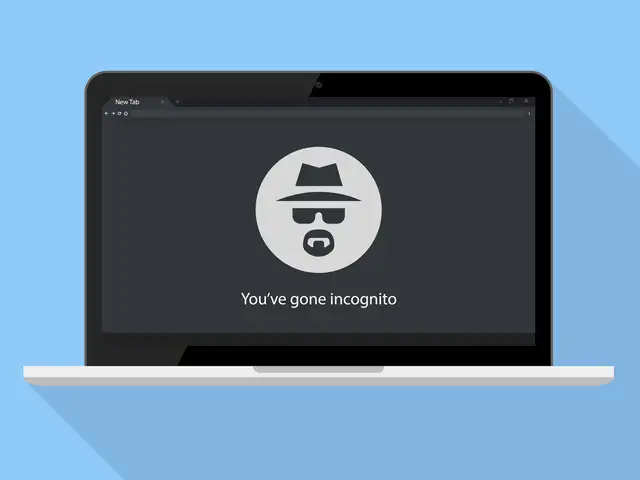
Most of us use the incognito mode in Google Chrome for private browsing. The USP of Google’s incognito mode is that it does not save history, information entered by the user in forms or browser cookies. The good folks at Google have now decided to take security and privacy in incognito mode a notch higher.

You can now control whether you wish to allow third-party cookies in incognito mode. Chrome will now block third-party cookies by default in incognito mode. If you wish to allow third-party cookies for specific sites, you can click the ‘eye’ sign on the address bar.

The feature, as per Google’s blog, will be gradually rolled out. For the uninitiated, third-party cookies allow websites to track a user across the web. With Chrome’s new update, you can keep your information secure by blocking these cookies.

Most of us use the incognito mode in Google Chrome for private browsing. The USP of Google’s incognito mode is that it does not save history, information entered by the user in forms or browser cooki..
Read More

Security attacks such as phishing and malware have become quite common on the internet. To combat the menace, Google Chrome now has a security update that users can opt for. Called ‘Enhanced Safe Browsing’, this security upgrade will allow Chrome to proactively detect phishing attacks, malware and other web based threats.

Chrome will do this by proactively checking if pages and downloads are dangerous by sending information about them to Google Safe Browsing.

Going forward, Google will also add more protections to this upgrade such as tailored warnings for phishing sites, file downloads, cross product alerts and more.

Security attacks such as phishing and malware have become quite common on the internet. To combat the menace, Google Chrome now has a security update that users can opt for. Called ‘Enhanced Safe Bro..
Read More

Another security upgrade that Chrome has come up to protect your privacy is ‘Secure DNS’.

When we enter a website in the address bar of the browser, it first needs to determine which server is hosting the website. This step is called DNS (Domain Name System) lookup.

Google Chrome’s Secure DNS feature will encrypt this step using ‘DNS-over-HTTPS’. This will not allow the attackers to find out which website you want to visit and they won’t be able to send you phishing webpages.

Another security upgrade that Chrome has come up to protect your privacy is ‘Secure DNS’. When we enter a website in the address bar of the browser, it first needs to determine which server is hostin..
Read More

Apart from introducing strong security measures to keep attackers at bay, Google has also developed a safety net for its users. With the help of a safety check in Chrome, you can make sure that your data is safe.

For starters, Chrome has come up with a new tool that will tell you if the passwords that you have asked Chrome to remember have been compromised and if so, how to fix it.

Secondly, Chrome will raise a red flag if ‘Safe Browsing’, Google’s technology to warn you when you are about to access a dangerous website, has been turned off.

The safety check tool will also help you determine if you are using the latest version of Google Chrome. It will also let you know if malicious extensions have been installed and how to remove them.


Apart from introducing strong security measures to keep attackers at bay, Google has also developed a safety net for its users. With the help of a safety check in Chrome, you can make sure that your ..
Read More

Download
The Economic Times Business News App
for the Latest News in Business, Sensex, Stock Market Updates & More.
READ MORE
ADVERTISEMENT

READ MORE:

LOGIN & CLAIM

50 TIMESPOINTS

More from our Partners

Loading next story
Business News › Magazines › Panache › 'Stock' it up! OTT drives demand for Shutterstock, Getty Images amid lockdown & shooting constraints
Text Size:AAA
Success
This article has been saved

*

+