Say goodbye to bladder problems: This tiny, implantable device can work wonders
The device can detect overactivity in the bladder and then use light from LEDs to tamp down the urge to urinate.
By PTI | Updated:
Getty Images
WASHINGTON DC: Scientists have developed a tiny, implantable device that has potential to help people with bladder problems bypass the need for medication or electronic stimulators.
The device, developed by researchers from Washington University, University of Illinois at Urbana-Champaign, and Northwestern University in the US, can detect overactivity in the bladder and then use light from tiny, biointegrated LEDs to tamp down the urge to urinate.
The team found that the device works in laboratory rats, and suggests that it may help people who suffer incontinence or frequently feel the need to urinate.
Overactive bladder, pain, burning and a frequent need to urinate are common and distressing problems. For about 30 years, many with severe bladder problems have been treated with stimulators that send an electric current to the nerve that controls the bladder.
Such implants improve incontinence and overactive bladder, but they also can disrupt normal nerve signalling to other organs.
This CT scan of a rat shows a small device implanted around the bladder. The device — developed by scientists at Washington University School of Medicine in St. Louis, the University of Illinois and Northwestern University — uses light signals from tiny LEDs to activate nerve cells in the bladder and control problems such as incontinence and overactive bladder.
ADVERTISEMENT
"There definitely is benefit to that sort of nerve stimulation," said Robert W Gereau IV, a professor at Washington University.
"But there also are some off-target side effects that result from a lack of specificity with those older devices," said Gereau.
During a minor surgical procedure, they implant a soft, stretchy belt-like device around the bladder. As the bladder fills and empties, the belt expands and contracts. The researchers also inject proteins called opsins into the animals' bladders.
The opsins are carried by a virus that binds to nerve cells in the bladder, making those cells sensitive to light signals. This allows the researchers to use optogenetics -- the use of light to control cell behaviour in living tissue -- to activate those cells.
ADVERTISEMENT
Using blue-tooth communication to signal an external hand-held device, the scientists can read information in real time and, using a simple algorithm, detect when the bladder is full, when the animal has emptied its bladder, and when bladder emptying is occurring too frequently.
"When the bladder is emptying too often, the external device sends a signal that activates micro-LEDs on the bladder band device, and the lights then shine on sensory neurons in the bladder. This reduces the activity of the sensory neurons and restores normal bladder function," Gereau said.
Assisted Surgery, Flawless Backflip: Milestones Achieved By Robots
1/7
A robot boat, SB Met, recently sailed into history by becoming the first unmanned vessel to cross the Atlantic. It completed an 1,800-mile trip from Canada to Ireland. But, it’s not the first robot to make news for achieving a milestone.
Here’s a brief account of milestones achieved by robots from surgery to sex:
(Text: Rajarshi Bhattacharjee)
A robot boat, SB Met, recently sailed into history by becoming the first unmanned vessel to cross the Atlantic. It completed an 1,800-mile trip from Canada to Ireland. But, it’s not the first robot t..
Read More
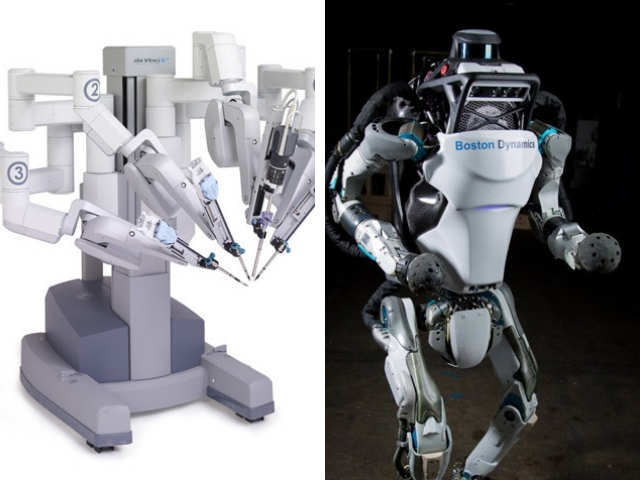
The first documented use of a robot-assisted surgical procedure occurred in 1985 when the PUMA 560 robotic surgical arm was used in a delicate neurosurgical biopsy.
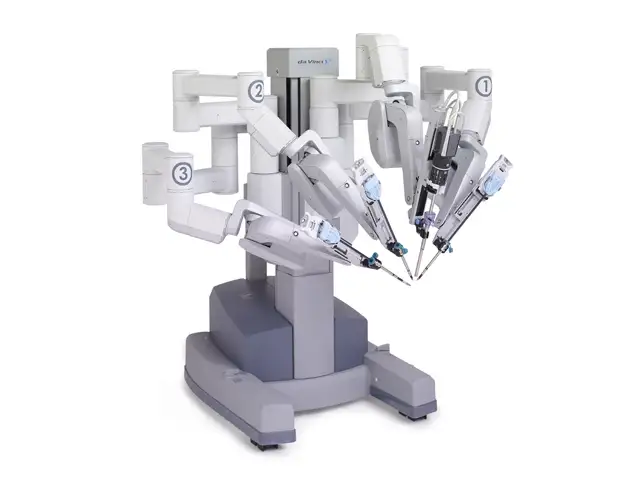
In 2000, the da Vinci Surgery System broke new ground by becoming the first robotic surgery system approved by the FDA for general laparoscopic surgery.
(Text: Rajarshi Bhattacharjee)
The first documented use of a robot-assisted surgical procedure occurred in 1985 when the PUMA 560 robotic surgical arm was used in a delicate neurosurgical biopsy. In 2000, the da Vinci Surgery Syst..
Read More
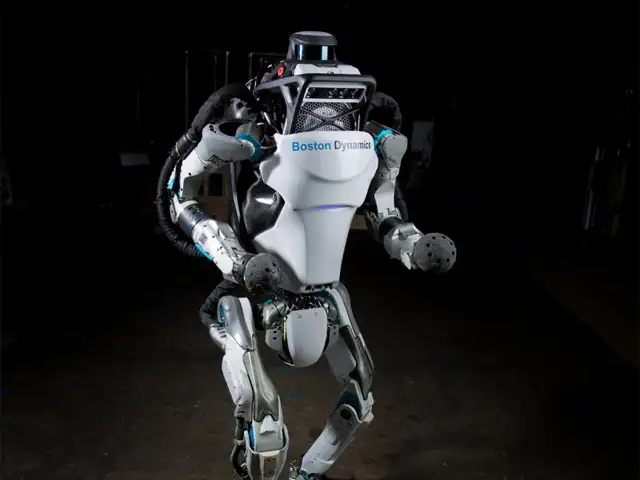
Boston Dynamics’s humanoid robot Atlas broke the internet last year when a video showed its ability to do a flawless backflip.
The robot’s backflip was globally seen as a marvel of mechanical engineering and software control.
Atlas’s control system coordinates motions of the arms, torso and legs to achieve whole body mobile skills.
(Text: Rajarshi Bhattacharjee)
Boston Dynamics’s humanoid robot Atlas broke the internet last year when a video showed its ability to do a flawless backflip. The robot’s backflip was globally seen as a marvel of mechanical enginee..
Read More
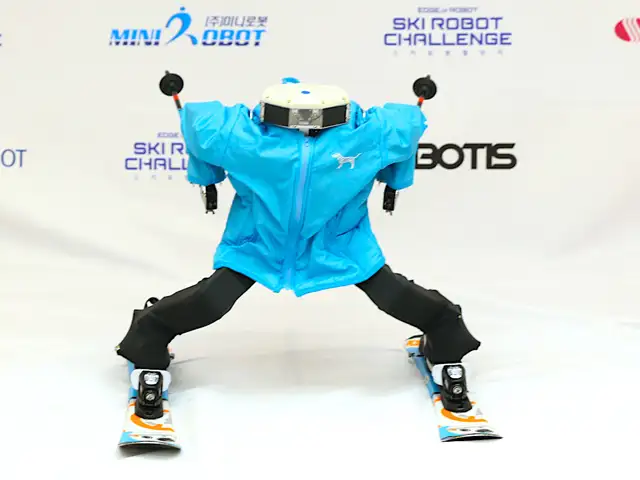
Taekwon V made news by winning the world’s first robot skiing competition earlier this year in South Korea. Taekwon V is fitted with a camera sensor that enables it to ‘see’ as it skis around.
Every robot participating at the Ski Robot Challenge was mandated to be taller than 50cm, stand on ‘two legs’, and have joints ‘resembling elbows and knees’.
(Text: Rajarshi Bhattacharjee)
Taekwon V made news by winning the world’s first robot skiing competition earlier this year in South Korea. Taekwon V is fitted with a camera sensor that enables it to ‘see’ as it skis around. Every ..
Read More
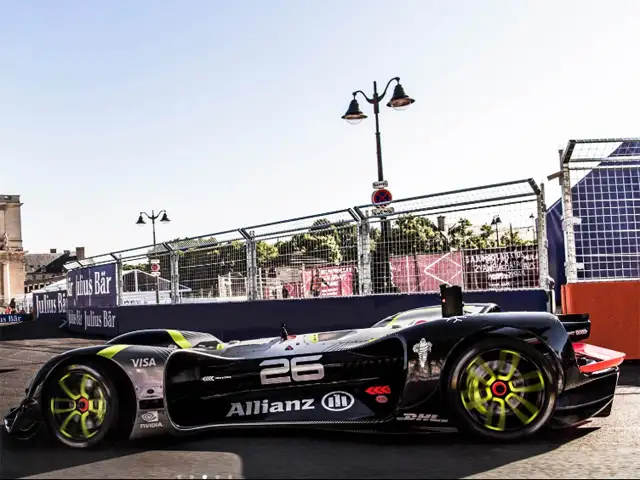
The world’s first driverless electric racing car, Robocar, made its debut appearance at Times Square, New York last year and became the first driverless race car to complete Goodwood Hillclimb earlier this year.
The vehicle is powered by four 135kW electric motors for a combined 500-plus hp. A variety of sensors around the vehicle gives it a 360-degree vision of the environment.
(Text: Rajarshi Bhattacharjee)
The world’s first driverless electric racing car, Robocar, made its debut appearance at Times Square, New York last year and became the first driverless race car to complete Goodwood Hillclimb earlie..
Read More
Sophia continues to be a global sensation ever since she became the world’s first robot citizen of Saudi Arabia.
Modelled after British actress Audrey Hepburn , Sophia is known for her human-like appearance, behaviour and artificial intelligence, can display more than 50 facial expressions, and has participated in many high-profile interviews across the world.
(Text: Rajarshi Bhattacharjee)
Sophia continues to be a global sensation ever since she became the world’s first robot citizen of Saudi Arabia. Modelled after British actress Audrey Hepburn , Sophia is known for her human-like app..
Read More
Meet Harmony, the world’s first AI sex robot. It’s made of advanced robotic components and customisable AI to deliver the most enjoyable conversation and interaction you can have with a machine.
The silicone robot, created by Realbotix, has an app to help you interact with it better.
(Text: Rajarshi Bhattacharjee)
Meet Harmony, the world’s first AI sex robot. It’s made of advanced robotic components and customisable AI to deliver the most enjoyable conversation and interaction you can have with a machine. The ..
The researchers believe a similar strategy could work in people. Devices for people likely would be larger than the ones used in rats, and could be implanted without surgery, using catheters to place them through the urethra into the bladder.
"This example brings together the key elements of an autonomous, implantable system that can operate in synchrony with the body to improve health: a precision biophysical sensor of organ activity; a noninvasive means to modulate that activity; a soft, battery-free module for wireless communication and control; and data analytics algorithms for closed-loop operation," said John A Rogers, a professor at Northwestern University.
Closed-loop operation essentially means the device delivers the therapy only when it detects a problem. When the behaviour is normalised, the micro-LEDs are turned off, and therapy can be discontinued.
Researcher expect to test similar devices in larger animals. The researchers also believe the strategy could be used in other parts of the body -- treating chronic pain, for example, or using light to stimulate cells in the pancreas to secrete insulin.
One hurdle, however, involves the viruses used to get light-sensitive proteins to bind to cells in organs.
"We don't yet know whether we can achieve stable expression of the opsins using the viral approach and, more importantly, whether this will be safe over the long term," Gereau said.
"That issue needs to be tested in preclinical models and early clinical trials to make sure the strategy is completely safe," they said.