Samosa Diplomacy has a nice crunch to it
The Australian PM’S 'ScoMosas' highlight the rise of a new diplomatic idiom.
By ET Bureau |

ThinkStock Photos
Diplomatic parleys are invariably predicated on what each party ‘brings to the table’. Australian Prime Minister Scott Morrison has added a new meaning to that phrase by putting out photos on social media of the vegetarian ‘ScoMosas’ he made over the weekend, ahead of a video charcha with his Indian counterpart Narendra Modi.
Our PM’s response that the two nations are “connected by the Indian Ocean, united by the Indian samosa” and that he looked forward to eating them with Morrison after “a decisive victory against Covid-19” certainly portends a larger international diplomatic role for samosas.
Perhaps Modi will reciprocate by expressing fondness for (or at least, interest in) that very Aussie vegetarian spread, Vegemite.
Earlier this year, industrialist Anand Mahindra had highlighted the unifying potential of our desi deep-fried dough when he observed that with Indians now heading four US technology giants, the White House would “have to ensure the snacks are samosas and not hamburgers”.
And while Morrison stuck to the conventional potato filling for ScoMosas, it may be recalled that when US President Donald Trump visited India this February, the specially concocted broccoli and corn samosas on the table in Ahmedabad remained untouched.
Thus, Samosa Diplomacy will have to be mindful of content, not merely the contours.
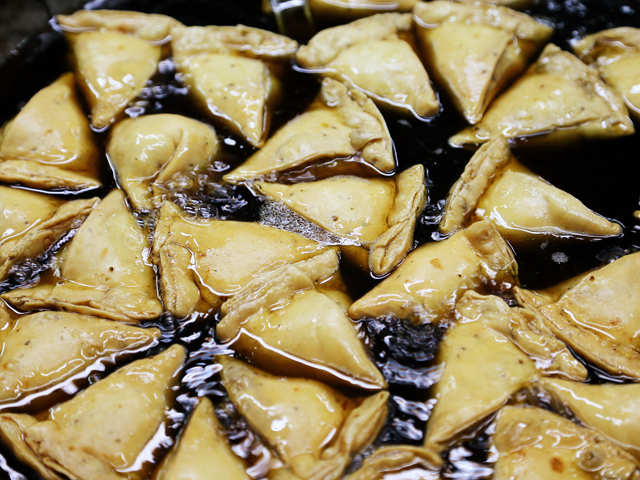
On April 21, 1526, the great Mughals came to India with an array of culinary techniques. But the samosa remained popular. The 16th century Mughal document Ain-i-Akbari confirms the presence of these timeless pastries in their time.
Our PM’s response that the two nations are “connected by the Indian Ocean, united by the Indian samosa” and that he looked forward to eating them with Morrison after “a decisive victory against Covid-19” certainly portends a larger international diplomatic role for samosas.
Perhaps Modi will reciprocate by expressing fondness for (or at least, interest in) that very Aussie vegetarian spread, Vegemite.
Earlier this year, industrialist Anand Mahindra had highlighted the unifying potential of our desi deep-fried dough when he observed that with Indians now heading four US technology giants, the White House would “have to ensure the snacks are samosas and not hamburgers”.
And while Morrison stuck to the conventional potato filling for ScoMosas, it may be recalled that when US President Donald Trump visited India this February, the specially concocted broccoli and corn samosas on the table in Ahmedabad remained untouched.
Thus, Samosa Diplomacy will have to be mindful of content, not merely the contours.
ADVERTISEMENT


Download
The Economic Times Business News App for the Latest News in Business, Sensex, Stock Market Updates & More.
The Economic Times Business News App for the Latest News in Business, Sensex, Stock Market Updates & More.
ADVERTISEMENT


