Ronan Farrow, who won 2017 Pulitzer for breaking Weinstein story, slams Hachette for Woody Allen's memoir
Farrow was 'disappointed' to find out that the publishing house went ahead with the acquisition of Allen's book.
By PTI |
Agencies
Ronan Farrow (L) had urged Hachette to conduct a fact check on Woody Allen's account.
LOS ANGELES: Slamming publisher Hachette for acquiring Woody Allen's memoir 'Apropos of Nothing', journalist and director Woody Allen's estranged son Ronan Farrow has announced that he is ending his association with the company. Grand Central Publishing, a division of Hachette Book Group, acquired the memoir a year ago and will bring it out on April 7, the company said earlier this week.
It was reported last year that Allen was pitching his memoir to several publishers but but was rebuffed in the wake of the #MeToo movement.
The multi-hyphenate director has become a subject of discussion over the resurfacing of the sexual assault allegations levelled against him by his step-daughter Dylan Farrow, Ronan Farrow's sister, which caught steam in the wake of the #MeToo uprising. He has repeatedly denied the accusations.
Incidentally, Hachette's division Little, Brown and Company published "Catch and Kill", by Ronan Farrow in 2019, in which he wrote about his reporting during the #MeToo movement that led to the downfall of many powerful Hollywood executives, including Harvey Weinstein, over sexual abuse allegations. He also won a Pulitzer Prize for his 2017 reporting at the New Yorker on Weinstein.
Hey, just wanted to share my thoughts on some recent news: https://t.co/ovPczgx8pB
Ronan Farrow said he was "disappointed" to find out that Hachette not only went ahead with the acquisition of Allen's book but also "concealed" the decision.
ADVERTISEMENT
"I was disappointed to learn through press reports that Hachette, my publisher, acquired Woody Allen's memoir after other major publishers refused to do so and concealed the decision from me and its own employees while we were working on 'Catch and Kill' - a book about how powerful men, including Woody Allen, avoid accountability for sexual abuse," he said in a statement posted on Twitter Tuesday.
Alleging that Hachette had not fact-checked the book, Ronan Farrow added no one contacted his sister for her side of the story.
He said the publisher had displayed a "wildly unprofessional" approach, which also "shows a lack of ethics and compassion for victims of sexual abuse". A book cover image for 'Apropos of Nothing,' an autobiography by Woody Allen. "My sister Dylan has never been contacted to respond to any denial or mischaracterisation of the abuse she suffered at the hands of Woody Allen - a credible allegation, maintained for almost three decades, backed up by contemporaneous accounts and evidence.
ADVERTISEMENT
"It's wildly unprofessional in multiple obvious directions for directions for Hachette to behave this way. But it also shows a lack of ethics and compassion for victims of sexual abuse, regardless of any personal connection or breach of trust here."
Ronan Farrow further said he had urged Hachette to conduct a fact check on Allen's account.
ADVERTISEMENT
"I've also Hachette that a publisher that would conduct itself in this way is one I can't work with in good conscience," he said.
Dylan on Monday took to Twitter to slam the company for betraying her brother with their decision to publish Allen's memoir.
My statement on the disappointing and, frankly shocking, news from @HachetteUS today. https://t.co/h0zuAi0T7l
"Hachette's publishing of Woody Allen's memoir is deeply upsetting to me personally and an utter betrayal of my brother whose brave reporting, capitalised on by Hachette, gave voice to numerous survivors of sexual assault by powerful men.
"For the record, I was never contacted by any fact checkers to verify the information in this 'memoir', demonstrating an egregious abdication of Hachette's most basic responsibility," she said in a statement posted on the microblogging site.
Predictive Text: 'Frankenstein', '1984' And Other Books That Foretold The Future
1/6
A look back at the different times when authors unleashed the Nostradamus in them and came up with something that was years ahead of its time.
A look back at the different times when authors unleashed the Nostradamus in them and came up with something that was years ahead of its time.
Vision: Virus outbreak
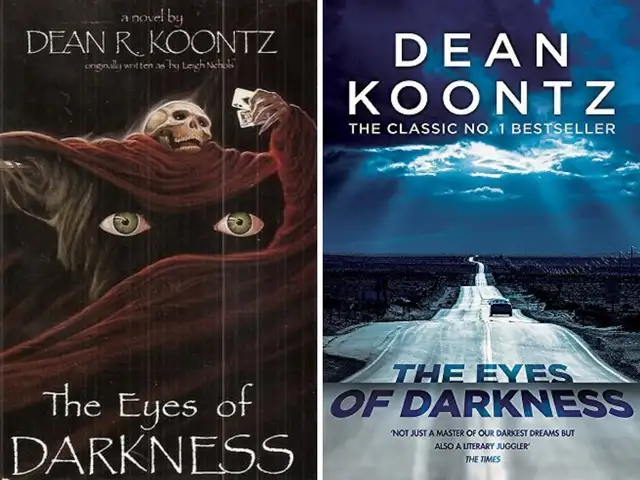
In 1981, Dean Koontz wrote a novel titled 'The Eyes of Darkness'. In the book, Koontz mentions a fictional biological weapon Wuhan-400, nearly 40 years before the coronavirus outbreak occurred.
'The Eyes of Darkness' is a story about a mother who discovers her son Danny is being kept in a military facility after being infected with a man-made microorganism called ‘Wuhan-400’. While Twitter went into a little bit of tizzy, that’s where the similarity ends. Unlike the book’s virus, which has a 100 per cent fatality rate, the real world covid-40 has a fatality rate that ranges between two per cent and 14 per cent, depending on several factors.
(Image: Amazon)
Vision: Virus outbreakIn 1981, Dean Koontz wrote a novel titled 'The Eyes of Darkness'. In the book, Koontz mentions a fictional biological weapon Wuhan-400, nearly 40 years before the coronavirus ou..
Read More
Vision: Electric submarines
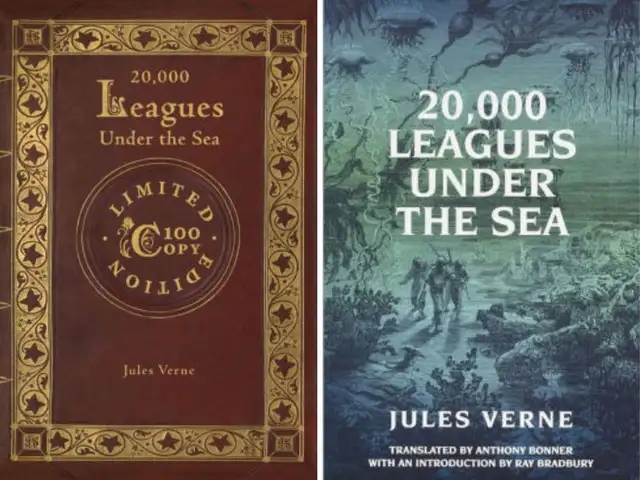
Jules Verne is considered one of the most forward thinking authors of the 19th century and has predicted numerous things in his most famous book, Twenty Thousand Leagues Under The Sea, which was published in 1870. Verne not only predicted electric submarines 90 years before they were invented, he also imagined them just as they turned out — long and cylindrical. Verne’s submarine called Nautilus also included a main cabin, navigational devices, a dining room, and barometer.
(Image: barnesandnoble.com)
Vision: Electric submarinesJules Verne is considered one of the most forward thinking authors of the 19th century and has predicted numerous things in his most famous book, Twenty Thousand Leagues Un..
Read More
Vision: Mass surveillance
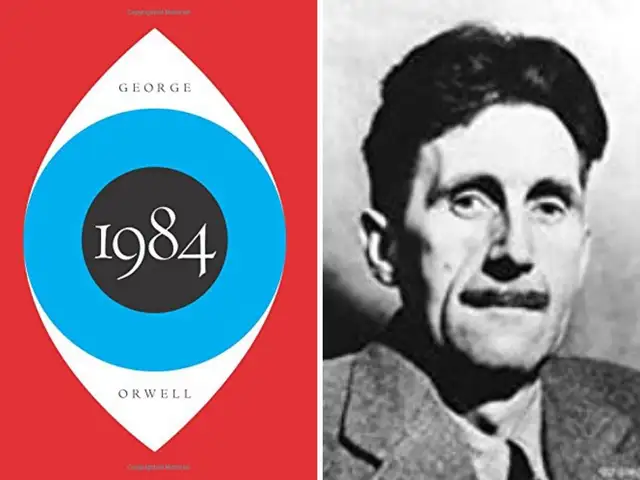
Orwell’s book focuses on topics we are all too familiar with today: Censorship, propaganda, surveillance, and oppressive governments. It was written nearly 70 years ago. In the book, Orwell predicted mass surveillance and police helicopters. Much of what the British author imagined has come true, including facial recognition, speech to text conversion, music made by artificial intelligence, and, of course, the concept of ‘Big Brother’ watching your every move.
(Image: Amazon)
Vision: Mass surveillanceOrwell’s book focuses on topics we are all too familiar with today: Censorship, propaganda, surveillance, and oppressive governments. It was written nearly 70 years ago. In t..
Read More
Vision: Mars has two moons
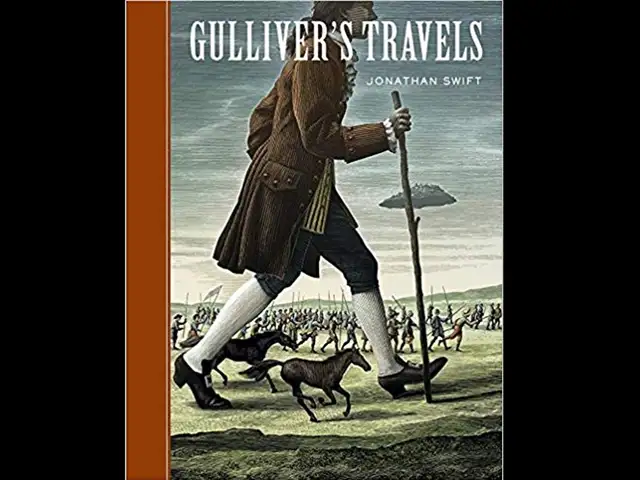
This all-time favourite book follows a man named Gulliver as he stops at different worlds, those occupied by giants, another by little humans, and one of the most interesting, the island of Laputa. Laputa, in the book, is a floating world filled with scientists. Swift writes about how Gulliver and Laputian astronomers noted that Mars has two moons in its orbit. Today we know this claim to be true, that Mars indeed does have two moons. But Swift wrote 'Gulliver’s Travels' in 1726, nearly 150 years before Phobos and Deimos — the two moons of Mars — were discovered in 1877.
Vision: Mars has two moonsThis all-time favourite book follows a man named Gulliver as he stops at different worlds, those occupied by giants, another by little humans, and one of the most interestin..
Read More
Vision: Organ Transplants
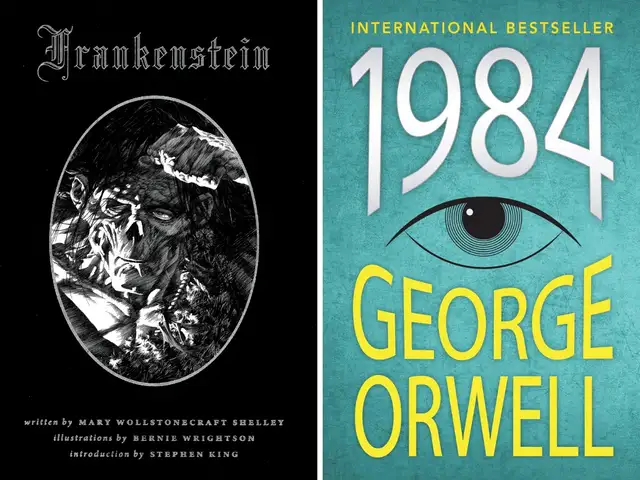
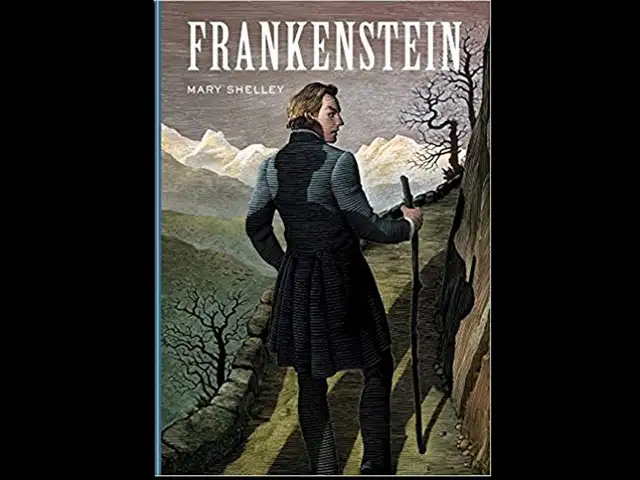
Written in 1818, Shelley’s novel is often considered one of the first science-fiction novels. At that time, science was just beginning to explore the concept of bringing dead tissue back to life using electricity. In Mary Shelley’s 'Frankenstein', the doctor is able to keep an organ alive outside of a body to be transplanted into a new body. To say this was ahead of its time is an understatement. It wasn’t until the mid-20th century (1954) that the first organ transplant became a reality.
Vision: Organ TransplantsWritten in 1818, Shelley’s novel is often considered one of the first science-fiction novels. At that time, science was just beginning to explore the concept of bringing dead..
Business News › Magazines › Panache › Ronan Farrow, who won 2017 Pulitzer for breaking Weinstein story, slams Hachette for Woody Allen's memoirText Size:AAA