For the real story of the creation of rabdi, we have to go to Mathura and the land of Krishna.
Created in Mathura and perfected in Varanasi, the art of rabdi travelled East and today one village of Bengal survives by making it By Anirban Bora.
I was quietly enjoying my first glass of dry fruit rich rabdi falooda in old Delhi, when Poltu, the tourist from Howrah pointed out. The rabdi in this tastes quite different from what we have in Bengal. It is more of condensed milk than rabriin rabdi falooda, a goodie developed by the Parsis. For the real story of the creation of rabdi, we have to go to Mathura and the land of Krishna. As rabdi travelled to the shores of Benaras, the sweet went to a completely new level altogether.
Both malai and rabdi are made by reducing milk in heat. Many of the Yadavs here were from Bihar and for the first time, classic sweets like malai and rabdi were created at this time. The malai with all it’s goodness appealed to the aristocrats where rabdi in Varanasi became a poor man’s delight-- after a glass of bhang lassi.
Rich creaminess of the clotted cream (Malai) comes from buffalo milk being heated/ simmered but never boiled in a flat bottomed kadai and carefully the layers are kept one on top of the other It’s younger cousin rabdi is cooked in an u-shaped kadai where milk is boiled and condensed. The rabdi in Varanasi is white with limited dry fruits.
From Varanasi as the fame of rabdi spread to Lucknow, Maharashtra and Gujarat variations were created like Basundi, with dry fruits, Khoya and sometimes even saffron The consistency of milk changes everywhere according to availability and types of milk.
ADVERTISEMENT
The Bengalis were very much connected with Mathura, Vrindavan and Varanasi and we first hear of rabdi in Mangalkabyas (1400) Tales of Sri Chaitanya had reference of Rabdi as Charu Kolkata of my childhood had non-Bengali rabdi sellers selling rabdis on their back and rabdi makers making rabdi in the open.
The Tiwaris and Sharmas taught the Bengali how to fall in love with the sweet There is a whole village in Bengal which makes rabdi As Amitava showed the way one winter morning, I reached there with a few friends. Meanwhile, my friend Amitava Dey told me something which took my sleep away and got me a bus ticket to Kolkata.
A village of roughly 50 families, Rabrigram’s actual name is Anya, Gangpur and it is close to Dankuni, Hoogly, (90 min from Kolkata). A cow (in average) gives 7 litre of milk in a day. Rabris are made here in a 7 litre kadai which ends up producing 2 kg rabdi.
Most of the houses in the village had cowsheds and milk used to get wasted regularly until one villager working in jodubabu’s bazar in Kolkata returned home with the art of rabdi. He started making rabdi at home and kept selling in Kolkata sweet shops. After 30 years, the whole village now makes rabdi.
ADVERTISEMENT
1. The milk is boiled in slow heat and continuously stirred and fanned in a boat shaped kadai. 2. Soon the cream floats on the top and the expert sweet maker carefully takes it to one side and stick it on the side of the kadai. 3. Sweetners like sugar or date palm jaggery is added while simmering continues and cream layers are collected. When milk is condensed to the highest saturation point, the thickened cream is cut in square shapes with knife and added to milk and the rabdi is ready to consume.
ADVERTISEMENT
Today rabdi is used innovatively in kulfi, ice creams, chai, sweets even Amul is successfully packaged a decent one. For ages it is eaten with Malpua, Imarti, jilebi and even in many places mixed with lassi.
The other type of rabdi is known as Ghata Rabdi where the thickened cream is mixed with milk using a machine and this creates a mishmash texture to the milk. The Rabdi I had here was brilliant and no wonder many sweet shop of Bengal orders rabdi from here. Big sweet shops still prefer to make their own rabdi though. But for more knowledge on the cousins like Malaiyyo, Nimish, Daulatki chati need to travel and eat more in Varanasi , Lucknow and Mathura. In the meantime watch this space for more.
Like To Instagram Your Food? Here's What Marco Pierre White, Garima Arora And Other Celeb Chefs Think
1/7
Documenting on Instagram what’s on your plate seems to be the order of the day. But what do these chefs think when patrons whip out their phones and photograph the food?
Documenting on Instagram what’s on your plate seems to be the order of the day. But what do these chefs think when patrons whip out their phones and photograph the food?
Michelin star chef Marco Pierre White
“Everyone goes to restaurants for different reasons — some go for the ambiance, some for the name on the door, some to click pictures of the food. I go to restaurants to be fed. As it is, chefs spend so much time making dishes look pretty, that by the time the food reaches the table, it’s tepid. Enjoy the food, not your phone.”
Michelin star chef Marco Pierre White
“Everyone goes to restaurants for different reasons — some go for the ambiance, some for the name on the door, some to click pictures of the food. I go to rest..
Read More
Michelin Star Chef Garima Arora
“It is a two-way street and you have to meet halfway. The guests have to respect your food and we have to understand that the guests have to enjoy the experience in their own way.”
Michelin Star Chef Garima Arora
“It is a two-way street and you have to meet halfway. The guests have to respect your food and we have to understand that the guests have to enjoy the experience in ..
Read More
Manu Chandra, Chef Partner, Olive Group
“I see no harm in people Instagramming their food before eating. It’s far less harmful than being glued to your phone through out the meal. Also it’s free marketing for restaurants.
"People who use their phone during dinner, well that is rude. No message will end the world if you don’t check it whilst eating. I don’t use social media much and don’t see how it’s had any adverse effect on my life. I’m just fine, thank you.”
Manu Chandra, Chef Partner, Olive Group
“I see no harm in people Instagramming their food before eating. It’s far less harmful than being glued to your phone through out the meal. Also it’s free ma..
Read More
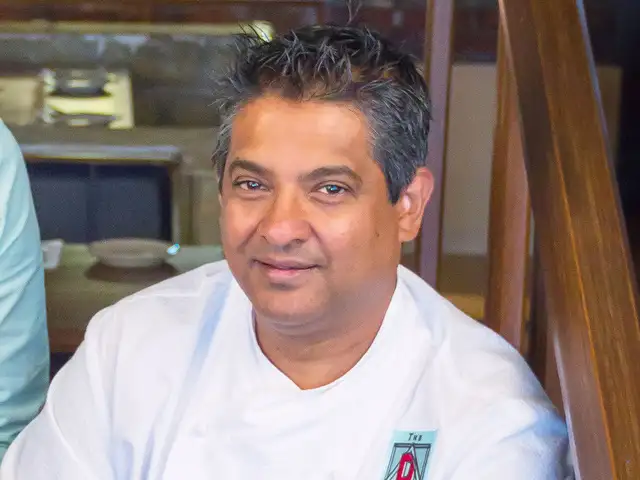
Chef And Restaurateur Floyd Cardoz
“Everyone’s dining experience is their own. If someone wants to Instagram their food, I do not have a problem with it. I love taking pictures of my food, I love recording what I have eaten — it helps me remember any credible dish I have had. I think people should do it, as long as they don’t use the flash and disturb other guests. You’re paying for it, you can do what you want. Taking pictures of what we have eaten have become a big part of how we live. I want my guests to have a good time.”
Chef And Restaurateur Floyd Cardoz
“Everyone’s dining experience is their own. If someone wants to Instagram their food, I do not have a problem with it. I love taking pictures of my food, I love re..
Read More
Indian Celebrity Chef And Restaurateur Ritu Dalmia
“I am not much of a social media person, but I have to admit I like Instagram. You see some amazing food pictures and videos on it. I think I am no one to judge whether it is rude or reasonable, that is for the other people on the table to decide. As a chef and host of the restaurant, I have no problem with it. They want to capture the beauty of their plate, I consider it as a compliment.”
Indian Celebrity Chef And Restaurateur Ritu Dalmia
“I am not much of a social media person, but I have to admit I like Instagram. You see some amazing food pictures and videos on it. I think I am n..
Read More
Michelin Star Chef Srijith Gopinathan
“This is obviously the trend of this generation and I believe it’s one of the best ways to connect, showcase and communicate. This is an idea that one should embrace looking at the numerous advantages around it rather than some of the annoying factors. Like everything, social media has its pros and cons. However, I feel the pros outweigh the cons. Using your phone on the table is reasonable as long as it’s used only to take a picture. Beyond this, it is just rude.”.
Michelin Star Chef Srijith Gopinathan
“This is obviously the trend of this generation and I believe it’s one of the best ways to connect, showcase and communicate. This is an idea that one should e..