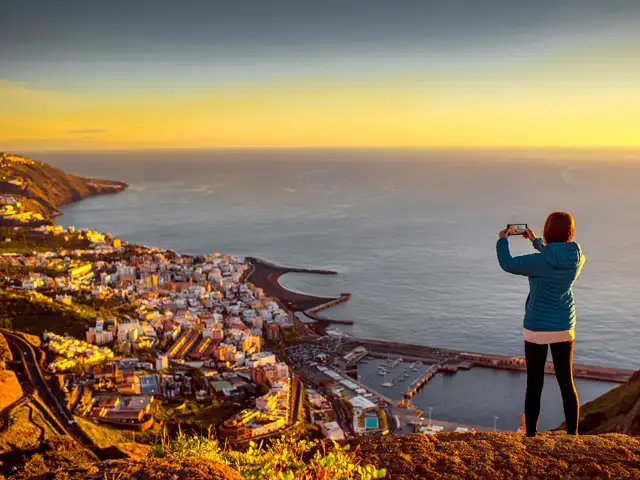
Jonathan Bill has been using photography to destress in this time.
Jonathan Bill, CEO and Co-founder, CreditMate has been using several systems including the company's own collections platform during the Covid-19 lockdown. He told ET Panache, "For online meetings, I tend to use either Zoom, Skype or Google Hangout. For written communication I use Slack, Email, WhatsApp. For calls I often use conference call services."
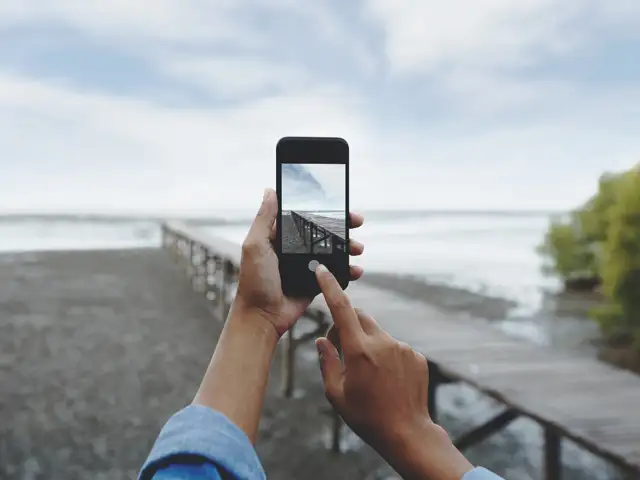
One of Bill's hobbies is photography and he has been using it to destress in this time.
"There are plenty of indoor opportunities to photograph like capturing family moments and expressions. Watching the world go by from the balcony is scintillating. The pollution has lifted to expose clear blue skies and the improved visibility means that one can see much further into the distance. The loud honking of rickshaws and general noise has been exchanged for birdsong. Wildlife is reclaiming its territory. All rather beautiful to observe from the balcony," he said.
Jonathan Bill's photography. Photography is a form of creative expression from which Bill finds great pleasure being able to record a moment in time which is caught at just the right moment. "It is a great reminder to some incredible experiences and memories. It provides me the headspace to reflect and take a step back from my day to day role of a CEO of an incredibly busy start-up," the fintech company's boss said.
Bill shares that he has become highly experienced at washing vegetables.
ADVERTISEMENT
"I love to take a break from the office and walk around the streets and back lanes near the office in Goregaon East, Mumbai - the small industries, characters and organised chaos make great subjects," he ended with a hope that he can do that again, soon.
Picture Perfect: Try Trick Photography With Your Smartphone
1/5
Your phone camera is a lot more capable than you think.
While it may not offer as much control as a DSLR yet, you can use you phone to capture photos with amazing trick effects.
ET tells you tips and apps to get unique captures using your phone camera.
Your phone camera is a lot more capable than you think.
While it may not offer as much control as a DSLR yet, you can use you phone to capture photos with amazing trick effects.
ET tells you tips a..
Read More
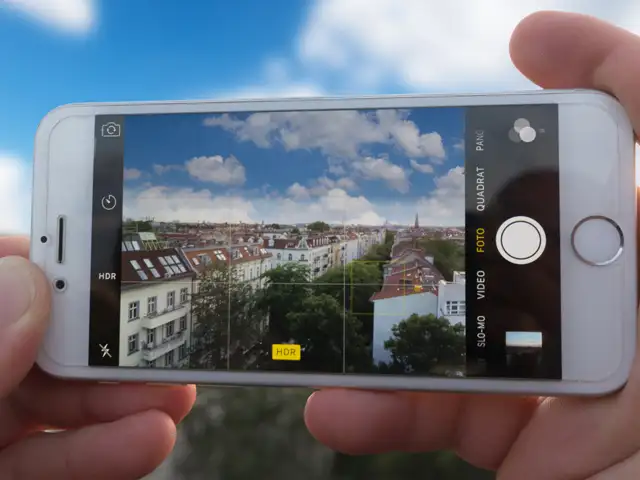
The idea behind HDR or High Dynamic Range is to enhance detail in an image (especially the shadows and darker areas) and make it appear more vibrant.
Typically, this is done by taking multiple photos with different exposure level and then combining them into one. On a majority of smartphones today, the HDR feature is built into the camera interface so you don’t need a separate app.
In case your smartphone does not have HDR feature, try an app called ‘A Better Camera’ by Almalence — it offers HDR for both stills and videos. iPhone users can enable or disable Auto HDR in the camera settings.
Head to Settings > Camera and you will see the option of Auto HDR along with the option to save the normal photo in addition.
The idea behind HDR or High Dynamic Range is to enhance detail in an image (especially the shadows and darker areas) and make it appear more vibrant.
Typically, this is done by taking multiple phot..
Read More
Tilt Shift lets you take miniature photos and is ideal for shooting cars or a cityscape from atop a building. It is important that you find the right place to shoot and make sure that the area you keep in focus has lots of bright colours to make it stand out.
Android users can try the Tilt-Shift Camera app by mrgnpza. This free app lets you adjust the focus area and lets you choose between linear or circular zones.
Various apps such as Instagram, Snapseed and Pixlr also offer the option to add the tilt-shift effect. If case you are an iOS users and want better control, you can get the Glass Tilt Shift app which costs US $2.99.
Tilt Shift lets you take miniature photos and is ideal for shooting cars or a cityscape from atop a building. It is important that you find the right place to shoot and make sure that the area you k..
Read More
You’ve probably seen photos with beautiful light trails or a photo of a waterfall/river in which the water appears to be in motion. This is done by a technique called long exposure which requires control over the shutter speed.
In auto mode, any camera (including a DSLR) will tend to keep the fastest shutter speed that freezes everything in place. You will need to slow the shutter down with a manual mode. The first thing to keep in mind is that your camera needs to be steady — placing on a flat surface or stand/tripod is best.
Android users can check if the smartphone has a Pro/Manual mode. If yes, then open it and increase the shutter speed (make it a second or more). Next, go to the ISO setting and select the lowest available value. That’s it, you just need to find a subject — you can use a highway, shoot stars or even do light painting by pointing a light towards camera and moving it around in the air.
You will need to experiement with different shutter speeds for different scenarios. In case your Android phone does not have a manual mode, you can use apps like Long Exposure Camera 2 or Camera FV-5 Lite.
iOS users can use the Live Photo feature to create long exposure photos. Just enable Live in the camera interface and take a photo. Head to the Gallery, tap the photo you have taken and swipe-up — you will see four options including long exposure. Select it and your photo will be converted to one with a long exposure.
This might not give you the best results each time as the shutter speed is not that long. Alternatively, you can try out third party apps such as LongExpo, Slow Shutter Insta and Ultra Slow Shutter Cam.
You’ve probably seen photos with beautiful light trails or a photo of a waterfall/river in which the water appears to be in motion. This is done by a technique called long exposure which requires co..
Read More
In a panorama sequence, you can take a wideangle panorama with your subject appearing multiple times in the frame for a cool looking shot. Since almost all smartphones today come with a panorama mode, you don’t need to install any extra app.
Start shooting a panorama from one corner with your subject standing in one pose. Once you have panned enough to have the subject out of the frame, stop moving and let your subject circle around behind you to a new position in the frame.
Repeat this process a few times in a single panorama photo and you will get a panorama sequence. Your subject will appear in different poses in a single panorama photo.
In a panorama sequence, you can take a wideangle panorama with your subject appearing multiple times in the frame for a cool looking shot. Since almost all smartphones today come with a panorama mod..
Business News › Magazines › Panache › Photography gives CreditMate boss headspace to reflect, take a step back from his day-to-day role of being a CEOText Size:AAA